
The Tool Desk
Outbyte PC Repair FREEClear out junk files and repair common Windows errorsFree Scan →Outbyte Driver Updater FREEScan for outdated or missing drivers - takes under a minuteDriver Scan →Robots can help Japanese rescue teams investigate dangerous sites, enter rubble too narrow for people, and listen for signs of trapped survivors. But those are different jobs—and many survivor-search systems remain research prototypes, controlled tests, or demonstrations rather than proven tools in live earthquake rescues.
How robots can help after an earthquake
Collapsed buildings create a difficult search problem: a person may be hidden behind debris, a responder may not be able to fit through a gap, and voices can be masked by machinery, falling material, or a robot’s own movement. Robots can extend what rescuers see or hear while keeping people away from some hazards. Their sensors may include cameras, microphones, thermal imaging, or gas detectors, depending on the system.
A robot’s ability to enter a dangerous area does not by itself mean it can find a survivor. Some systems are designed mainly to inspect structures or gather information; others explore ways to detect and locate people. Evidence also varies: a robot used for reconnaissance in a real emergency, a device tested in a constructed rubble field, and a simulated search demonstration represent different levels of readiness.
What Japan’s earthquake robots have done
Quince: reconnaissance at Fukushima Daiichi
After the 2011 earthquake and tsunami, Quince was sent into upper floors of the Fukushima Daiichi nuclear plant to gather information in areas where radiation and heat made human access dangerous. Tohoku University describes the 2011 Great East Japan Earthquake as the first disaster in which robotic systems were widely used. The Quince mission was hazardous-site reconnaissance—not evidence that the robot searched earthquake rubble for survivors. Tohoku University’s account of Quince quotes Satoshi Tadokoro explaining that the robot went up to inspect pipes and valves that people could not safely reach.
#1 Best Overall

- Little heroes can enjoy twice the fun with 2 modes of play, converting this heat wave the fire-bot action figure from a fire-rescue rig to a robot and back again
- Kids can pretend to roll out with this heat wave the fire-bot figure, inspired by the character from the Transformers: rescue Bots animated TV show
- Designed with easy 2 Do conversion preschoolers can do, this heat wave the fire-bot figure is a great gift. With 1 easy steps, kids can convert this rescue Bots toy from a robot to a vehicle
- The fun and oversized Transformers converting robot toy inspires adventurous imaginative play for boys and girls ages 3 and up
Active Scope Camera: entering narrow gaps and listening
Waseda University and partner researchers developed the Active Scope Camera, a flexible, snake-like robot intended to reach narrow, deep spaces in rubble. Distributed microphones gather sound from multiple positions, while processing aims to make faint sounds easier to hear. This addresses a practical complication: the robot’s movement can itself obscure a trapped person’s voice.
Researchers evaluated the system in a constructed rubble field modeled on collapsed wooden houses. Waseda describes two processing approaches: one designed for near-real-time sound enhancement, and another that takes post-processing time to produce clearer audio. The tests showed improved hearing performance relative to earlier results, but they were controlled evaluations—not documented live rescues. Waseda’s Active Scope Camera account describes the robot and its evaluation.
Rank #2

- 2 MODES: Help Knight Watch Optimus Prime save the day in medieval times alongside his Mini-Cons
- 2 MINI-CON FIGURES: Includes Scale the Shield-Bot and Lance the Raptor-Bot Mini-Con figures
- EASY TO DO CONVERSION: Optimus Prime and Mini-Con figures each convert with 1 step
- SIZED RIGHT FOR SMALL HANDS: Transformers Rescue Bots figures are sized right for small hands
Other approaches under development or demonstration
CURSOR and SMURF: combining air and ground robots
The CURSOR project describes a system in which aerial robots carry or deploy miniature soft ground robots. Sensors and information-management tools are intended to combine observations for first responders, with detecting and locating people in debris as a project objective. That objective should not be confused with an independently established rescue capability. JST’s CURSOR project abstract outlines the system design.
At Expo 2025, a simulated underground-search demonstration featured SMURF, a soft miniaturized robot. The Expo page lists a target V2 sensor suite of cameras, thermography, a microphone, GPS, and a sniffer. It also describes large-scale field trials in Japan of the combined drone-and-SMURF system. A field trial or simulated search is not the same as deployment in a live earthquake rescue. Expo 2025’s SMURF demonstration page documents the event.
Quick wins for a faster PC:
Repair Windows errors before they cause bigger problemsFix Now →Scan for outdated or missing drivers - takes under a minuteDriver Scan →Clear out junk files and repair common Windows errorsFree Scan →Rank #3
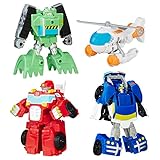
- Convert bots to vehicles and back again in 1 step
- Play in bot mode or vehicle mode
- 4 core Rescue Bot figures in their classic vehicle modes
- Includes Boulder the Construction-Bot, Blades the Flight-Bot, Heatwave the Fire-Bot, and Chase the Police-Bot figures.
- Each 4.5” figure is sized right for little hands
Listening drones and cooperating ground robots
Microphone arrays on drones can help estimate where sounds originate when cameras cannot see a person. Rotor and wind noise make this difficult, so research described by the Nakadai Lab focuses on suppressing that noise, estimating sound-source positions, and mapping them. The lab also describes demonstrations in which drones and ground robots cooperate. Its account supports describing a research and demonstration effort, not an established disaster-response service. The Nakadai Lab’s page on disaster-site sound research explains these approaches.
OCTOPUS: climbing and moving over obstacles
Waseda’s OCTOPUS is an articulated response robot with four arms and four flippers. Hydraulic and electric versions are described, with movement designed for climbing obstacles and performing complex maneuvers. The available account establishes its disaster-response design, not that it found survivors in a particular earthquake. Waseda’s OCTOPUS page describes the platform.
Rank #4

- As seen in the Transformers rescue Bots Academy TV series: kids can imagine racing to the rescue with this rescue Bots figure set, inspired by the Transformers rescue Bots Academy animated show
- 4 iconic rescue Bots Academy characters: the Academy rescue team figure pack comes with hot shot, whirl the flight-bot, wedge The construction Bot, and hoist action figures
- Easy to do 2-in-1 play: sized right for small hands and designed with easy 2 Do conversion, boys and girls can convert the rescue Bots toys from Robots to vehicles and back again with 1 easy step
- Imaginative play: the fun Transformers rescue Bots Academy converting robot toys inspire adventurous imaginative play for boys and girls ages 3 and up
- Collectible toys: look for other Playskool heroes transformer rescue Bots Academy toys to assemble a rescue team (other figures each sold separately. Subject to availability.)
What the detection numbers do—and do not—show
A 2024 Scientific Reports paper evaluated object-detection models using a specially compiled dataset of 200 images depicting trapped people. In the authors’ evaluation, YOLOv10 achieved 98.5% accuracy and a reported inference time of 15 milliseconds. These are results on that dataset and evaluation; they are not the percentage of real earthquake survivors a robot can find, nor a rescue success rate. The 2024 study in Scientific Reports reports the dataset and model results.
Independent reader supportYour contribution helps us test, update, and keep practical guides available for everyone.How to judge a robot’s readiness
When evaluating a claim about earthquake robots, distinguish where a machine can go, what it senses, and what has actually been demonstrated. A small robot may fit through a gap, a drone may cover an overhead view, and an articulated platform may climb obstacles; none necessarily provides the same kind of evidence about a person’s location. Some systems offer a quick estimate, while clearer sound or combined sensor information may require more processing.
Do these 3 things before closing this tab:
1Scan for outdated or missing drivers - takes under a minute2Repair Windows errors before they cause bigger problems3Fix the driver behind crashes, sound loss and screen glitchesBest Value

- 2-IN-1 RESCUE BOTS ACADEMY TOY: Little heroes can enjoy twice the fun with 2 modes of play, converting this Bumblebee action figure from a sportscar to a robot and back again
- AS SEEN IN THE TRANSFORMERS RESCUE BOTS ACADEMY TV SERIES: Kids can imagine racing to the rescue with this toy, inspired by the Transformers Rescue Bots Academy animated TV show
- EASY TO DO: Designed with Easy 2 Do conversion preschoolers can do, this figure makes a great gift. With 1 easy step, kids can convert this Rescue Bots Academy toy from a robot to a vehicle
- IMAGINATIVE PLAY: The fun and miniature Transformers Rescue Bots Academy converting robot toy inspires adventurous imaginative play for boys and girls ages 3 and up
- COLLECTIBLE TOYS: Look for other Playskool Heroes Transformers Rescue Bots Academy toys to assemble a rescue team (Other figures each sold separately. Subject to availability.)
- Operational use: A robot entered a hazardous real-world site, as Quince did at Fukushima Daiichi. This establishes a reconnaissance role, not survivor detection.
- Controlled evaluation: A sensor or algorithm was tested under specified conditions, such as the Active Scope Camera in constructed rubble or YOLOv10 on the paper’s image dataset.
- Simulation or demonstration: A system performed a planned exercise, such as the Expo 2025 underground-search demonstration. This shows a capability being demonstrated, not routine use in actual earthquakes.
The cited sources do not establish nationwide deployment levels, comparative field success rates, or a universal best robot. Japan’s examples show a range of promising tools, but the evidence does not support treating all of them as operational survivor-finding systems.
Quick Recap
Product prices and availability are accurate as of the date/time indicated and are subject to change. Any price and availability information displayed on Amazon at the time of purchase will apply.

