
The Tool Desk
Outbyte PC Repair FREEClear out junk files and repair common Windows errorsFree Scan →Outbyte Driver Updater FREEScan for outdated or missing drivers - takes under a minuteDriver Scan →Nuclear power plants use multiple layers of protection—not one device—to prevent abnormal conditions from escalating, shut down the chain reaction, remove heat, contain radioactive material, and manage emergencies. The U.S. Nuclear Regulatory Commission (NRC) describes this approach as defense in depth. The systems and requirements discussed here reflect U.S. NRC material; designs and rules vary by country, reactor type, and site.
What defense in depth means
Defense in depth combines independent and redundant safety functions with physical barriers, operating practices, accident procedures, and emergency preparedness. Redundancy gives a safety function more than one way to operate; diversity and physical separation help reduce the chance that a single failure or hazard disables all of those options. The NRC defines defense in depth as “An approach to designing and operating nuclear facilities that prevents and mitigates accidents that release radiation or hazardous materials.”
These layers address different stages of risk. Monitoring and automatic protection can respond to abnormal conditions; shutdown stops the sustained fission chain reaction; cooling removes the heat that remains; barriers limit the movement of radioactive material; and procedures and emergency response address challenges that engineered systems alone may not resolve.
How nuclear power plants prevent accidents
Design, construction, and operating controls
Plant design, construction quality assurance, conservative operating controls, and safety culture all help prevent equipment problems or operating deviations from developing into more serious events. They are preventive layers, not substitutes for engineered safety systems. The NRC’s defense-in-depth account treats these protections as parts of a larger system rather than relying on a single safeguard.
What’s actually slowing this PC down?
Pick the symptom - the matching free tool is one click away.
#1 Best Overall
- ATMOSPHERE-BOOSTING HUMIDIFIER MORE THAN JUST MIST: Bring your space to life with a soft green glow and fine ultrasonic mist. This USB-powered humidifier doesn't just add moisture - it creates a calm, immersive atmosphere for bedrooms, desks, or late-night work sessions
- USB POWERED FOR EASY USE ANYWHERE: No bulky setup needed. Simply plug into your laptop, power bank, or adapter and enjoy instant mist anytime. Suitable for office desks, gaming setups, travel, or small personal spaces
- COMPACT SIZE FOR DESKTOP SPACES: Designed to fit seamlessly into your workspace without taking up room. Whether placed beside your monitor, bedside, or shelf, it adds both function and visual appeal without clutter
- SOFT GREEN LIGHT FOR RELAXING AMBIENCE: The built-in green LED light enhances the overall mood, making it suitable for stress relief, relaxation, or creating a unique aesthetic setup. Works well for night use without being too harsh on the eyes
- HUMIDIFIER AND DECOR IN ONE UNIQUE PIECE: Not just a humidifier - a conversation-starting decor piece. Combines practical air moisture benefits with a visually striking design, making it a thoughtful gift or personal setup upgrade
Monitoring and automatic protection
Instrumentation and control systems provide safety-relevant information to operators, allow control of safety systems, and can automatically protect the reactor core when conditions indicate a potential accident. Operators therefore do not have to initiate every protective response manually. Plants differ in their control-system architecture: newer designs may use digital systems, and existing plants may upgrade instrumentation, but no single technology describes every facility.
What happens when a reactor shuts down or loses cooling
Shutdown stops the chain reaction, not the need for cooling
A reactor trip stops the sustained fission chain reaction. The reactor still produces heat after shutdown, so cooling remains important. Safety systems must manage that heat to protect the fuel and other plant equipment.
Rank #2

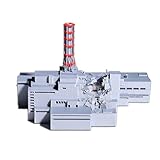
- A premium display model for adult collectors and history enthusiasts, featuring high-precision 3D printing with metallic luster material. The intricate components can be detached to showcase the remarkable engineering and realistic textured details.
- Designed as an educational tool to demonstrate complex geometric principles. Explore the iconic Fullerene structure (a truncated icosahedron) through this model, which represents a pivotal design from a significant historical scientific project.
- Features a modular design where each polyhedron component can be freely assembled and rearranged into various spatial configurations. This hands-on process provides an engaging and thoughtful exploration of structural mechanics and is ideal for STEM learning.
- Serves as a sophisticated conversation piece for office or study desk decor. It makes a unique and thoughtful gift for avid collectors, physics buffs, military history aficionados, or anyone who appreciates precision models and scientific history.
- Crafted for long-term display with stunning visual impact and fade-resistant quality. THIS IS A COLLECTOR-GRADE, HISTORICAL REPLICA MODEL INTENDED FOR ADULTS. IT IS FOR DISPLAY AND EDUCATIONAL PURPOSES ONLY.
Emergency core cooling and long-term heat removal
In the U.S. NRC context, emergency core cooling systems (ECCS) are required to mitigate design-basis accidents. A design-basis accident is an event considered in a plant’s safety design; it is not the same category as a severe accident involving extensive core damage.
The NRC’s explanation of a pressurized-water reactor (PWR) loss-of-coolant accident describes one example of how cooling can continue: water and spray solutions collect in a containment sump and can be recirculated for long-term core cooling, residual heat removal, and containment-atmosphere cleanup. This is a PWR-specific example, not a universal layout for all reactor types. In that arrangement, sump screens, pump inlets, and connected piping matter because debris could obstruct flow or damage components.
Rank #3

- Visualize Molecular: The molecular model kit simplifies complex chemistry concepts into tangible 3D structures improve learning efficiency, suitable for students from Grade 7 to Graduate level.
- 444 Pcs Complete Set: The atom model kit includes with 136 atoms,158 bonds, and 150 fullerene model parts, explore most the molecules structures from simple compounds to complex polymers.
- Effortless Assembly: Embedded component design ensures easy to construct Ball-and-stick and Space-filling models that maximizes focus on exploration without complex assembly.
- Durable & Portable: Built to last, the chemistry set is crafted from high-quality materials. Plus, its portable Snap-Lock design allows you to take your experiments learning anywhere, between the home, classroom and lab.
- Essential Study Tool: Whether you're studying organic chemistry, biochemistry, or molecular biology, molecule building kit is an perfect learning tool for you deeper comprehension of molecular science.
How physical barriers limit radioactive releases
The NRC identifies several physical barriers: the fuel matrix, fuel-rod cladding, the reactor coolant pressure boundary, and containment. Each helps limit the movement of radioactive material. Containment is designed to hold material that may escape earlier barriers; it is one part of the protection strategy, not a guarantee that a release is impossible.
If earlier protections are challenged, an event may progress in different ways depending on its circumstances. Severe-accident analysis considers scenarios involving uncontrolled increases in core temperature that can lead to melting of fuel and internal structures. That description concerns modeled severe-accident progression; it does not mean every accident follows the same sequence.
Rank #4
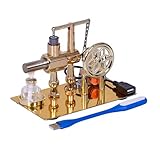
- RTR Version Stirling Engine Model: No need to assemble, unpack the engine model and get ready to see the wonders of science. Comes with a USB LED lights for you to DIY and experience more fun.This is a very interesting and imaginative toy! It can be used for teaching physics, great to display basic principles of a Stirling engine and to show the art of design.
- Good Look Stirling Engine Mode: The bottom of the model is made of high-quality steel, and the bracket is made of aluminum alloy. The bottom of the bracket is wide, stable and solid, exquisite. Due to the heat of alcohol, the engine will run wildly and generate electricity. The power supply will pass through the wire and drive the LED light. Sturdy and durable metal components ensure long operation, enjoy physical powertrain mechanism display.
- Easy to Operate: Fill the alcohol burner with your 95% medical-alcohol (we recommend this fuel) and light it. Let the light burn the cylinder with the rounded ends for about 60 seconds, then gently push the wheel.
- Superior performance: The Stirling engine is equipped with an LED. As power will pass through the wire and turn on the LED light. When the model continues to rotate, the speed is high, the performance is stable, and the rotation can be maintained for a long time.
- Great Educational Tool: This is an amazing and wonderful Stirling Engine, which has a wide range of applications, such as science project, physics / mechanical learning, teacher presentation props in class, friends, family, parents birthday gifts, etc.
Why redundancy, diversity, and separation matter
Duplicating equipment helps only if a shared hazard cannot disable every duplicate at once. NRC fire-protection material illustrates how a plant can address that concern through several complementary measures:
- Prevent, detect, and suppress fires: Fire protection includes prevention, detection, and suppression, supported by inspections, drills, and a trained onsite fire brigade.
- Protect alternate equipment: Separated redundant safety equipment, fire barriers, and cable protection help reduce the chance that a fire affects multiple safety trains.
- Maintain safe-shutdown capability: Reliable backup power and protected equipment support the ability to shut down the plant safely if fire affects normal systems.
The NRC’s fire FAQ states that approximately 70 percent of fires at nuclear power plants since 1995 occurred in non-safety-related turbine buildings. That is a historical statement from an NRC FAQ page accessed in 2026—not a current fire rate, a figure for all nuclear accidents, or evidence about the frequency of reactor core damage. The fire-protection examples above illustrate protection against fire; they are not a complete account of defenses against every external hazard.
Best Value

- Educational toys - Through this DIY package, children can exercise their own hands, thinking, exploring, creating ability,Build a toy that light up the LED by hand and the drive motor to learn the principle of conversion between energies.
- Hands on fun - The Hand Cranked Power Generator sets come with complete accessories ,tools and instruction manuals,kids can learn to solve and think about issue while reading the manuals.
- Learn through playing - Kids will learn from the mechanics of the hand-crank generator and how the kinetic energy is used to generate electricity. The Dynamo Lantern is a safe and interactive experience that keeps kids engaged, which makes it one of the most unique electricity learning toys available.
- Safe to play - A great and practical gift for children to enjoy and learn. Popular among schools and teachers for an interactive, hands-on learning experience as well as being one of the safest electricity learning toys in the classroom. Our kids STEM toys contain small parts, not for children under the age of 3.
How procedures and emergency preparedness address later challenges
Engineered equipment is not the only response layer. The NRC’s severe accident analysis process considers emergency operating procedures and severe accident management guidelines among the mitigation measures used in modeled scenarios. These measures address how operators and plant staff manage an event as it develops; they do not replace automatic protection, cooling systems, or physical barriers.
Emergency preparedness extends defense in depth beyond the plant systems. During an actual event, follow instructions from local authorities and official emergency communications rather than relying on general guidance about what protective action to take.
How the main safety layers differ
| Layer | Primary role | When it matters |
|---|---|---|
| Prevention and operating controls | Reduce the likelihood that abnormal conditions develop or escalate. | During design, construction, routine operation, and maintenance. |
| Monitoring and automatic protection | Identify abnormal conditions, inform operators, and initiate protective actions such as reactor protection. | As plant conditions depart from normal. |
| Shutdown and emergency cooling | Stop the sustained chain reaction and manage the heat that remains. | After a reactor trip or during an accident addressed by safety design. |
| Physical barriers | Limit the movement of radioactive material. | Throughout operation and if fuel or coolant systems are challenged. |
| Accident procedures and emergency preparedness | Guide mitigation and response when an event requires actions beyond automatic systems. | As an event develops and, for public protective actions, through official emergency response. |
The distinctions matter: design-basis accident mitigation and severe-accident management address different analytical scopes, while prevention, automatic response, cooling, containment, and emergency response perform different jobs. Nuclear safety depends on how these layers work together.
Quick Recap
Product prices and availability are accurate as of the date/time indicated and are subject to change. Any price and availability information displayed on Amazon at the time of purchase will apply.

