
Crashes, No Sound, or Screen Glitches?
Random freezes, missing sound and display glitches usually trace back to one bad driver. Find and replace yours safely.Free scan · under a minutePC Slower Than It Used to Be?
A free scan shows the junk files, broken settings and background clutter dragging Windows down - then fixes them in one click.Free scan · Windows 10 & 11A nuclear plant delay can increase the time investors’ capital is tied up and postpone the electricity the plant was expected to supply. Whether that raises household bills—or creates a supply-security problem—depends on how the project is financed, who is contractually responsible for overruns, how costs can be recovered, and what other resources are available while the plant is delayed. There is no universal bill increase that can be inferred from a project’s cost overrun alone.
Do nuclear plant delays make electricity bills go up?
They can, but a delay does not automatically produce a higher bill. A longer construction period can increase financing costs because capital remains committed for longer before the plant generates electricity. It can also postpone expected sales or revenue. The International Energy Agency (IEA) identifies construction delays and cost overruns as major investor risks in its 2025 discussion of nuclear project financing.
Those project costs reach consumers only through particular ownership, contract, regulatory and market arrangements. A utility might seek to recover approved costs through regulated rates; a publicly financed project can expose taxpayers; investors or the developer may absorb some losses; and contractual terms can allocate risk differently. The timing matters too: costs may be passed through during construction, after a plant begins operating, or not directly passed through to household bills at all.
The UK National Audit Office’s 2026 review of Sizewell C explicitly considers implications for electricity consumers, taxpayers and investors. That is a useful reminder that “who pays?” is a project-specific question, not a property of nuclear technology in general.
#1 Best Overall
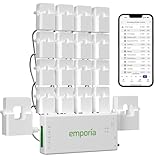
- SAFETY YOU CAN TRUST WITH UL CERTIFICATION: With Emporia Energy, your home energy monitoring is safe, reliable, and certified. The Emporia Vue is UL Listed, meaning it has met rigorous safety standards for electrical products in the U.S. and Canada. This certification ensures that every component has been thoroughly tested to prevent hazards, such as overheating, short-circuiting, or fire, offering you peace of mind as you manage your home’s energy consumption.
- INSTALLS IN CIRCUIT PANEL of most homes with clamp-on sensors. Supports Single phase, Single-split phase, and 2-wire systems. 3-wire systems; 3-phase, 4-wire Wye systems with earthed (TN or TT) neutral (no-Delta) are supported with an additional 200A sensor (sold separately).
- 24/7 ENERGY MANAGEMENT AND MONITORING: Automate, manage and control your home's real power anywhere, anytime to prevent costly repairs, conserve energy, and save costs. Monitor solar / net metering. PROTECTED BY A 1-YEAR WARRANTY.
- LOWER YOUR ELECTRIC BILL: Configure settings in the Emporia Energy App to automate energy management for time of use, peak demand, excess solar, and rewards programs. You can even see live reporting and invaluable savings opportunities instantly. Gauge real-time spending and get actionable notifications and automated energy management to help you reduce costs.
- REAL-TIME ENERGY DATA: REQUIRES 2.4 GHz WIFI WITH AN INTERNET CONNECTION to monitor energy use with iPhone / Android / Web app. Vue sensors collect energy data and are accurate from ±2%. The Vue is UL and CE Listed for your safety. 1 second data is only available in the app (when actively open) and retained 3 hours. Minute and hour data are retained in the cloud. 1 minute data is retained 7 days, 1 hour data is retained indefinitely. Export cloud data whenever you want in the app.
Who pays when a project goes over budget?
Check the project’s risk allocation and cost-recovery rules rather than assuming the entire overrun lands on customers. The relevant distinctions include who owns the plant, who arranged its financing, whether construction costs can enter regulated charges, and whether a contract shifts some risks to a developer, investors or the public sector.
- Consumers: They may bear costs if a utility or generator can recover eligible expenses through regulated tariffs or other charges. The extent and timing depend on local rules and the project’s arrangement.
- Taxpayers: Public funding, guarantees or other government commitments can expose public budgets to project risk. This is distinct from a direct household electricity charge, even though public costs can have wider fiscal effects.
- Investors, utilities or developers: They may carry some or all of the financial impact, depending on ownership, financing terms and contracts.
For a particular plant, compare the original and updated cost and schedule estimates, then identify which costs are eligible for recovery and who bears costs above the approved amount. Without those details, a project-level overrun cannot be converted into a reliable household-bill estimate.
Rank #2

- ⚡ EASY INSTALLATION: Installs in circuit panel of most homes with clamp-on sensors. Supports single-phase up to 240VAC line-neutral; single, split-phase 120/240VAC; and three-phase up to 415Y/240VAC (no Delta). The branch lines can automatically match different phases and have no restrictions in terms of quantity and voltage.Panels with access only to busbars will need flexible sensors available from SEM-Meter.
- ⚡ ENERGY MONITORING ANYTIME, ANYWHERE: Monitor your home's real power anywhere, anytime to prevent costly repairs, conserve energy, and save costs. Monitor solar / net metering. Light commercial 3 phase option available as a separate bundle. Protected by a 1-year warranty.
- ⚡ VARIOUS ELECTRICAL APPLIANCE MONITORING: Comes with 16 50A sensors to accurately monitor your air conditioner, furnace, water heater, washer, dryer, range, etc.
- ⚡ LOWER YOUR ELECTRIC BILL: SEM-Meter measures real-time spending and gets actionable notifications to understand where savings can be made, both to lower your electric bill and to conserve energy and protect the planet’s resources. Be an environmentalist.
- ⚡ REAL-TIME ENERGY DATA: Connect SEM-Meter device via 2.4GHz WiFi to monitor energy usage, with an accuracy range of 1%. View usage in real time through Android/Apple software. Statistics of power usage in now/day/week/month/year format: the validity period of hourly exported data is 90 days, and the exported data of day/month/year data is permanent, available at any time Export from application.
What a Contract for Difference does—and does not do
A Contract for Difference (CfD) can stabilise a generator’s revenue; it does not make construction risk disappear. UK government materials describe Hinkley Point C’s CfD as providing greater certainty around revenue levels while the generator continues to sell electricity in the commercial market.
Revenue stabilisation concerns the income side of a project. A construction delay can still affect when the plant starts producing electricity and when it can earn revenue. The CfD should therefore not be treated as proof that consumers pay no costs, that every overrun is passed to consumers, or that the original schedule is guaranteed. The agreement’s detailed terms and the wider UK cost-recovery arrangements determine the implications for different parties.
Recommended Free Tools
Rank #3

- EM16P MODEL & LOCAL CONTROL & DATA PRIVACY: Access your home energy monitor data locally via Built-in Web UI, Open API, and MQTT without relying on cloud services. Unlike cloud-dependent monitors, Refoss ensures your data stays within your home network. Direct local access protects your privacy while giving you 100% full control of your home energy system.
- NATIVE HOME ASSISTANT & OPENCLAW AI: Experience seamless Native Home Assistant integration right out of the box—no firmware flashing or complex coding required. Featuring ✨NEW✨ OpenClaw Support, it enables AI-driven automation for smarter, real-time energy management and seamless smart home control.
- MAXIMIZE SOLAR & ZERO FEED-IN AUTOMATION: Designed for solar homes, the power monitor works with the Refoss app and Home Assistant to automatically use surplus solar power. Appliances like EV chargers, washing machines, and water heaters are powered during midday peaks, maximizing solar self-consumption and reducing low-value electricity feed-in to the grid. Optimizes usage and reduces bills.
- REAL-TIME MONITORING & ±1% ACCURACY: Monitor voltage, current, active power, and power factor of major appliances. Provides ±1% accuracy (200A: 2–200A; 60A: 1–60A) and ±2% at low current. Daily data stored up to 5 years and exportable. With no subscriptions or hidden fees, you get deep historical insights to help you identify every energy-saving opportunity and save 10–20% on monthly bills.
- SMART ALERTS & CIRCUIT-LEVEL CONTROL: Set usage targets for each individual circuit and receive instant alerts when appliances exceed normal consumption. Refoss app supports automation and peak management to optimize schedules, reduce peaks, and improve efficiency. Real-time electricity usage monitor for circuit-level insights.
How a delay can affect energy security
A delayed unit may leave a gap in the supply plan: the system does not receive the plant’s expected electricity on the expected date. Nuclear power can provide low-emissions electricity available on demand, but the security impact depends on what can cover the missing contribution and when. A delay does not by itself establish that a country will face an electricity shortage.
- Replacement generation: Other available generators may supply some or all of the electricity, with implications for emissions and fuel needs depending on the mix.
- Imports: Electricity imports can help if neighbouring systems have capacity and the transmission links are available.
- Storage and demand response: Storage can shift electricity across time, while demand response can reduce or move consumption. Their usefulness depends on scale, duration and availability.
- Other system resources: Existing plants, renewables and grid flexibility can contribute, but the outcome depends on the system and the period of the delay.
The IEA’s 2019 and 2022 work discusses nuclear’s potential contribution to secure energy transitions alongside the long lead times and delivery risks involved in new construction. The practical question is not simply whether a delayed plant is low-carbon or dispatchable; it is whether the rest of the electricity system can reliably cover its planned contribution during the delay.
Rank #4
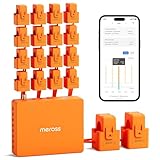
- SAFE & RELIABLE: Meross smart energy consumption monitor is ETL‑certified and compliant with the UL 61010 testing standard, ensuring safe and reliable home energy monitoring. Works with most US homes: single-phase 2-wire systems, single-split phase 3-wire systems, and 3-phase 4-wire Wye systems with earthed (TN or TT) neutral (no Delta). Easy clamp‑on design installs in minutes. Invert CT readings in the app—no physical flipping. PROTECTED BY 2-YEAR WARRANTY for worry-free use.
- TRACK ENERGY & CUT BILLS: Track power, voltage, current, and power factor within ±1% accuracy. Clear power usage and cost charts by minute/hour/day/month/year help you easily understand your energy use. Store up to 5 years of data and export hourly reports for deep analysis. Most users save 10–20% on energy costs by spotting energy hogs and getting accurate insights to cut their bills.
- 24/7 ENERGY MONITORING + SMART ALERTS: Real-time home energy monitoring from anywhere. Set custom alerts for unusual usage spikes and threshold breaches for total peace of mind. Catch issues early with no subscriptions, no cloud lock‑in, and no hidden fees — all built-in. Supports 2 main circuits (200A) + 16 branch circuits (60A), making it perfect for precise, circuit-level energy monitoring.
- MAXIMIZE YOUR SOLAR SAVINGS (HOME ASSISTANT): This solar energy monitor integrates with Home Assistant to detect solar surplus and automatically power EV chargers, water heaters, and other high‑use appliances. Stop wasting solar energy—use it yourself and cut your electricity bill faster. The perfect home energy monitor for solar homes.
- LOCAL DATA, FULL PRIVACY, NO SUBSCRIPTIONS: Connect seamlessly with Home Assistant for advanced energy automation. All energy data stays local—no cloud, no delays, no privacy concerns. Take full control of your home energy, reduce waste, and protect your privacy. Supports Open API and Web Control.
What past overruns show—and what they cannot tell you about bills
Published project histories demonstrate that schedules and cost estimates can change substantially. They do not establish a standard amount by which construction delays raise household bills.
| Project | Reported schedule or cost comparison | How to interpret it |
|---|---|---|
| Olkiluoto, first EPR | The IEA/OECD 2022 report says the first EPR began producing electricity in 2022, 13 years after its original planned date. | This is the reported gap between the original planned date and the start of electricity production; it is not a household-bill estimate. |
| Vogtle Units 3 and 4 | The IEA/OECD 2022 report compares an initial estimate of about USD 4,300/kW and about four years with a later estimate of about USD 8,600/kW and about eight years. | These are project cost and schedule estimates reported in that 2022 source, not a calculation of what households paid. |
To estimate a bill effect, one would need the relevant jurisdiction, the project’s current financing and cost forecasts, rules for recovering costs, tariff design, and the timing and allocation of payments. The figures above cannot be converted into a per-household charge without those inputs.
Quick wins for a faster PC:
Clear out junk files and repair common Windows errorsFree Scan →Scan for outdated or missing drivers - takes under a minuteDriver Scan →Repair Windows errors before they cause bigger problemsFix Now →Best Value
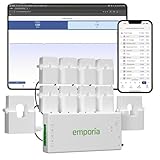
- SAFETY YOU CAN TRUST WITH UL CERTIFICATION: With Emporia Energy, your home energy monitoring is safe, reliable, and certified. The Emporia Vue is UL Listed, meaning it has met rigorous safety standards for electrical products in the U.S. and Canada. This certification ensures that every component has been thoroughly tested to prevent hazards, such as overheating, short-circuiting, or fire, offering you peace of mind as you manage your home’s energy consumption.
- INSTALLS IN CIRCUIT PANEL of most homes with clamp-on sensors. Supports Single phase, Single-split phase, and 2-wire systems. 3-wire systems; 3-phase, 4-wire Wye systems with earthed (TN or TT) neutral (no-Delta) are supported with an additional 200A sensor (sold separately).
- 24/7 ENERGY MANAGEMENT AND MONITORING: Automate, manage and control your home's real power anywhere, anytime to prevent costly repairs, conserve energy, and save costs. Monitor solar / net metering. PROTECTED BY A 1-YEAR WARRANTY.
- LOWER YOUR ELECTRIC BILL: Configure settings in the Emporia Energy App to automate energy management for time of use, peak demand, excess solar, and rewards programs. You can even see live reporting and invaluable savings opportunities instantly. Gauge real-time spending and get actionable notifications and automated energy management to help you reduce costs.
- REAL-TIME ENERGY DATA: REQUIRES 2.4 GHz WIFI WITH AN INTERNET CONNECTION to monitor energy use with iPhone / Android / Web app. Vue sensors collect energy data and are accurate from ±2%. The Vue is UL and CE Listed for your safety. 1 second data is only available in the app (when actively open) and retained 3 hours. Minute and hour data are retained in the cloud. 1 minute data is retained 7 days, 1 hour data is retained indefinitely. Export cloud data whenever you want in the app.
Why a plant’s cost is not the same as the electricity system’s cost
A plant-level capital cost or levelised cost of electricity (LCOE) describes a different thing from the total cost of keeping an electricity system reliable. A delayed plant may require other resources to cover the expected supply gap, but the cost and availability of those resources vary by country and system. Conversely, a plant-level cost figure alone does not capture every system-level effect.
The OECD Nuclear Energy Agency and the Electric Power Research Institute’s 2025 electricity-cost publication cautions that LCOE should be complemented by country-specific system-cost analysis. For decisions about bills and security, compare both the project’s cost and schedule outlook and the options available to the system while construction continues.
Quick Recap
What to check for a specific delayed plant
- Find the current schedule and cost forecast. Compare each estimate with the original baseline and note the date and source for each figure.
- Identify who carries construction and financing risk. Check ownership, public financing or guarantees, and the project’s contracts.
- Check the recovery rules. Establish whether and when construction costs can enter regulated tariffs or other consumer charges, and whether recovery is limited or conditional.
- Separate revenue arrangements from construction-risk allocation. A PPA, CfD, regulated asset base or other revenue structure may affect income or cash flow; it does not, by itself, answer who bears every overrun.
- Assess the supply gap. Determine what generation, imports, storage, demand response or other capacity can cover the plant’s expected contribution during the delay.
- Keep project and system figures distinct. Do not treat capital cost, LCOE, system cost and a household tariff as interchangeable measures.
Product prices and availability are accurate as of the date/time indicated and are subject to change. Any price and availability information displayed on Amazon at the time of purchase will apply.

