
Windows Errors? Fix Them Before They Spread
Repair common Windows errors and clear accumulated junk for a smoother, more stable PC - no reinstall needed.Free scan · no reinstallOutdated Drivers Are Slowing You Down
One free scan finds every outdated or missing driver and matches the right update for your exact hardware.Free scan · exact hardware matchA remote DSLAM or DPU can receive power over the same copper pair that carries broadband data: equipment at a customer’s premises sends DC toward the fiber-fed remote node, which extracts that power. This is called reverse power feed (RPF). It is one way to power a remote access node—not a feature of every DSLAM—and the design must account for what happens when only one customer is supplying power, how voice service is arranged, and how faults are detected.
What does line powering mean for a remote DSLAM?
In this context, line powering means reverse power feed. The network brings fiber to a remote distribution point, where a compact distribution point unit (DPU) provides DSL or G.fast service over existing copper drops. At the customer end, power source equipment (PSE) injects DC onto a copper pair. At the remote end, a splitter or extraction function separates the DC power from the broadband signal path.

The pair can therefore carry power toward the node while carrying xDSL data in the other direction. Depending on the chosen design, it may also be part of a telephone (POTS) arrangement. Multiple powered pairs can feed one DPU, which combines the power for shared node functions. ETSI TS 101 548-1 V2.3.1, dated January 2020, describes this general arrangement and distinguishes between standalone and integrated PSE/network-termination equipment.
RPF is not the only way to power a DPU. Broadband Forum TR-301 Issue 2 Amendment 3, dated September 2024, identifies three options:
Free tools Windows power users keep installed
One-click scans. No signup required.
#1 Best Overall

- Reliable Home Internet Connectivity Designed to provide stable and consistent internet access for everyday browsing, streaming, online meetings, and connected home devices.
- Dual Band Wireless Performance Dual band wireless technology helps improve network efficiency by supporting smoother connections across multiple devices simultaneously.
- Integrated Modem & Router Design Combines modem and wireless router functionality into one compact device for simplified home networking and reduced cable clutter.
- Multi-Device Support Supports laptops, smartphones, smart TVs, tablets, gaming systems, and smart home devices for convenient whole-home connectivity.
- Compact & Modern Design Desktop-friendly design fits easily into home or office environments while maintaining dependable long-term networking performance.
| Powering method | Where power comes from | What to evaluate |
|---|---|---|
| Reverse power feed | Customer-premises equipment sends power over the copper drop to the remote node. | Whether available customer feeds can support the node, including when only one source is active. |
| Forward network-node power | Power is fed from a network-side node toward the DPU. | The network power-feed design and how it reaches the remote equipment. |
| Local AC | An AC supply is available at the remote installation. | Local power availability and the equipment’s applicable installation requirements. |
The standards identify these as distinct architectures; they do not establish one as universally best or supply a deployment-specific cost comparison.
What happens if only one customer supplies power?
A DPU must be designed for the minimum-source case, not just for the total power available when many subscribers are connected. Broadband Forum TR-301 Issue 2 Amendment 3, section 8.1, requires a reverse-powered DPU to operate with one power source. The required service includes the supplying user’s transceiver, the central DPU, and necessary backhaul functions.
Rank #2

- Ensure coaxial cable is connected securely at all times to get steady connection
That matters because common node circuitry serves more than the subscriber whose equipment provides a feed. The architecture must define how that shared load is supported when only one customer is contributing power; it cannot assume every connected subscriber will always be powered and online.
The DPU also has to manage changes in feed count. The Broadband Forum requirements call for approximately equal sharing at the DPU among powered-on sources and for active lines and uplinks not to be interrupted as the number of feeds changes, under the specified conditions. Those are system-level behaviors: a design should explain what happens as sources join or leave, rather than treating power sharing as an incidental wiring detail.
Do these 3 things before closing this tab:
1Clear out junk files and repair common Windows errors2Fix the driver behind crashes, sound loss and screen glitches3Repair Windows errors before they cause bigger problemsRank #3
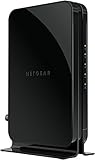
- Save monthly rental fees: Model CM500 replaces your cable modem, saving you up to $168/yr in equipment rental fees.
- Speeds by carrier plans: Xfinity (up to 200Mbps), Cox (up to 150Mbps).
- Works with any wifi router: Connect any WiFi router, separate unit, to this modem's Ethernet port to support all your wireless devices.
- Ethernet connections: 1 Gigabit Ethernet port connects to your computer or separate WiFi router.
- Modem technology: Engineered with 16x4 channel bonding and DOCSIS 3.0.
How can POTS coexist with reverse power?
Voice service is an architectural choice, not an automatic property of RPF. ETSI TS 101 548-1 describes options that include no POTS, exchange-provided POTS, derived POTS, shared in-premises wiring, and broadband bypass. The selected arrangement determines whether adapters or switching and copper-reconfiguration functions are needed.
| Arrangement | What it means for the design |
|---|---|
| No POTS | The reverse-powered broadband arrangement does not provide POTS on the line. |
| Exchange POTS | POTS is supplied from the exchange; the design must account for its relationship to the reverse-power path. |
| Derived POTS | Voice is provided through a derived arrangement rather than simply assumed to pass transparently alongside RPF. |
| Shared in-premises wiring | Adapters may be needed to make the selected voice and broadband arrangement work over the premises wiring. |
| Broadband bypass | A defined bypass arrangement is used where the architecture calls for it; it should not be confused with a universal voice-and-power configuration. |
For deployments that need exchange POTS removed before reverse-power startup, Broadband Forum TR-301 points to ETSI’s Metallic Detection Start Up (MDSU) and an optional POTS Remote Copper Reconfiguration Protocol (PRP). Specify the actual voice arrangement and its startup sequence rather than describing POTS and reverse power as transparently coexisting in every installation.
How does the system avoid powering a faulty or unintended line?
Power should not be applied blindly to an unknown pair. Broadband Forum TR-301 describes a controlled startup in which the source detects the DPU and checks for conditions such as an open or short circuit and other equipment connected to the copper before applying power. This helps distinguish a suitable remote node from a fault or an unintended connection.
Isolation is equally important. TR-301 section 8.1, requirement R-10, states: “A DPU MUST prevent any CO/exchange or cabinet power feed entering the DPU from being connected to a reverse powered customer drop.” In practice, the architecture must keep network-side or cabinet power from being connected to a customer pair carrying reverse power.
Best Value
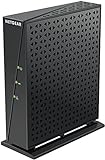
- Compatible with major DSL Internet Service providers such as Century Link and Frontier. Check with your internet service provider if you have a bonded DSL line
- Not compatible with AT&T U-verse, Verizon FiOS, and Cable Internet providers. Does NOT support bonded VDSL/ADSL.
- DSL Modem only (no WiFi router)
- Connect to high-speed VDSL/ADSL Internet access, Connect directly to a computer or wireless router
- Built-in VDSL, compatible with ADSL connections - Compatible with VDSL, VDSL2, ADSL, ADSL2, & ADSL2+
Voltage figures also need context. ETSI TS 101 548-1 V2.2.1 (2018) describes short-range 60 V DC and long-range 120 V DC options, while noting that the long-range specifications in that edition were incomplete and provided for information. These are edition-specific figures, not universal operating limits. The applicable current specification and the equipment documentation must determine the limits for a particular deployment.
Independent reader supportYour contribution helps us test, update, and keep practical guides available for everyone.What should a deployment specify about backup and operating conditions?
Customer-premises backup batteries can be part of an RPF design, but backup alone does not describe what service the system preserves during an outage. ETSI’s overview discusses premises batteries; Broadband Forum TR-301 discusses communicating power-source state and the possibility of reducing power when operating on battery.
When evaluating a design, establish the details that determine whether it will work in the intended network and environment:
- Minimum-source capability: the supported service when only one customer source is available, including the DPU, required backhaul functions, and that user’s transceiver.
- Transitions and sharing: how feeds share the load and how active lines and uplinks behave as feed count changes.
- Backup behavior: whether premises batteries are used, what reduced-power mode is supported, and how source status or imminent loss is communicated.
- Line and equipment limits: source voltage and current, copper-loop conditions, delivered output power, and the applicable equipment specifications.
- Fault protection and installation: startup detection, open/short handling, isolation, enclosure, surge behavior, and suitability for the actual environment and location.
Safety approvals, utility rules, and national requirements depend on where the equipment is deployed. They must be checked for that location and the selected equipment; the standards cited here do not define a universal approval path.
What equipment is used for line-powered remote nodes?
Some deployments use specialist conversion equipment between copper-pair feeds and the powered load. As one manufacturer-documented example, EnerSys lists the Alpha LPR48-300 as a line-powered down-converter for remote line powering over twisted copper pairs, with mini-DSLAM and FTTdp equipment among its stated applications. Its product page specifies four isolated pair inputs and up to 300 W at 48 VDC output. Those are the manufacturer’s figures for that product, not a standard-wide guarantee or a recommendation for every deployment.
Quick Recap
Product prices and availability are accurate as of the date/time indicated and are subject to change. Any price and availability information displayed on Amazon at the time of purchase will apply.

