
Home Assistant automations can make everyday routines feel less like a sequence of chores and more like your home responding to what is happening around you. The basic idea is simple: a trigger starts an automation, optional conditions determine whether it should continue, and actions make something happen. That structure is easy to understand; the personal payoff depends on which routines and devices you choose to connect.
What makes an automation feel useful in daily life?
An automation is a response to an event in or around your home. A documented example is turning on living-room lights when a person arrives home after sunset. The arrival is the trigger, “after sunset” is a condition, and turning on the lights is the action. Home Assistant describes automations as “how you make your home work for you” in its automation guide.
The useful shift is from issuing a command each time to defining a rule once. You decide what event matters, when the response is appropriate, and what the home should do. That can remove a repeated decision from a routine, but it does not mean every automation will suit every household: the right trigger, condition, and action depend on your devices and habits.
How the trigger-condition-action pattern works
Trigger: what starts the automation
A trigger is an event that starts an automation. Home Assistant documents physical events such as motion or a door opening, as well as time, sunset, presence, a remote button, or an Assist voice command. One automation can have multiple triggers, so different events can start the same response. See the official trigger documentation for the available concepts.
The Tool Desk
Outbyte Driver Updater FREEFix the driver behind crashes, sound loss and screen glitchesFind Drivers →Outbyte PC Repair FREERepair Windows errors before they cause bigger problemsFix Now →#1 Best Overall

- LOCAL PROCESSING FOR INSTANT RESPONSE: The Hubitat Elevation C-8 Pro runs automations directly on the hub, not on remote servers, so lights, locks, thermostats, and routines keep working even when your internet goes down; this local-first architecture delivers near-instant response to every trigger without relying on remote servers to process commands; compatible with 1,000+ devices across 100+ brands, and device data stays at home for enhanced privacy
- WORKS WITH ALEXA, GOOGLE HOME, AND APPLE HOMEKIT: Connect your preferred voice assistant and start controlling your smart home from day 1; the C-8 Pro is compatible with Amazon Alexa, Google Home, and Apple HomeKit, so your existing ecosystem works alongside the hub without compromise; Ring camera integration adds a concrete layer of security awareness; approachable setup is supported by step-by-step documentation and an active online community ready to guide you through every stage
- MULTI-PROTOCOL SUPPORT WITH EXTENDED RANGE: A single hub covers Matter 1.5, Z-Wave 800 Series with Long Range, Zigbee 3.0, and Bluetooth, so existing devices stay compatible without extra bridges or adapters; 800 Series Z-Wave and Zigbee 3.0 deliver improved reliability and mesh stability, backed by Z-Wave Alliance membership; 2 dedicated external antennas, one for Z-Wave and one for Zigbee, extend wireless reach in larger homes and device-dense environments where signal consistency is critical
- AI-ASSISTED AUTOMATION AND ADVANCED RULE ENGINE: The AI-assisted routine builder suggests and builds automations based on your connected devices, no programming required; Rule Machine enables multi-condition logic across lighting scenes, geofenced arrivals, layered security responses, and whole-home scheduling; when your family arrives after dark, the hub can unlock the door, activate pathway lights, and adjust the thermostat, turning complex sequences into reliable hands-free routines
- NO SUBSCRIPTION REQUIRED AND CONTINUOUS UPDATES: Full platform functionality needs no recurring subscription; every automation, integration, and advanced feature is available from setup; continuous platform updates since 2018 have expanded compatibility without requiring new hardware; an active community of tech-savvy homeowners and DIY smart home builders shares custom apps, drivers, and automation blueprints for ongoing value; compact at 3.23 x 2.95 x 0.67 in and just 0.16 lb, it fits anywhere
Condition: when the response is allowed
Conditions are optional checks made after a trigger fires. For example, a condition can limit a lighting response to after sunset. Timing matters: if someone arrives before sunset, the arrival trigger has already happened. The condition does not wait until sunset and then rerun the automation. That distinction is important when deciding whether your trigger should be an event, a time, or a combination of both. Home Assistant explains this behavior in Understanding automations.
Action: what Home Assistant does
Actions can control a device or activate a scene. More elaborate sequences can wait, repeat steps, choose between branches, or run steps in parallel. Those building blocks let a simple response grow into a more specific routine without changing the underlying pattern. Home Assistant documents these options in its scripts and actions guide and automation actions guide.
Choose the right Home Assistant tool for the job
Not every useful routine needs to be built as a new automation from scratch. Home Assistant distinguishes among automations, scripts, scenes, blueprints, and helpers; they can also be combined. Its tool-selection guide explains when each fits.
Rank #2

- [Multi-Protocol Hub with Matter Bridge] The M3 is a versatile hub supporting Aqara Zigbee and Thread devices. It integrates third-party devices into the Aqara Home app. Supports advanced Matter bridge functionality, enabling Aqara-exclusive scenes and signals to sync with Matter ecosystems such as Home Assistant for seamless integration. Supports up to 127 Aqara Zigbee devices (** Not third-party Zigbee devices) and 127 Thread devices (Repeaters are needed).
- [Edge Compatibilities and Local Automations] The M3 serves as an Edge Hub, prioritizing local control and automation. Upon integration, it supersedes existing Aqara hubs, shifting the automations among them to local operation (Some cloud-based notifications still require internet). Upgrade-friendly, it supports migrating Zigbee devices from older Aqara hubs.
- [Smart IR Blaster with Feedback and Learning] The 360°IR blaster not only sends commands but also provides accurate status updates by detecting traditional remote use. It connects IR air conditioning units to Matter, functioning as an AC thermostat when paired with an Aqara Temperature and Humidity Sensor. (Note: Only one AC device can be exposed to Matter. Functionality may vary based on the Matter integration app. For Apple Home exposure, use Matter integration instead of HomeKit.)
- [Optimal Wired and Wireless Connectivity] Offering both wired and wireless solutions, the smart home hub M3 provides dual-band Wi-Fi (2.4/5 GHz) with advanced WPA3 security, and a Power over Ethernet (PoE) port. The addition of a USB-C port allows for mini-UPS and power bank connections, delivering unparalleled stability. (2A USB power adapter is not included. ) . Note: To ensure a stable connection, place the Hub M3 between 6 to 19 feet from the router.
- [Privacy-Focused with Encrypted Storage, Easy Setup and Versatile Placement] The M3 prioritizes privacy by excluding microphone or camera components. It boasts 8GB end-to-end encrypted local storage, for device lists, configuration parameters, and automation configuration data. Additionally, it includes a mount and screws for flexible placement on flat surfaces, walls, or ceilings. Magic Pair technology ensures effortless detection by the Aqara Home app upon power-up.
| Tool | Best fit |
|---|---|
| Automation | Responding to a change or event in the home. |
| Script | Saving a sequence of actions that can be started by a dashboard, Assist, an automation, or another caller. |
| Scene | Applying a saved set of device states together. |
| Blueprint | Reusing a configurable template, supplying home-specific choices such as which sensor and light to use. |
For a first project, Home Assistant recommends starting with a blueprint. Its documentation points to community examples such as motion-activated lights, low-battery notifications, holiday lighting, and presence-based heating. A blueprint can provide a starting structure while letting you choose the devices and settings that fit your home. See About blueprints.
Quick wins for a faster PC:
Clear out junk files and repair common Windows errorsFree Scan →Scan for outdated or missing drivers - takes under a minuteDriver Scan →Repair Windows errors before they cause bigger problemsFix Now →Build a first routine around one real need
Start with a routine you want to simplify, not with the most elaborate sequence you can imagine. A useful design is narrow enough to understand and test: one event, a condition only if it serves a clear purpose, and an action whose result you can observe.
- Name the event. Decide what should start the routine, such as motion, a door event, a time, presence, a button press, or a voice command.
- Decide whether a condition is necessary. Add one when the response should depend on something beyond the trigger—for example, a lighting action that should happen only after sunset.
- Choose the response. Pick a device action or a scene that achieves the outcome you want.
- Choose how to build it. Use an automation for an event-driven response; consider a blueprint if a reusable template fits, a script for a saved sequence called from different places, or a scene for a set of device states.
- Check the timing and result. Confirm that the trigger occurs when expected and that conditions do not prevent the action. In particular, do not expect a condition that becomes true later to replay an earlier trigger.
Home Assistant describes itself as an open platform that runs on your hardware and works with thousands of devices and brands, but those broad compatibility claims do not establish that any particular product is required or supported in every setup. Check the platform’s documentation for device-specific details before building around particular hardware.
Rank #3
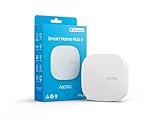
- Powered by SmartThings: Connect, monitor, and automate your home through the SmartThings app. Build a reliable, unified smart home using Samsung's proven ecosystem
- Matter + Zigbee Smart Home Hub: Supports the newest Matter standard plus Zigbee for lighting, sensors, plugs, switches, thermostats, and more - thousands of compatible devices. PLEASE NOTE: Z-Wave not supported
- Easy Setup with Wi-Fi or Ethernet: Get started in minutes using Wi-Fi or a wired Ethernet connection for apartments, houses, and expanding smart home systems - Z-Wave not supported
- Automations That Work for You: Create custom routines for security, lighting, comfort, and energy savings. Many local automations continue working even if your internet goes offline
- Wide Device Compatibility: Connect compatible smart devices from Aeotec and many other brands to build a unified system for lighting, voice control, energy management, and climate settings
Keep the reason for each step understandable
Automations become harder to maintain when their purpose is no longer obvious. Home Assistant’s 2026.6 release announcement, published June 3, 2026, describes a Notes field for automation and script steps. The announcement says those notes travel with automations when they are duplicated, exported, or shared as a blueprint. This is a release-specific feature; check your installed Home Assistant version before looking for it in the interface. Details are in the 2026.6 release announcement.
What an honest first-person account needs
The software documentation can explain how automation flows work, but it cannot establish which devices someone uses, whether a particular setup has been reliable, or what changed their feelings about automation. A genuine personal account should connect the mechanics to the writer’s own confirmed example: the routine before automation, the trigger and action they set up, what happened in practice, and why that experience mattered to them. Without those details, it is more accurate to describe documented possibilities than to claim a personal transformation.
Do these 3 things before closing this tab:
1Repair Windows errors before they cause bigger problems2Scan for outdated or missing drivers - takes under a minute3Clear out junk files and repair common Windows errorsQuick Recap
Product prices and availability are accurate as of the date/time indicated and are subject to change. Any price and availability information displayed on Amazon at the time of purchase will apply.

