
FR3 could give future 6G networks in India more room for capacity than traditional mid-band, while avoiding some of the short-range limitations associated with much higher frequencies. But it is a candidate future layer, not a spectrum band India has already allocated wholesale for commercial 6G: the government’s current roadmap separates bands available or planned for IMT from ranges still under international study.
What FR3 means—and what it does not
FR3 is commonly used for the upper-mid-band range of roughly 7–24 GHz. It is a potential spectrum layer for future wireless systems, not a single band with one uniform regulatory status. The technical literature describes the opportunity and challenges of 7–24 GHz while noting that measurements in this range remain limited. Cui, Zhang and Pollin’s 2023 review of 6G in the 7–24 GHz band is one overview.
| # | Preview | Product | Price | |
|---|---|---|---|---|
| 1 |

|
TP-Link AXE5400 Tri-Band WiFi 6E Router, 2025 PCMag Editors' Choice | $89.99 | Buy on Amazon |
| 2 |

|
TP-Link BE6500 Dual-Band WiFi 7 Router (BE400) | $114.98 | Buy on Amazon |
| 3 |

|
TP-Link AX1800 WiFi 6 Router (Archer AX21 V5) | $59.98 | Buy on Amazon |
| 4 |
|
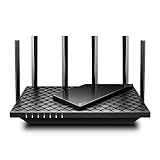
TP-Link AX5400 WiFi 6 Router (Archer AX73) | $105.29 | Buy on Amazon |
India’s 6 GHz planning should not be conflated with FR3. The Department of Telecommunications (DoT) lists certain frequencies below 7 GHz for IMT, while ranges beginning at 7.125 GHz are among the candidates being studied for possible future identification. A band’s inclusion in a study or roadmap is not the same as a final Indian assignment, a commercial network launch, or a guarantee that compatible phones and radios will be available.
How FR3 could affect coverage and capacity
More spectrum could create room for capacity
Higher frequencies can offer access to wider channels, potentially allowing operators to carry more data in busy locations and to reuse spectrum across nearby cells. That makes FR3 a possible capacity layer for places such as dense urban areas, transport hubs, or campuses—if suitable spectrum is identified, equipment is available, and deployment costs make sense. The DoT describes 1–7 GHz mid-band as a “coverage and capacity layer” for 5G and early 6G, but spectrum quantities in its roadmap are planning figures, not user-speed or network-capacity measurements. DoT, Spectrum Roadmap for 6G services (2026).
Quick wins for a faster PC:
Clear out junk files and repair common Windows errorsFree Scan →Scan for outdated or missing drivers - takes under a minuteDriver Scan →#1 Best Overall
- Tri-Band WiFi 6E Router - Up to 5400 Mbps WiFi for faster browsing, streaming, gaming and downloading, all at the same time(6 GHz: 2402 Mbps;5 GHz: 2402 Mbps;2.4 GHz: 574 Mbps)
- WiFi 6E Unleashed – The 6 GHz band brings more bandwidth, faster speeds, and near-zero latency; Enables more responsive gaming and video chatting
- Connect More Devices—True Tri-Band and OFDMA technology increase capacity by 4 times to enable simultaneous transmission to more devices
- Unique Design, More RAM, Better Processing - A unique housing design provides optimal heat dissipation, combined with a 1.0 GHz dual-core CPU and 512 MB High-Speed Memory, the AXE75 is designed for long-term reliability and performance.
- EasyMesh-compatible - Extend network range even more by adding EasyMesh-compatible routers, extenders, or wireless powerline adapters for a seamless, whole-home connection. Eliminate dead zones, drops, and lag as you move across your home.
Coverage would depend on the network, not just the frequency
As frequency rises, propagation and obstruction losses generally make broad-area and indoor coverage more challenging. FR3 may offer a middle ground between established mid-band and very high-frequency mmWave or sub-terahertz approaches, but it should not be assumed to match the coverage of India’s 3.5 GHz networks on the same sites. The Bharat 6G Alliance says reusing the existing site grid becomes more challenging as bands move above 3.5 GHz; techniques such as extreme MIMO and higher effective isotropic radiated power may mitigate the challenge to some extent. Bharat 6G Alliance, Spectrum Roadmap for 6G in India.
In practice, the capacity gain and coverage footprint would depend on channel width, antenna systems, obstructions, site spacing, device support, and rules for protecting other users of the spectrum. Operators may need denser sites or upgraded antennas in some areas. A wider channel can help a cell carry more traffic; it does not by itself make that cell reach farther.
Rank #2
- 𝐅𝐮𝐭𝐮𝐫𝐞-𝐑𝐞𝐚𝐝𝐲 𝐖𝐢-𝐅𝐢 𝟕 - Designed with the latest Wi-Fi 7 technology, featuring Multi-Link Operation (MLO), Multi-RUs, and 4K-QAM. Achieve optimized performance on latest WiFi 7 laptops and devices, like the iPhone 16 Pro, and Samsung Galaxy S24 Ultra.
- 𝟔-𝐒𝐭𝐫𝐞𝐚𝐦, 𝐃𝐮𝐚𝐥-𝐁𝐚𝐧𝐝 𝐖𝐢-𝐅𝐢 𝐰𝐢𝐭𝐡 𝟔.𝟓 𝐆𝐛𝐩𝐬 𝐓𝐨𝐭𝐚𝐥 𝐁𝐚𝐧𝐝𝐰𝐢𝐝𝐭𝐡 - Achieve full speeds of up to 5764 Mbps on the 5GHz band and 688 Mbps on the 2.4 GHz band with 6 streams. Enjoy seamless 4K/8K streaming, AR/VR gaming, and incredibly fast downloads/uploads.
- 𝐖𝐢𝐝𝐞 𝐂𝐨𝐯𝐞𝐫𝐚𝐠𝐞 𝐰𝐢𝐭𝐡 𝐒𝐭𝐫𝐨𝐧𝐠 𝐂𝐨𝐧𝐧𝐞𝐜𝐭𝐢𝐨𝐧 - Get up to 2,400 sq. ft. max coverage for up to 90 devices at a time. 6x high performance antennas and Beamforming technology, ensures reliable connections for remote workers, gamers, students, and more.
- 𝐔𝐥𝐭𝐫𝐚-𝐅𝐚𝐬𝐭 𝟐.𝟓 𝐆𝐛𝐩𝐬 𝐖𝐢𝐫𝐞𝐝 𝐏𝐞𝐫𝐟𝐨𝐫𝐦𝐚𝐧𝐜𝐞 - 1x 2.5 Gbps WAN/LAN port, 1x 2.5 Gbps LAN port and 3x 1 Gbps LAN ports offer high-speed data transmissions.³ Integrate with a multi-gig modem for gigplus internet.
- 𝐎𝐮𝐫 𝐂𝐲𝐛𝐞𝐫𝐬𝐞𝐜𝐮𝐫𝐢𝐭𝐲 𝐂𝐨𝐦𝐦𝐢𝐭𝐦𝐞𝐧𝐭 - TP-Link is a signatory of the U.S. Cybersecurity and Infrastructure Security Agency’s (CISA) Secure-by-Design pledge. This device is designed, built, and maintained, with advanced security as a core requirement.
What India’s spectrum roadmap says
DoT’s 2026 roadmap divides planning into short-term (2025–2026), medium-term (2027–2030), and long-term (2031–2035) periods, aligned with international processes including WRC-27. Its near-term status and study candidates are distinct:
| Frequency range | Roadmap status | What that means for 6G |
|---|---|---|
| 6425–6725 MHz and 7025–7125 MHz | 400 MHz described as made available for IMT in the 2025–2026 short-term plan, with restrictions to protect space-based services. | Potential IMT spectrum in the broader 6 GHz area; it is not the same as saying all FR3 spectrum is allocated. |
| 6725–7025 MHz | 300 MHz planned for IMT in the 2027–2030 medium-term plan, subject to restrictions. | A future planning item, not a present-day commercial 6G assignment. |
| 7125–8400 MHz, or selected portions | Listed for WRC-27 studies on sharing, compatibility, and technical conditions. | Possible future IMT identification is still subject to international and subsequent Indian assessment. |
| 14.8–15.35 GHz | Also listed for WRC-27 studies; possible Indian refarming would be assessed after IMT identification. | A study candidate, not an established Indian mobile-network band. |
The 400 MHz and 300 MHz figures are amounts of spectrum described in the roadmap, not predicted throughput, coverage, or a commitment to deploy a network by those dates. DoT says the ranges under WRC-27 study would be assessed for possible refarming in India after an international IMT identification decision. A Ministry of Communications parliamentary reply in December 2024 likewise described the ranges as under international study and said identification would be decided at WRC-27. Ministry of Communications, parliamentary reply, 11 December 2024.
Rank #3
- DUAL-BAND WIFI 6 ROUTER: Wi-Fi 6(802.11ax) technology achieves faster speeds, greater capacity and reduced network congestion compared to the previous gen. All WiFi routers require a separate modem. Dual-Band WiFi routers do not support the 6 GHz band.
- AX1800: Enjoy smoother and more stable streaming, gaming, downloading with 1.8 Gbps total bandwidth (up to 1200 Mbps on 5 GHz and up to 574 Mbps on 2.4 GHz). Performance varies by conditions, distance to devices, and obstacles such as walls.
- CONNECT MORE DEVICES: Wi-Fi 6 technology communicates more data to more devices simultaneously using revolutionary OFDMA technology
- EXTENSIVE COVERAGE: Achieve the strong, reliable WiFi coverage with Archer AX1800 as it focuses signal strength to your devices far away using Beamforming technology, 4 high-gain antennas and an advanced front-end module (FEM) chipset
- OUR CYBERSECURITY COMMITMENT: TP-Link is a signatory of the U.S. Cybersecurity and Infrastructure Security Agency’s (CISA) Secure-by-Design pledge. This device is designed, built, and maintained, with advanced security as a core requirement.
Why the distinction matters for “the 7 GHz band”
There is no single 7 GHz status to apply across the whole range. The roadmap treats 7025–7125 MHz as part of the 400 MHz made available for IMT in the 2025–2026 plan, while 7125–8400 MHz is listed for WRC-27 study. The boundary matters: calling all of 7–8 GHz “allocated for 6G” would overstate the current position. Any use also depends on applicable restrictions and protection of incumbent services.
Independent reader supportYour contribution helps us test, update, and keep practical guides available for everyone.What will determine whether FR3 is useful in India
Whether FR3 improves service will depend on several linked decisions and practical constraints:
Rank #4
- 𝐆𝐢𝐠𝐚𝐛𝐢𝐭 𝐖𝐢𝐅𝐢 𝐟𝐨𝐫 𝟖𝐊 𝐒𝐭𝐫𝐞𝐚𝐦𝐢𝐧𝐠 – Up to 5400 Mbps WiFi for faster browsing, streaming, gaming and downloading, all at the same time. Performance varies by conditions, distance to devices, & obstacles such as walls.
- 𝐅𝐮𝐥𝐥 𝐅𝐞𝐚𝐭𝐮𝐫𝐞𝐝 𝐖𝐢𝐅𝐢 𝟔 𝐑𝐨𝐮𝐭𝐞𝐫 – Equipped with 4T4R and HE160 technologies on the 5 GHz band to enable max 4.8 Gbps ultra-fast connections.Power:12 V 2.5 A
- 𝐂𝐨𝐧𝐧𝐞𝐜𝐭 𝐌𝐨𝐫𝐞 𝐃𝐞𝐯𝐢𝐜𝐞𝐬 – Supports MU-MIMO and OFDMA to reduce congestion and 4X the average throughput
- 𝐄𝐱𝐭𝐞𝐧𝐬𝐢𝐯𝐞 𝐂𝐨𝐯𝐞𝐫𝐚𝐠𝐞 - Covers up to 2,000 sq. ft. High-Power FEM, 6× Antennas, Beamforming, and 4T4R structures combine to adapt WiFi coverage to perfectly fit your home and concentrate signal strength towards your devices.
- 𝐌𝐨𝐫𝐞 𝐕𝐞𝐧𝐭𝐬, 𝐋𝐞𝐬𝐬 𝐇𝐞𝐚𝐭 – Improved vented areas help unleash the full power of the router
- Usable bandwidth: How much contiguous spectrum can be made available for mobile use, and under what technical conditions.
- Coverage and site economics: Whether the added capacity justifies new sites, denser deployments, or upgrades to existing locations, especially beyond dense urban areas.
- Coexistence: How mobile systems can operate while protecting space-based and other incumbent services, as required by restrictions and technical conditions.
- Equipment and devices: Whether standards, network radios, antennas, and consumer devices support the relevant bands. The Ministry’s 2024 reply linked deployment to the availability of a device ecosystem.
- International harmonization: Whether WRC-27 identifies the candidate bands for IMT and what conditions follow, before India considers any further action.
The Bharat 6G Alliance’s roadmap is an ecosystem analysis and set of recommendations, not a binding government allocation. The Ministry of Communications reported that the Bharat 6G Alliance had 90 member organisations as of 15 July 2026, alongside work on a 6G terahertz testbed and support for eligible startups and MSMEs participating in standards work. These are signs of research and ecosystem activity, not evidence that FR3 6G service is commercially deployed. Press Information Bureau, “Bharat 6G Alliance and Spectrum Roadmap for 6G in India,” 22 July 2026.
What consumers and businesses should expect
FR3 is best understood as one possible component of a future multi-band network: lower bands can support wider-area reach, established mid-band can balance coverage and capacity, and higher bands may add capacity where traffic is concentrated. The exact role of FR3 in India will depend on spectrum decisions, standards, network economics, and device availability. The sources cited here do not establish an Indian commercial FR3 6G deployment or compatible consumer device.
Quick Recap
Product prices and availability are accurate as of the date/time indicated and are subject to change. Any price and availability information displayed on Amazon at the time of purchase will apply.

