
Quick wins for a faster PC:
Repair Windows errors before they cause bigger problemsFix Now →Scan for outdated or missing drivers - takes under a minuteDriver Scan →Businesses can use chatbots to answer routine questions, guide customers through simple tasks, and direct requests to the right support channel. The strongest deployments start with a specific customer need, explain clearly that the interaction is automated, and make it easy to reach a person when the bot cannot help.
What a customer-support chatbot can—and cannot—do
A chatbot is an application that can help a customer without a human advisor. That differs from webchat, which is an online conversation with a human advisor. Some services combine automation and human support, but the distinction matters: customers should know whether they are speaking with software or a person. The UK Government Digital Service explains the difference in its guidance on chatbots and webchat.
A chatbot is most useful when a business can identify a recurring request, supply a reliable answer or simple next step, and define what happens when the request falls outside the bot’s abilities. It is not a substitute for a clear support site, good search, or human help. In some cases, improving those existing resources is a better solution than adding a chatbot.
Choose the chatbot approach for the task
Chatbots can use one approach or combine several. Choose based on what customers need to accomplish, not on which technology sounds most advanced.
Recommended Free Tools
#1 Best Overall
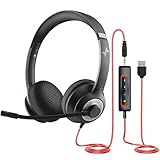
- ✅【Outstanding Noise cancelling Microphone】 The headphones with unidirectional boom 270°microphone that only picks up your voice and block out unwanted background noises. Also, you can wear it on the left or right ear as you like.
- ✅【All-Day Comfort for All Head Shape】 Eaglend always designed for all-day comfort using, there will be no restraint pressure, with the adjustable headbend fit adult and kids easily.The soft protein memory foam earpads is made of high-level breathable materials,ROHS certified materials prevent your ears from heat and sweat.
- ✅【Enhanced sound performance & 40mm audio driver】:Corded phone headset with built-in audio sound card, Eaglend sound lab tested thousands of times for your daily conversation/music/movie/gaming, bringing you extra clear and bass for pleasant experience.
- ✅【USB/3.5mm Connection】 The headphone is designed for multiple use, 3.5mm audio cable with USB In-line audio volume control (cord length 5+4 feet),with mic mute &indicators /speaker mute.Compatible with PC/Tablet/Mac/iOS/laptop /Android phone and other devices."
- ✅【Global warranty &multi-purpose】24 months warranty by eaglend. Great ideal for online courses, Skype chat, call center, Webinars Presentations, Office, Business, Rosetta Stone, Dragon Speaking, Conference Calls and more.
| Approach | How it works | Best fit | Important limit |
|---|---|---|---|
| Menu-based | Offers buttons or options that guide customers along predefined paths. | Requests with a small number of predictable choices, such as finding a support topic or selecting a service category. | Customers may not find a useful path if their request does not match the available options. |
| Keyword recognition | Looks for words or phrases in a message and connects them to a prepared answer or action. | Frequently asked questions with recognizable wording. | Different wording, spelling, or an unexpected question can lead to a poor match. |
| Natural-language processing (NLP) | Interprets a customer’s message to match it to an intent or response; implementations vary. | Services where customers phrase the same need in different ways. | It still needs well-organized support information, testing, monitoring, and a way to handle uncertain or incorrect answers. |
The categories and examples above follow the UK Government Digital Service’s chatbot and webchat guidance. More advanced language processing does not remove the need to set boundaries or offer a route to human support.
What businesses can use chatbots for
Start with a narrow support problem and a clear definition of success. Suitable initial tasks are those for which the business can maintain accurate information and give customers a useful outcome without requiring unsupported judgment.
- Answer common questions: Provide concise answers drawn from maintained help or FAQ content.
- Guide customers to information: Help people find the right support article, service page, or next step.
- Route a request: Ask a limited set of questions to identify the right topic or support channel.
- Support a simple, bounded process: Walk through a task when the instructions and possible outcomes are clear.
- Recognize when it cannot help: Invite a customer to rephrase or move to an appropriate human or alternative channel instead of repeating an unhelpful answer.
Do not make the bot responsible for decisions or advice it cannot safely and reliably provide. Where an answer may affect a customer’s consumer decision, the UK Competition and Markets Authority says businesses should consider disclosing AI involvement and should not mislead people about an agent’s role or capabilities. Its consumer-law guidance on AI agents was published 9 March 2026 and applies to UK consumer-law considerations.
Plan a focused first release
1. Find a real, recurring customer need
Review past inquiries, chat logs, common concerns, web analytics, and customer feedback to see what people repeatedly ask and where they get stuck. Write down the specific customer task, the useful answer or next step, and the cases the bot must hand off. If the problem is that customers cannot find accurate information, improve the content, navigation, or site search before assuming a chatbot is the answer.
What’s actually slowing this PC down?
Pick the symptom - the matching free tool is one click away.
2. Decide whether to build, buy, or improve what you have
Compare a build-or-buy option against the existing support process and non-chat alternatives. Assess how a proposed tool fits current content and processes, what integrations the task requires, how its data is handled, who will maintain its answers, and how a person can take over. The Government Digital Service recommends considering these questions when deciding whether to use chatbots or webchat tools.
3. Define the bot’s scope and boundaries
Choose a small set of tasks for the initial release. For each one, specify what information the bot may use, what counts as a successful answer or action, what it must not attempt, and which route to offer when it cannot help. Prefer simple, focused transactions over a broad promise to answer every question.
Rank #2

- Digital Stereo Sound: Fine-tuned drivers provide enhanced digital audio for music, calls, meetings and more
- Rotating Noise Canceling Mic: Minimizes unwanted background noise for clear conversations; the rotating boom arm can be tucked out of the way when you’re not using it
- Handy In-line Controls: Simple in-line controls on the headset cable let you adjust the volume or mute calls without disruption
- Plug-and-Play USB Computer Headset: Simply plug the USB-A connector into your computer and you’re ready to talk or listen without the need to install software
- Padded Comfort: Comfortable headphones with adjustable headband features swivel-mounted, leatherette ear cushions for hours of comfort and is easy to clean
4. Prepare and maintain the knowledge behind it
Use clear, current support content as the bot’s foundation. For an NLP system, structure and classify information so it can connect customer intents to the right material, including different ways people may express the same need. Keep the underlying FAQ and help content up to date: automation cannot compensate for information the business has not written, checked, or maintained.
5. Set expectations in the opening message
Tell customers that the service is automated, state what it can help with, and identify its limits. Give examples of useful questions when that would help people get started. Do not present the bot in a way that implies it is a human advisor. Put it where customers are likely to need support, using service and contact patterns to guide placement; poor placement can make customers miss either the tool or the information they need.
PC Slower Than It Used to Be?
A free scan shows the junk files, broken settings and background clutter dragging Windows down - then fixes them in one click.Free scan · Windows 10 & 11Outdated Drivers Are Slowing You Down
One free scan finds every outdated or missing driver and matches the right update for your exact hardware.Free scan · exact hardware match6. Design for misunderstandings and handoffs
Use concise language. Show customers when the bot has understood a request, and explain when it needs them to rephrase. Define an exit from repeated or unproductive exchanges. Offer transfer to a person, human webchat, telephone, or another suitable channel when the bot cannot resolve the request, and preserve those alternatives rather than making automation the only way to get help. Where it is useful to customers, provide a transcript or other record of the conversation.
7. Test, launch, and improve in measured steps
Test whether people can complete the intended task before launch, including on desktop and mobile. Check common phrasings as well as misunderstandings and requests outside scope. After release, review customer feedback and complaints, answer quality, task completion, and whether the bot is behaving as intended. Use what you learn to correct the content or interaction, and expand scope gradually rather than treating a launch as proof that the bot is working well.
A Federal Student Aid implementation account published by Digital.gov describes offering an agent or a self-service knowledge center when a chatbot does not know an answer. It also emphasizes experimentation and using results to improve customer experience; see Digital.gov’s account (7 April 2021). That account is an implementation example, not evidence of the present-day status of a particular product.
Protect customer access, privacy, and safety
Keep human help reachable
Provide an obvious way out of the bot and ensure the alternative channel works for the kinds of requests the bot cannot resolve. Human support is particularly important for unclear, sensitive, or consequential cases. In Gartner’s survey of 3,566 B2B and B2C customers, conducted in February and March 2026, 87% said it was essential for companies using generative AI in customer service to provide an option to reach a human agent. This is a survey finding, not a guarantee of behavior in every sector or geography. Gartner’s 4 August 2026 announcement also quotes its analyst Eric Keller: “Service leaders should not use GenAI as a mandatory first step for every issue.”
Rank #3
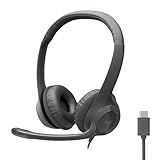
- Digital Stereo Sound: Fine-tuned drivers provide enhanced digital audio for calls, meetings, music, and more
- Rotating Noise-Canceling Mic: Minimizes unwanted background noise for clear conversations; the rotating boom arm can be tucked out of the way when not in use
- Handy Inline Controls: Simple inline controls on the headset cable let you adjust the volume or mute calls without disruption
- USB-C Plug-and-Play: Simply plug the USB-C cable into your computer, including MacBook Neo laptops, and you're ready to talk or listen without installing software.
- Padded Comfort: Comfortable USB C headphones with adjustable headband feature swivel-mounted, leatherette ear cushions for hours of comfort
Collect as little information as the task needs
Do not ask for personal information simply because the chatbot can collect it. Review the provider’s reputation, third-party dependencies, data ownership, data use and storage, privacy practices, and incident response. Understand what information is passed between the bot and connected systems, and limit it to what the defined task requires.
Review the vendor and contract
For a purchased service, determine how the provider handles data and security, what happens if there is an incident, and whether the service’s reliability meets the business’s needs. The Australian Cyber Security Centre recommends addressing data protection, breach notification, and uptime in business contracts. Its AI guidance for small businesses is Australian government advice; legal obligations depend on the business’s location and circumstances.
Apply human oversight to consequential outputs
Test AI agents before and after launch, monitor their performance, and keep qualified people involved where errors could cause harm. The Australian Cyber Security Centre specifically recommends qualified human review before acting on chatbot responses in legal, medical, or financial advice scenarios. The UK CMA likewise recommends testing, performance monitoring, and human oversight for AI agents, noting that models can misinterpret information or generate inaccurate results. Businesses remain responsible for what their agents do, including agents supplied by a third party.
Independent reader supportYour contribution helps us test, update, and keep practical guides available for everyone.Measure whether the chatbot is helping
Choose measures that reflect the task and the customer outcome rather than the volume of conversations alone. For a bot intended to answer a known set of questions, review whether it gives correct answers and whether customers can find the relevant information. For a guided process, assess whether customers reach the intended outcome and where they abandon or need a handoff. Pair those observations with complaints, feedback, and checks for errors or unintended behavior. Use findings to update the content, boundaries, or escalation path.
Gartner reported that 50% of surveyed customers said interactions were easier when companies used generative AI for customer service. In the same February–March 2026 survey of 3,566 B2B and B2C customers, 58% of customers who use generative AI said they had used it to complete a task; in B2B environments, the figure was 74%. These survey results should not be treated as universal customer behavior or as proof that a particular chatbot will improve a business’s service.
Accessibility and inclusive service
Test the chatbot with the devices and ways of expressing a request that customers actually use. Keep language understandable, make the conversation workable on mobile as well as desktop, and do not let the bot block access to relevant support information or another contact channel. Provide an alternative when a customer cannot use the automated interaction or the bot cannot understand the request. Repeat usability checks as content and service behavior change.
Rank #4

- Digital Stereo Sound: Fine-tuned drivers provide enhanced digital audio for music, calls, meetings and more
- Rotating Noise Canceling Mic: Minimizes unwanted background noise for clear conversations; the rotating boom arm can be tucked out of the way when you’re not using it
- Handy In-line Controls: Simple in-line controls on the headset cable let you adjust the volume or mute calls without disruption
- Plug-and-Play USB Computer Headset: Simply plug the USB-A connector into your computer and you’re ready to talk or listen without the need to install software
- Padded Comfort: Comfortable headphones with adjustable headband features swivel-mounted, leatherette ear cushions for hours of comfort and is easy to clean
Frequently Asked Questions
Is a chatbot the same as live chat?
No. A chatbot can help without a human advisor; live webchat is a conversation with a human advisor. Some support services combine automated and human interactions, so explain which is in use at each point.
Should a small business use a chatbot?
It may make sense when the business has a recurring, bounded support task and can maintain accurate answers, monitor results, and provide another way to get help. If customers mainly struggle to find information, improving the website or search may be the more direct fix.
Can a chatbot replace customer-support staff?
A chatbot can handle defined tasks, but customers still need a route to a person for cases the bot cannot resolve, sensitive matters, or consequential decisions. Keep human support available rather than making a bot a mandatory first step.
What should a chatbot say when it does not know?
It should be candid that it cannot answer, avoid repeating an unhelpful response, and offer a clear next step such as rephrasing, a relevant help resource, or contact with a person.
What should a business review before buying an AI chatbot?
Check how the tool fits the support task and existing processes, what content and integrations it depends on, how the provider handles data and security, how the business will maintain and monitor it, and how customers can reach human help. For higher-risk advice or actions, arrange qualified human review.
Quick Recap
Product prices and availability are accurate as of the date/time indicated and are subject to change. Any price and availability information displayed on Amazon at the time of purchase will apply.
The Tool Desk
Outbyte Driver Updater FREEFix the driver behind crashes, sound loss and screen glitchesFind Drivers →Outbyte PC Repair FREEClear out junk files and repair common Windows errorsFree Scan →
