
Do these 3 things before closing this tab:
1Fix the driver behind crashes, sound loss and screen glitches2Clear out junk files and repair common Windows errors3Scan for outdated or missing drivers - takes under a minuteAutomated license plate readers (ALPRs, also called ANPR in the UK) capture a vehicle’s registration plate and associate the read with details such as the time and location. Depending on the system, the record may also include the plate image and other information. A read does not have to match a wanted-vehicle list to be stored: ordinary reads may be retained and searched later, subject to the agency’s rules and the system’s retention limits.
What happens next depends on the jurisdiction and the agency operating or using the system. Data may stay in a local police database, be hosted by a technology vendor, or enter a national platform. Retention periods, access rules, and sharing arrangements are not uniform.
What an ALPR system captures
An ALPR camera detects a vehicle’s plate and uses software to convert the image into a searchable plate number. The system can associate that read with contextual information, especially when and where the camera recorded it. It may also retain the image itself and related record fields. The exact fields depend on the system and the responsible agency; a person’s name, address, date of birth, or criminal-charge information is not an inherent part of every plate read.
Systems may compare reads with a hot list, such as records of vehicles of interest. A match can prompt an alert, but systems may also store reads that produced no alert. In a 2019 audit, the California State Auditor found that 99.9 percent of the 320 million images Los Angeles stored during the audited period concerned vehicles that were not on a hot list when imaged. That is a historical finding about one agency’s data, not a current figure for Los Angeles or a general estimate for all ALPR systems.
Quick wins for a faster PC:
Fix the driver behind crashes, sound loss and screen glitchesFind Drivers →Clear out junk files and repair common Windows errorsFree Scan →#1 Best Overall
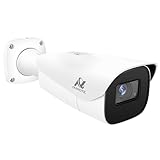
- Compatibility-- Only Work With ONWOTE TD Series NVR (PNT-808, PNA-8016-T, PNT-1232).
- LPR-- License Plate Recognition IP Network PoE Camera.
- 4MP Resolution-- 2592×1520 @30fps for sharp and fluid video.
- 1/1.8" Low-Light Image Sensor-- Ensuring clear images even in dim conditions.
- 8-32mm Motorized Varifocal Lens @F1.6 for adjustable field of view.
Where the cameras are placed
Collection can use fixed roadside cameras, movable or mobile units, cameras covering multiple lanes, systems integrated with CCTV, or covert camera arrangements. The UK National ANPR Service impact assessment identifies these as collection sources for its national system. Other deployments can differ in camera placement, coverage, and collection practices.
Where the data goes after a camera reads a plate
Once captured, a record can be stored in an agency’s own system, in a vendor-hosted cloud service, or in a national platform. Some deployments may use more than one system. The storage location and the organization that controls the data are separate questions: a vendor may host a database while an agency sets the authorized purposes and access rules.
Vendor contracts matter because they define responsibilities for protecting data, handling access, and responding to incidents. In its 2019 audit of four California agencies, the State Auditor found that three used cloud-storage vendors without contract guarantees that the vendors would appropriately protect ALPR data. This audit finding describes those agencies at that time; it does not establish the terms of current contracts elsewhere.
Who can search ALPR records, and how access is controlled
Access policies generally specify who may use the system, for what purposes, and under what authorization. A useful policy should make clear how a user’s role limits searches, what justifications are required, and who approves sensitive or extended access. The existence of a written policy alone does not show that every search is appropriate or that the controls are consistently enforced.
Rank #2

- LICENSE PLATE RECOGNITION CAMERA - Features 8mm - 32mm lens for an 15° - 40° Viewing Angle. F1.6 Max Aperture, 1/1.8" 4-Megapixel CMOS Image Sensor and License Plate Recognition Distance 26.25ft - 98.43ft. Supports recognizing vehicle type, vehicle color, and license plate details. Supports IVS, Tripwire & Intrusion as well as displaying vehicle plate, vehicle path & loitering detection.
- SMARTER SECURITY – Query and review license plate details professionally on a PC using a web browser. Works with most standard web browsers however for an optimal experience it is recommended to use Microsoft Edge in IE mode as the camera may require the use of a .exe plugin. Supports storage to a MicroSD Card (up to 256GB), PC/Windows only supports SFTP, IE mode in Microsoft Edge, Firefox, Chrome (limited query options).
- ACTIVE DETERRENTS – This outdoor POE IP LPR camera features a heavy-duty metal weatherproof IP67 housing as well as 4 IR LEDs for night vision up to 98 feet, includes red/blue warning LEDs which can be used as an active deterrent. Dual H.265/H.264 compression allows for maximum encryption with the latest technology as well as backwards compatibility with legacy platforms.
- SIMPLE, RELIABLE, SECURE – This Amcrest POE camera features a secure connection. At Amcrest, we want to ensure the safety of our customers, their loved ones, homes and businesses. Compatible with the following Amcrest AI NVR's for live view purposes only: B0C381YK91, B0CDHDHPR8, B0CBL8W9NY, B0D464HMBB, B0D47X8WJJ
For UK agencies connected to the National ANPR Capability, version 3.5 of the Home Office’s National ANPR standards for policing and law enforcement, updated July 29, 2026, requires written policies and says access must be proportionate to the circumstances and rights involved. The standards call for logs of data capture, alterations, searches, and administrator or user access, including the user’s identity, justification, time, and relevant authorization. These requirements apply to the UK national capability, not to U.S. agencies generally.
Logs make it possible to review who accessed a record and why, but oversight also depends on whether an agency regularly checks those logs, investigates questionable searches, and acts on violations. The California State Auditor’s 2019 review of four agencies identified weaknesses in access oversight, account safeguards, written policies, and system auditing.
How long ALPR data is kept
There is no single retention period for all ALPR data. The period can depend on the system, jurisdiction, and whether a record is preserved for a specific legal or investigative reason. These two published examples illustrate why a retention figure must be tied to the system it describes.
| System or agency | Published retention information | Scope |
|---|---|---|
| UK National ANPR Service and related national systems | 12 months, followed by automatic deletion, unless data is preserved under applicable criminal-procedure provisions | Stated in the UK National ANPR Service impact assessment; not a general UK rule for every camera system or a rule for the United States. |
| Palo Alto | 30-day local retention limit | Described on the city’s public information page; applies to the local system described there, not to other agencies. |
Deletion rules should also distinguish routine expiration from records preserved under an exception. The California State Auditor found in its 2019 audit that agencies might retain images longer than necessary. That finding is a warning about implementation and oversight in the audited agencies, not evidence that all ALPR systems exceed their retention rules.
Free tools Windows power users keep installed
One-click scans. No signup required.
Rank #3

- 𝐄𝐧𝐡𝐚𝐧𝐜𝐞𝐝 𝐃𝐮𝐚𝐥-𝐂𝐚𝐦𝐞𝐫𝐚 𝐂𝐥𝐚𝐫𝐢𝐭𝐲 𝐚𝐭 𝐔𝐩 𝐭𝐨 𝟒𝟎 𝐟𝐭 (𝟏𝟐 𝐦): Capture every event around your home in ultra-clear 3K resolution. Enjoy sharp, detailed visuals with 8× zoom to see what matters most.
- 𝐒𝐨𝐥𝐚𝐫-𝐏𝐨𝐰𝐞𝐫𝐞𝐝, 𝐈𝐧𝐬𝐭𝐚𝐥𝐥 𝐎𝐧𝐜𝐞 𝐚𝐧𝐝 𝐢𝐭 𝐑𝐮𝐧𝐬 𝐅𝐨𝐫𝐞𝐯𝐞𝐫: Experience constant peace of mind with this solar-powered security camera that's easy to set up and always on, thanks to its removable solar panel.
- 𝟑𝟔𝟎° 𝐆𝐮𝐚𝐫𝐝𝐢𝐚𝐧, 𝐍𝐨 𝐁𝐥𝐢𝐧𝐝 𝐒𝐩𝐨𝐭𝐬: Say goodbye to blind spots with full home coverage by installing the product vertically. Enjoy 360° Pan & Tilt Surveillance , check your front porch, monitor your backyard, and keep an eye on the driveway with ease.
- 𝐕𝐞𝐫𝐬𝐚𝐭𝐢𝐥𝐞 𝐈𝐧𝐬𝐭𝐚𝐥𝐥𝐚𝐭𝐢𝐨𝐧, 𝐄𝐟𝐟𝐨𝐫𝐭𝐥𝐞𝐬𝐬 𝐒𝐞𝐭𝐮𝐩: Experience the convenience of a 7-minute installation with its compact size and wire-free design.
- 𝐑𝐞𝐬𝐭 𝐚𝐬𝐬𝐮𝐫𝐞𝐝 𝐬𝐞𝐫𝐯𝐢𝐜𝐞: you can enjoy a worry-free experience, all backed by our professional customer service team.
How ALPR data is shared
Agencies may share records with other law-enforcement organizations, and some arrangements can involve other public bodies. Sharing can broaden the number of people and organizations able to search or receive a record beyond the agency that operates the camera. The relevant policy or agreement should identify permitted recipients, purposes, and conditions for access or disclosure.
UK national standards require use and disclosure to comply with the standards and applicable law. They also describe formal written agreements for certain cases in which non-law-enforcement organizations own equipment used for shared collection. These are safeguards for the UK national capability, not a description of every agency’s arrangements.
Written agreements are not proof that access is limited effectively. In its 2019 audit of four California agencies, the State Auditor found that three had shared images with hundreds of entities around the United States but could not provide evidence that they had determined whether those entities had a right or need to access the images. The same audit reported weaknesses in vendor contracts, written policies, account safeguards, access oversight, and system auditing. These results concern the four agencies examined and should not be read as a nationwide measurement of current practice.
How to evaluate an ALPR system’s safeguards
If you are reviewing a local deployment, look for the agency’s current policy and records that explain how the system works in practice. These questions help distinguish a camera’s basic function from the rules governing its data.
- Collection: What fields are recorded with each read? Are images retained? Which camera types and locations contribute data?
- Control and storage: Which agency is responsible for the records, where are they stored, and what role does a technology vendor play?
- Retention and deletion: What is the routine retention period? Are there exceptions for preserved records, and how is deletion carried out or verified?
- Access: Which users can search records, for what purposes, and what approvals or justifications are required?
- Sharing: Which agencies or other organizations may receive or query data? Are written agreements in place, and do they limit purpose and onward disclosure?
- Oversight: Are searches and user activity logged? Who reviews the logs, how are violations handled, and what audits or public reports are available?
- Vendor protections: Do contracts set security responsibilities, access restrictions, incident procedures, and rules for returning or deleting data?
- Public accountability: Where can residents find the policy, retention schedule, sharing agreements, audit reports, and the agency’s complaint or oversight process?
For a specific system, use that agency’s current policy and agreements rather than assuming that a rule published for another city, state, or country applies. Retention examples and audit findings are useful context, but the governing documents determine what the system is authorized to do.
Quick Recap
Product prices and availability are accurate as of the date/time indicated and are subject to change. Any price and availability information displayed on Amazon at the time of purchase will apply.

