
Recommended Free Tools
Phone location is not the same thing as GPS. GPS is one source a phone can use; the blue dot is the device’s estimate, which may combine satellite signals with Wi-Fi, cellular networks, and Bluetooth. Which method is most accurate depends on conditions: GPS can work well outdoors with a clear sky, while network-based methods can help when satellites are blocked. Specialized Wi-Fi RTT can estimate distance precisely with compatible equipment, but that is not a general accuracy claim for ordinary Wi-Fi positioning.
What is the difference between GPS and phone location?
GPS is a satellite navigation system: satellites broadcast signals, and a receiver uses them to calculate its position. A phone’s location service is broader. Apple describes Location Services as using GPS, Wi-Fi, cellular, and Bluetooth information when available and permitted. The phone may combine these inputs or lean more on network sources when satellite signals are blocked. That means the blue dot is a software estimate, not necessarily a raw GPS reading.
“Phone location” can also mean different things: the position calculated by the device, the dot or pin shown by a map app, or an address inferred from that position. A map label or address can be wrong even when the phone’s receiver is working; GPS.gov notes that map data and address estimates can mislead. GPS.gov’s GPS Accuracy page explains factors that affect the receiver’s position estimate.
How accurate are GPS, phone location, and Wi-Fi?
There is no universal winner. The figures below describe different methods and conditions, so they should not be compared as if they were measurements of the same phone in the same place.
#1 Best Overall

- 【Strong Adsorption】The inspiration of the silicone phone suction case comes from the adhesive force of the octopus. Each suction cup phone mount is 3.15 inches long and 2.17 inches wide, with 24 independent suction cups providing a stronger and more stable suction force, so you don't have to worry about your phone falling during use.
- 【Back of Phone Suction Grip】Remove the adhesive film on the phone suction cup and stick it on the phone case. You can then fix the phone on any smooth surface, which is very convenient. (The phone suction cup cannot be removed and reused after being attached to the phone case. It is recommended to attach it to a regular phone case, not a valuable one.)
- 【Widely Used】Our non-slip silicone phone sticky grip mount attaches to almost any flat phone case and make it compatible with common mobile phones such as iPhone and Android.You can shoot, watch videos or video calls in the kitchen, gym, dance studio, bathroom and other places.
- 【Capture the Wonderful Picture】Whether you are a TikTok creator or just like to share videos and photos, this phone suction cup can help you hands-free capture wonderful videos and photos for sharing with friends.
- 【Note】You can fix the phone suction cup on a smooth surface such as a mirror or glass. If necessary, wipe the suction cup with a damp cloth to obtain stronger suction. Before releasing your hand, make sure the phone is firmly fixed. (Not applicable to rough walls, wooden surfaces, and other uneven surfaces)
| Method or metric | What the figure means | Important qualification |
|---|---|---|
| Smartphone GPS | Typically within a 4.9 m (16 ft.) radius under open sky | GPS.gov gives this as a typical smartphone example, attributed to the Institute of Navigation—not a guarantee for every phone or setting. Buildings, trees, bridges, reflections, satellite geometry, atmospheric conditions, and receiver design can worsen results. |
| GPS signal-in-space user range error (URE) | U.S. government commitment of a daily global average ≤2.0 m (6.6 ft.), with 95% probability across healthy satellites; GPS.gov records ≤0.643 m (2.1 ft.) on April 20, 2021, 95% of the time | URE describes signal ranging error, not a phone’s end-to-end position accuracy. GPS.gov says user accuracy also depends on satellite geometry and local conditions. |
| GPS service performance in 2024 | At least 99% horizontal service availability at the average location, at least 90% at the worst-case location, and global-average horizontal positioning error no more than 8 m at 95% | These are GPS service-in-space performance metrics from GPS.gov’s 2024 summary, not a promise about an individual phone. |
| Wi-Fi RTT | Typically a 1–2 m estimate using measurements to three or more RTT-capable access points | Android’s figure applies to Wi-Fi round-trip-time ranging and multilateration with compatible equipment. It does not describe ordinary hotspot-based phone location generally. |
| Ordinary Wi-Fi positioning | Not stated as a universal figure in the official sources cited here | Results depend on detected networks, available location data, and the technique used; do not apply Wi-Fi RTT’s figure to this category. |
One commonly confused pair of figures is GPS.gov’s signal error and smartphone accuracy. As the agency puts it, “URE is not user accuracy.” The signal’s ranging quality is only one input to a phone’s final estimate.
Android’s Wi-Fi RTT documentation describes a separate technique: a device measures round-trip time to compatible access points, and uses measurements to three or more to estimate its position. Android says the typical estimate is within 1–2 meters. This requires supported phone and access-point hardware, Wi-Fi scanning, and location services; support varies by device and Android version. Android Developers’ Wi-Fi RTT documentation covers the method and requirements.
Rank #2

- SUPERIOR COMFORT — Unlike traditional circular ear buds, the design of EarPods is defined by the geometry of the ear. Which makes them more comfortable for more people than any other ear bud–style headphones.
- HIGH-QUALITY AUDIO — The speakers inside EarPods have been engineered to maximize sound output and minimize sound loss, which means you get high-quality audio.
- BUILT-IN REMOTE — EarPods with USB-C plug also include a built-in remote that lets you adjust the volume, control the playback of music and video, and answer or end calls with a pinch of the cord.
- COMPATIBILITY — Works with all devices that have a USB-C port.
- INTEGRATED MICROPHONE — A built-in microphone precisely captures your voice while you’re on the phone, taking a FaceTime call, or summoning Siri — so you’re always heard loud and clear.
Why is phone location inaccurate indoors?
GPS signals can be blocked or weakened by walls, roofs, tall buildings, mountains, and other obstructions. Indoors and underground, a phone may receive too little useful satellite information for a reliable fix. Signals that bounce off buildings or other surfaces can also reach the receiver by a longer path than expected—a problem called multipath—causing position error.
When satellite reception is poor, a phone may use nearby Wi-Fi networks, cellular information, or other available inputs. That can provide a useful estimate, but the result depends on what networks the device detects and how complete or current the relevant location data is. Indoor location can therefore vary between buildings and even between rooms. A Wi-Fi network being available does not, by itself, mean the phone is using Wi-Fi RTT or achieving a particular accuracy.
Free tools Windows power users keep installed
One-click scans. No signup required.
Rank #3

- Secure Hold: Our PopSockets adhesive phone grip gives your cell phone a secure, comfortable hold in hand to help prevent drops while texting, taking photos, or scrolling on the go. Designed to stick firmly to most phone cases and devices.
- Hands-Free Made Easy: Easily turn your PopSocket into a phone stand to prop up your phone anywhere, perfect for watching videos, video calls, or following recipes. A must-have phone holder that keeps your device secure and ready for anything.
- Compatibility: Works with all phones, tablets, and Kindles. Sticks best to smooth, hard plastic cases and may not adhere to silicone or textured cases. Easily swap your PopTop to change up your style.
- Black PopSockets: Simple, refined, and endlessly versatile. A timeless essential for any phone.
- Travel Must-Have for People On the Go: A must-have travel accessory for flights, flying, airports, air travel, airplanes, planes, international trips, cruises, and long travel days. Key gadget for your airport haul, travel accessories and must-haves.
Which method has better coverage?
GPS has worldwide civil availability as a service, but availability of the service does not guarantee reception at every location. Its radio signals can be degraded or blocked locally, especially indoors, underground, or where obstructions interrupt the line of sight to satellites.
Network-based positioning can help where satellite signals are weak, provided the phone can detect useful infrastructure and its location service has relevant data. Its coverage is not uniform: network availability and mapping data vary by place, and map services may be incomplete or unavailable in some geographic areas. A phone’s location service can switch among or combine sources rather than making a strict GPS-versus-Wi-Fi choice. Apple’s Location Services guidance describes the inputs it may use and the effect of obstructions.
Rank #4

- [360 ° Flexible Rotation Design] Comes with a rotatable lanyard ring that supports 360 ° free rotation, effectively solving the problem of twisted and tangled lanyards
- [Wide compatibility] The ultra-thin 0.02-inch design does not block the charging port at all, and both wired and wireless charging can be used directly without removing the pad. Compatible with most smartphones such as iPhone, compatible with various wristbands, lanyards, crossbody straps, and keychains
- [Durable and Portable Material] Premium rust-resistant stainless steel material with good flexibility, which not only avoids scratching the phone case, but also has excellent anti rust and anti fading performance
- [Multi scenario Practical] Paired with a lanyard or wristband, hands-free use can be achieved. The phone is within reach and not easily dropped, ideal for daily commuting and outdoor activities. Suitable for full coverage phone cases, does not support half coverage phone cases
- [Quality Service] If you find any damage or other issues with the product upon receipt, please contact us immediately. We will handle it quickly
Does GPS or Wi-Fi track you?
GPS satellites broadcast one-way signals; they do not receive a phone’s position or track devices on the ground. But a phone or app can store or transmit location if it has access and connectivity. The relevant privacy question is generally what the device, platform, or app does with location—not whether a satellite can see the phone. GPS.gov’s privacy overview distinguishes the satellite system from device tracking and summarizes U.S. legal context.
App access and platform practices
On Apple devices, apps must request permission to use Location Services, and users can change app access; background access is surfaced separately. Apple also says that when Location Services is on, nearby Wi-Fi hotspot and cell-tower geo-tagged locations may periodically be sent to Apple to improve a crowdsourced database. Apple says that data is stored with encryption and does not personally identify users. These statements describe Apple’s services and practices, not every phone maker or app.
Windows Errors? Fix Them Before They Spread
Repair common Windows errors and clear accumulated junk for a smoother, more stable PC - no reinstall needed.Free scan · no reinstallOutdated Drivers Are Slowing You Down
One free scan finds every outdated or missing driver and matches the right update for your exact hardware.Free scan · exact hardware matchBest Value
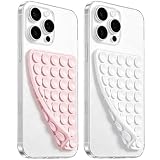
- 【PKYAA Double Sided Silicone Suction Phone Case Mount】PKYAA With Double Sided 40 Strong and Reliable individual suction cups, PKYAA provides a thicken and upgraded universal silicon suction mount for your phone.
- 【Friendly to Content Creators】If you are a content creator or an online influencer, you can create videos anywhere with this suction mount completely hands free with this silicone cell phone mount for cases.
- 【HANDS-FREE & Adhere to Mirrors】This Double Sided silicone suction phone case mount allows you to stick your phone to the mirror easily. No longer holding your phone in one hand to watch video tutorials while making up.
- 【Strong Grip on the Smooth Surface】You can easily hang your phone anywhere with a smooth surface. All you do is you clean off your phone and smooth surface. It is STURDY and it not only sticks to mirrors, it also sticks to windows, it sticks to refrigerators, tiles and other clean, flat surfaces.
- 【Press Down Firmly Every 30 Minutes】Use your palm or fingers to press the phone down firmly and check it's secure before letting go. Apply even pressure for a few seconds to allow the suction cup to adhere properly. To maintain the grip and prevent accidental falls, it's a good practice to periodically reapply pressure to the suction cup.
Apple says a network owner can append _nomap to a Wi-Fi network’s name (SSID) to opt that access point out of being sent to Apple’s crowdsourced database. Apple says this does not work for hidden networks. Its guidance also says location may be used during emergency calls regardless of the Location Services setting, so disabling a setting should not be treated as a guarantee that emergency location is unavailable.
Wi-Fi RTT and privacy
For Android Wi-Fi RTT, the requesting device determines distance to access points; Android says the access points do not receive that distance result. That detail does not establish that an app or operating system collects no location data. Review the permissions and data practices of the app and platform you use.
Legal protections depend on location
Privacy law varies by jurisdiction. GPS.gov’s overview focuses on the United States and says current federal statute does not provide clear protection for geolocation information; it also summarizes Supreme Court decisions involving physical GPS tracking and historical cell-site records. That overview is not a universal rule for other countries or every form of location collection.
Quick Recap
How to interpret your phone’s location
- Outdoors with a clear sky, satellite positioning may provide a strong estimate; the 4.9 m figure is a typical open-sky smartphone example, not a promise.
- Indoors or among tall structures, expect more uncertainty because satellite signals can be blocked or reflected.
- A blue dot may use multiple sources. It does not reveal, by itself, whether the phone relied on GPS, Wi-Fi, cellular, or a combination.
- Do not apply Wi-Fi RTT’s specialized 1–2 m figure to ordinary Wi-Fi location; RTT needs compatible hardware and multiple access points.
- For privacy, check app location permissions and background access, then consult the platform and app’s own data practices.
Product prices and availability are accurate as of the date/time indicated and are subject to change. Any price and availability information displayed on Amazon at the time of purchase will apply.

