
GLM-5.3-Flash is a mixture-of-experts model with 320 billion total parameters and 18 billion active per token. The 18B figure describes how many parameters are engaged for an individual token; it does not make the model an 18B download or mean it fits in ordinary PC memory. NVIDIA documents one serving configuration that uses eight H100 GPUs.
The model’s advertised context maximum is 1,048,576 tokens, and its publisher describes it as natively multimodal. Those are model-level claims, not guarantees that every API, interface, or local setup will support the same limits.


What do 320B total parameters and 18B active parameters mean?
The figures describe different aspects of GLM-5.3-Flash. Its model card lists 320 billion total parameters and 18 billion active parameters per token. It is misleading to call it simply an “18B model” without explaining that the full model contains 320B parameters. Z.ai’s model card provides these figures.
GLM-5.3-Flash uses a mixture-of-experts design: for each token, the model routes computation through selected experts rather than activating every parameter. Thus, “18B active” is a per-token computation figure, not a statement about total model size, memory required to store the weights, or a guarantee of consumer-hardware compatibility.
Free tools Windows power users keep installed
One-click scans. No signup required.
#1 Best Overall

- [Local AI Inference & 70B Model Ready] Equipped with the AMD Ryzen 7 PRO 8845HS processor, NEXUS is engineered for heavy local AI workloads. With a full-size GPU bay, it runs 70B LLMs natively without an internet connection. Ideal for AI developers and tech enthusiasts who need private environment for coding and model testing.
- [132TB Mass Storage with ZFS Integrity] Features a hybrid storage architecture (3×NVMe + 4×3.5" HDD) supporting up to 132TB. Utilizing the enterprise-grade ZFS file system and ECC memory, it prevents data corruption and bit rot—a must-have for professional photographers and video editors safeguarding 4K/8K RAW footage.
- [OpenClaw-Driven Automation Workflow] The built-in OpenClaw execution layer allows complex automated tasks to be processed locally. Even when offline, your backup schedules and AI file organization continue seamlessly. Say goodbye to monthly cloud subscriptions and high latency.
- [Dual 10GbE & USB4 Ultra-Connectivity] Experience server-class speeds with dual 10GbE ports and a 40Gbps USB4 interface. It enables multi-user real-time collaboration on large project files directly from the NAS, ensuring zero-lag editing for creative studios and production teams.
- [Open-Source ZimaOS for Total Privacy] Running on the fully open-source ZimaOS, NEXUS ensures your data stays physically on-premise with no backdoors. It acts as a "Digital Fortress" for privacy-conscious families and small businesses who demand absolute data sovereignty.
Can GLM-5.3-Flash really handle a million tokens?
NVIDIA lists a maximum context length of 1,048,576 tokens. That is the advertised upper limit, not a promise that every host or application accepts a full million tokens, or that every long prompt will be processed with equal effectiveness. Check the context limit, output allowance, and request constraints of the particular service or inference setup you plan to use. NVIDIA’s model card lists the maximum.
The model’s publisher describes hybrid sparse and linear attention as a way to improve long-context serving costs and scaling efficiency. Those are publisher-attributed design benefits, not independent performance measurements. The model card also says pre-training used a 30-trillion-token multimodal corpus. Z.ai’s card is the source for these publisher claims.
What can GLM-5.3-Flash do with images and tools?
Z.ai calls GLM-5.3-Flash the first natively multimodal model in its GLM-5 series. NVIDIA documents text and image input with text output, along with reasoning and function or tool calling. Its listed use cases include visual question answering, multi-image reasoning, document and screenshot understanding, coding and tool-using agents, and long-context document tasks. These capabilities still depend on the deployment: for example, NVIDIA says its endpoint accepts up to eight images per request. That is an endpoint-specific limit, not a universal limit for every implementation.
Rank #2
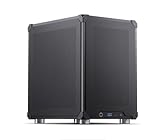
- Pre-Installed AI Models: High-performance local 14 billion parameter Large Language Model runs directly out of the box with multiple LLM models installed and ready to use
- Easy Model Management: One-click switching between different AI models and simple downloads of latest suitable models to stay current with AI development
- Advanced AI Features: RAG framework and Embedding Models come pre-installed, enabling immediate local document ingestion and vectorization for enhanced AI capabilities
- Compact Design: Mini ITX PC case featuring mesh panels on all sides for optimal airflow and cooling in a space-saving form factor
- Local Computing Power: Cost-effective personal AI server that processes everything locally, ensuring privacy and eliminating cloud dependency for AI workloads
NVIDIA also lists multi-token prediction for speculative decoding. This is a serving feature; it should not be confused with a separate user-facing context or modality guarantee. NVIDIA’s model card describes its endpoint and listed capabilities.
What is known about the architecture?
Z.ai describes the model as a newly trained base model using a hybrid of sparse and linear attention, plus Manifold-Constrained Hyper-Connections (mHC). Its stated rationale is lower serving cost for long contexts and improved scaling efficiency; the card’s explanation is a publisher claim rather than independent validation.
NVIDIA gives a more detailed architecture breakdown: 45 decoder layers, comprising 34 KDA linear-attention layers and 11 sparse-attention layers, with 288 routed experts per MoE layer. These layer and expert counts are NVIDIA’s model-card details. NVIDIA identifies H100 hardware for its serving configuration and says its native FP8 checkpoint is tensor-parallel across eight H100 GPUs. This describes that documented setup; it does not establish eight H100s as the minimum for every quantization, inference engine, or context length.
Rank #3
What hardware do you need to run it?
There is no single hardware requirement established for every way of running GLM-5.3-Flash. NVIDIA’s eight-H100 configuration signals that serving the native FP8 checkpoint at that scale is an enterprise-level deployment, not a normal desktop workload. Active parameters do not remove the need to store and serve the overall model weights.
Z.ai lists SGLang, vLLM, TokenSpeed, Transformers, KTransformers, and Unsloth as serving routes, and provides an SGLang example in its model card. The existence of these options does not establish that each can run the same precision, context length, or throughput on the same hardware. Before self-hosting, confirm the supported checkpoint format, quantization, memory needs, engine compatibility, and context-length behavior for the exact configuration you intend to use. Z.ai’s model card lists the serving routes.
Quick wins for a faster PC:
Clear out junk files and repair common Windows errorsFree Scan →Scan for outdated or missing drivers - takes under a minuteDriver Scan →Repair Windows errors before they cause bigger problemsFix Now →For configuration, the card says reasoning_effort accepts low, high, or max, with max as the default. It also advises explicitly passing clear_thinking=true in chat scenarios. Framework and model revisions can change these details, so check the current instructions for your chosen serving route.
Rank #4
Should you use a hosted API or self-host?
Both hosted access and local-serving routes are documented, but they answer different operational needs. A hosted endpoint can avoid managing model weights and inference infrastructure; self-hosting can provide more deployment control but puts hardware, setup, and ongoing operation in your hands. Do not assume that the model’s advertised limits automatically carry over to a hosted provider or local engine.
- Compare actual limits: Verify the provider’s context window, image and tool support, request-size constraints, and output limits.
- Check infrastructure fit: For self-hosting, assess the chosen precision, engine, memory budget, and desired context length rather than relying on the 18B active figure alone.
- Review data handling: Hosting terms and data practices are provider-specific; comparable terms across providers are not established here.
- Compare current billing: Use the provider’s live price table and billing unit for your region and account before estimating cost.
What does “open-weight” mean here, and what about commercial use?
The model weights are published for download, and NVIDIA’s card says usage is governed by the MIT License and calls the model ready for commercial use. That statement concerns the model license; it does not automatically determine the terms of a hosted API. NVIDIA separately says its trial endpoint is governed by NVIDIA API Trial Terms. Read the applicable license and service terms for the route you choose. NVIDIA’s model card distinguishes the model usage statement from its endpoint terms.
How much does GLM-5.3-Flash cost?
Z.ai claims GLM-5.3-Flash costs roughly one-tenth as much as GLM-5.2. The available claim does not specify a comparable current price, billing unit, or regional rate, so it is not enough to calculate a cost or compare providers. Treat it as a relative publisher comparison and check Z.ai’s current pricing information before making a budget decision. Hosted-provider pricing can also differ from self-hosting costs.
What are the model’s limitations?
NVIDIA warns that GLM-5.3-Flash can produce inaccurate, biased, or objectionable outputs and can make mistakes in multi-step reasoning. It also notes that image-understanding quality varies with image resolution and quality. For consequential or user-facing applications, evaluate the model for the intended task and apply appropriate safety checks and guardrails. NVIDIA’s model card outlines these limitations.
Quick Recap
Product prices and availability are accurate as of the date/time indicated and are subject to change. Any price and availability information displayed on Amazon at the time of purchase will apply.

