
Recommended Free Tools
Choose a full-frame camera by matching its features to the photography and video you actually do—and by pricing the lenses that make the body useful. Start with your subjects, existing gear, and total kit budget; then compare autofocus, stabilization, resolution, video, handling, and card configuration. Full frame is not automatically the best fit: a smaller-format system may be more portable, less expensive, or offer more reach.
Start with your subjects and shooting conditions
Write down what you photograph most, what you want to improve, and how often you record video. A camera feature matters when it helps with a real part of that work—not simply because its specification looks impressive.
| # | Preview | Product | Price | |
|---|---|---|---|---|
| 1 |
|
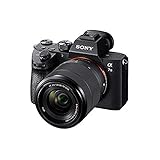
Sony Alpha a7 III Mirrorless Camera with 28-70mm Lens Black | $1,598.00 | Buy on Amazon |
| 2 |

|
Canon EOS R6 Mark II Mirrorless Camera RF24-105mm F4-7.1 is STM Lens Kit | Buy on Amazon |
- Landscapes: Consider the resolution you need for cropping or large prints, suitable wide-angle lenses, and controls that work comfortably on long outings.
- Events and low light: Give more weight to autofocus behavior, stabilization, lens options, card configuration, and the practical workflow for managing difficult lighting.
- Street photography and travel: Handling, portability, discreet operation, and the size of the lenses you expect to carry can matter as much as the body.
- Action or wildlife: Compare autofocus features, burst requirements, and the telephoto lenses available for the mount; include lens size and cost in the decision.
- Video: Check the actual resolution, frame rates, crops, recording formats, and media requirements you need. Do not assume that two bodies described as “4K” provide the same recording options.
For each candidate, list the capabilities your work requires and separate them from features that would be nice to have. This prevents a high specification in one area from obscuring a poor fit elsewhere.
Price the system, not just the camera body
A camera body is one part of a system. Its mount determines which lenses fit, and lenses can add substantially to both the cost and the bulk of a kit. Canon’s U.S. full-frame mirrorless guide describes its system around the RF mount and discusses lens and accessory options.
#1 Best Overall
- Advanced 24.2MP BSI Full-frame Image Sensor w/ 1.8X readout speed Advanced 24.2MP Back-Illuminated 35mm Full-frame Image Sensor
- 15-stop dynamic range, 14-bit uncompressed RAW, ISO 50 to 204,800
- Up to 10fps Silent or Mechanical Shutter with AE/AF tracking
- 693 phase-detection / 425 contrast AF points w/ 93% image coverage
- In the box: SEL2870 lens, Lens hood, Lens cap, Lens rear cap, Rechargeable Battery (NP-FZ100), AC Adapter (AC-UUD12), Shoulder strap, Body cap, Accessory shoe cap, Eyepiece cup, Micro USB cable
- List the lenses you already own and confirm compatibility with the exact body you are considering.
- Choose two or three lenses you are likely to need next, based on your subjects.
- Check local prices for the body alone and for any body-and-lens kit. Do not compare a body-only price with a kit price as if they were equivalent.
- Estimate the cost and carried size of the complete kit, including the lenses you expect to add.
- Compare lens availability, price, and size across the systems you are considering.
Canon UK’s camera-buying guide recommends checking whether a quoted camera price is body-only or includes a lens. Use local prices and verify current availability; these vary by market and over time.
Decide whether full frame is the right format
Full frame is one option, not a guarantee of a better camera for every photographer. Canon UK describes format choice as a matter of subject, working style, and the balance between photography and video. It also notes that APS-C cameras can be more compact and lightweight than full-frame counterparts and can provide extra telephoto reach. DPReview likewise cautions that full-frame lenses are typically larger and more expensive than lenses for smaller formats.
That trade-off can change what is practical to carry or afford. If you often need long telephoto reach, travel light, or are working to a tight total-kit budget, compare smaller-format systems before committing to full frame. If full frame better suits your lens plans and working preferences, compare complete systems rather than choosing on sensor format alone.
Compare the features that affect your workflow
Use the same checklist for each body, then give more weight to the items tied to your photography.
Rank #2
- High image quality featuring a new 24.2 megapixel full-frame CMOS sensor
- DIGIC X Image Processor with an ISO range of 100-102400, expandable to 204800
- High-speed continuous shooting of up to 12 fps with mechanical shutter and up to 40 fps electronic (silent) shutter, RAW burst mode and pre-shooting captures up to approx. 30 fps
- Dual Pixel CMOS AF II covering up to 100% x 100% area with 1,053 AF zones
- Automatic subject detection of people, animals, and vehicles using deep learning technology with new subjects to detect including aircraft, trains, and horses.(1)
| What to compare | What to verify |
|---|---|
| Autofocus | How the available focus features match your subjects and shooting situations. Manufacturer claims and specifications are model-specific; do not treat a rating as a guarantee for every lens or condition. |
| Stabilization | Whether stabilization is in the body, lens, or both, and what the manufacturer’s stated figure measures. Read the conditions behind any rated result. |
| Stills | Resolution, burst needs, and whether the body supports the kind of cropping, printing, or continuous shooting you require. |
| Video | Resolution, frame rates, crop behavior, recording formats, and the cards or other media required for your intended modes. |
| Cards | Number and type of card slots and the exact media specifications supported. Check the body’s documentation for your recording mode. |
| Handling | Grip, button placement, menus, viewfinder comfort, and whether the body feels manageable with the lenses you plan to use. |
| Portability and power | Combined body-and-lens size, battery needs, and whether the kit is comfortable for your typical outings or assignments. |
Manufacturer figures need their context. Nikon Australia’s guide to its Z5II, Z6III, and Z8 states conditions for its model-specific autofocus and stabilization figures. For example, its reported −10 EV autofocus detection figure for the Z5II and Z6III is tied to photo mode, single-servo autofocus, center single-point AF, ISO 100, an f/1.2 lens, and 20°C. It should not be generalized to other bodies, lenses, or shooting conditions.
Independent reader supportYour contribution helps us test, update, and keep practical guides available for everyone.Use model examples as starting points, not winners
Buying guides cover bodies across price tiers and use cases. DPReview’s current camera buying guides identifies the Nikon Z5 II as a full-frame option and the Z6 III as a mid-priced full-frame example. Nikon Australia’s guide focuses on the Z5II, Z6III, and Z8.
These examples show that buyers can compare different tiers, but they do not establish a universal winner or a controlled cross-brand ranking. The right shortlist depends on your local body and lens prices, compatibility needs, and the work you expect the camera to do.
Quick Recap
Check fit and compatibility before buying
- Confirm that the exact lenses you own—or plan to buy—fit the body, including any adapter requirements.
- Check the specific camera’s card types and recording limits against your intended stills or video use.
- Compare the body and lenses together for weight and balance, not just the body’s dimensions.
- If possible, handle the camera in person. Grip, controls, menus, and viewfinder comfort are personal preferences that specifications cannot settle.
- Recheck local pricing and availability immediately before purchase; distinguish body-only offers from lens kits.
Product prices and availability are accurate as of the date/time indicated and are subject to change. Any price and availability information displayed on Amazon at the time of purchase will apply.

