
Quick wins for a faster PC:
Clear out junk files and repair common Windows errorsFree Scan →Scan for outdated or missing drivers - takes under a minuteDriver Scan →Neither camera is automatically more accurate. For facial proportions, the biggest factor is usually how close the camera is to your face—not whether it is on the front or back of the phone. A rear camera can produce a more natural-looking portrait when you use it from farther away, but lens behavior, processing, lighting, pose and mirroring also affect the result.
Why can the same face look different in a selfie?
When a phone is close to your face, perspective makes nearer features appear larger relative to features farther away. A 2024 preprint by Ahmed Alhawwary, Phong Nguyen-Ha, Janne Mustaniemi and Janne Heikkilä attributes this effect to perspective projection and the short camera-to-subject distance, rather than to camera quality or lens specifications alone: the authors’ preprint.
This is different from optical, or radial, lens distortion, which can bend straight lines or shapes, particularly toward the edges of an image. Camera properties such as focal length, principal point and lens distortion can affect image geometry; Apple describes these properties in its camera calibration documentation.
Why front-camera selfies are often close-ups
A front camera is commonly used at arm’s length, and a wide field of view helps fit a face and its surroundings into the frame. That combination can make perspective effects more noticeable, but a wide view by itself does not prove that a camera distorts facial proportions. Camera position and distance matter separately from framing.
What’s actually slowing this PC down?
Pick the symptom - the matching free tool is one click away.
#1 Best Overall
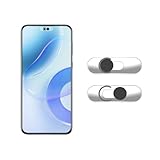
- Camera privacy protection: Simply slide the lens cover to block the front camera of your phone, effectively preventing the camera from being activated under malicious software and hacker attacks, keeping you away from intruders, and protecting your personal information.
- Clever design: The bottom is transparent design, and when attached to the lens area, it will not obstruct the screen display or affect the appearance of the phone. Combined with a sliding cover design, it can be easily opened and closed, preventing dust and scratches, and providing privacy protection at any time.
- Scope of application: This phone’s front lens cover is designed specifically for single front camera models, providing you with a more fitting and save worry user experience. Please make sure to confirm before purchasing that your Android phone's front camera is a single independent lens.
- Excellent lens cover: Made of high-quality ABS plastic, with a thickness of only 0.02 inches, it is lightweight and wear-resistant. Paired with a sticky backing, it adheres firmly and is not easy to peel off. Simply sliding cover, ensuring both lens protection and privacy security.
- Simple installation: First, wipe the lens clean, align the front lens cover with the lens position, and lightly press the edge to firmly fit it. Slide the lens cover again to open and close smoothly without affecting the normal shooting of the camera.
Does the rear camera take more accurate selfies?
Not as a general rule. The rear camera may be easier to use from farther away, especially with a timer or remote shutter, and that greater distance can make facial proportions look more natural. But switching cameras without changing the distance or viewpoint does not guarantee a more faithful result. Phone models also differ in their sensors, lenses, focus, exposure and computational processing, so image quality and rendering cannot be ranked universally from front-versus-rear labels alone.
Google’s 2017 explanation of Pixel 2 portrait mode illustrates the distance point: it reported 1.5× rear-camera and 1.2× selfie-camera portrait-mode zoom on Pixel 2 and Pixel 2 XL, explaining that the narrower views encouraged photographers to stand farther back and reduced perspective distortion. Those figures describe those historical devices and modes; they are not current specifications or general values for phones today. See Google’s Pixel 2 portrait-mode explanation.
Rank #2

- Note:Viidure APP doesn't require VIP for footage. [No VIP needed for: online video viewing, front/rear view switching, playback viewing, video downloading, social media sharing, camera setup.] [Developed with a third-party, Viidure isn't exclusive. Some features need membership: video speed adjustment, timeline viewing, cloud disk uploads.]
- 4K + 2.5K Dual Recording Dash Cam (Front and Rear):The WANLIPO A13 front and rear dash cam captures incredibly sharp footage in Ultra HD 4K (3840*2160P) for the front and 2.5K rear camera.This enables you to clearly identify crucial details like road signs and license plates with ease. Equipped with a 170° wide - angle front lens and a 120° rear lens, the dual dash cam significantly reduces blind spots, offering comprehensive coverage to safeguard vital evidence during events such as collisions
- 5GHz WiFi with APP & Built-in GPS: The dash cam front and rear wireless comes with state-of-the-art 5GHz WiFi and a free app, the video download speed reaches up to 8MB/s, while the 2.4GHz option only offers 2MB/s. This significantly reduces download times and lag during video review. The integrated GPS logs your driving speed, route, and real-time latitude and longitude, allowing you to track your journey on Maps via app or GPS Player,Which will provide additional evidence you may need.
- Loop Recording & 64GB SD Card:The WANLIPO A13 front and rear dash cam features intelligent loop recording, ensuring you never miss a moment, as it automatically overwrites the oldest files when storage is full. This dual dash cam comes with a 64GB SD card, allowing you to start recording immediately and continuously without worrying about running out of space. Equipped with a premium F1.8 aperture and a 6-layer optical lens, this dash cam's WDR technology enhances clarity in low-light conditions
- Built-In G-Sensor:The 4K dash cam is equipped with a high-performance G-sensor, designed to detect collisions or abrupt events, and optimized to detect even minor impacts. When the G-sensor detects an impact, the dash cam automatically locks the relevant footage, ensuring that critical recordings are not overwritten during loop recording. This feature provides reliable protection by preserving essential video evidence in the event of an accident, making it an essential safeguard for driving.
How to take a selfie with more natural-looking proportions
- Move the camera farther away. Use a timer, remote shutter or hands-free capture instead of relying on arm’s length. Google’s Pixel camera guidance describes timer and hands-free options, including setting the phone on a stable surface and stepping into the frame.
- Keep the camera near eye level. This is a practical way to avoid an unusually high or low viewpoint; it is a composition recommendation, not a result established by the cited sources.
- Choose framing after setting your distance. If the face does not fit, adjust the crop or camera view rather than immediately moving the phone close to your face.
- Use support if needed. A phone tripod and remote shutter can make a farther-away shot easier to compose. They do not correct perspective on their own; distance is what changes the perspective effect.
What does selfie mirroring change?
Mirroring changes left-right orientation, not facial proportions. A mirrored image reverses the arrangement of features and objects from the preview; it does not, by itself, cause or fix close-range perspective exaggeration. The saved image may therefore look unfamiliar even when its proportions are unchanged.
On iPhone, Apple’s user guide says: “To take a selfie that captures the shot as you see it in the front-facing camera frame, rather than reversing it, go to Settings > Camera, then turn on Mirror Front Camera.” Find the option under Settings > Camera > Mirror Front Camera. Google also documents an option to save selfies as previewed or reversed in its Pixel camera guidance. The exact control and default depend on the phone and camera app.
Rank #3

- 4K UHD + 170° Wide Angle Recording: Featuring 4K UHD resolution and dual recording with a 170° front & 150° rear ultra-wide angle, dash cam delivers full vision coverage of your vehicle’s front and rear. The 60fps high frame rate ensures smooth, sharp footage even at high speeds, accurately capturing license plates, road signs and roadside details. Perfectly adapted to all driving conditions, including congested city streets, interstate highways and unlit rural roads.
- STARVIS Night Vision + Large Aperture WDR Technology: Dashcam features a STARVIS starlight night vision sensor and large-aperture WDR technology. It cuts glare from oncoming headlights and streetlights, boosts dark-area details, and captures clear footage in low/complex light—including rainy nights, tunnels, underground garages, and unlit rural roads. This resolves blurry shooting at night or in rain, ensuring sharp, evidence-ready footage for reliable driving records at all times.
- Loop Recording + G-Sensor Collision Lock: Dash cam front and rear features 128GB large storage and automatic loop recording, which overwrites old videos when full—no manual cleanup required, balancing long-duration recording and user-friendliness. Its built-in G-sensor instantly locks critical footage during collisions, emergency braking or other emergencies to prevent overwriting, keeping accident clips intact.
- 24-Hour Parking Monitoring: Dashcam front and rear camera offers 24-hour parking monitoring: it stays on guard even when the car is off and locked, automatically capturing and saving footage if the vehicle is scratched, collided or maliciously bumped, for safer parking in malls, streets, campsites and more. Built with automotive-grade durable construction, it resists high temperatures, bumps and vibrations, handling summer in-car heat and rough roads with stable long-term performance.
- GPS Location Tracking + 5GHz WiFi: With real-time GPS tracking, the car dash cam syncs video with vehicle location, speed and route for quick accident trajectory tracing, delivering dual GPS & video evidence for efficient, persuasive insurance claims and liability determination. Built-in 5GHz WiFi enables high-speed phone connection, supporting 1-minute large video downloads and one-click social sharing—perfect for road trip enthusiasts to share journeys effortlessly.
How to compare two cameras fairly
If you want to see how a particular phone’s front and rear cameras render your face, change one factor at a time. Keep the subject, camera-to-subject distance, angle, lighting and framing the same, and account for whether each saved image is mirrored. Record the phone model, camera mode, app and mirror setting so the comparison is interpretable.
Assess facial proportions and stretching near the frame edges separately from sharpness, exposure, color, noise, skin processing and autofocus. A photo that looks sharper or brighter is not necessarily more accurate in facial geometry. There is no universal verdict for all phones: the sources cited here explain imaging principles and settings, but do not establish a standardized comparison or ranking of current devices.
Quick Recap
Best Value
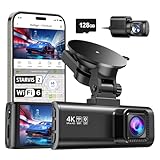
- [4K+1080P Front & Rear Recording] REDTIGER F7NP dash cam captures every detail with stunning 4K front and 1080P rear video. Featuring the advanced STARVIS 2 sensor plus the 170° front and 140° rear wide-angle lens, this dash camera delivers sharper images, balanced lighting, and reliable evidence day or night. Ideal for commuting, road trips, rideshare drivers, and new drivers.
- [STARVIS 2 Sensor & WDR Night Vision] Equipped with the advanced STARVIS 2 sensor, F1.5 large aperture, and 6-layer optical lens, F7NP 4K dual dash cam delivers clear, high-contrast footage in any lighting. WDR and HDR technology balance highlights and shadows, ensuring sharp night vision and crisp details day or night, providing reliable evidence and enhanced safety for every drive.
- [Built-in 5.8GHz WiFi & Smart App] Connect your smartphone to the dashcam’s built-in 5.8GHz WiFi to enjoy ultra-fast downloads up to 20MB/s. Using Redtiger Cam app, you can preview, download, and replay videos in real time, check GPS ata (route, speed, and location), and manage settings effortlessly, making it simple to review footage and share important moments.
- [Loop Recording & Free Memory Card] This car camera supports seamless loop recording to ensure continuous coverage without interruption. Older files are automatically overwritten when storage is full, while important events are safely locked. A free memory card is included, giving you ample space for 4K recordings and allowing you to use the camera right out of the box.
- [24/7 Parking Mode* & G-Sensor] Enjoy round-the-clock protection with two parking modes: time-lapse recording for continuous low-bitrate monitoring and G-sensor mode that records when collision is detected. The car security camera with G-sensor automatically locks important clips, ensuring crucial evidence is safely preserved even while your vehicle is parked.(*Hardwire kit needed.)
Rank #4

- Brand New Replacement Part.
- Replacement for Samsung Galaxy S25 Plus SM-S936/Galaxy S25 Ultra SM-S938 Front Camera Face Facing Camera (US Version)
- Please note installation can be difficult so we DO NOT recommend purchase if you are not a technician.
Product prices and availability are accurate as of the date/time indicated and are subject to change. Any price and availability information displayed on Amazon at the time of purchase will apply.

