
PC Slower Than It Used to Be?
A free scan shows the junk files, broken settings and background clutter dragging Windows down - then fixes them in one click.Free scan · Windows 10 & 11Outdated Drivers Are Slowing You Down
One free scan finds every outdated or missing driver and matches the right update for your exact hardware.Free scan · exact hardware matchA research team at Sungkyunkwan University (SKKU) has reported a prototype electrochemical biosensor designed to detect β₂-transferrin, a cerebrospinal fluid (CSF)-associated form of transferrin. The 2026 announcement reports results in patient CSF samples and a palm-sized reader, but the device remains experimental: the researchers say further clinical validation is needed before developing it as an emergency diagnostic device.
What the biosensor is designed to detect
The platform targets β₂-transferrin, a transferrin glycoform associated with CSF. The researchers focus on its sugar structure: when terminal sialic acid is absent, sugar-attachment sites are exposed. Detecting this form could help identify CSF in a fluid sample, which is relevant when clinicians are investigating a suspected leak.


The announcement describes a research assay, not a test patients can currently obtain. It does not establish that the prototype can diagnose a CSF leak on its own or replace existing clinical testing.
How the enzyme-based electrical signal works
Rather than relying only on antibodies recognizing the overall shape of a protein, the approach uses α-2,3-sialyltransferase to act on exposed sites on the target glycoform. The enzyme reaction is converted into an electrical signal, with gold nanostructured electrodes used to amplify weak signals. In principle, this links a specific biochemical feature of the target to a measurable output.
#1 Best Overall
The SKKU announcements contrast the strategy with conventional immunoassays and more complex analytical techniques, but do not provide enough protocol detail for a full head-to-head comparison of assay procedures or diagnostic performance.
What results the researchers reported
SKKU’s 2026 announcement reports the following prototype results:
Rank #2
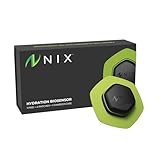
- Real-Time Hydration Data & Alerts - Stay optimally hydrated with real-time, personalized data and notifications sent directly to your phone, watch, or bike computer. Nix's hydration monitor analyzes your sweat as you train, quantifying exactly when, what, and how much to drink for peak performance. The perfect fitness tracker for endurance athletes training for their next marathon, Ironman or triathlon.
- Sweat-Powered, Science-Backed Performance - Nix is the first biosensor to scientifically analyze sweat and deliver real-time hydration insights. Track your fluid, electrolyte, and sodium losses using your own biomarkers - no needles, no pricks, just a single-use adhesive patch that works only when you’re actively sweating. It requires as little as 4.5 microliters of sweat to obtain a reading.
- Advanced App Features & Hydration Calculators - The free Nix Solo app connects via Bluetooth and gives you deep hydration analytics: sweat composition, environmental conditions, activity tracking, and custom drink inputs. Plus, use five in-app calculators (Custom Drink, Recovery, Race Day, Predictive, and Priming) for pre workout and post workout tailored hydration guidance. Available in multiple languages, including Spanish, French, and Portuguese. Compatible with iOS and Android devices.
- Designed for Serious Training & Race Prep - Perfect for endurance sessions 45+ minutes long runs, cycling (indoor or outdoor), brick workouts, or race training. The rechargeable Nix Pod clips onto a new single-use patch each session. With up to 36 hours of battery life, over 70% of Nix users rely on it for endurance prep. Seamlessly integrates with Garmin smartwatches, Apple Watch, and Garmin bike computers.
- Complete Starter Kit & Athlete-Trusted Tech - The Nix Hydration Biosensor Starter Pack includes 1 rechargeable Pod, 1 Sweat Patch Refill (4 patches), 1 charger case, and 1 USB-A to USB-C cable. Used by elite athletes across the NBA, NFL, NHL, MLB, PGA, Olympians, and Ironman competitors.
| Measure | Reported result | What it means—and does not mean |
|---|---|---|
| Lowest target concentration detected | 0.135 μg/mL | A reported analytical detection level; it is not a measure of clinical sensitivity. |
| Correlation with conventional precision analytical methods | R² = 0.912 in actual patient CSF samples | Reports correlation between measurements, not the proportion of patients correctly diagnosed. |
| Analysis time | Within 95 minutes | The reported time for analysis; the announcement does not establish a routine clinical turnaround time. |
| Reader | Palm-sized prototype | Demonstrates compact form and point-of-care potential, not clinical deployment. |
These figures are study-reported results, not independently verified measures of sensitivity, specificity, or patient outcomes. Correlation with another analytical method does not by itself show how accurately the biosensor distinguishes people with and without a CSF leak.
Independent reader supportYour contribution helps us test, update, and keep practical guides available for everyone.What is still unknown about clinical use
The accessible institutional announcements do not state the study’s sample size, patient inclusion criteria, prospective diagnostic performance, sensitivity, specificity, or regulatory status. They also do not identify a commercial product or say that the reader is available to hospitals or patients. Without those details, the reported analytical results cannot establish how the test would perform across real-world patients or clinical settings.
Recommended Free Tools
Professor Jinsung Park of SKKU said the team aims to develop the technology into a rapid diagnostic device for emergency settings “following additional clinical validation.” That is a stated development goal, not evidence of approval or current clinical use. The work is identified as Chihyun Kim et al., “Enzymatic sialylation–driven gold nanostructured platform for rapid and selective detection of sialic acid–deficient transferrin,” published in Chemical Engineering Journal in 2026, DOI 10.1016/j.cej.2026.182244. The accessible announcements do not provide the full study protocol needed to assess the findings in greater depth.
Quick Recap
Best Value

- 1 Pcs Human body sensing sensor Ultra-low power biosensor hub MAX32664GWEC+T WLP-16 (1.55x1.57)
Product prices and availability are accurate as of the date/time indicated and are subject to change. Any price and availability information displayed on Amazon at the time of purchase will apply.

