
Yes—electronics is still a living, visible hobby. Makers continue to prototype with development boards, share projects and tutorials, and move from simple sensor experiments toward connected devices and custom circuit boards. That activity is well documented, but it does not prove that the total number of hobbyists is rising: the available surveys and platform reports do not provide a population-wide count over time.
What shows that electronics making is still active?
Several distinct signals point to ongoing activity: open-source contributions around established platforms, survey respondents using development boards, and makers describing projects that combine microcontrollers, code, sensors, and other tools. Each signal describes a particular ecosystem or group—not every person who enjoys electronics.
Arduino reports continued contributions and new hardware
In its report on the 2024 reporting year, published February 19, 2025, Arduino said users contributed 1,198 new libraries to its Library Manager, an 18% increase year over year. The company also reported that seven open-source hardware boards were developed for its Modulino family, featured in the Plug and Make Kit and Portenta Prototyping Kit. These figures show activity within Arduino’s ecosystem; they are not a count of hobbyists across the industry. Arduino’s 2024 Open Source Report
Maker surveys show development boards in use
In a September 2024 snapshot of its maker survey, Electronic Design identified Raspberry Pi and Arduino as the two most popular development platforms among respondents. The publication cautioned that its audience was primarily Electronic Design readers, so the result should be read as a snapshot of that respondent group, not a representative poll of all hobbyists. Electronic Design’s maker survey snapshot
#1 Best Overall

- BUILD BREADBOARD CIRCUITS AND MINI PROJECTS - Create LED indicators, button inputs, traffic-light sequences, light-activated circuits, RGB effects and buzzer alarms for electronics practice, classroom demonstrations and maker projects
- 235 PARTS FOR REPEATABLE EXPERIMENTS - Includes a 400-tie-point solderless breadboard, power module, jumper wires, Dupont wires, potentiometer, buttons, LEDs, resistors, capacitors, diodes, transistors, buzzers and light-sensitive components
- LEARN HOW CORE COMPONENTS WORK - Use the 74HC595 to expand outputs, the 4N35 optocoupler to explore signal isolation, PN2222 transistors to switch loads and 1N4007 diodes for polarity protection and rectification experiments
- POWER AND REWIRE PROJECTS QUICKLY - Use the breadboard power module for selectable 3.3 V or 5 V rails, while rigid jumpers and female-to-male leads simplify connections; use a suitable 6.5–9 V DC input and do not exceed 9 V
- COMPONENT KIT WITH CLEAR EXPECTATIONS - A controller board, programming cable and wall power adapter are not included; use a compatible microcontroller for coded projects and follow the current tutorial, datasheets and wiring guidance
A 2021 EETech study likewise describes development boards as common tools for prototyping and tinkering. Its self-identified maker respondents also reported challenges with prototyping, coding, hardware selection, and test and measurement. Those findings offer useful context about the work, but are dated and do not measure current participation across the public. EETech’s 2021 Maker & Hobbyist Research Study
Makers describe an evolving set of projects and tools
A 2026 feature in Raspberry Pi Official Magazine gathers named contributors’ perspectives on making. Jeff Geerling observed, “ESP, Arduino, and Pico devices are being integrated into so many projects, it’s almost surprising when I see a new product that doesn’t use one of them.” Matt Venn offered the forecast, “I think it will continue to grow.” These are contributors’ views, not measurements of adoption, but they illustrate how familiar microcontroller platforms feature in contemporary maker conversations. Raspberry Pi Official Magazine’s future-of-making feature
Rank #2
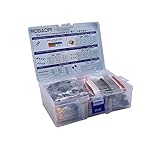
- All products are tested for stability, consistency and reliability,Ensure product excellence
- Save time with this handy box full of the most practical and common electronic components
- Easy to store: Each different component is packaged in a plastic bag, Resistors values are stamped with the according value
- Electronic components set include: diodes, resistors, transistors, LED diodes, electrolytic capacitors, ceramic capacitors
- Electronics component kit: This is a great assortment of components for electronic professionals or enthusiasts
What do electronics hobbyists build?
The hobby can begin with a board and a small experiment, then expand in several directions. A microcontroller can read a sensor, control lights or motors, or connect a physical device to software. A single-board computer can support projects that need a fuller operating system or computing environment. With more experience, a maker might design a custom printed circuit board (PCB) or build a more complex embedded system.
- Small experiments: Read a sensor, display a measurement, or switch an output on and off.
- Connected devices: Combine a board, sensors, code, and a network connection to make a device that exchanges data.
- Computer-based builds: Use a single-board computer when the project benefits from a full operating system or a broader software environment.
- Custom hardware: Progress from modular boards and breadboards to a circuit designed around the project’s requirements.
These are useful starting points, not strict categories. The right platform depends on what the project must do and how you want to learn.
Rank #3

- All-in-One Electronics & Coding Starter Kit: Learn the fundamentals of electronics, coding, and circuit design with the Horizon Uno board (Arduino-compatible), LEDs, sensors, and specialty components — everything you need to start building.
- Includes Step-by-Step Video Lessons: Gain lifetime access to a full online video course created by robotics engineers. Each lesson walks you through real-world projects, coding examples, and clear explanations designed for beginners. Each kit comes with a unique access code to access on our course website. The course includes lectures, labs, projects and problem sets.
- High-Quality Components for Reliable Learning: Each kit includes premium parts for accurate circuit performance — from durable resistors and sensors to jumper wires and LEDs — ensuring a frustration-free learning experience.
- Perfect for Students, Educators & Hobbyists: Ideal for classrooms, STEM programs, and self-learners. The Horizon Uno Kit makes it easy for beginners to grasp the fundamentals of electricity, coding logic, and microcontroller programming.
- Learn, Build & Innovate with Horizon Robotics Lab: Backed by an experienced team of engineers and educators, Horizon Robotics Lab is dedicated to making robotics and electronics education accessible, inspiring learners to build cool projects and bring ideas to life.
How should a beginner choose a starting point?
Choose around your first project and preferred way of working rather than looking for one universally best board. A guided kit can reduce the early work of selecting compatible parts; choosing components individually offers more flexibility but asks you to make more decisions. A microcontroller suits projects centered on controlling hardware, while a single-board computer is worth considering when the project needs a fuller computing environment.
Compare the learning routes
| Choice | Best fit | Trade-off |
|---|---|---|
| Guided beginner electronics kit | A first build where instructions and selected parts help you get started. | Less freedom to choose every component than buying parts individually. |
| Microcontroller development board | Reading inputs and controlling sensors, lights, motors, or other devices. | You will still need to learn the board’s tools and troubleshoot the circuit and code. |
| Single-board computer | A build that needs a fuller operating system or computing environment. | It may involve more software setup than a project focused on simple hardware control. |
| Custom PCB design | A project that has outgrown modular prototyping or calls for a purpose-designed circuit. | It adds schematic and board-design work to the build. |
Before choosing, check whether the board has project examples and documentation that suit your goals, and whether you are comfortable with its programming tools. In Electronic Design’s 2024 survey snapshot, respondents preferred desktop software-development environments, while a significant number also used web-based tools; the publication noted that web-based development can bring connection and debugging challenges. The result describes its respondents, not a universal preference.
Rank #4
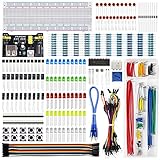
- Highest Cost Components Kit: It comes with more than 400pcs sensors and components for fun and simple electronic projects.
- Safe and Secure Pakcage: Resistors/LED/Transistors and Integrated Circuits are individually packaged and labeled, and well-stored in a sturdy box
- The Breadboard Power Supply come with a USB Power Cables,which is hard to find.
- Datasheet and Tutorial are available to download from our official website or you can contact our customer service.
- Not including the controller board.
What tools and skills does the hobby require?
You can begin with a development board and the parts needed for a small project; you do not have to start by designing a circuit board from scratch. As projects become more ambitious, schematic design, testing, measurement, and PCB design become more relevant. The precise tools depend on the build, so choose them to match the circuit and the board rather than assuming every hobbyist needs the same bench setup.
Expect some iteration. In EETech’s 2021 study, respondents described prototyping as the most challenging product-development stage. Coding and hardware selection were common difficulties, followed by test and measurement; respondents also wanted more learning resources for schematic design, troubleshooting and testing, and PCB design. That friction is a normal part of working out why a circuit or program is not behaving as expected—not evidence that you are unsuited to the hobby.
Free tools Windows power users keep installed
One-click scans. No signup required.
Best Value

- 3 Power Options: MT3608 Type-C boost, battery holder, and 9V clip with DC jack. Power breadboard circuits anywhere.
- Dual Breadboards: 830-point for permanent builds, 400-point for quick tests. Never tear down a working project.
- 100+ Components: 60 LEDs + RGB, potentiometers, push buttons, 4 buzzers, rotary encoder, 65 jumper wires, 40 M-M dupont.
- Add-On for Your Arduino, Raspberry Pi, ESP32: 2.54mm headers and 22AWG wires plug into every popular dev board.
- Microcontroller NOT Included: for makers who own a dev board. Pair with your Arduino or ESP32 and start building.
Access also matters. A 2026 Raspberry Pi Official Magazine feature notes that having the time, equipment, and tools to make projects is a privilege not everyone interested in making has. Start at a scale that fits your circumstances, and do not mistake the simplest published build for a requirement to own a complete workshop.
Is electronics hobby participation growing?
The evidence supports saying that electronics remains active and visible, not that participation is increasing across the population. Arduino’s library and board figures cover its own ecosystem; Electronic Design reports a reader-skewed survey snapshot; EETech’s study reflects self-identified maker respondents from 2021; and the 2026 magazine feature presents named contributors’ perspectives. None supplies a robust population-wide time series of electronics-hobby participation.
So “thrives” is reasonable as a description of continuing projects, platforms, and maker activity. It should not be used as a statistical claim that there are more hobbyists now than before.
Quick Recap
Product prices and availability are accurate as of the date/time indicated and are subject to change. Any price and availability information displayed on Amazon at the time of purchase will apply.
The Tool Desk
Outbyte PC Repair FREEClear out junk files and repair common Windows errorsFree Scan →Outbyte Driver Updater FREEScan for outdated or missing drivers - takes under a minuteDriver Scan →
