
iTechGuides is reader-supported. When you buy through links on our site, we may earn an affiliate commission. As an Amazon Associate I earn from qualifying purchases. Learn more
Agent memory is valuable only when it changes what an agent does later—and improves the result. Remembering a previous failure is not proof that the agent learned from it. To judge the “same failure, three outcomes” comparison, examine what was stored, whether it changed a later action, and how the task performed across repeated runs.
What would count as a changed outcome?
A credible comparison needs to connect a specific memory to a later decision and a measurable result. For each outcome, establish whether the agent completed the task, whether it avoided the earlier failure, and whether the environment reached the intended state. If the task involves a state change, such as completing a purchase or updating a record, success should mean the target state was actually reached—not merely that the agent reported success.
The phrase “three outcomes” cannot be substantiated without the original run records. No public source identifies the agent, task, memory change, or three observed results. Those details should be reported as experiment-specific facts only when the underlying logs support them; benchmark findings are useful context, not evidence for that particular comparison.
Free tools Windows power users keep installed
One-click scans. No signup required.
How to tell whether memory helped
Trace memory into an action
Record what the agent saved, when it retrieved the information, and what it did differently afterward. Separate relevant and correctly applied memory from irrelevant, stale, or misapplied content. A retrieved note that does not alter a decision is not evidence that memory changed behavior.
#1 Best Overall
![Arduino® UNO™ Q 4GB [ABX00173]- Hybrid Board, Qualcomm Dragonwing QRB2210 microprocessor (MPU) & STM32U585 Microcontroller(MCU), AI Vision, Voice, IoT, Robotics, Linux Debian OS, Wi-Fi 5, USB-C](https://m.media-amazon.com/images/I/51cl4xygwGL._SL160_.jpg)
- Dual-Brain Hybrid Power: Combines the Qualcomm Dragonwing QRB2210 MPU (Quad-core Arm Cortex-A53 @ 2.0 GHz CPU, Adreno GPU, AI acceleration) and the real-time, low-power STM32U585 MCU for advanced applications like object recognition, voice commands, and motion detection.
- AI & Linux Capabilities: Unlocks AI-powered vision and sound solutions; runs Linux Debian OS for coding in Python and supports the Arduino ecosystem with libraries and Sketches; quick start with Arduino App Lab.
- Advanced Features: Equipped with 4 GB LPDDR4 RAM, 32 GB eMMC built-in storage, ideal for single-board computer (SBC) mode, running multiple simultaneous high-level processes, more complex AI or ML models, extensive logs. Dual-band Wi-Fi 5 (2.4/5 GHz), Bluetooth 5.1, and high-speed headers for vision, audio, and display peripherals.
- Seamless Expansion & Connectivity: Features the classic UNO form factor for shields compatibility, an 8x13 LED matrix, and a Qwiic connector for easy expansion with Modulino nodes; power and connect via the USB-C connector.
- Intended Use & Development: The perfect platform for prototyping robotics or IoT projects, empowering innovators with a unified development experience to mix Arduino Sketches, Python scripts, and containerized AI models in a single interface.
Check completion and repeatability
One successful run can be luck. Repeat the same task under comparable conditions and report the number of runs and the success criterion. Microsoft’s STATE-Bench evaluates each task five times and calls a task “pass^5” when it succeeds on all five runs. That strict measure highlights whether an agent is dependable, not just whether it can succeed once.
Track the costs and the interaction
Success is not the only outcome that matters. Compare turns, unnecessary tool calls, and input, output, and retrieval tokens if they were logged consistently. Also consider user effort, consent, and side effects from actions that change state. A memory mechanism could improve completion while making interactions slower or less appropriate; report that trade-off rather than treating success as the whole story.
Rank #2
- Dual-Brain Hybrid Power: Combines the Qualcomm Dragonwing QRB2210 MPU (Quad-core Arm Cortex-A53 @ 2.0 GHz CPU, Adreno GPU, AI acceleration) and the real-time, low-power STM32U585 MCU for advanced applications like object recognition, voice commands, and motion detection.
- AI & Linux Capabilities: Unlocks AI-powered vision and sound solutions; runs Linux Debian OS for coding in Python and supports the Arduino ecosystem with libraries and Sketches; quick start with Arduino App Lab.
- Advanced Features: Equipped with 2 GB LPDDR4 RAM, 16 GB eMMC built-in storage, ideal to develop in PC-connected mode, running the OS, Python scripts, and basic network services (SSH) without a demanding GUI or heavy multitasking; great for lightweight AI and memory-optimized TinyML applications, needing local storage for basic OS and core libraries. Dual-band Wi-Fi 5 (2.4/5 GHz), Bluetooth 5.1, and high-speed headers for vision, audio, and display peripherals.
- Seamless Expansion & Connectivity: Features the classic UNO form factor for shields compatibility, an 8x13 LED matrix, and a Qwiic connector for easy expansion with Modulino nodes; power and connect via the USB-C connector.
- Intended Use & Development: The perfect platform for prototyping robotics or IoT projects, empowering innovators with a unified development experience to mix Arduino Sketches, Python scripts, and containerized AI models in a single interface.
What current agent-memory benchmarks show
STATE-Bench measures reliability as well as completion
Microsoft Open Source announced STATE-Bench on May 19, 2026, as an open-source, memory-agnostic benchmark covering customer support, travel, and shopping. Its initial release contains 450 tasks across those three domains, including policy compliance, information synthesis, and multi-step procedures. The benchmark uses stateful environments, simulated customers, and success assertions; some tasks are scored against a target state. Its four evaluation dimensions are task completion, reliability across runs, efficiency, and user experience. The last is scored on a one-to-five rubric that includes user effort and consent. Read Microsoft Open Source’s STATE-Bench announcement.
For a baseline, Microsoft reports that GPT-5.1 without memory completed fewer than half of tasks reliably; about 30% of travel tasks succeeded across all five runs. These are results reported by Microsoft for its benchmark baseline, not a general estimate of memory’s effect. The announcement frames whether memory improves reliability as an open evaluation question, not a settled result.
Rank #3
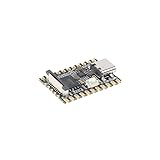
- Single core ARM Cortex-A7 32-bit core, integrated with NEON and FPU
- Built in Micro's self-developed 4th generation NPU, with high computational accuracy and support for mixed quantization of int4, int8, and int16. Among them, int8 has a computing power of 0.5 TOPS and int4 has a computing power of up to 1.0 TOPS
- Built in self-developed 3rd generation ISP3.2, supports 4 million pixels, and supports various image enhancement and correction algorithms such as HDR, WDR, and multi-level denoisin
- It has powerful encoding performance, supports intelligent encoding, adapts to save bit rates according to the scene, and saves more than 50% of the bit rate compared to conventional CBR mode, making the captured images high-definition, smaller in size, and doubling the storage space
- The design with built-in RISC-V MCU supports low-power fast startup, 250ms fast capture, and simultaneous loading of AI model library, enabling facial recognition to be completed within 1 second
MemoryArena tests whether experience guides later actions
MemoryArena evaluates agents across interdependent sessions: an agent acts, receives feedback, distills experience into memory, and then uses that memory in later actions. Its tasks include web navigation, preference-constrained planning, progressive information search, and sequential formal reasoning. He and coauthors report that agents near saturation on existing long-context memory benchmarks such as LoCoMo performed poorly in their agentic setting. That finding illustrates why recalling information and using experience successfully during a later task are distinct capabilities; it does not establish that every memory system will improve every agent. The work appears in the 2026 Proceedings of the 43rd International Conference on Machine Learning, volume 306, pages 41975–42005. Read the MemoryArena paper.
AMA-Bench evaluates long-horizon trajectories
AMA-Bench focuses on long-horizon agent trajectories, including states, actions, observations, and tool outputs rather than dialogue alone. It combines real-world trajectories and expert-curated questions with synthetic trajectories and rule-based questions. Zhao and coauthors report that their AMA-Agent achieved 57.22% accuracy on AMA-Bench and exceeded the strongest baseline by 11.16 percentage points. Those figures describe the authors’ result on that benchmark; they are not a general measure of memory’s benefit or evidence about an unnamed agent’s three outcomes. Read the AMA-Bench paper.
Rank #4

- 【POWERFUL ESP32‑S3 CONTROLLER】Built‑in Xtensa 32‑bit LX7 dual‑core processor, 512KB SRAM, 8MB PSRAM, 16MB Flash for stable AI voice computing and multitask processing.
- 【Preloaded Dual AI Platforms】Comespre-installed with complete Deepseek and OpenAI voice dialogue projects.Experience intelligent voice interaction instantly. (Note: OpenAI functionality requires your own API key.)
- 【STABLE WIRELESS & CLEAR AUDIO】Integrated 2.4GHz Wi‑Fi + Bluetooth 5 (LE); dedicated audio decoding module for natural, responsive voice interaction.
- 【USER‑FRIENDLY VISUAL & PLUG‑AND‑PLAY】2” TFT‑SPI color screen shows real‑time chat; modular design, no extra wiring, ready to use after setup.
- 【FULL LEARNING SUPPORT】45 programmable GPIOs, rich interfaces, online web tutorials, free technical support for beginners & developers.
What a fair three-outcome comparison needs
To attribute a difference to memory, keep other factors stable and make the comparison auditable. At minimum, disclose:
- The task, starting state, and precise success condition.
- The model version, prompt, tools, and scoring method used in each condition.
- What memory was available, what it contained, and when it was retrieved or updated.
- The number of runs per condition, plus success and failure counts.
- Consistently logged efficiency measures, such as turns, tool calls, tokens, latency, or cost.
- Relevant interaction risks, including consent, policy steps, user effort, and unintended state changes.
If the model, prompt, tools, task state, or scoring also changed, the results may still be useful, but they do not isolate memory as the cause. State that limitation rather than presenting sequence alone as proof.
How to read claims that an agent “learned”
Memory can capture procedural experience from prior interactions, not just personal preferences or conversation details. But the label “memory” covers different mechanisms and settings. MemoryArena’s multi-session action tasks, AMA-Bench’s long-horizon trajectories, and STATE-Bench’s production-style tasks measure different things. Their results are best read as evidence about the particular evaluations each team conducted—not as a universal ranking of memory systems or a promise that adding memory will prevent a specific failure.
Quick Recap
Product prices and availability are accurate as of the date/time indicated and are subject to change. Any price and availability information displayed on Amazon at the time of purchase will apply.

