
Usually, no—not by default. Docker running on an Ubuntu ZFS file or media server does not, on its own, mean you need a SLOG or L2ARC. A SLOG can help with a measured bottleneck in synchronous writes; L2ARC can help with repeated reads of data that does not fit in useful RAM cache. Identify the slow workload first, then choose the device—if any—that matches it.
What SLOG and L2ARC do in ZFS
They are different auxiliary devices for different I/O paths. ARC is ZFS’s RAM read cache. L2ARC is an optional second read cache on a device. A SLOG is a dedicated device for the ZFS Intent Log (ZIL), which records synchronous writes so they can be replayed after a crash if they have not yet been committed to a transaction group. OpenZFS explains these roles in its Caching and Auxiliary Devices documentation.

| Device or mechanism | What it serves | When it may help |
|---|---|---|
| ARC | Read cache in RAM | Often the first place to look when repeated reads are slow. |
| L2ARC | Secondary read cache on a device | Potentially useful when a reusable read working set exceeds what ARC can hold. |
| ZIL on the main pool | Log for synchronous writes | Exists for every pool; by default, the log is allocated from the main pool. |
| SLOG | Separate device for the ZIL | Potentially useful when slow synchronous writes are the bottleneck. |
A SLOG is not a general write-back cache. OpenZFS states that asynchronous writes do not use the ZIL; they are aggregated in memory and written at the next transaction group. If the slow workload consists of asynchronous writes, adding a SLOG will not address it.
When a SLOG may help a Docker server
Consider a SLOG only if the slow operation requires synchronous durability and that write path is actually limiting performance. Synchronous writes include operations that request durability with mechanisms such as fsync() or O_SYNC. OpenZFS identifies NFS, databases, and VM hosts with sync-heavy guests as common contexts where a separate log device can be relevant. Its Workload Tuning guidance discusses workload-specific tuning.
The Tool Desk
Outbyte PC Repair FREEClear out junk files and repair common Windows errorsFree Scan →Outbyte Driver Updater FREEScan for outdated or missing drivers - takes under a minuteDriver Scan →#1 Best Overall
Docker’s use of ZFS does not establish that a container workload is synchronous or that the ZIL is its bottleneck. Docker documents how its ZFS storage driver works, but the SLOG decision still depends on the actual I/O issued by applications and the underlying pool.
Choose reliability as well as latency
If a SLOG is justified, OpenZFS recommends a low-latency device with power-loss protection. A consumer SSD that acknowledges data as stable without power-loss protection may lose recently acknowledged data when power fails. Do not treat an arbitrary NVMe drive as suitable just because it is fast. Hardware endurance, cost, and exact suitability depend on the device and workload.
Rank #2
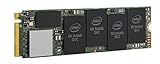
- 1B Storage Capacity
- M2. 2280 Form Factor
- PCIe NVMe 3.0 x4 Interface
- 1800 MB/s Sequential Read Speeds. 1800 Sequential Write Speeds. Intel QLC 3D NAND
Do not substitute a durability change for a SLOG
Setting sync=disabled skips the ZIL and changes the durability semantics: recent writes that asked for synchronous protection may be lost after a failure. It is not a harmless performance setting or a general replacement for a SLOG. OpenZFS also documents logbias=throughput, which bypasses log devices for a dataset; it is a workload-specific setting, not a universal fix.
When L2ARC may help a file or media server
L2ARC is worth evaluating when the server repeatedly reads a working set that is larger than the effective ARC cache. A library’s total size is not enough to establish that case: if clients mostly play different files once, the large library may not yield useful cache reuse. Conversely, frequently revisited files or metadata may create a reusable working set. Measure the actual access pattern rather than buying an SSD based on pool capacity.
What’s actually slowing this PC down?
Pick the symptom - the matching free tool is one click away.
Rank #3
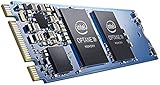
- Snappy PC experience with short boot times, fast application launches, extraordinary gaming experience and responsive browsing
- Pair Intel Optane memory with storage media (HDD, SSD), to get amazing performance and responsiveness without compromising storage capacities
- Supported on 7th Gen Intel Corei3 processor and above
- Requires Optane Ready Motherboard and storage drive such as HDD and/or SSD
- A computer with Intel Optane memory adapts to your everyday computing activities to make your repetitive tasks increasingly faster, smoother and easier to accomplish
OpenZFS describes RAM as its most effective tuning knob and cautions that L2ARC can make a RAM-constrained system slower. First assess ARC behavior and whether adding or freeing RAM is the better remedy. Dataset properties primarycache and secondarycache determine which content is eligible for ARC and L2ARC, respectively.
Decide based on the symptom, not the presence of Docker
| Observed workload or goal | Option to evaluate | What to establish first |
|---|---|---|
| Slow NFS, database, or VM writes that request synchronous durability | SLOG | Verify synchronous writes are the bottleneck; choose low latency and power-loss protection. |
| Repeated reads from a working set larger than effective RAM cache | L2ARC, after RAM and cache analysis | Check ARC behavior, reuse, and whether RAM constraints could make L2ARC counterproductive. |
| Ordinary asynchronous media ingest or sequential playback, with no demonstrated sync-write bottleneck | Neither by default | Measure first; a SLOG does not help asynchronous writes. |
| Slow directory traversal or metadata on an HDD pool | Evaluate metadata-specific options separately | Do not confuse a special allocation-class vdev with L2ARC: a special vdev is persistent storage and has different redundancy and removal implications. |
What to check before adding a device
Ubuntu release, kernel and OpenZFS package version, pool topology, RAM, Docker storage configuration, client protocol, and the measured I/O profile all affect implementation. The right next step is to identify what is slow, determine whether applications request synchronous writes, inspect the pool layout and status, and observe cache and workload behavior using tools appropriate to the installed OpenZFS version. Without those details, no reliable capacity recommendation or performance prediction can be made.
Rank #4

- OEM PRODUCT, NO PACKAGING.
Adding auxiliary devices changes pool configuration. OpenZFS documents examples such as zpool add pool log device for a log vdev and zpool add pool cache device for L2ARC, but these are examples, not safe copy-paste commands: confirm device identity, pool layout, and the recovery consequences first. OpenZFS supports mirrored log devices; RAIDZ is not supported for the intent log. A SLOG can be removed later according to OpenZFS’s auxiliary-device comparison, while a special allocation-class vdev has more restrictive removal characteristics.
Quick Recap
Product prices and availability are accurate as of the date/time indicated and are subject to change. Any price and availability information displayed on Amazon at the time of purchase will apply.
Quick wins for a faster PC:
Fix the driver behind crashes, sound loss and screen glitchesFind Drivers →Repair Windows errors before they cause bigger problemsFix Now →
