
Yes. Most older phones, laptops, and smart-home devices can connect to a Wi-Fi 7 mesh system if it offers a Wi-Fi band and security mode they support. They connect using their own Wi-Fi capabilities, though: an older device does not gain Wi-Fi 7 speeds, 6 GHz access, or features such as Multi-Link Operation (MLO) just because the router supports them.
How older devices connect to Wi-Fi 7
Wi-Fi 7 mesh systems can serve clients from earlier Wi-Fi generations. The client and mesh system negotiate a connection using a compatible combination of Wi-Fi generation, band, and security settings. TP-Link says its Wi-Fi 7 routers and Deco systems include 2.4 GHz and 5 GHz radios, which lets many older devices connect on those bands. TP-Link’s Wi-Fi 7 router and Deco FAQs explain the supported bands and compatibility.
Compatibility does not upgrade the client. An older phone or laptop remains limited by its own Wi-Fi hardware, and a smart-home device designed for 2.4 GHz will not suddenly use 5 or 6 GHz. A Wi-Fi 7 mesh system is an access point the device can connect to—not an upgrade to the device’s wireless adapter.
Which Wi-Fi bands can your devices use?
2.4 GHz and 5 GHz
These are the bands most likely to keep older devices connected. Many smart-home products support 2.4 GHz only, while phones and laptops may support 2.4 GHz, 5 GHz, or both. Check each device’s manual or manufacturer specifications rather than assuming its supported bands from its age or product category.
#1 Best Overall

- 𝐃𝐞𝐜𝐨 𝟕 𝐒𝐮𝐩𝐞𝐫𝐜𝐡𝐚𝐫𝐠𝐞𝐝 𝐰𝐢𝐭𝐡 𝟒-𝐒𝐭𝐫𝐞𝐚𝐦 𝐁𝐄𝟓𝟎𝟎𝟎 𝐃𝐮𝐚𝐥-𝐁𝐚𝐧𝐝 𝐖𝐢𝐅𝐢 𝟕: Delivers up to 4324 Mbps (5 GHz) and 688 Mbps (2.4 GHz) speeds for 4K/8K streaming, AR/VR gaming, and more◇. Performance varies by conditions, distance to devices, & obstacles such as walls.
- 𝐒𝐞𝐚𝐦𝐥𝐞𝐬𝐬 𝐖𝐡𝐨𝐥𝐞-𝐇𝐨𝐦𝐞 𝐂𝐨𝐯𝐞𝐫𝐚𝐠𝐞: Covers up to 6,600 sq. ft. for over 150 devices with the option to expand anytime by adding another Deco router. All Deco routers work together.
- 𝐒𝐢𝐦𝐮𝐥𝐭𝐚𝐧𝐞𝐨𝐮𝐬 𝐖𝐢𝐫𝐞𝐝 & 𝐖𝐢𝐫𝐞𝐥𝐞𝐬𝐬 𝐁𝐚𝐜𝐤𝐡𝐚𝐮𝐥: Wi-Fi 7 and 2.5G Ethernet work together to balance traffic between Deco units for faster, more stable whole-home coverage. Backhaul requires at least two Deco units.§
- 𝐄𝐚𝐬𝐲 𝐒𝐞𝐭𝐮𝐩 & 𝐌𝐚𝐧𝐚𝐠𝐞𝐦𝐞𝐧𝐭: Set up and control your network in minutes with the Deco App. Keep your WiFi performing at its best by keeping the firmware updated through the App. All Wi-Fi routers require a separate modem. ⌂
- 𝐎𝐮𝐫 𝐂𝐲𝐛𝐞𝐫𝐬𝐞𝐜𝐮𝐫𝐢𝐭𝐲 𝐂𝐨𝐦𝐦𝐢𝐭𝐦𝐞𝐧𝐭 - TP-Link is a signatory of the U.S. Cybersecurity and Infrastructure Security Agency’s (CISA) Secure-by-Design pledge. This device is designed, built, and maintained, with advanced security as a core requirement.
6 GHz
A device needs Wi-Fi 6E or Wi-Fi 7 support to use 6 GHz. A Wi-Fi 7 mesh system’s 6 GHz radio does not make that band available to an older client that lacks compatible hardware. TP-Link says devices released before 2020 are unlikely to support 6 GHz, but the date is a general indicator, not a substitute for checking the exact model. Availability of 6 GHz features can also depend on region. Apple’s guidance on Wi-Fi 6E and Wi-Fi 7 networks describes support for Apple devices and notes regional availability.
One network name or separate names
A mesh system may use one network name (SSID) across several bands and steer devices toward a suitable connection. Google says clients that support only 2.4 GHz connect on that band, while its band steering attempts to guide devices to an appropriate band. Apple recommends a single network name across 2.4, 5, and 6 GHz for best performance with compatible Apple devices; if names differ, Apple devices may identify limited compatibility and offer 5 GHz instead. That specific behavior applies to Apple devices, not necessarily to other brands. Google’s explanation of Wi-Fi bands and Apple’s Wi-Fi 6E and Wi-Fi 7 guidance provide details.
Rank #2
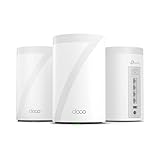
- 𝐅𝐞𝐚𝐭𝐮𝐫𝐞-𝐑𝐢𝐜𝐡 𝐖𝐢-𝐅𝐢 𝐁𝐮𝐢𝐥𝐭 𝐭𝐨 𝐋𝐚𝐬𝐭: Get expansive whole-home coverage, fast Wi-Fi 7 speeds, and a future-ready 10G WAN/LAN port that stays ahead as your network grows. Ideal for both everyday users and performance-focused homeowners.
- 𝗩𝗮𝘀𝘁 𝗠𝗲𝘀𝗵 𝗖𝗼𝘃𝗲𝗿𝗮𝗴𝗲 & 𝗗𝗲𝘃𝗶𝗰𝗲 𝗖𝗮𝗽𝗮𝗰𝗶𝘁𝘆: The 3-pack mesh system covers up to a vast 7,600 sq.ft. and supports over 200 devices without compromising performance, ensuring seamless connectivity.
- 𝐁𝐄𝟏𝟎𝟎𝟎𝟎 𝐓𝐫𝐢-𝐁𝐚𝐧𝐝 𝐖𝐢-𝐅𝐢 𝟕 𝐒𝐩𝐞𝐞𝐝𝐬: Delivers up to 5,188 Mbps (6 GHz), 4,324 Mbps (5 GHz), and 574 Mbps (2.4 GHz) speeds for 4K/8K streaming, AR/VR gaming, and more. Performance varies by conditions, distance to devices, & obstacles such as walls.
- 𝗙𝗼𝘂𝗿 𝟮.𝟱𝗚 𝗪𝗔𝗡/𝗟𝗔𝗡 𝗣𝗼𝗿𝘁𝘀: Includes four 2.5G WAN/LAN ports and a USB 3.0 port, making it an ideal choice for future-proofing your home network.
- 𝐒𝐢𝐦𝐮𝐥𝐭𝐚𝐧𝐞𝐨𝐮𝐬 𝐖𝐢𝐫𝐞𝐝 & 𝐖𝐢𝐫𝐞𝐥𝐞𝐬𝐬 𝐁𝐚𝐜𝐤𝐡𝐚𝐮𝐥: Tri-band Wi-Fi 7 and 10G Ethernet work together to balance traffic between Deco units for faster, more stable whole-home coverage. Backhaul requires at least two Deco units.
Which Wi-Fi 7 features require newer devices?
Wi-Fi 7 mesh hardware can offer features that older clients cannot use. Qualcomm identifies 320 MHz channels, MLO, 4K QAM, and preamble puncturing as Wi-Fi 7 capabilities. A client needs compatible hardware and software to benefit from a given feature; the mesh system alone cannot provide it to an older phone, laptop, or smart-home device. MLO performance can also vary by client, and TP-Link says older Deco models do not support MLO. Qualcomm’s Wi-Fi 7 overview describes the technology features.
Even for compatible newer clients, feature availability depends on the mesh system, its configuration, and—in the case of 6 GHz—regional availability. Wi-Fi 7 certification or a Wi-Fi 7 label on the mesh does not mean every connected device uses every Wi-Fi 7 capability.
Do these 3 things before closing this tab:
1Fix the driver behind crashes, sound loss and screen glitches2Clear out junk files and repair common Windows errors3Scan for outdated or missing drivers - takes under a minuteRank #3

- WHOLE-HOME COVERAGE WITH NO DEAD ZONES: The router plus satellites create a seamless mesh system that blanket up to 6,000 sq ft in fast, reliable WiFi from the front door to the backyard and basement to rooftop, link up to 70 devices on one network
- EVERYONE ONLINE AT ONCE, NO SLOWDOWNS: Dual-Band technology with Enhanced Backhaul helps deliver faster WiFi across your home so WiFi stays fast on every device simultaneously
- NEXT-GEN WIFI 7 SPEEDS: Up to 5 Gbps, 2.4X faster than WiFi 6, for 8K streaming, gaming, VR & video calls. Your phones, laptops and TVs all connect, including WiFi 6 and WiFi 5. Real-world speeds vary depending on connected devices and internet plan
- EASY SET UP WITH THE ORBI APP: Guided step-by-step setup gets your mesh network running fast, then manage devices and guest WiFi from anywhere
- WORKS WITH ANY INTERNET PROVIDER: Compatible with cable or fiber Internet Service Provider equipment and ready for plans up to 2.5 Gbps. Simply connect Orbi to your existing modem for whole-home WiFi
Why an older smart-home device may fail to connect
If a device stops joining after a mesh upgrade, the issue may be its band or security requirements rather than basic Wi-Fi 7 backward compatibility. Work through these checks in order:
- Confirm the device’s requirements. Look up the exact model’s supported bands and security modes in its manual or manufacturer specifications. Some smart-home products support only 2.4 GHz.
- Check for a 2.4 GHz or IoT network. If the mesh app offers an IoT SSID or a way to separate bands, use the option that matches the device’s instructions. Verizon documents an IoT network that provides a dedicated 2.4 GHz connection for devices that struggle with a combined signal; availability and setup vary by system. Verizon’s Wi-Fi Access Point FAQs describe its implementation.
- Put the setup phone on 2.4 GHz if required. Some setup flows expect both the phone and the smart-home device to be on 2.4 GHz. Google recommends manually connecting the phone to that band for some device setups. Follow the product’s setup instructions, since the requirement is not universal.
- Review WPA3 settings if the device uses WPA2. Google warns that some legacy WPA2 devices may have trouble when WPA3 transition mode is enabled. For affected devices, Google advises turning off WPA3; this can reduce how often 6 GHz clients connect. The available controls and trade-offs depend on the router.
- Check MLO settings if the system exposes them. Verizon documents a 3-Link MLO mode that changes its network to WPA3 and may cause problems for older electronics; its implementation enables an IoT SSID by default in that mode. These are Verizon-specific behaviors, not universal rules for Wi-Fi 7 mesh systems.
Do not weaken security or change network settings without checking the device and router instructions. If a change resolves setup, confirm that the rest of the household’s devices still connect as expected.
Rank #4

- 𝐅𝐞𝐚𝐭𝐮𝐫𝐞-𝐑𝐢𝐜𝐡 𝐖𝐢-𝐅𝐢 𝐁𝐮𝐢𝐥𝐭 𝐭𝐨 𝐋𝐚𝐬𝐭: Get expansive whole-home coverage, fast Wi-Fi 7 speeds, and a future-ready 10G WAN/LAN port that stays ahead as your network grows. Ideal for both everyday users and performance-focused homeowners.
- 𝗩𝗮𝘀𝘁 𝗠𝗲𝘀𝗵 𝗖𝗼𝘃𝗲𝗿𝗮𝗴𝗲 & 𝗗𝗲𝘃𝗶𝗰𝗲 𝗖𝗮𝗽𝗮𝗰𝗶𝘁𝘆: The 2-pack mesh system covers up to a vast 5,800 sq.ft. and supports over 200 devices without compromising performance, ensuring seamless connectivity.
- 𝐁𝐄𝟏𝟎𝟎𝟎𝟎 𝐓𝐫𝐢-𝐁𝐚𝐧𝐝 𝐖𝐢-𝐅𝐢 𝟕 𝐒𝐩𝐞𝐞𝐝𝐬: Delivers up to 5,188 Mbps (6 GHz), 4,324 Mbps (5 GHz), and 574 Mbps (2.4 GHz) speeds for 4K/8K streaming, AR/VR gaming, and more. Performance varies by conditions, distance to devices, & obstacles such as walls.
- 𝗙𝗼𝘂𝗿 𝟮.𝟱𝗚 𝗪𝗔𝗡/𝗟𝗔𝗡 𝗣𝗼𝗿𝘁𝘀: Includes four 2.5G WAN/LAN ports and a USB 3.0 port, making it an ideal choice for future-proofing your home network.
- 𝐒𝐢𝐦𝐮𝐥𝐭𝐚𝐧𝐞𝐨𝐮𝐬 𝐖𝐢𝐫𝐞𝐝 & 𝐖𝐢𝐫𝐞𝐥𝐞𝐬𝐬 𝐁𝐚𝐜𝐤𝐡𝐚𝐮𝐥: Tri-band Wi-Fi 7 and 10G Ethernet work together to balance traffic between Deco units for faster, more stable whole-home coverage. Backhaul requires at least two Deco units.
Can older mesh nodes join a new Wi-Fi 7 mesh?
Client compatibility and mesh-node compatibility are separate questions. An older phone connecting to a Wi-Fi 7 node does not mean an older router or mesh unit can be added to any Wi-Fi 7 system.
TP-Link says Deco products are designed to work together and describes adding a Wi-Fi 7 Deco to an existing Deco network. It also says MLO is available only on Wi-Fi 7 Deco hardware, while some functions require compatible firmware across the network. Treat this as guidance for the Deco product family—not a general promise that mesh units from different manufacturers or product families interoperate. Check the exact system’s documentation before reusing nodes. TP-Link’s Deco FAQs cover its product-family compatibility.
Best Value

- WHOLE-HOME COVERAGE WITH NO DEAD ZONES: The router plus satellites create a seamless mesh system that blankets up to 8,000 sq ft in fast, reliable WiFi from the front door to the backyard and basement to rooftop, link up to 100 devices on one network
- EVERYONE ONLINE AT ONCE, NO SLOWDOWNS: Tri-Band technology with Enhanced Backhaul helps deliver faster WiFi across your home so WiFi stays fast on every device simultaneously
- NEXT-GEN WIFI 7 SPEEDS: Up to 11 Gbps, 2.4X faster than WiFi 6, for 8K streaming, gaming, VR & video calls. Your phones, laptops and TVs all connect, including WiFi 6 and WiFi 5. Real-world speeds vary depending on connected devices and internet plan
- EASY SET UP WITH THE ORBI APP: Guided step-by-step setup gets your mesh network running fast, then manage devices and guest WiFi from anywhere
- WORKS WITH ANY INTERNET PROVIDER: Compatible with cable or fiber Internet Service Provider equipment and ready for plans up to 2.5 Gbps. Simply connect Orbi to your existing modem for whole-home WiFi
What to check before upgrading
- List the bands and security modes each important older device supports, especially smart-home products.
- Check whether the mesh system supports a shared network name, separate band names, or an IoT/2.4 GHz network.
- Look for WPA3 and MLO controls if you have legacy devices that may be sensitive to those settings.
- If you plan to reuse mesh nodes, verify compatibility and firmware requirements for the exact product family.
- For newer devices, check whether they support the Wi-Fi 7 features you want and whether the relevant bands are available in your region.
Wi-Fi Alliance announced Wi-Fi CERTIFIED 7 on January 8, 2024, and forecast more than 233 million Wi-Fi 7 devices entering the market in 2024, growing to 2.1 billion by 2028. Those were forecasts, not observed device counts. The Alliance also stated that 4K QAM can provide 20% higher transmission rates than 1024 QAM—a technology comparison, not a promised household speed or a benefit for older clients. Wi-Fi Alliance’s January 8, 2024 announcement gives the figures and their context.
Quick Recap
Product prices and availability are accurate as of the date/time indicated and are subject to change. Any price and availability information displayed on Amazon at the time of purchase will apply.

