
Neither district heating nor a home heat pump is universally cheaper or more efficient for a household. The answer depends on local heat tariffs and connection fees, the home’s heat demand and system design, electricity prices, and the emissions of the energy supplying each option. Compare local quotes and expected annual delivered heat—not a generic price or efficiency claim.
What you are comparing
District heating supplies heat from a central network to connected buildings. A home heat pump uses electricity to move heat from an external source—commonly air or the ground—into the home for space heating and, in many systems, hot water. The European Commission describes heat pumps as extracting ambient or geothermal heat and upgrading it; most use an electrically powered vapour-compression cycle (European Commission: Heat pumps).
These are different kinds of systems, so a fair comparison needs the same boundary: heat delivered to the home over the same period. For district heating, include the network’s charges and delivery performance. For a heat pump, include electricity use and the costs of the installed home system.
How to compare costs
Compare the costs for your home, not an assumed national winner. A 2023 European Commission study was designed to assess end-user ownership and operating costs across the EU27, the UK, Norway, Switzerland and Iceland. Its geographic scope does not make it a current quote for a particular building, and no single study-wide cost figure establishes which option is cheaper for you (European Commission: Heat pumps and district heating end-user costs).
Recommended Free Tools
#1 Best Overall

- CENTRAL AC EFFICIENCY: Transform your existing central air conditioning system into a highly efficient mini-split setup with our state-of-the-art variable speed compressor featuring Inverter Technology. Say goodbye to old, inefficient central air conditioner units.
- POWERFUL CENTRAL AIR CONDITIONING: Experience superior cooling with our 36,000 BTU unit designed to quickly and efficiently cool large spaces up to 2,000 square feet. Ideal for homes and commercial areas needing robust central air conditioning solutions.
- UNBEATABLE CENTRAL AIR HEATING: Don't let extreme cold compromise your comfort. Our Inverter Heat Pump technology delivers reliable and efficient heating, providing warmth even in conditions as low as -22F/-30C, making it a perfect complement to your central air conditioner system.
- DURABLE AND RELIABLE CENTRAL AC: Crafted with premium materials and robust construction, this unit is built to last. We offer a 10-year warranty on the compressor and a 5-year warranty on parts, providing long-term peace of mind for your central air conditioning investment.
- REPLACE YOU EXISITING CENTRAL AC SYSTEM: Recommended for professionals. Installation of this central air conditioning system requires a licensed professional. It is not suitable for DIY installation.
| Cost item | District heating | Home heat pump |
|---|---|---|
| Upfront | Connection charge and any in-home interface or equipment; ask the provider for an itemized amount. | Equipment, system design and installation, plus any required emitter, distribution or electrical work. |
| Recurring | Variable heat tariff, fixed or standing charges, and contract terms. | Estimated electricity use at your tariff, plus service and maintenance costs. |
| Other assumptions | Financing, contract duration and any applicable grants. | Financing, replacement assumptions, maintenance and any applicable grants. |
For a UK context, Energy Saving Trust lists £7,000–£13,000 as a typical air-source heat-pump cost. The retrieved page does not state when that range was published, so it should be treated as an indicative published range, not a current installation quote (Energy Saving Trust: Air source heat pumps).
To estimate annual costs, use the same heat-demand estimate for both options. For district heating, apply the provider’s current variable price and fixed charges. For a heat pump, use the installer’s estimated annual electricity consumption and your electricity tariff, then add maintenance. For a longer-term comparison, use the same time horizon and make financing, replacement, subsidy and tariff assumptions explicit. Without the home’s location, heat demand and current quotes, there is no supported payback period or cost winner.
Rank #2

- CERTIFIED ACiQ SELLERS: Everything you need for reliable HVAC solutions!
- HEATING & COOLING: This Packaged Heat Pump Unit combines efficient air conditioning and dependable heating in a single system, ideal for residential or commercial use applications.
- ENERGY EFFICIENT: 13.4 SEER2 rating and R32 refrigerant provide efficient heating and cooling while helping reduce energy consumption, delivering reliable year-round comfort with low sound operation.
- CONVENIENT CONTROLS: Non-programmable 2 Heat / 1 Cool thermostat with memory retention, compressor protection, and adjustable limits for simple and effective temperature management.
- DURABLE BUILD: Heavy-gauge galvanized steel cabinet, enhanced coil protection, and fully insulated blower compartment for reliable operation and easier maintenance.
Efficiency: avoid an apples-to-oranges comparison
A heat pump moves heat rather than producing all of it directly from electricity. The European Commission says heat pumps are around three to five times as energy efficient as gas boilers. That is a comparison with gas boilers—not with district heating—and it should not be used to claim that a heat pump will outperform a particular network (European Commission: Heat pumps).
Heat-pump performance at a particular home depends on the heat source, system design, weather and the flow temperature needed to warm the home. UK consumer guidance notes that flow temperature is affected partly by the heat emitters and the building’s heat loss. A survey should therefore establish the home’s design heat loss, required flow temperature, emitter suitability and expected seasonal performance.
Windows Errors? Fix Them Before They Spread
Repair common Windows errors and clear accumulated junk for a smoother, more stable PC - no reinstall needed.Free scan · no reinstallOutdated Drivers Are Slowing You Down
One free scan finds every outdated or missing driver and matches the right update for your exact hardware.Free scan · exact hardware matchRank #3

- Made from top quality and durable Materiasl
District-heating performance also varies. It depends on how heat is generated and on conversion, transport and distribution in the relevant system. EU legal definitions direct comparisons to system boundaries that account for energy used in extraction, conversion, transport and distribution (Directive (EU) 2023/1791). There is no single universal efficiency figure in the available evidence that directly compares district heating with home heat pumps.
Independent reader supportYour contribution helps us test, update, and keep practical guides available for everyone.Emissions depend on the energy behind the heat
For a heat pump, assess expected seasonal performance alongside an appropriate electricity emissions factor. For district heating, ask the provider for current heat-source mix and network emissions or performance data. The generation mix and delivery system matter; the label “district heating” alone does not establish an emissions result.
Rank #4
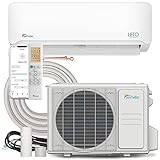
- Alexa Enabled Mini Split AC/Heating System: Integrate with voice control or app, allowing you to adjust your mini split air conditioner from anywhere. Set routines for temperature changes.
- Versatile 4-in-1 Mini Split: All-season solution with air conditioning, heat pump (functional up to 5F/-15C), dehumidifier, fan, and turbo function. Includes a DC Inverter that's UL Listed, AHRI Certified, and works with Alexa.
- Stylish & Functional Mini Split AC: Suitable for both home and business. Provides performance without compromising aesthetics. Ideal for bedrooms, living areas, stores, eateries, and warehouses.
- Installation Package Included: Includes indoor air handler, outdoor condenser, remote control, and installation kit with a 16ft. line set and communication wire. Pre-loaded with refrigerant for up to 25 ft. Note: Professional installation required.
- 5 Year Manufacturer's Warranty: Includes 5 years on parts replacement and 5 years on the compressor. Senville offers complimentary technical assistance. Labor not included.
The European Commission’s 2024 recommendation gives 150 g CO₂-equivalent per kWh as a threshold for classifying efficient district-heating systems for 2026–2034. This is a regulatory threshold, not an average emissions figure or a claim that every network meets it (European Commission: Recommendation on efficient heating and cooling systems).
Quick Recap
Practical trade-offs to check
- Availability: District heating is an option only if a network can connect to the property. A heat pump needs a site-specific design and may require upgrades to emitters, distribution or electrical supply.
- Control and service: Ask how the district provider handles service interruptions and what its contract covers. For a heat pump, clarify who maintains the household equipment and what service arrangements are available. Neither option can be declared more reliable without local evidence.
- Home comfort and constraints: Include the home’s heating needs, any cooling requirements, equipment location and noise considerations in the assessment. Their importance and feasible solutions depend on the property.
A decision process for your property
- Check network availability. Ask the district-heat provider whether the home can connect. Request current connection costs, fixed charges, variable heat prices, contract duration and terms, and the network’s heat-source mix and emissions or performance data.
- Get a heat-pump survey and itemized quote. Ask for the design heat loss, expected seasonal performance, required flow temperature, proposed emitters or other changes, electrical work, installed cost and estimated annual electricity use.
- Compare like-for-like costs. Use the same annual heat demand and time horizon. Include fixed and variable charges, electricity or heat prices, financing, maintenance, replacement assumptions and applicable subsidies; identify each assumption.
- Compare emissions on suitable boundaries. Use current network data and an appropriate electricity emissions factor. Do not substitute a regulatory threshold for the network’s actual emissions.
- Test practical fit. Consider comfort, cooling needs, location and noise constraints, service arrangements and your willingness to maintain household equipment.
Product prices and availability are accurate as of the date/time indicated and are subject to change. Any price and availability information displayed on Amazon at the time of purchase will apply.
What’s actually slowing this PC down?
Pick the symptom - the matching free tool is one click away.

