
What’s actually slowing this PC down?
Pick the symptom - the matching free tool is one click away.
Use both: a decision log is the searchable collection of decisions, while an architecture decision record (ADR) captures one significant architectural choice and the reasoning behind it. Keep a log or index for discovery, and write focused ADRs when future contributors will need to understand a choice’s context, alternatives, rationale, and consequences.
What is the difference between a decision log and an ADR?
The terms describe different levels of a decision-recording practice, not necessarily competing formats. An individual ADR documents one significant decision; the collection of ADRs forms a decision log. Teams may also use a broader log for operational or process decisions that are not architectural.


| Aspect | Decision log | ADR |
|---|---|---|
| Unit | A collection or index of decisions and their history. | One focused record for one significant decision. |
| Scope | Can cover relevant engineering or project decisions, depending on the team’s practice. | Usually focuses on architecturally significant decisions; teams may extend the practice to other decision types. |
| Reader’s need | Find what was decided and when. | Understand the context, options, rationale, consequences, and status. |
| Typical structure | An index, table, repository listing, or wiki overview. | A short record with context, decision, consequences, and useful lifecycle details. |
| When a decision changes | Preserve history and point readers to the current decision. | Keep the old record and create a linked record for the superseding decision. |
| Storage | A central index or collection accessible to its intended readers. | Often near the relevant code, or in a shared wiki or index when wider access matters. |
This is a practical distinction, not a universal naming rule: organizations do not all use the terms identically. The ADR GitHub organization describes the accumulated records as a decision log, while AWS Prescriptive Guidance distinguishes an individual record from the collection.
When should an engineering team write an ADR?
Write one when the decision is significant enough that someone later may need its reasoning to understand, maintain, or safely change the system. AWS Prescriptive Guidance describes an ADR as a document about a choice concerning a significant aspect of planned software architecture. Its examples include:
- System structure or construction techniques, including a framework, library, tool, or process.
- Security, high availability, or other non-functional requirements.
- Dependencies, interfaces, and published contracts.
Google Cloud also points to decisions with multiple engineering options, a new technical question without an established basis, or a solution whose rationale is not documented somewhere accessible. A useful practical test is whether future teammates would otherwise have to rediscover constraints and reasoning, or whether revisiting the choice could bring substantial cost, risk, integration work, or renewed debate. That is a judgment about significance, not a numerical threshold established by the guidance.
Small, reversible implementation choices usually do not need their own ADR if the code, tests, or existing documentation already make the decision and its rationale clear. A team can still include other decisions in its wider log when it needs a record of them.
Rank #2
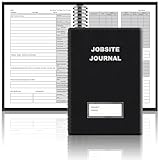
- The Jobsite Journal: this offering features a single black construction planner ensures you have a streamlined tool for organized recording at the jobsite, allowing you to document ideas, create sketches, and monitor progress in one centralized place. Crafted with quality in mind, this journal is a daily essential for jobsite scheduling, serving as a reliable partner for all your documentation needs
- Portable Design: measuring approximately 7 x 10 inches, the construction notebook fits seamlessly into work bags or briefcases, making it a go-to accessory for architects, engineers, and field professionals. Its ample page space ensures notes and sketches remain comprehensive and legible, while its lightweight design supports mobility during site visits and meetings
- Productive Layout: featuring a clear, efficient layout, the construction daily log book eliminates organizational challenges, enabling effortless documentation of critical details-including jobsite activities, task timelines, and milestone dates. It serves as a trustworthy archive for referencing, verifying, and reviewing site information, essential for project accountability and compliance
- Premium Materials: constructed with high-quality PU leather and paper, this project management notebook is built to endure daily use, while offering a smooth writing experience.The sleek, solid-black cover combines modern style with long-lasting durability, preserving its pristine appearance even after frequent use-all while safeguarding your work records. Designed with a spiral binding, it allows for easy, flat-page access, making note-taking effortless in any on-site scenario
- Versatile Utility: engineered to meet the demands of anyone requiring systematic and dependable note-taking, drafting, or sketching, this Record Construction Planner adapts to various roles-from architects and engineers to site supervisors. Its thoughtful size and design make it suitable for individual use or collaborative teams, ensuring it caters to diverse needs in field observations, project planning, and progress tracking
What should an ADR contain?
Keep the record proportionate to the decision. AWS names context, decision, and consequences as the minimum. Google Cloud and the GOV.UK framework offer additional useful fields for making records understandable and traceable.
- Title and date: Make the subject easy to identify and establish when the decision was recorded.
- Status: For example, proposed, accepted, rejected, or superseded.
- Owner and stakeholders: Identify who maintains the record and who contributed or is affected.
- Context and constraints: Explain the problem, relevant requirements, and project, customer, or technology factors.
- Options and trade-offs: Note the alternatives considered and why they were accepted or set aside.
- Decision: State plainly what the team chose. AWS’s FAQ advises that the decision be expressed in imperative language.
- Consequences: Record known benefits, costs, limitations, and follow-up triggers.
- Links: Point to supporting material, affected code or projects, and any later record that supersedes this one.
Not every field needs a long explanation. The purpose is to preserve the useful reasoning without turning documentation into an approval ritual.
Recommended Free Tools
Rank #3

- Heavyweight, unpunched white paper.
- Left sheet printed 10 squares per inch; right sheet college-ruled.
- Wirebound cover.
- Science and engineering notebook
- Spiral-bound with rigid white cover
How should teams review and update decisions?
A practical lifecycle is to propose a record, invite review, and then mark it accepted, rejected, or still in progress. AWS describes an owner who maintains and communicates the record while other team members contribute. Its guidance recommends enabling every project team member to create and own ADRs, rather than routing all records through one architect.
- Draft: The owner describes the context, options, and proposed decision.
- Review: Relevant teammates comment on the reasoning and consequences. AWS suggests setting aside an initial 10–15-minute review slot for reading and comments; this is AWS process guidance, not a measured universal productivity result.
- Record the outcome: Mark the decision’s status and add useful details such as the acceptance date, version, and stakeholders.
- Supersede when needed: If new evidence leads to a different choice, create and review a new record. Once accepted, link it to the earlier record and mark the earlier one superseded.
Do not silently rewrite an accepted or rejected record to make it appear that the new rationale was always the old one. Preserving the history lets readers understand what changed and why.
Rank #4

- Jobsite Tool: this offering includes 1 black construction planner, 184 sheets in total, use for 6 months; Record your thoughts, make sketches, keep track of progress in one place; It is of quality and a staple in your daily jobsite schedule
- Versatile Uses: a construction notebook seeks to cater to every individual who requires a systematic and reliable way to note, draft or sketch; Its size and design make it suitable for multiple person use
- Quality Materials: crafted from quality PU leather and paper, the construction site book withstands everyday use and wear and tear, smooth to write; The pure black, sturdy cover provides both style and longevity, maintaining its fresh look
- Efficient for Enhanced Productivity: experience boosted productivity with our construction log book's clear and efficient layout; The layout is designed to help you note important details without hassle, specific to jobsite activities and tasks
- Easy Documentation: the construction journal, which is the tool for efficient onsite documentation; With its convenient size of about 7 x 10 inches, fitting into your work bag or briefcase is easy; It's the accessory for architects
Where should the log and ADRs live?
Choose a location that the intended readers can access and the team will maintain. Google Cloud recommends keeping ADRs close to the relevant application code when that is practical; version control preserves prior versions. AWS names Git as a versioning option and wiki pages as an accessibility option. Martin Fowler likewise favors Markdown in a source repository for code-level decisions while noting that a single product repository may not suit decisions spanning an ecosystem or readers outside development.
- Repository files: Convenient for code-specific decisions, code review, and version history.
- Wiki or shared index: Easier for cross-team or non-developer readers to find, especially when decisions span projects.
- Combined approach: Keep code-specific records with the code and expose them through a prominent index or wiki view. For decisions spanning repositories, use an appropriate shared home and link to impacted projects.
Whichever arrangement you choose, make the log searchable and ensure readers can tell which decision is current.
Quick wins for a faster PC:
Clear out junk files and repair common Windows errorsFree Scan →Scan for outdated or missing drivers - takes under a minuteDriver Scan →Repair Windows errors before they cause bigger problemsFix Now →Who should make a decision, and when should it be escalated?
Match review to the decision’s reach. A choice affecting one team can usually be handled locally; choices that cross team or organizational boundaries need the relevant stakeholders and an agreed route for resolution.
The GOV.UK Architectural Decision Record Framework gives a UK public-sector example in which decision levels range from a team lead to programme forums, departmental boards, and a Technical Design Council as impact widens. The framework is intended for UK public-sector use; its hierarchy is not a universal organizational chart, and its mandate for cross-government and cross-public-sector decisions should not be generalized to other organizations.
Quick Recap
A practical approach for most teams
- Maintain a searchable index of decisions and their status.
- Write one focused ADR for each significant architectural choice.
- Use context, decision, and consequences as the baseline; add options, ownership, dates, stakeholders, and links when they help future readers.
- Keep records near the affected code when useful, and provide a shared index for broader discovery.
- Preserve the original record when a decision changes, and link it to the accepted replacement.
Product prices and availability are accurate as of the date/time indicated and are subject to change. Any price and availability information displayed on Amazon at the time of purchase will apply.

