
CoolIT direct liquid cooling (DLC) is an integrated cooling system, not just a coldplate attached to a processor. Coldplates capture heat from chips; server loops carry coolant to rack piping and manifolds; and a coolant distribution unit (CDU) links the IT-side loop to the facility’s heat-rejection system. Its “seamless efficiency” depends on those pieces—and the server, rack, and facility around them—being designed to work together.
What CoolIT direct liquid cooling includes
CoolIT’s architecture spans four connected layers: component coldplates, a coolant loop inside each server, rack-level piping and manifolds, and a CDU. The CDU circulates and controls coolant and transfers heat to ambient air or facility water, depending on the configuration. CoolIT presents its portfolio as including CDUs, prefabricated Technology Cooling System (TCS) piping, rack manifolds, and liquid-cooled OEM servers (CoolIT portfolio overview).
- Coldplates: Contact processor or other component surfaces to capture heat.
- Server loop: Moves coolant through the server and its coldplates.
- TCS piping and rack manifold: Route coolant between the rack’s servers and the larger cooling system.
- CDU: Pumps, thermally manages, and exchanges heat from the IT-side coolant loop to the chosen heat-rejection path.
How coolant moves from a chip to the facility
- Capture heat at the component. A coldplate is fitted to a heat-producing surface, such as a CPU, GPU, or ASIC. CoolIT also describes peripheral coldplates for components including memory, storage, networking, and power hardware (CoolIT coldplate technology).
- Carry heat through the server. The server’s coldplate loop circulates coolant through the installed plates. Plate geometry and loop design must match the server platform and the components’ thermal requirements.
- Connect servers at the rack. Rack manifolds and TCS piping distribute coolant to and from liquid-cooled servers. This is a system connection, not evidence that every server using CoolIT components can be swapped into any rack without design work.
- Transfer heat through the CDU. The CDU conditions and circulates coolant, then transfers heat out of the IT loop. The heat-rejection route depends on whether the deployment uses a liquid-to-air or liquid-to-liquid CDU and on the facility design.
Where the integration has to match
“Seamless” is best understood as an integration goal. A coldplate must suit component geometry and heat load; the server loop must suit the OEM’s system; and the rack and facility must provide compatible flow, controls, and heat rejection. CoolIT says it designs, validates, and mass-produces loops for server makers, while its server page describes pre-built systems with CoolIT loops available through leading OEMs (CoolIT direct-liquid-cooled servers).
CoolIT describes its CDU range as offering liquid-to-air and liquid-to-liquid configurations, with rack- or row-based architectures, redundancy, and system controls (CoolIT CDU portfolio). These are vendor-described options, not a universal recommendation: selecting a configuration requires matching the server and rack design to site conditions and the facility’s heat-rejection capacity.
Free tools Windows power users keep installed
One-click scans. No signup required.
#1 Best Overall
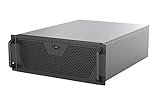
- Engineered for High-Performance Computing: Supports E-ATX motherboards for multi-GPU setups and top-tier hardware, making it a solid foundation for rendering, AI training, and virtualization servers
- Ready for 360mm AIO Liquid Cooling: Directly supports a 360mm radiator for extreme CPU cooling, enabling sustained performance under heavy computational loads without modification
- Triple 120mm PWM Fans for Effective Airflow: Three pre-installed, quiet PWM fans work with the AIO to ensure optimal airflow, keeping GPUs and other critical components cool and stable
- Front-Access 10Gbps USB-C for Fast Transfers: A front-panel USB 3.2 Gen Type-C port delivers up to 10 Gbps transfer speeds, drastically improving efficiency when working with large files
- Versatile Storage Configuration: Accommodates up to 2 x 3.5-inch hard disk drives and 4 x 2.5-inch solid state drives, providing flexible storage options for your server needs
What published performance figures do—and do not—show
CoolIT’s direct-liquid-cooled server page claims up to 30–40% better thermal performance. The page does not state a benchmark method or comparison conditions in the cited material, so the figure should be treated as a vendor claim rather than an independently verified result (CoolIT direct-liquid-cooled servers).
CoolIT’s coldplate technology page describes a validated 15 kW single-phase coldplate; the cited page does not include the full test report. On March 13, 2025, CoolIT announced a 4000W-ready single-phase direct-liquid-cooling coldplate (CoolIT’s March 13, 2025 announcement). These are product capability statements, not measures of a data center’s energy use.
Rank #2

- Liquid cooling radiators: Support up to 360mm
- M/B size: EATX/ATX/MicroATX/Mini-ITX
- Drive Bays: 2*3.5 (internal)
- Expansion Slots: 8xslots PCI/PCIE full height
- Sliding rail: Not support, suggest to use rack shelf
CoolIT’s server page also says it supports OEM deployments in more than 80 countries (CoolIT direct-liquid-cooled servers). That is a vendor-reported support footprint; it does not establish that a particular model or configuration is available in every market.
Does direct liquid cooling reduce data-center energy use?
Direct liquid cooling moves heat away from components through liquid loops, but the available product descriptions and case-study summaries do not establish a universal reduction in total data-center energy use, operating cost, or total cost of ownership. Facility-level results depend on the complete cooling design and operating conditions, including the CDU and heat-rejection method. A component heat-capacity figure or thermal-performance claim cannot, by itself, be converted into a site energy-savings estimate.
Recommended Free Tools
Rank #3

- Supports up to 360mm liquid cooling radiators
- Supports up to SSI-EEB / Extended ATX motherboards
- 8 PCIe / PCI expansion slots
- Includes sliding rail mounting holes for quick rail installation
- Includes one USB Type-C interface
CoolIT’s case-study index describes its SWE01 site in Stockholm as using DLC for greater rack density, reduced power use, and peak performance; it describes GWDG in Göttingen as using DLC to support higher-density computing, efficiency, and HPC research (CoolIT case studies). Those descriptions are qualitative: they do not provide before-and-after measurements, test boundaries, or independently audited savings.
Independent reader supportYour contribution helps us test, update, and keep practical guides available for everyone.OEM and deployment examples
CoolIT supplies OMNI coldplates and coldplate loops to server OEMs and directs buyers to identify systems that use its coldplates through the relevant OEM channels (CoolIT direct-liquid-cooled servers). One specific example is GIGABYTE’s H262-series high-density servers, for which GIGABYTE says CoolIT DLC is a standard option; its description says a rack manifold connects liquid-cooled server nodes to rack-based CDUs (GIGABYTE: What is direct liquid cooling?). This example illustrates one OEM implementation, not interchangeability across all CoolIT-enabled systems.
Quick Recap
Best Value
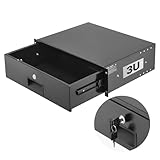
- 3U Rack Drawer: Fit for 19-inch server racks & network cabinets. This rack mount drawer has 13.8 inch inner depth gives you plenty of room to store your gear. Smooth sliding design allows easy access to your equipment
- Built to Last: Made from solid steel and coated with a rust-resistant, wear-proof finish, this rack drawer can hold up to 50 lbs (22.68 kg). Premium rails ensure every slide is smooth and reliable.(Overall size: 19" x 13.86'' x5.31” )
- Secure Lock: Equipped with a lock to guard your devices from unauthorized access. This server rack drawer provides added security for your setup
- Effective Wiring: Three cable management holes make organizing wires easy. This rackmount drawer keeps cables neat, hidden, and your space looking professional
- Easy to Install: Arrives fully assembled—just mount it in your rack using the included screws. This lockable drawer is ideal for server rooms, small offices, home offices, gaming setups, and more
Rank #4

- Includes 3×120mm fans (pre-installed) or supports 360mm liquid cooling radiators (pre-installed fans must be removed)."
- M/B size: ATX/MicroATX/Mini-ITX
- Drive Bays: 2*3.5 (internal)+1*2.5 (internal) Storage: suggest use of M.2/NVMe and PCIe based storage on M/B
- 8 slots PCI/PCIE expansion: Support max length=320mm with fans only / max length=305mm with AIO only
- PSU: SFX or SFX-L
What to check before specifying a system
- Server compatibility: Confirm the server model, supported processor platform, coldplate configuration, and loop are designed to work together.
- Rack architecture: Establish how the servers connect to the manifold and whether the design uses rack- or row-based CDU placement.
- Facility interface: Determine whether the heat exchanger is liquid-to-air or liquid-to-liquid and confirm the facility can support the required heat-rejection path.
- Capacity and redundancy: Check the documented capacity and redundancy for the exact CDU and deployment configuration, rather than inferring them from a different product or system.
- Service and controls: Review how coolant flow, thermal control, monitoring, and service access fit the operator’s procedures.
- Evidence for savings claims: Ask for measurement boundaries, baseline conditions, workload, operating period, and independent verification before treating an efficiency claim as a site-level result.
Product prices and availability are accurate as of the date/time indicated and are subject to change. Any price and availability information displayed on Amazon at the time of purchase will apply.

