
Do these 3 things before closing this tab:
1Fix the driver behind crashes, sound loss and screen glitches2Clear out junk files and repair common Windows errors3Scan for outdated or missing drivers - takes under a minuteClojure lets Java developers use the JVM and its libraries while adopting a Lisp syntax, immutable data structures, functional composition, and a REPL-centered workflow. You can call Java from Clojure, expose Clojure functions to Java, or introduce the language gradually in an existing application.
What changes when you move from Java to Clojure?
Clojure is a Lisp hosted on the JVM, not a replacement JVM. It compiles to Java 8-compatible bytecode, and newer Java versions can load that bytecode, according to the Clojure downloads page. The official page lists Clojure 1.12.6 as the stable release dated September 2, 2026.


The biggest adjustment is how you express programs. Clojure uses prefix notation and emphasizes functions, immutable persistent collections, and sequence processing. Rather than defaulting to mutable objects and loops, developers commonly compose operations such as map, filter, and reduce over values. This is a change in programming style, not a barrier to using Java classes or libraries.
There is also a different development rhythm: the Clojure CLI can start a REPL, where you evaluate expressions interactively and inspect results. That often replaces some of the repeated edit-compile-run cycle with incremental experimentation.
Windows Errors? Fix Them Before They Spread
Repair common Windows errors and clear accumulated junk for a smoother, more stable PC - no reinstall needed.Free scan · no reinstallCrashes, No Sound, or Screen Glitches?
Random freezes, missing sound and display glitches usually trace back to one bad driver. Find and replace yours safely.Free scan · under a minute#1 Best Overall
Can Clojure use Java libraries?
Yes. Clojure can consume Java classes and libraries directly. Its interop support covers common Java types and structures, including maps, arrays, strings, collections, lists, and iterables. You can retain Java domain or infrastructure code and write new logic in Clojure, rather than translating an entire system at once. The official Java interop reference documents the supported forms and details.
Calling Java from Clojure
Import a Java class when you want to use a shorter name, or refer to it by its fully qualified name. Instance methods use a dot form, for example (.method object args); instance fields can be accessed with .-field. Static calls use a class-qualified form. When Java overloads make a call ambiguous, or reflection needs to be reduced, type hints can help; consult the reference for the Clojure version in use, especially for primitive types and newer syntax.
Implementing Java interfaces and classes
reifycreates an implementation of an interface, useful when passing a Clojure-defined callback or service to a Java API.proxycreates runtime adapters for interfaces or classes.gen-classgenerates a named Java-facing class when Java code needs a class with a stable, discoverable name.
These options address different integration needs; use the simplest one that fits the Java caller and API contract.
Can Java call Clojure code?
Yes. Clojure provides clojure.java.api to bootstrap access from other JVM languages. Java can locate a Clojure var and invoke it through the clojure.lang.IFn interface. The official interop reference and the Java API reference describe this route.
Recommended Free Tools
Rank #3
This makes incremental adoption practical: Java can remain the application shell or public API while selected functions are implemented in Clojure. Decide at the boundary how data is represented and how errors are communicated, so callers do not need to understand Clojure-specific conventions throughout the codebase.
How should a Java developer approach Clojure tooling?
Build and dependency conventions are likely to feel less familiar than Java’s Maven or Gradle defaults. Clojure’s official CLI uses deps.edn, a data file that declares source paths, Maven or Git dependencies, repositories, and aliases. The CLI resolves those declarations and constructs the JVM classpath. The Deps and CLI Guide explains the flow: specify a library and version, retrieve it from a repository, then make it available on the classpath for the REPL or program.
Rank #4
Choose deps.edn or Leiningen based on the project
- For a new project or to follow current official CLI guidance: start with
deps.ednand the Clojure CLI. The CLI guide covers dependency and classpath configuration. - For an established codebase: use its existing build convention. Many projects use Leiningen and
project.clj; switching tools is not a prerequisite for learning the language or using Java interop.
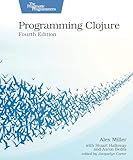
Programming Clojure, Fourth Edition discusses both Leiningen and the CLI-oriented file model, making it a relevant book for developers comparing conventions. Check the publisher or bookseller for the edition and availability in your region.
What are the main trade-offs for a Java team?
| Area | What Clojure offers | What to weigh |
|---|---|---|
| JVM ecosystem | Direct access to Java classes and libraries | Interop syntax and overloaded methods take practice |
| State and data | Persistent immutable maps, vectors, sets, and lists support data-oriented code | Developers accustomed to changing objects in place must learn different state-management patterns |
| Typing | Dynamic typing can make exploratory code concise | Some Java-style compile-time guarantees are absent; type hints may be useful for interop and reflection-sensitive calls |
| Development loop | A REPL supports evaluating and inspecting code incrementally | Teams need conventions and editor support that work well with a REPL-driven workflow |
| Build setup | deps.edn and the CLI provide dependency, path, repository, and alias configuration |
Existing projects may use Leiningen; Java teams may need to learn Clojure-specific conventions alongside their Maven or Gradle practices |
| Team adoption | Java and Clojure can coexist on the JVM | Syntax, macros, IDE tools, documentation, and hiring familiarity affect onboarding |
The 2023 State of Clojure survey material records community concerns about IDE tools, documentation, migration from Leiningen to Clojure CLI/tools.build, and Java interop. These are reported pain points, not proof that every team will encounter them or a current quantitative measure of their prevalence.
What’s actually slowing this PC down?
Pick the symptom - the matching free tool is one click away.
Best Value
What should you learn first?
- Read and write basic forms. Get comfortable with prefix notation and the way Clojure code is organized before translating Java syntax line by line.
- Practice core collections and functions. Work with persistent maps, vectors, sets, and lists; then use functions such as
map,filter, andreduceto transform data. - Use the REPL early. The official REPL guide introduces the interactive workflow available from the
cljtool. - Call a familiar Java API. Import a class, invoke an instance or static method, and investigate type hints only when overload resolution or reflection makes them necessary.
- Learn the project’s dependency model. For CLI projects, read its
deps.ednaliases and classpath setup; in a Leiningen project, first follow the conventions already in use. - Try one boundary in an existing application. Implement a small function in Clojure and call it from Java, or have Clojure call a Java service. Keep the interface narrow while the team learns the operational and development workflow.
Is Clojure a good fit for Java developers?
Clojure is worth considering when you want JVM library compatibility but are open to a functional, data-oriented style and interactive development. It can coexist with Java, which lets a team evaluate it in a bounded area instead of committing to a full rewrite. The costs are real: developers must learn Lisp syntax, immutable-state patterns, dynamic typing, macros, and tooling conventions. Evaluate those costs against team familiarity, IDE support, documentation needs, and the Java-facing API you must maintain.
Quick Recap
Product prices and availability are accurate as of the date/time indicated and are subject to change. Any price and availability information displayed on Amazon at the time of purchase will apply.

