
Cisco’s Mesh Policy Engine lets administrators describe an application’s required network access once, then maps that intent to relevant firewalls in a modeled network and deploys policy through Cisco Security Cloud Control. Cisco names its own firewalls and selected third-party platforms—Palo Alto Networks, Fortinet, and Juniper—as supported targets. It is policy orchestration across an existing security estate, not a claim that every vendor’s firewall is interchangeable or that topology and deployment validation are no longer needed.
What Cisco Mesh Policy Engine does
Mesh Policy Engine is an intent-based policy-management feature in Cisco Security Cloud Control, within Cisco’s broader Hybrid Mesh Firewall approach. Instead of separately working out which firewalls need a change and writing vendor-specific rules in multiple consoles, an operator specifies the access requirement—for example, application A communicating with application B over particular ports and protocols.
After the network topology is represented in Security Cloud Control, the engine identifies the firewall devices that should enforce the policy and deploys it to them. Cisco says operators can enter intent in the interface or through an API, and describes the workflow as covering policy lifecycle management from application onboarding through access revocation. Cisco’s January 2026 product announcement describes the feature and its intended workflow.
How the policy workflow works
- Set up the enforcement targets. Cisco’s documentation organizes the workflow around install targets and domains. The target inventory and required access must be suitable for the environment; support should not be assumed for every model, software release, or configuration. Cisco’s Mesh Policy Engine documentation, updated July 23, 2026, covers the product workflow.
- Represent domains and topology. Map the relevant network so the system can determine which enforcement points lie on the paths that need the policy. The deployment decision depends on that representation being accurate.
- Create or import policy. Express the application access requirement in the product’s policy workflow, or import existing policy where appropriate. Intent describes the desired access; the engine still has to translate that into rules applicable to the selected devices.
- Validate and deploy changes. Review the generated or imported policy, validate it, and deploy it to the relevant targets. Cisco’s documentation includes changesets for organizing and validating updates, committing them, and resolving conflicts.
- Manage changes over time. Track policy changes as applications are onboarded or access is revoked. For an enterprise evaluation, check how the product exposes the policy rationale and effective result, as well as its deployment, rollback, and conflict-handling behavior.
Which firewall vendors does Cisco name?
Cisco’s January 2026 announcement identifies Cisco firewalls and third-party firewalls from Palo Alto Networks, Fortinet, and Juniper. That is a named list, not evidence of universal compatibility across every product or release from those vendors. Confirm supported versions, configurations, credentials, and install-target requirements for the specific environment before planning a rollout.
#1 Best Overall
![Cisco FPR1010-NGFW-K9 FirePower 1010 Next-Generation Firewall w/ AC Adapter [Unclaimed & No License] (Renewed)](https://m.media-amazon.com/images/I/210TbW+gN6L._SL160_.jpg)
- Firewall Protection Supported: Malware Protection
- Firewall Protection Supported: Threat Protection
- Firewall Protection Supported: URL Filtering
- Firewall Protection Supported: Intrusion Prevention
- Total Number of Ports: 8
The feature belongs to a broader architecture. Cisco describes Hybrid Mesh Firewall as covering distributed enforcement points across physical, virtual, cloud, switch, and workload environments, with Security Cloud Control as a console for applicable policy orchestration. This wider platform context should not be read as proof that Mesh Policy Engine itself supplies every segmentation, threat-protection, or workload-protection capability Cisco discusses elsewhere. Cisco’s Hybrid Mesh Firewall overview explains that broader product family.
What Cisco claims—and what those numbers mean
Cisco’s product blog says Mesh Policy Engine can produce up to 80% fewer redundant rules and 35% fewer objects. These are Cisco-reported figures, not independently validated customer outcomes in the reviewed material; “up to” applies to the rule-reduction claim, and neither figure should be treated as a guaranteed result for an individual network.
Rank #2

- Cisco asa 5525-x firewall edition - 8 port - gigabit Ethernet
- Cisco asa 5525-x firewall edition
- 8 port - gigabit Ethernet
Cisco also says new or updated Layer 3/4 policies can be created and applied within minutes after network topology is mapped. This is the vendor’s description of capability, not an independent benchmark or a promise about every deployment. Actual effort depends on the quality of the topology model, the policy and target scope, and the validation and change-management process.
What to evaluate before adopting it
Centralized intent can reduce repetitive rule authoring, but it does not remove the need to understand traffic paths or govern changes. During a technical evaluation, establish:
What’s actually slowing this PC down?
Pick the symptom - the matching free tool is one click away.
Rank #3
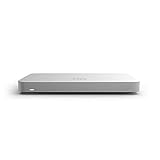
- 10 × GbE (2 WAN, 2 PoE+), 1 × USB 2.0 for 3G/4G failover
- Stateful firewall throughput: 450 Mbps, VPN throughput: 200 Mbps
- Recommended maximum clients: 50, Layer 7 application visibility and traffic shaping
- Automatic firmware upgrades and security patches, VLAN support and DHCP services
- Includes 100W DC Power Supply, requires Enterprise or Advanced Security License
- Which firewall vendors, product versions, and configurations are supported for the organization’s intended targets.
- What is required to onboard install targets, including domains, credentials, and access.
- How accurately the topology model represents actual application paths and enforcement points.
- How imported and newly created rules are validated, deployed, rolled back, and reconciled when conflicts arise.
- How administrators can inspect the reason for a policy and determine its effective result across devices.
- Which operational responsibilities remain with the network and security teams during onboarding, change approval, and access revocation.
These questions follow the workflow areas in Cisco’s documentation; the reviewed sources do not provide an independent head-to-head benchmark against competing policy-orchestration products.
Independent reader supportYour contribution helps us test, update, and keep practical guides available for everyone.Availability and product boundaries
The feature announcement was published by Cisco in January 2026, and Cisco documentation was updated July 23, 2026. Those sources establish the product description and documented workflow, but do not establish one generally applicable launch date, geography, or customer entitlement. Organizations should confirm availability and licensing for their own Cisco account and deployment rather than infer them from the announcement.
Rank #4

- REMOTE-WORKER READY: Pre-integrated support for additional Cisco Security capabilities, including Cisco AnyConnect remote access VPN and Cisco Duo multi-factor authentication.
- COMPACT: 1RU design for small and mid-sized offices
- PERFORMANCE WITHOUT SACRIFICE: Firepower 1000 Series firewalls include hardware-based acceleration, maintaining firewall performance in all conditions
- CONFIGURABLE: With available Firepower Threat Defense (FTD) base software, add network-based content inspection, Intrusion Prevention System (IPS), and URL filtering
- PEACE OF MIND: 90-day limited warranty
Mesh Policy Engine should also be distinguished from adjacent capabilities in the Hybrid Mesh Firewall portfolio. Cisco’s June 2025 discussion of Secure Workload describes microsegmentation policy generation using topology, workload metadata, network flows, and application process data, with enforcement through several kinds of infrastructure. That is related architecture context, not evidence that Mesh Policy Engine itself performs all Secure Workload functions. Cisco’s June 2025 Hybrid Mesh Firewall article describes the broader context.
Quick Recap
Best Value

- More Secured Server Mounting Setup: RM-CI-T14 by Rackmount.IT IU rack mount kits have dedicated slots to safely install compatible Cisco Meraki models, including Cisco Meraki MX68, MX68W, MX68CW, and MX75.
- Improves Cable Management: All console ports of the Cisco Meraki appliance are brought to the front for easy access and user convenience — all while preventing overheating with custom-made cut-outs.
- Straightforward Installation Process: Mounting your appliance to a 19 inch shelf only takes 2-5 mins. as our network tray kits have everything a user needs — bolts, hex keys, zip ties, port labels, cables, and an assembly guide.
- Suitable for Any Type of Business: Our 1U rack shelf kits are designed to fit your appliance in 19-inch network rack shelves, making them ideal for small business owners, large corporations, and government agencies looking to improve their cloud management and network connectivity.
- Passionate for Smart Design and Customization: Rackmount.IT offers innovative solutions to common user needs by producing high-quality custom rack mounted shelf with excellent features that support major desktop appliance manufacturers.
Product prices and availability are accurate as of the date/time indicated and are subject to change. Any price and availability information displayed on Amazon at the time of purchase will apply.
Quick wins for a faster PC:
Clear out junk files and repair common Windows errorsFree Scan →Fix the driver behind crashes, sound loss and screen glitchesFind Drivers →Repair Windows errors before they cause bigger problemsFix Now →
