
Recommended Free Tools
Yes, some AI systems have decoded limited information from brain signals recorded without MRI—but that is not the same as reading any thought on demand. EEG and MEG studies have matched brain activity to speech a person was hearing, and one EEG demonstration decoded words from passages participants silently read. These systems rely on specific tasks, noisy signals, and constrained outputs; they do not establish that a consumer device can transcribe private, unrestricted thoughts.
What “reading thoughts” means in these studies
Brain-decoding AI learns patterns that connect measured brain activity with a particular task or signal. The task might be listening to supplied speech, silently reading supplied text, or attempting to speak. Those are distinct abilities. A system that identifies which of many audio clips a listener heard has not necessarily transcribed that listener’s unprompted inner monologue.
The output also matters: a decoder may select a likely segment, reproduce a rough semantic gist, or generate words that resemble a target passage. These results do not give a system unrestricted access to a person’s subjective mental life.
What MRI-free demonstrations have shown
MEG and EEG while listening to speech
Défossez and colleagues combined four public datasets covering 175 volunteers recorded with EEG or MEG as they listened to short stories and sentences. In their 2023 study, three seconds of MEG data identified the corresponding speech segment with up to 41% accuracy on average across participants, among more than 1,000 possibilities; the best participants reached up to 80%. This was a candidate-matching task—not transcription of arbitrary thoughts. The authors report that predictions relied primarily on lexical and contextual semantic representations, and describe EEG and MEG signals as noisy and variable across people and sessions. Read the study in Nature Machine Intelligence.
#1 Best Overall
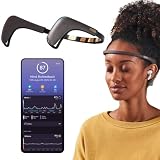
- Works great on its own — access core EEG-powered feedback and session tracking right out of the box; optional Premium subscription adds AI Coach, deeper brain insights, and access to 500+ meditations.
- Personal Meditation Coach — Meet MUSE 2, a smart headband that helps you understand your brain and live a more relaxed, present life. Begin improving your overall brain health and mental wellbeing by harnessing the calming power of meditation.
- Wearable Neurofeedback — To begin, put on the headband and position it so the sensors are in contact with your skin. Next, connect to Bluetooth through the MUSE app, select your meditation experience, take a deep breath, and begin to relax.
- Tune Into Your Body — After each session, you are provided with a calm score. Track your progress to improve your meditation practice overtime and develop an understanding of your internal cues to learn how to relax, build energy and optimize performance.
- Safe, Trusted and Certified — MUSE is backed by research from prestigious institutions and is used by neuroscience researchers around the world. Our SmartSense EEG sensors are award winning and our company is built on credibility and trust.
EEG while silently reading
The University of Technology Sydney described DeWave, an EEG system tested with 29 participants who silently read passages. UTS reported a score of about 40% BLEU-1, a text-similarity measure—not “40% of thoughts decoded.” The account notes that the model could substitute semantically related words, such as a general category or synonym instead of the exact noun. The result concerns language tied to a silent-reading task and study protocol, not open-ended transcription of inner speech. See UTS’s description of the demonstration.
What the best-known fMRI decoder required
The 2023 continuous-language decoder that brought widespread attention to “mind reading” used fMRI, not a portable EEG cap. NIH reports that each of three participants listened to 16 hours of spoken stories to train a participant-specific decoder. On new stories, it sometimes reproduced words and phrases, but more often generated text that captured the gist without matching the original wording. The researchers also tested imagined stories and silent-film viewing.
Rank #2

- Real-Time EEG Neurofeedback Headband for Brainwave Monitoring: Monitor your brain activity in real time using advanced EEG sensors. Track key brainwave patterns such as alpha, beta and theta waves to understand how your brain responds during meditation, focus sessions, relaxation and sleep preparation.
- Smart App with Guided Meditation & Brain Training – No Subscription Fees: The companion app offers guided meditation and neurofeedback exercises with real-time brainwave feedback. As your mind calms and focus sharpens, visuals and sound become clearer, helping you practice mindfulness, enhance focus, improve sleep, and train mental control.
- Track Your Brain Training Progress: The app records your sessions and brainwave data, letting you monitor meditation duration, focus levels, and training history. Download your data freely to track progress and understand your brain performance.
- Train Focus and Calmness with Real-Time Neurofeedback: Turn brain activity into meaningful feedback that guides your mind toward deeper calm and concentration. Neurofeedback training helps make meditation more effective while strengthening awareness, focus and relaxation.
- Soft Hydrogel Sensors for Better Comfort & Signal Stability: Flexible hydrogel skin-contact sensors adapt naturally to your forehead, improving comfort and maintaining stable signal transmission. The low-impedance hydrogel interface enhances EEG signal quality for more reliable brainwave analysis.
The decoder did not transfer from one trained participant to another. Successful training required cooperation, and participants could disrupt decoding by focusing on a different task. NIH also notes that the scanner is not portable and the system was not usable outside the laboratory. Alexander Huth, the study’s lead researcher, called it “a real leap forward” for non-invasive decoding, compared with earlier work on single words or short sentences; the achievement remains constrained semantic reconstruction under experimental conditions. Read NIH’s account of the study.
Why the reported accuracy figures cannot be compared directly
The numbers describe different tasks and scoring systems. MEG segment matching asks whether a brain recording corresponds to the right item among more than 1,000 audio candidates. BLEU-1 compares generated text with reference text. Neither number is a general measure of how much of someone’s thoughts an AI can read.
Rank #3
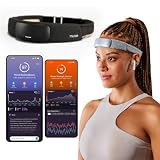
- Deep Sleep Boost – Newest feature designed to detect slow-wave sleep and sustain it longer for a more continuous deep sleep, supporting better physical and mental recovery. It complements the Sleep Assist feature that helps you fall asleep faster.
- Longer Focus, Less Stress, More Calm – Muse S Athena is a smart brain-sensing headband designed to help you better understand your brain so you can improve focus, calm your busy mind, and develop a stronger mental fitness foundation.
- Ready to use immediately — get advanced EEG + fNIRS tracking for sleep, focus, and recovery; optional Premium subscription adds AI Coach, deeper brain insights, and access to 500+ meditations.
- Wearable EEG and fNIRS Biofeedback — Put on the soft, adjustable headband and position the sensors to make skin contact. Connect to the Muse app via Bluetooth, select a meditation, sleep or brain training experience, and begin to focus, relax or unwind.
- Safe & Trusted — Built on years of scientific validation, Muse is trusted by neuroscientists, researchers and wellness professionals. Our award-winning SmartSense EEG sensors combined with new fNIRS technology brings the most advanced Muse experience yet.
- Signal method: fMRI uses a scanner; EEG and MEG record brain activity without MRI, but are still research measurement systems. Implanted electrodes are invasive and belong in a separate category.
- Task: Listening to supplied speech, silently reading supplied text, imagining a limited set of stories, and attempting speech are not interchangeable.
- Training and cooperation: Ask how much participant-specific data was used, whether calibration was required, and whether the participant had to cooperate.
- Output and metric: Check whether the result is exact transcription, semantic gist, candidate selection, classification, or text similarity—and what the reported score measures.
- Generalization and control: Look for evidence that a model works with a new person and whether the participant can resist or redirect decoding.
- Purpose and setting: A laboratory proof of concept is not automatically a clinical aid or a consumer product.
Where implanted systems fit
Implanted electrodes can record higher-quality signals and have supported research on speech prostheses for people with paralysis or other disabilities. That work aims to help restore communication; it is not evidence that non-invasive consumer devices can read unrestricted thoughts. A 2024 study of internal speech used intracranial recordings and described its result as a proof of concept for a high-performance internal-speech brain-machine interface. Its findings should be understood in that invasive research context. Read the 2024 internal-speech study.
NIH describes brain-computer interfaces as a potential assistive communication technology and notes that established systems have required invasive surgery. See NIH’s discussion of brain-decoder research and communication applications.
Rank #4

- Deep Sleep Boost – Newest feature designed to detect slow-wave sleep and sustain it longer for a more continuous deep sleep, supporting better physical and mental recovery. It complements the Sleep Assist feature that helps you fall asleep faster.
- Longer Focus, Less Stress, More Calm – Muse S Athena is a smart brain-sensing headband designed to help you better understand your brain so you can improve focus, calm your busy mind, and develop a stronger mental fitness foundation.
- Ready to use immediately — get advanced EEG + fNIRS tracking for sleep, focus, and recovery; optional Premium subscription adds AI Coach, deeper brain insights, and access to 500+ meditations.
- Wearable EEG and fNIRS Biofeedback — Put on the soft, adjustable headband and position the sensors to make skin contact. Connect to the Muse app via Bluetooth, select a meditation, sleep or brain training experience, and begin to focus, relax or unwind.
- Safe & Trusted — Built on years of scientific validation, Muse is trusted by neuroscientists, researchers and wellness professionals. Our award-winning SmartSense EEG sensors combined with new fNIRS technology brings the most advanced Muse experience yet.
Can you buy a device that reads general thoughts?
The studies described here do not establish a consumer device that can read general thoughts. An ordinary EEG headset should not be treated as a product that reproduces these laboratory results: the demonstrations depend on defined tasks, particular data and decoding methods, and outputs that are limited or imperfect. A product claim should specify the signal method, exact task, training required, output metric, and evidence that it works beyond a controlled research setting.
Quick Recap
Product prices and availability are accurate as of the date/time indicated and are subject to change. Any price and availability information displayed on Amazon at the time of purchase will apply.

