
Sometimes—but not every internet-visible interface is open to anyone, and visibility does not always mean control. In Censys ARC’s October 2024 scan, nearly 400 web-based human-machine interfaces (HMIs) associated with U.S. water facilities were exposed online. Censys classified 40 as unauthenticated and controllable, while others required authentication or were read-only. The findings describe a specific scan, not every water utility or the number exposed today.
What an HMI does at a water or wastewater facility
A human-machine interface is the screen-based control and monitoring interface used by operators to interact with operational technology (OT). In a water facility, an HMI can display information from supervisory control and data acquisition (SCADA) systems connected to programmable logic controllers (PLCs). Operators use it to monitor processes and, depending on the system and permissions, change settings or issue commands.
An HMI reachable over the public internet can disclose operational information such as interface screens, distribution maps, logs, or security settings. If access controls are weak or absent and the interface permits changes, an intruder may be able to alter operations. The specific exposure and risk depend on how the system is configured; an internet-visible HMI is not automatically controllable.
EPA and CISA’s December 13, 2024 fact sheet describes the risks to water and wastewater systems and documents incidents involving manipulated HMIs.
Recommended Free Tools
#1 Best Overall

- [Simple Operation] The PQ125B water leak detectors for home utilizes a factory-developed UI interaction system. Its touchscreen displays each functional module clearly with operational guidance and error pop-ups, enabling even inexperienced users to easily detect leak points. For professional leak detection personnel, it proves an invaluable asset.
- [Precise Localization] The water leak detector has two leak detection modes.Users can quickly scan large areas to identify leak locations via GENERAL DETECTION MODE.In LOCATION MODE, signals from sixteen points are captured and retained in the screen's data collection box. By comparing signal strengths, the exact leak point is pinpointed.
- [High-Precision Sensors] The PQ125B water leaks detector features RC-S3 ACOUSTIC CHAMBER RESONANCE SENSOR&Listening rod,Specifically designed for leak detection in outdoor and industrial settings。RC-S3 Sensor based on monitoring changes in the reflection and superposition (reverberation) patterns of sound waves inside the chamber, it captures sound wave signals conducted through the ground. offering high sensitivity to minor vibrations
- [Original Manufacturer] The PQ125B water leaks detector is independently developed and manufactured by PQWT—Hunan Puqi Geologic Exploration Equipment Institute. As a precision instrument manufacturer collaborating with multiple universities, we have specialized in pipeline leak detection for 19 years, possessing mature production lines and a robust R&D team.
- [Warranty and Languages] The main unit comes with a two-year warranty and lifetime maintenance. Available in 12 languages: English, Turkish, Italian, French, Spanish, Arabic, Russian, Korean, German, Portuguese, Polish, Vietnamese.
What the HMI-specific scan found—and what its categories mean
Censys ARC reported nearly 400 web-based HMIs exposed online at U.S. water facilities in its October 2024 scan. Its June 5, 2025 account grouped the identified systems into three access categories:
| Category | Systems in Censys ARC’s October 2024 scan | What the category indicates |
|---|---|---|
| Authenticated | 95 | Authentication was required to access the interface. |
| Read-only | 264 | The scanned interface was classified as viewable but not able to change settings. |
| Unauthenticated | 40 | The interface was classified as accessible without authentication and controllable. |
These distinctions matter. Read-only access can still expose sensitive operational details, while unauthenticated control presents a more direct path to unauthorized changes. Censys does not name the software vendor or model in its account, so the findings should not be attributed to a particular product.
Rank #2

- Breakthrough 1804 ft Connectivity: Engineered with advanced Sub-1G long-range wireless tech, our leak detector maintains robust signals over unprecedented distances—reaching up to 1804 feet even through 5 dense walls. Secure every critical space in expansive properties, from deep basements to detached garages and distant outbuildings.
- Multiple Reminder Methods: Our water leak sensor supports multiple remote alarm. It can instantly send SMS, APP, and Email notifications to your phone (no matter how many times the SMS is used, it's free). Also, the water leak sensor flashes red and sounds a 105 dB alarm. Perfect for the basement, kitchen, or vacation home!
- Feature-Rich App: Receive instant push notifications. Use the “Find Device” feature to quickly trigger audible beeps to retrieve misplaced sensors. Add multiple email addresses through the APP, and your family and friends can also receive reminders when there is a water leak at home.
- Industry Leading IP67 Waterproof: Its IP67 waterproof rating ensures durability against spills, humidity, and accidental submersion.It can be used multiple times after wiping dry.
- Four-level volume adjustment: Customize your own alarm to fit your life! Use the app to adjust the volume in 4 levels, with a maximum alarm volume of 105 decibels. Whether it's day or night, whether it's in the bedroom or the basement, you can find the right volume.
How the HMI findings differ from EPA OIG’s wider assessment
The figures below describe a separate, broader assessment, not additional HMI counts. The EPA Office of Inspector General’s Report 25-N-0004, published November 13, 2024, says its passive assessment covered 1,062 drinking water systems serving over 193 million people. Its scan date was October 8, 2024.
| EPA OIG finding | Population and risk category | Assessment date and report date |
|---|---|---|
| 97 systems | Serving approximately 26.6 million users; critical- or high-risk vulnerabilities | Scan: October 8, 2024; report: November 13, 2024 |
| 211 systems | Serving over 82.7 million people; medium- or low-risk externally visible open portals | Scan: October 8, 2024; report: November 13, 2024 |
The EPA OIG assessment considered cybersecurity vulnerabilities and externally visible portals broadly, not only HMIs. Its totals should not be added to Censys’s HMI findings or treated as a count of exposed control interfaces. See the EPA OIG report for its scope and findings.
Rank #3
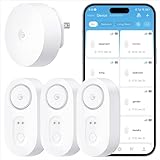
- Breakthrough 1804 ft Connectivity: Engineered with advanced Sub-1G long-range wireless tech, our leak detector maintains robust signals over unprecedented distances—reaching up to 1804 feet even through 5 dense walls. Secure every critical space in expansive properties, from deep basements to detached garages and distant outbuildings.
- Multiple Reminder Methods: Our water leak sensor supports multiple remote alarm. It can instantly send SMS, APP, and Email notifications to your phone (no matter how many times the SMS is used, it's free). Also, the water leak sensor flashes red and sounds a 105 dB alarm. Perfect for the basement, kitchen, or vacation home!
- Feature-Rich App: Receive instant push notifications. Use the “Find Device” feature to quickly trigger audible beeps to retrieve misplaced sensors. Add multiple email addresses through the APP, and your family and friends can also receive reminders when there is a water leak at home.
- Industry Leading IP67 Waterproof: Its IP67 waterproof rating ensures durability against spills, humidity, and accidental submersion.It can be used multiple times after wiping dry.
- Four-level volume adjustment: Customize your own alarm to fit your life! Use the app to adjust the volume in 4 levels, with a maximum alarm volume of 105 decibels. Whether it's day or night, whether it's in the bedroom or the basement, you can find the right volume.
What is known about remediation—and what is not known today
Censys said EPA and the software manufacturer engaged in remediation after the October 2024 findings. In its May 2025 scan, Censys reported fewer than 20 read-only or unauthenticated systems. That is a dated result from Censys’s scan; the cited sources do not establish how many systems are exposed in October 2026. It should not be presented as a current census.
Why exposed control interfaces can matter operationally
EPA and CISA report that pro-Russia hacktivists manipulated HMIs at water and wastewater facilities in 2024. In documented cases, pump and blower equipment was made to exceed normal operating parameters, and operators had to revert to manual operations. These incidents show that unauthorized HMI access can have operational consequences; they do not mean every exposed interface will cause physical damage.
Rank #4

- 【Professional Leak Detection】- Professional-grade water leak detection probe, housed in a fully waterproof and corrosion-resistant metal structure, simultaneously protect against water damage and flooding hazards. Its durability far exceeds plastic models in damp, harsh environments. Features an adjustable alarm up to 120dB with a bright flashing beacon for audio-visual alerts. Includes a 33ft (10m) adjustable cable and simple mounting bracket for flexible installation in hard-to-reach areas.
- 【Plug-and-Play】- Integrates one-touch power and mute buttons for intuitive, instant operation. Clear status indicators immediately distinguish between alerts triggered by the left or right leak probe, helping you quickly identify the issue. Designed for safe 110V operation (with low-voltage 12V for probes) and built with industrial-grade durability for reliable long-term performance, giving you complete peace of mind.
- 【Built for Modern Farms & Facilities】- Specializes in leak detection at critical points, reliably monitoring pipe valves in irrigation systems, connectors for livestock water lines, plumbing in aquaculture tanks, and supply lines in wine cellars. It provides instant alerts for sudden water leaks, effectively preventing water waste from pipe bursts, interruptions in animal drinking supply, damage to aquatic environments, or loss of stored inventory.
- 【Industrial-Grade Leak Sentinel】- The ideal guardian for data center raised floors, cable trenches in electrical rooms, under production line equipment, on warehouse storage floors, and along pipeline corridors. Its all-metal, corrosion-resistant construction withstands damp, dusty conditions. With immediate audible & visual alarms, it prevents electrical short circuits, equipment damage, production downtime, and safety hazards caused by coolant leaks, pipe bursts, or condensation buildup
- 【For Home & DIY Protection】- Offers robust water leak detection for homeowners and DIY enthusiasts. Easily installs in basements, under kitchen sinks, behind washing machines, near water heaters, or in bathroom vanity areas for flood warning and seepage alerts. Also monitors areas around sump pumps to warn of potential overflow. Upon detecting moisture, its high-decibel alarm provides early warning, enabling quick action to prevent costly water damage and major repairs.
How water utilities can reduce HMI exposure
EPA and CISA’s recommended approach is to remove public exposure where feasible, then layer protections around any remote access that must remain. The agencies state: “If possible, disconnect HMIs and all other accessible and unprotected systems from the public-facing internet.”
- Inventory internet-accessible OT. Identify exposed HMIs and other remotely reachable systems so the utility knows what needs protection.
- Remove direct public access where possible. Disconnect HMIs and other accessible, unprotected systems from the public-facing internet when operations allow.
- Secure necessary remote access. Use strong passwords and multifactor authentication (MFA). Place OT behind a demilitarized zone (DMZ) or bastion host rather than exposing the HMI directly. A DMZ can centralize traffic and monitoring; a bastion host provides a secured access point between external and protected networks.
- Limit and monitor connections. Allowlist authorized IP addresses, apply geographic restrictions where appropriate, and log remote logins so access can be reviewed.
- Maintain the system. Apply current patches and follow the product vendor’s security recommendations.
The fact sheet also points water utilities to CISA’s free vulnerability-scanning service. Utilities can consult the EPA/CISA fact sheet for the recommendations and service information.
Do these 3 things before closing this tab:
1Scan for outdated or missing drivers - takes under a minute2Clear out junk files and repair common Windows errors3Fix the driver behind crashes, sound loss and screen glitchesQuick Recap
Best Value

- Complete plug-and-play kit: hub plus Leak Sensor 4 units, each with a built-in 105 dB audible alarm for instant on-site alerts.
- Long-range LoRa: reliable coverage where Wi-Fi struggles (up to 2,034 ft. open-air); get app, email, and SMS/text alerts and name sensors by location.
- Works even without internet: with YoLink Control-D2D, sensors can directly trigger YoLink sirens or shutoff valves for local protection during outages.
- Low-maintenance power: each sensor uses 2 AAA batteries with up to 5 years typical battery life; easy replacement.
- Scalable IoT platform: one hub supports 300+ YoLink devices; part of a whole smart home/building ecosystem; hub options include standard Hub, SpeakerHub, and Cellular Hub.
Product prices and availability are accurate as of the date/time indicated and are subject to change. Any price and availability information displayed on Amazon at the time of purchase will apply.

