
What’s actually slowing this PC down?
Pick the symptom - the matching free tool is one click away.
Microsoft Teams Live Share lets a Teams app connect meeting, chat, or channel participants to a shared session, where they can synchronize state and interact in real time. Its JavaScript SDK provides collaboration building blocks—such as shared presence, state, events, timers, and follow mode—so developers can add them without building all the collaboration infrastructure themselves. Start by choosing the Teams surface and client platforms your app must support, then try Microsoft’s Dice Roller sample before designing your own shared experience.
What Live Share does—and what it does not do
Live Share is a JavaScript SDK for adding multi-user collaboration to supported Teams apps. A LiveShareClient joins participants to a session associated with a meeting, chat, or channel; a host created with LiveShareHost.create() supplies the connection to that context. Microsoft describes the service as integrating Teams meetings with Fluid Framework and using a managed Azure Fluid Relay-backed service. The goal is to reduce the work of supplying collaboration infrastructure for these scenarios, not to remove the need to design your app’s data model, permissions, and deployment.

Microsoft Learn describes Live Share as an SDK for turning Teams apps into collaborative multi-user experiences without dedicated backend code, and says users can “co-watch, co-create, and co-edit” in Teams. These are Microsoft’s descriptions of the product, not independent performance measurements. The overview provides no latency benchmark or head-to-head test against alternatives. Read Microsoft’s Live Share overview.
Choose the collaboration primitive that fits the task
Live Share’s core capabilities and its media and canvas features address different kinds of interaction. Use only the pieces your app needs; synchronized media and collaborative inking are optional paths, not prerequisites for a basic integration.
#1 Best Overall

- Compatible with Nintendo Switch 2’s new GameChat mode
- Auto-Light Balance: RightLight boosts brightness by up to 50%, reducing shadows so you look your best—compared to previous-generation Logitech webcams (1)
- Privacy with a Slide: The integrated webcam cover makes it easy to get total, reliable privacy when you're not on a video call
- Built-In Mic: The built-in microphone lets others hear you clearly during video calls
- Easy Plug-And-Play: The Brio 101 works with most video calling platforms, including Microsoft Teams, Zoom and Google Meet—no hassle; it just works
| Capability | What it synchronizes | Example fit |
|---|---|---|
LivePresence |
Participant presence and metadata | Show who is in the shared experience or associate lightweight participant information with it. |
LiveState |
Session state that disappears when participants leave | Share transient app state that should not persist beyond the session. |
LiveTimer |
A shared countdown or timer | Keep a planning activity’s timer aligned across participants. |
LiveEvent |
Real-time events | Send discrete interaction signals where shared persistent state is not the right model. |
LiveFollowMode |
Presenting and following | Let participants follow a presenter’s view or position. |
SharedMap, SharedString |
Fluid Framework collaborative data structures | Model shared app data using Fluid structures where they suit the experience. |
LiveMediaSession, MediaPlayerSynchronizer |
Media player state and transport controls | Synchronize playback of audio or video; the synchronizer can work with HTML video/audio implementations. |
InkingManager, LiveCanvas |
Collaborative ink and canvas interactions, including pointers | Support shared annotation or pointing on visual content. |
Microsoft’s overview suggests experiences such as watching a video together, using Agile Poker during planning, reviewing a PDF contract with shared cursors or highlights, and exploring a 3D model. Treat these as vendor examples of possible scenarios, not evidence of independent customer outcomes. Details on the core Live Share capabilities, media capabilities, and Live Share Canvas can help you match an interaction to an API.
Check the Teams surface and client support first
Decide where people will use the app before choosing its integration path. A meeting side panel or stage has different context and deployment considerations from a tab in a chat or channel. Microsoft’s capability documentation says chat and channel content contexts are supported on Teams desktop and web only; do not assume those contexts work on every Teams client. Confirm current support for the specific surface and clients your users need in the Live Share quick start.
Rank #2
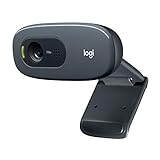
- Compatible with Nintendo Switch 2’s new GameChat mode
- Crisp HD 720p/30 fps video calls with diagonal 55° field of view and auto light correction. Compatible with popular platforms including Skype and Zoom.
- The built-in noise-reducing mic makes sure your voice comes across clearly up to 1.5 meters away, even if you’re in busy surroundings.
- C270’s RightLight 2 feature adjusts to lighting conditions, producing brighter, contrasted images to help you look good in all your conference calls.
- The adjustable universal clip lets you attach the camera securely to your screen or laptop, or fold the clip and set the webcam on a shelf. You’re always ready for your next video call.
For a tab app, the quick-start documentation specifies Microsoft Teams JavaScript SDK (@microsoft/teams-js) version 2.23.0 or later and says to initialize TeamsJS before creating the Live Share host. Version and package requirements can change, so check the documentation and package compatibility when implementing.
Add Live Share to a JavaScript app
The documented setup uses @microsoft/live-share, fluid-framework, and @fluidframework/azure-client. Tab apps also need TeamsJS. If the app is built with React, Microsoft documents a React integration using LiveShareProvider; otherwise, define the Fluid schema and initial objects for your direct integration, then join through LiveShareClient.
Rank #3

- 【Full HD 1080P Webcam】Powered by a 1080p FHD two-MP CMOS, the NexiGo N60 Webcam produces exceptionally sharp and clear videos at resolutions up to 1920 x 1080 with 30fps. The 3.6mm glass lens provides a crisp image at fixed distances and is optimized between 19.6 inches to 13 feet, making it ideal for almost any indoor use.
- 【Wide Compatibility】Works with USB 2.0/3.0, no additional drivers required. Ready to use in approximately one minute or less on any compatible device. Compatible with Mac OS X 10.7 and higher / Windows 7, 8, 10 & 11 / Android 4.0 or higher / Linux 2.6.24 / Chrome OS 29.0.1547 / Ubuntu Version 10.04 or above. Not compatible with XBOX/PS4/PS5.
- 【Built-in Noise-Cancelling Microphone】The built-in noise-canceling microphone reduces ambient noise to enhance the sound quality of your video. Great for Zoom / Facetime / Video Calling / OBS / Twitch / Facebook / YouTube / Conferencing / Gaming / Streaming / Recording / Online School.
- 【USB Webcam with Privacy Protection Cover】The privacy cover blocks the lens when the webcam is not in use. It's perfect to help provide security and peace of mind to anyone, from individuals to large companies. 【Note:】Please contact our support for firmware update if you have noticed any audio delays.
- 【Wide Compatibility】Works with USB 2.0/3.0, no additional drivers required. Ready to use in approximately one minute or less on any compatible device. Compatible with Mac OS X 10.7 and higher / Windows 7, 10 & 11, Pro / Android 4.0 or higher / Linux 2.6.24 / Chrome OS 29.0.1547 / Ubuntu Version 10.04 or above. Not compatible with XBOX/PS4/PS5.
- Select the Teams context. Identify whether the experience belongs in a meeting side panel or stage, or a chat/channel content surface. Check that the relevant Teams clients support that context.
- Add the documented dependencies. Install
@microsoft/live-share,fluid-framework, and@fluidframework/azure-client; add@microsoft/teams-jsfor a tab app. Verify current version compatibility against Microsoft’s quick start. - Initialize TeamsJS before the host. In a tab app, initialize the Teams JavaScript SDK before calling
LiveShareHost.create(). - Model the shared experience. Choose the core Live Share or Fluid objects that represent the data and interactions you need. Use
LiveShareClientto join; for the documented React route, useLiveShareProvider. - Design permissions explicitly. Decide which actions participants may take and where role checks are enforced. Core Fluid DDS objects do not support meeting role verification, so do not rely on those objects alone for host-versus-attendee permissions.
- Provision and release through the appropriate Teams workflow. Microsoft’s tutorial points developers to Microsoft 365 Agents Toolkit or Developer Portal for provisioning and upload. Review the SDK license and validate tenant, security, and residency requirements for the intended deployment.
Try the Dice Roller sample locally
The Dice Roller is a practical first step for seeing shared state synchronization in a small app. Microsoft’s guide describes a local development flow using Node.js, VS Code, and Git; it says Node.js LTS 12.17 and later is supported. The sample flow runs the app locally, then opens a second browser client so you can observe state synchronization. This demonstrates the guide’s local learning workflow; it does not establish production readiness or prove how a deployed Teams app will behave.
- Install Node.js (LTS 12.17 or later, as stated in the guide), VS Code, and Git.
- Follow the Dice Roller instructions in Microsoft’s Live Share code tutorial to obtain the sample and install its dependencies.
- Run the local app using the commands and configuration in that tutorial.
- Open the local app in a second browser client and interact with the sample. Observe whether the shared state updates across the two clients.
Use the sample to understand the shape of a simple shared interaction, then adapt the data model and permission rules to your app rather than treating the sample as a complete production blueprint.
Rank #4

- 1080P Webcam with Cover for Video Calls - EMEET computer webcam provides design and Optimization for professional video streaming. Realistic 1920 x 1080p video, 5-layer anti-glare lens, providing smooth video. C960 computer camera delivers 1920x1080 video with fixed focus (11.8–118.1 inches), so as to provide a clearer image. C960 USB webcam has a cover and can be removed automatically to meet your needs for privacy. For optimal image performance, use the webcam in a well-lit environment.
- Built-in 2 Omnidirectional Mics - EMEET webcam with microphone for desktop features 2 built-in omnidirectional microphones, picking up your voice to create clear audio for communication. When installing the webcam, select EMEET C960 as the default microphone input device in your computer and video applications and select C960 as the default device in Zoom/Teams and ensure microphone permissions are enabled for proper use. Please note that C960 does not include built-in speakers.
- Automatic Light Adjustment - Automatic exposure adjustment is applied in EMEET HD webcam 1080p so that the streaming webcam can deliver stable image performance. EMEET C960 camera for computer also features color adjustment and exposure optimization to help you look your best. For optimal video quality, it is recommended to use the webcam in normal or well-lit environments and select suitable video settings in your application. Proper lighting helps achieve a clearer and more balanced image.
- Plug-and-Play & Upgraded USB Connectivity - New C960 webcam features both USB Type-A & A-to-C adapter connections for wider compatibility. For stable performance, connect the webcam directly to the computer's main USB port and ensure the device is recognized correctly. If a hub or docking station is used, please ensure it provides sufficient power and stable data transmission, as limited ports may affect performance. 90° wide-angle lens captures more participants without frequent adjustments.
- High Compatibility & Multi Application - C960 webcam for laptop is compatible with Windows 10/11, macOS 10.14+, and Android TV 7.0+. Not supported: Windows Hello, TVs, tablets, or game consoles. It works with Zoom, Teams, Facetime, Google Meet, YouTube and more. Please select C960 webcam as the default camera and microphone device in your application and ensure camera/microphone permissions are enabled, especially on macOS. (Tips: Incompatible with Windows Hello)
Plan permissions, licensing, and deployment
Live Share’s collaboration layer does not automatically make every shared object permission-aware. Microsoft specifically cautions that core Fluid DDS objects do not support meeting role verification. If an experience distinguishes a presenter, host, or attendee, define how the app verifies roles and restricts actions rather than assuming the shared object will enforce those distinctions.
Microsoft requires developers to read and agree to the Live Share SDK License before using these capabilities. Managed service descriptions and security, scale, or residency commitments should be understood as Microsoft’s terms, not as an independent audit or a substitute for checking your organization’s legal, security, and regional requirements. Complete those checks for the target tenant and deployment, and use the appropriate Teams app provisioning and publishing process.
Do these 3 things before closing this tab:
1Clear out junk files and repair common Windows errors2Fix the driver behind crashes, sound loss and screen glitches3Repair Windows errors before they cause bigger problemsBest Value
When to evaluate another collaboration approach
Live Share is aimed at collaboration inside supported Teams contexts. If you are weighing it against raw WebSockets or operating a separate Azure Fluid Relay setup, Microsoft’s overview does not provide a measured head-to-head comparison. Compare the approaches against your own requirements instead of assuming one is universally faster or simpler.
- Who owns session identity, authorization, and membership?
- How will shared state and conflict handling be modeled?
- Does the experience require synchronized audio/video or shared canvas tools?
- Who is responsible for infrastructure operations and compliance?
- Which Teams surfaces and client platforms must be supported?
- What integration effort fits the app’s existing architecture?
For a Teams app whose collaboration belongs in a supported meeting, chat, or channel experience, Live Share offers purpose-built session and synchronization capabilities. The right fit still depends on client support, permission design, and deployment requirements.

