
Windows Errors? Fix Them Before They Spread
Repair common Windows errors and clear accumulated junk for a smoother, more stable PC - no reinstall needed.Free scan · no reinstallCrashes, No Sound, or Screen Glitches?
Random freezes, missing sound and display glitches usually trace back to one bad driver. Find and replace yours safely.Free scan · under a minuteAn anonymous support app earns trust by making a narrow, accurate promise about identity—and designing every data flow, access rule, moderation feature, and retention period to match it. Start by deciding whether each part of the service needs no identity, a pseudonym, or verified identity. Then map who can access each piece of data, why it exists, and when it is deleted. An anonymous or pseudonymous account can reduce identity friction, but it does not prove that a person cannot be identified from device, network, content, or operational data.
Decide what “anonymous” means in each user journey
Identity is not one switch. A person may be able to read public support material without an account, post under a pseudonym, and use a separate process to recover an account or report a safety concern. Each step creates different needs and risks. Avoid describing all of these states with the same unqualified promise.
NIST SP 800-63-4 says that “When confidence in a person’s real-life identity is not required to provide access to an online service, organizations can use anonymous or pseudonymous accounts.” It frames digital identity as a risk-management decision, with privacy and customer experience considered alongside security and with impacts on individuals and communities taken into account.
| Identity state | What it can mean in the product | Design question |
|---|---|---|
| No account or anonymous access | A person can use a feature without giving the service a real-life identity or persistent account name. | Can the feature work without an account? What technical or operational data is still created, and who can access it? |
| Pseudonymous account | A person uses a service-specific name that is not their real-life identity. | What account or recovery data is necessary? Can users separate this identity from other services? |
| Verified identity | The service checks some real-life identity attribute or credential. | What specific action requires that confidence, and can the service avoid collecting or retaining more identity evidence than necessary? |
These are product options, not guarantees of unlinkability. For example, a pseudonym can still be linked to a person through information in a post or data associated with a device or network. Explain the actual limits of each identity state in plain language, including what moderators and service providers can see.
#1 Best Overall

- [2 Pack] This product includes 2 pack privacy screen protectors.WORKS FOR iPhone 17e/16e/14/iPhone 13/13 Pro 6.1 Inch tempered glass screen protector.Featuring maximum protection from scratches, scrapes, and bumps.[Not for iPhone 16 6.1 inch, iPhone 13 mini 5.4 inch, iPhone 13 Pro Max/iPhone 14 Pro Max/iPhone 14 Plus 6.7 inch, iPhone 14 Pro 6.1 inch]
- Specialty: to enhance compatibility with most cases, the Tempered glass does not cover the entire screen. HD ultra-clear rounded glass for iPhone 17e/16e/14/iPhone 13/13 Pro is 99.99% touch-screen accurate.
- 99.99% High-definition clear hydrophobic and oleophobic screen coating protects against sweat and oil residue from fingerprints.
- High Privacy: Keeps your personal, private, and sensitive information hidden from strangers,screen is only visible to persons directly in front of screen.Good choose when you are in the bus,elevator,metro or other public occasions.(Note: Due to this privacy cover will darken the image to prevent the peeking eyes near you, you might need to turn your device display brightness up a bit when use it.)
- Online video installation instruction: Easiest Installation - removing dust and aligning it properly before actual installation,enjoy your screen as if it wasn't there.
Map the trust boundaries before choosing features
A trust boundary is a point where information moves to a different component, organization, or person—or where access changes. Draw the user journey from device to app, backend, moderator tools, vendors and SDKs, and other users. For every crossing, record the information involved and the rules that govern it. This mapping is a practical design method, not a claim that any particular architecture has been proven safe.
- List the actors and systems. Include users and their devices, the app, backend services, moderators, analytics or crash-reporting tools, authentication or messaging providers, and other users who can view content.
- Trace each data flow. Record what leaves the device, what is stored or generated on the backend, what appears to other users, and what is sent to each vendor. Include support posts, account identifiers, report contents, and operational data where applicable.
- For each flow, answer five questions. What is collected? Why is it needed? Who or what can access it? How long does it persist? How can a user learn about or control the flow?
- Remove unjustified flows. If a field or vendor transfer is not needed for a defined feature or safety task, do not collect it. If the need ends, define the deletion path rather than keeping the data indefinitely.
- Check the map against the interface. Consent screens, privacy explanations, reporting flows, and account controls should describe the same behavior the systems implement.
The Federal Trade Commission’s App Developers: Start with Security guidance puts the basic rule plainly: “Don’t collect or keep data you don’t need.” For a support service, that means treating every extra identifier, log, integration, and retained conversation as a decision requiring a purpose—not as harmless by default.
Threat-model privacy around specific flows
Privacy threat modeling helps teams find ways a system can expose or misuse personal information before those flows become entrenched. NIST’s Privacy Framework resource listing identifies LINDDUN as a framework for systematically eliciting and mitigating privacy threats in software architectures. Use a structured method like this to turn broad concerns—such as “users need anonymity”—into concrete questions about particular features and boundaries.
Rank #2

- [3 Pack] This product includes 3 pack privacy screen protectors.WORKS FOR iPhone 16/iPhone 15/iPhone 15 Pro 6.1 Inch tempered glass screen protector. Due to the rounded edge design of the iPhone 16/iPhone 15/iPhone 15 Pro and to enhance compatibility with most cases,the tempered glass screen protectors will be slightly smaller than the phone screen.[Not for iPhone 16e 6.1 inch, iPhone 15 Plus/iPhone 15 Pro Max/iPhone 16 Plus 6.7 inch,iPhone 16 Pro 6.3 inch,iPhone 16 Pro Max 6.9 inch]
- Specialty: HD rounded glass for iPhone 16/iPhone 15/iPhone 15 Pro 6.1 Inch is 99.99% touch-screen accurate.
- 99.99% High-definition hydrophobic and oleophobic screen coating protects against sweat and oil residue from fingerprints. Featuring maximum protection from scratches, scrapes, and bumps.
- High Privacy: Keeps your personal, private, and sensitive information hidden from strangers,screen is only visible to persons directly in front of screen.Good choose when you are in the bus,elevator,metro or other public occasions.(Note: Due to this privacy cover will darken the image to prevent the peeking eyes near you, you might need to turn your device display brightness up a bit when use it.)
- Online video installation instruction: Easiest Installation - removing dust and aligning it properly before actual installation,enjoy your screen as if it wasn't there.
Work from a feature, not an abstract promise
Take one flow at a time, such as creating a pseudonymous account, posting to a group, sending a report, or recovering access. Identify the information involved and the parties that can see or infer it. Ask how disclosure, correlation, unexpected access, or retention could affect the user. Then decide what to change: collect less, limit access, alter the flow, shorten retention, or explain a residual risk clearly.
Recommended Free Tools
Include people and inferences, not only database fields
A post can reveal identity through its wording or details even when the account name does not. A vendor may receive data outside the app’s own backend. Moderator access can create a different exposure from public visibility. The threat model should therefore cover content, metadata, access paths, integrations, and inferences—not just whether a profile contains a legal name.
Record the decision and its owner so it can be revisited when a feature, vendor, or data flow changes. NIST’s mobile app vetting publication, SP 800-163, describes security vetting and testing as part of assessing mobile apps; a threat model is a planning aid, not a substitute for implementation review and testing.
Rank #3
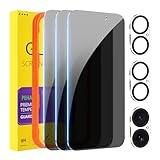
- [Designed for iPhone 16] - PEHAEL's screen protector is specially designed for the iPhone 16 6.1 inch. Include 3 privacy screen protectors, 3 tempered camera lens protectors, a precision installation frame, and a cleaning kit. *Two types of packaging boxes are randomly shipped.
- [Full Coverage Protection] - This screen protector offers edge-to-edge protection for your device, using military-grade explosion-proof glass. It is also compatible with most phone cases, the appropriate size ensures that the phone case won't squeeze the screen protector after installation, providing double protection for the edges of the phone.
- [High Privacy Protection] - The necessary choice for you in public places. Select the optimal anti-peeping angles for the anti-spy coating to balance privacy and visual comfort. Protect your personal privacy and sensitive information from being seen by people nearby who might peek. To better protect your phone, 3mm nano-scale ultra-thin aviation glass is chosen as the material, it also protects your eyes from harsh light, ensuring a softer visual effect.
- [Night Shooting Function] - This feature includes a specially designed dark circle phone camera lens protector. The camera lens protector uses new technology to seamlessly integrate augmented reality, maintaining high light transmittance and effective night shooting capabilities without needing a separate flash hole, ensuring original photo and video quality when the flash is used at night.
- [Face ID Compatible] - Precisely cut the screen for the iPhone 16. To ensure the perfect use of the Face ID function, it is recommended to use the included precision mounting frame for precise alignment and installation. The high-quality glass material supports the use of the Face ID function, and high-pixel photos can also be taken through the front camera.
Design abuse safeguards without requiring unnecessary identity
Privacy does not remove the need to handle harmful content and abusive users. If user-generated content is central, build safeguards into the product rather than relying on a vague promise that the community will self-police. Apple’s App Store Review Guidelines require user-generated-content apps to provide content filtering, a mechanism for users to report offensive content with timely responses, the ability to block abusive users, and published contact information. The same policy warns that services primarily used for random or anonymous chat may be removed.
- Filtering: Decide how content is screened and what happens when a filter flags it. Make the behavior understandable, and provide a path to report content that filtering misses.
- Reporting: Make the reporting action reachable from the relevant content. Tell users what information a report includes and what response process follows; route reports to people or systems with defined responsibility.
- Blocking: Let users block abusive accounts and ensure the block has a meaningful effect on the interaction the product supports.
- Contact: Publish a reachable contact channel for service concerns, separate from any promise that a report will receive a particular outcome.
These controls can be designed without requiring every person seeking support to provide a real-world identity. For instance, a report can refer to a post or pseudonymous account, while the service limits access to report details and sets a retention period for them. If safety escalation truly requires additional information, explain what is requested, when, and why rather than quietly broadening collection across the entire service.
Do these 3 things before closing this tab:
1Scan for outdated or missing drivers - takes under a minute2Repair Windows errors before they cause bigger problems3Fix the driver behind crashes, sound loss and screen glitchesApple’s policy is a living document, and the reviewed page is its UK version. Check the current requirements for the distribution market and the app’s exact interaction model before release; anonymous support groups, public posting, and random matching should not be assumed to receive identical treatment.
Rank #4

- 【Industry-Leading 100% Anti-Spy Privacy Protection】Designed for iPhone 16 Pro. Larger iPhone screens are easier for others to glance at, so UltraGlass uses patented, SEGI-certified 25° Blackout-3 optical technology to help block side views and keep emails, banking apps, and private content visible only to you—while keeping the front view HD-clear and comfortable through hours of scrolling and streaming.
- 【Unbreakable TOP 9H+ Glass, the Excellent 2nd Screen for Your iPhone】Boasting unparalleled shatter resistance and durability. The core excellence is the top 9H+ tempered glass material, which is widely applied in aerospace and military fields for its ① Shatter-proof ② Scratch & Wear Resistance ③ Durability that is 7-8 times higher than other materials. Thus, UltraGlass builds a second tough screen for your iPhone 16 Pro.
- 【Industry NO.1 Military-Grade Shatterproof】Authorized by the International Military Standard with 50+ rigorous engineering tests of 220 lbs impact, 8,000+ drop tests, 20,000+ scratch tests, etc., its strength, toughness and durability perform NO.1 among all glass. By especially breaking the industry's record with a 12FT drop, the iPhone 16 Pro privacy glass is ensured to be unbreakable from its surface to every edge and corner.
- 【Invisible Armor, 1:1 Full Covers the iPhone's Screen】Mimicking the iPhone's original screen design, it uses a 1:1 3D curved reinforced black edge, wraps around every curve, securing even the most vulnerable edges. Seamlessly blending with the iPhone 16Pro screen, it’s virtually invisible and feels like the original screen while offering enhanced full-screen protection.
- 【0 Bubbles + 0 Dust + 0 Misaligned =100% Successful Installation】Includes everything you need with pioneering automatic positioning, dust removal, and absorption technology, making the installation just effortlessly easy in seconds. No air bubbles and troubles, it transforming beginners into experts!
Make privacy and security part of service operations
Security promises depend on routine work after launch as much as on initial design. FTC guidance for mobile health app developers recommends addressing security across the product lifecycle, protecting stored and transmitted data, assessing third-party providers, testing protections, maintaining a vulnerability response process, and planning updates. These are useful practices where support content is sensitive; the guidance does not by itself determine which laws apply to a particular service.
Assign ownership and access
Name the person or team responsible for each sensitive data flow, moderator access, vendor relationship, and security issue. Give staff and systems only the access needed for their defined tasks. Review who retains access when roles or responsibilities change, and keep the user-facing explanation consistent with the actual access model.
Set retention and deletion rules
For each data category, define the purpose, the point at which the purpose ends, and the deletion or de-identification action that follows. Account recovery, moderation, and abuse investigations may create different retention needs; document those separately rather than applying an indefinite default to everything. Tell users what deletion does and does not remove where that distinction affects their expectations.
Best Value

- True 28° Anti-spy Protection: This privacy screen offers 28° partial and 45° full peep-proof protection, keeping your messages private—even from friends or colleagues beside you. It's a good choice when you are on the elevator, metro, and public spaces.
- Perfect Fit & Case Friendly: Precisely cut to perfectly match your phone’s display, with edges designed slightly smaller than the screen. This prevents interference with Face ID and the front camera, while ensuring case compatibility and avoiding edge lift or bubbling.
- Super-Easy Installation: This dual-pack privacy screen protector includes an auto-alignment frame for hassle-free application. The kit comes with alcohol wipes, dust removal stickers, absorbers, a microfiber cloth, and a guide. Perfect alignment is effortless, even for beginners.
- Durable Protection: This privacy screen protector features 9H hardness tempered glass to guard against scratches, drops, and bumps. Its hydrophobic and oleophobic coating resists fingerprints and smudges.
- HD Clarity & Touch Sensitivity: This privacy glass screen protector maintains screen brightness and detail while ensuring smooth, accurate touchscreen response with minimal distortion.
Review vendors and test protections
Inventory providers and SDKs that receive data or can access systems. Understand what each receives, the service purpose, and how its access and retention are controlled. Test the protections that matter to the product’s actual flows, including the handling of stored and transmitted data, moderator permissions, account and report workflows, and expected deletion behavior. A vendor’s presence or a security feature’s name is not evidence that the whole service is safe.
Prepare for vulnerabilities and updates
Provide a channel for reporting security vulnerabilities, assign responsibility for reviewing reports, and plan how fixes reach supported versions of the app and its backend. State how users can contact the service about security concerns without suggesting that every issue can be resolved on a fixed timetable. Build update planning into ongoing operations rather than treating launch as the end of security work.
Choose the trade-offs deliberately
There is no single identity setting that resolves privacy, safety, continuity, and distribution requirements. Make the trade-offs explicit at feature level and record the reason for the chosen design.
| Decision | Question to resolve | Practical design test |
|---|---|---|
| Identity assurance vs. exposure | Which actions genuinely need a verified identity, a pseudonym, or no identity? | Can a user complete the support journey with less identity information? |
| Abuse resistance vs. user friction | How should reports, blocks, rate limits, or moderator escalation work? | Can safeguards function without asking every vulnerable user for unnecessary identifiers? |
| Data utility vs. privacy risk | Which information is essential to deliver support or operate safety controls? | Can a field or transfer be excluded, de-identified, or deleted sooner? |
| Support continuity vs. retention | What must persist for an account or conversation to work? | Is there a defined deletion path once that purpose ends? |
| Distribution reach vs. platform rules | Does the interaction model fit current store policies for user-generated content and anonymous chat? | Has the exact design been checked against the current policy for each target market? |
These comparisons are decision aids synthesized from NIST’s risk framing and FTC and Apple guidance, not results from a published comparative study. They help make design choices reviewable; they do not certify an app or establish that a particular moderation workflow, vendor, or technical architecture is safe.
Quick Recap
Product prices and availability are accurate as of the date/time indicated and are subject to change. Any price and availability information displayed on Amazon at the time of purchase will apply.

