
Free tools Windows power users keep installed
One-click scans. No signup required.
Build one repeatable export workflow around a maintained exporter profile and a separate record for each shipment. Keep EU-wide identifiers and rules distinct from the national customs system used to file, and make destination- and product-specific documents conditional. This guide covers goods leaving the EU customs territory; moving goods between EU Member States involves different VAT, excise and sector-specific questions.
How to structure a multi-country export workflow
A reliable pipeline is not a single document bundle copied to every order. It is a sequence of checks that uses shared exporter data while adapting filing steps and document requirements to each shipment. The workflow below is a practical design based on the European Commission’s export guidance, not a prescribed legal or technical schema.
- Maintain an exporter profile. Record the operator’s legal identity, establishment country, EORI and the national customs filing route relevant to that establishment. Keep this profile separate from shipment records so a verified change can be maintained centrally.
- Create a shipment record. Capture the destination market, goods description, commodity or HS classification, quantity, value, origin information, transport mode and parties. Include the intended customs treatment and any preference claim where relevant.
- Resolve conditional requirements. Check restrictions and product controls, destination documents, licences or certificates, and whether a preferential-origin claim is available for these goods under an applicable agreement.
- Prepare the shipment evidence. Generate or collect the commercial invoice, packing list, transport record and customs-declaration data. Add licences, certificates or origin evidence only when the route, goods, agreement or intended treatment calls for them.
- Assign every action. Name the person or company responsible for exporter-side documents, filing, presentation of goods, exit follow-up and any buyer-side import clearance, duties or taxes.
- File, monitor and retain. Track both export and exit formalities, retain the resulting evidence, and preserve the shipment record under a retention policy that accounts for applicable national rules.
Use shipment status gates—such as “requirements checked,” “documents ready,” “declaration filed,” “goods presented” and “exit confirmed”—so an order cannot appear complete merely because its export declaration was submitted.
What is shared across the EU, and what changes by country or shipment?
Multi-country operations become easier to control when the workflow separates three layers. The European Commission’s Access2Markets guidance describes EORI as valid throughout the EU and needed for customs export declarations. The filing system and many operational details, however, are national; import conditions vary with the destination and the product.
#1 Best Overall

- PORTABLE SCANNER FOR USE ON-THE-GO — The fastest and lightest mobile single-sheet-fed compact document scanner in its class¹
- QUICK DOCUMENT SCANNING ― This Epson ultra-fast scanner scans a single page as quickly as 5.5 seconds²; Windows and Mac compatible
- VERSATILE PAPER HANDLING ― Portable scanner scans documents up to 8.5 x 72 in; Also easily digitizes receipts and ID cards to make accounting, bookkeeping, and organizing simpler
- INTUITIVE, HIGH-SPEED SOFTWARE — Epson ScanSmart Software³ is a smart tool allowing you to easily scan, review, and save; Stay organized easily with the help of this Epson scanner
- EASY SETUP — USB-powered connect to your computer for quick and simple scanning; No batteries or external power supply required to operate portable document scanner; Standard Connectivity: USB 2.0
| Workflow layer | What belongs there | What to verify |
|---|---|---|
| EU-level identifier and framework | The exporter’s EORI and the general export and exit process. | Whether the operator has an EORI and whether the shipment’s facts fit the relevant procedure. |
| National filing route | The competent authority and electronic system used to lodge the declaration, plus country-level filing mechanics. | The current route and requirements of the relevant national customs authority. |
| Shipment and destination | Goods, classification, route, origin evidence, product controls and destination-market documents. | The current requirements for this product-country combination and intended customs treatment. |
This division prevents two common design mistakes: assuming one national filing interface works identically across the EU, and treating one destination’s document checklist as universal.
How do you get an EORI number?
Apply to the competent customs authority in the EU country where the operator is established. The Commission says an EORI is valid throughout the EU and is needed for customs export declarations. Store the resulting identifier in the exporter profile, then use it consistently in the shipment and declaration records.
Because the application is handled by the competent authority in the establishment country, confirm its current application route and any local instructions there. Do not build a process that assumes an EORI must be obtained separately for every EU country through which goods travel.
Rank #2

- FAST SPEEDS - Scans color and black and white documents a blazing speed up to 16ppm (1). Color scanning won’t slow you down as the color scan speed is the same as the black and white scan speed.
- ULTRA COMPACT – At less than 1 foot in length and only about 1. 5lbs in weight you can fit this device virtually anywhere (a bag, a purse, even a pocket).
- READY WHENEVER YOU ARE – The DS-640 mobile scanner is powered via an included micro USB 3. 0 cable allowing you to use it even where there is no outlet available. Plug it into you PC or laptop and you are ready to scan.
- WORKS YOUR WAY – Use the Brother free iPrint&Scan desktop app for scanning to multiple “Scan-to” destinations like PC, Network, cloud services, Email and OCR. (2) Supports Windows, Mac and Linux and TWAIN/WIA for PC/ICA for Mac/SANE drivers. (3)
- OPTIMIZE IMAGES AND TEXT – Automatic color detection/adjustment, image rotation (PC only), bleed through prevention/background removal, text enhancement, color drop to enhance scans. Software suite includes document management and OCR software. (4)
What documents should each shipment record include?
Use a stable core record, then add conditional evidence when the shipment requires it. The European Commission’s export guide identifies the following documents or records to prepare or retain:
Quick wins for a faster PC:
Fix the driver behind crashes, sound loss and screen glitchesFind Drivers →Clear out junk files and repair common Windows errorsFree Scan →- Commercial invoice and transport documents.
- Packing list.
- Customs declaration information and the related export and exit evidence.
- VAT and export records, including proof of export where applicable.
- Licences, certificates and origin evidence when the goods, route or customs treatment require them.
Keep the shipment facts that allow these documents to be checked against one another: parties, goods description, classification, quantity, value, destination, transport mode and origin information. A mismatch between the invoice, packing list and declaration data can make review and correction harder.
Make origin evidence conditional
Do not treat “made in the EU” as automatic qualification for a preferential tariff. A preference claim requires an applicable trade agreement, compliance with that agreement’s product-specific rules of origin and the form of proof permitted by the agreement. Depending on the agreement, evidence may take the form of an origin statement or declaration, or a certificate. Authorised Exporter or REX status may be required for some self-certification routes or thresholds.
Rank #3
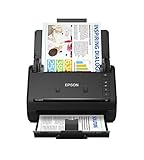
- FAST DOCUMENT SCANNING — Document scanner with feeder allows you to speed through stacks with a 50-sheet Auto Document Feeder (ADF); Efficient office scanner to help you scan more productively
- INTUITIVE, HIGH-SPEED SOFTWARE — Quickly scan with this desktop document scanner; Epson ScanSmart Software lets you easily preview scans, email files, upload to the cloud, and more; Plus, automatic file naming saves even more time
- SEAMLESS INTEGRATION — Easily incorporate your data into most document management software with the included TWAIN driver; Office document scanner integrates seamlessly with business workflows
- EASY SHARING — Duplex scanner allows you to scan straight to email or popular cloud storage2 services like Dropbox, Evernote, Google Drive, and OneDrive for simple storage and sharing
- SIMPLE FILE MANAGEMENT — Scanner allows the creation of searchable PDFs with Optical Character Recognition (OCR) and convert scans to editable Word or Excel files effortlessly; Designed for home and office document scanning
Non-preferential origin evidence can also be requested or required in particular circumstances. Record the basis for an origin claim and the evidence used rather than marking every shipment as eligible by default.
How do you check export requirements for a specific product and country?
Check each product-country combination in the European Commission’s My Trade Assistant in Access2Markets. The tool uses product or HS-code and country details to provide trade information. Use the result as a route-specific check, not as permission to skip confirmation where an item is unclear or the shipment has special circumstances.
- Identify the product accurately and determine the relevant commodity or HS classification.
- Enter the product or code and destination details in My Trade Assistant / Access2Markets.
- Review applicable import licences, product compliance requirements, labelling, packaging, restrictions, duties and taxes, as relevant to the goods and market.
- Check whether an agreement applies and, if a preference is intended, verify the product-specific origin rule and allowed proof.
- Confirm unresolved requirements with the relevant destination authority or importer, and check national customs authorities for the export filing mechanics.
There is no universal destination checklist. A certificate, licence or label that matters for one product or market may not be required for another, and rules can depend on the intended customs treatment as well as the goods and destination.
Rank #4

- Scanner type: Document
- Connectivity technology: USB
- With Auto Scan Mode, the scanner automatically detects what you're scanning
- Digitize documents and images
How do export declaration and exit formalities fit together?
The export declaration is electronic and must be lodged before departure. It is submitted to the national customs authority, generally through that country’s processing system. The European Commission also describes a pre-departure declaration as a safety and security requirement for goods leaving the EU customs territory; that information may be included in the customs declaration.
The Commission’s general process has two customs stages:
- Customs office of export: lodge the declaration and present the goods. Customs can process the declaration and release the goods for export.
- Customs office of exit: present the goods and identify the declaration’s MRN. The exit office records the goods’ departure and releases them for exit.
Track both stages in the shipment record. A filed declaration alone does not establish that exit formalities are complete. The Commission describes limited exceptions to the general lodging rules based on consignment value and restrictions; these are procedural and route-specific, so confirm the current national system and shipment facts rather than encoding a blanket exception.
Best Value

- OUR MOST ADVANCED SCANSNAP. Large touchscreen, fast 45ppm double-sided scanning, 100-sheet document feeder, Wi-Fi and USB connectivity, automatic optimizations, and support for cloud services. Upgraded replacement for the discontinued iX1600
- CUSTOMIZABLE. SHARABLE. Select personalized profiles from the touchscreen. Send to PC, Mac, mobile devices, and clouds. QUICK MENU lets you quickly scan-drag-drop to your favorite computer apps
- STABLE WIRELESS OR USB CONNECTION. Built-in Wi-Fi 6 for the fastest and most secure scanning. Connect to smart devices or cloud services without a computer. USB-C connection also available
- PHOTO AND DOCUMENT ORGANIZATION MADE EFFORTLESS. Easily manage, edit, and use scanned data from documents, receipts, photos, and business cards. Automatically optimize, name, and sort files
- AVOIDS PAPER JAMS AND DAMAGE. Features a brake roller system to feed paper smoothly, a multi-feed sensor that detects pages stuck together, and skew detection to prevent paper damage and data loss
Who files, and how should responsibilities be assigned?
The exporter can file directly or use a customs representative, such as a forwarding company or broker. Whichever approach is used, write down the handoff: who supplies accurate goods data, who prepares and submits the declaration, who presents the goods, who follows the MRN through exit, and who retains the evidence.
Agree with the buyer who prepares destination-side documents and who handles import clearance, duties and taxes. A buyer or broker may perform a task, but the workflow should still identify its owner and the evidence that confirms completion. This is especially important when the exporter uses more than one representative or ships to several markets.
How long should export records be retained?
The European Commission’s Access2Markets export guide says to retain the documents it lists for at least three years. It also cautions that national commercial and fiscal laws may require longer. Configure the retention schedule to meet the applicable national requirements rather than treating three years as a universal maximum or sufficient period in every case.
Preserve the underlying documents and a traceable link between them and the shipment record. The record should make it possible to retrieve the declaration and MRN, invoice, transport evidence, proof of export and any conditional origin, licence or certificate evidence for the relevant transaction.
Do these 3 things before closing this tab:
1Fix the driver behind crashes, sound loss and screen glitches2Repair Windows errors before they cause bigger problems3Scan for outdated or missing drivers - takes under a minuteWhat should the system make configurable?
Keep the workflow’s structure stable, but avoid hard-coding rules that differ by route, product or market. Practical configuration points include:
- The exporter’s establishment country, EORI and national declaration route.
- Product classifications and shipment-specific goods data.
- Conditional document rules for licences, certificates, origin proofs and destination fields.
- Filing and exit statuses, with clear owners and evidence requirements at each gate.
- Retention schedules that can reflect applicable national commercial and fiscal rules.
If choosing between self-filing and a representative, assess the number of national routes and product categories involved, the complexity of origin claims, available links to business, transport and customs systems, audit-trail controls, and coverage of destination-specific documents. These are practical selection criteria, not requirements imposed by the Commission.
Quick Recap
Product prices and availability are accurate as of the date/time indicated and are subject to change. Any price and availability information displayed on Amazon at the time of purchase will apply.

