
Blended cement can reduce concrete’s carbon footprint by replacing some clinker with other materials, but it is not automatically weaker, stronger, or suitable for every project. The right choice depends on the specific cement type, concrete mixture, required strength age, exposure conditions, local supply, and applicable specification.
What is the difference between blended cement and ordinary portland cement?
Both are hydraulic cements: they react with water and form solid hydrates. In the United States, ordinary portland cement is generally specified under ASTM C150, while blended hydraulic cement is specified under ASTM C595. The specifications define different product categories; the labels alone do not tell you how a finished concrete mixture will perform.
Blended cement is a family of formulations that combine portland cement or clinker with one or more other fine materials. Depending on the product, those materials may include limestone, blast-furnace slag, coal ash, silica fume, calcined clay, or other pozzolans. Common ASTM C595 designations include:
- Type IL: portland-limestone cement. The American Cement Association (ACA) says Type IL contains 5% to 15% ground limestone.
- Type IS: portland cement incorporating blast-furnace slag.
- Type IP: portland cement incorporating pozzolans.
- Type IT: a ternary blend combining multiple supplementary materials.
ASTM C150 includes portland cement Types I, II, III, and V. Type and suffix designations matter: products can have particular properties, and the project’s governing specification determines what is permitted.
Do these 3 things before closing this tab:
1Fix the driver behind crashes, sound loss and screen glitches2Repair Windows errors before they cause bigger problems3Scan for outdated or missing drivers - takes under a minute#1 Best Overall
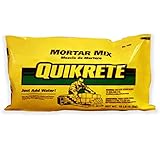
- QUIKRETE Construction Grade Mortar Mix of Masonry Cement and Graded Sand for Laying Brick, Concrete Units, and Stone, 10 Pounds
Does blended cement reduce CO2 emissions?
It can. Clinker is the energy- and CO2-intensive ingredient in cement, so replacing some clinker with non-clinker materials is the main material-level emissions lever described by the ACA. The size of any reduction depends on the blend and how the cement and concrete are produced and used; it should not be assumed from the word “blended” alone.
For Type IL, the ACA states: “PLC reduces carbon footprint by up to 10% when replacing portland cement in concrete mixtures.” This is the association’s upper-bound claim, not a guaranteed reduction for every product, mix, or project. Other blends may have lower footprints where they use larger proportions of non-clinker materials, but availability of slag, coal ash, calcined clay, and other ingredients varies by location.
Rank #2

- QUICK SETTING: Sets in 20 minutes
- VERSATILE: Indoor, and outdoor use
- EASY TO USE: Ready to use! Just add water, mix, and use!
- MULTIPLE SURFACES: Handrails, bolts, poles, fixtures, and more
- PRACTICAL SIZE: 10 pound bag saves your back while providing plenty of cover
The ACA also estimates that U.S. use of portland-limestone cement and other blended cements reduced emissions by more than 3.9 million metric tons of CO2 in 2023. That figure is an industry-association estimate for national use, not a measured saving that can be applied to a particular project. The association has also reported that PLC U.S. shipments exceeded portland cement shipments in mid-2023; that is a dated market claim, not a current shipment comparison.
For a product comparison, review environmental product declarations (EPDs) for the actual cement options. Check that their product categories, functional units, and declared boundaries match. An EPD reports impacts under its stated rules, especially manufacturing impacts; by itself, it does not establish the full lifecycle impact of a building or infrastructure project. Transportation, construction, service life, maintenance, and end-of-life treatment also affect a project assessment. The ACA’s environmental-impact page said U.S. industry-average cement EPDs had been extended until July 2027; confirm the current status when using one.
What’s actually slowing this PC down?
Pick the symptom - the matching free tool is one click away.
Rank #3
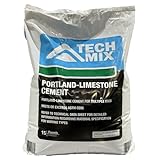
- MULTIPURPOSE: Basic building material for crafts, pavement, sidewalks, reinforced concrete buildings, masonry units, and more
- MIX AND USE: Use to create concrete, mortar, and stucco mixes
- GREAT FOR DIY PROJECTS: Ideal for small crafts with forms and silicone molds
- HIGH STRENGTH: Solid once dry, dry in 48 hours
- LESS IS MORE: One bag yields approximately .16 cu. ft.
Is blended cement stronger than ordinary portland cement?
There is no universal strength winner. Strength is a property of the concrete mixture, not just the cement label. Cement composition and fineness, water-to-cement ratio, aggregate, admixtures, curing, temperature, and test age all affect the result. Supplementary cementitious materials can also change workability, heat release, setting, strength-development rate, pore structure, permeability, and resistance to deleterious materials.
Some slower-reacting supplementary materials can mean lower measured strength at 28 days, while strength may continue to develop at later ages. The ACA says some specifiers use 56- or 90-day strength ages for this reason. Standard practice commonly measures concrete compressive strength at 28 days, but the project specification can call for another age. Compare concrete mixture data at the specified test age rather than comparing cement types in isolation.
Rank #4

- 【Cement Repair Base Mix for Concrete & Masonry】:Industrial-grade cement powder formulated for repairing cracks, surface defects, holes, and spalling on concrete, masonry, brick, and mortar substrates. This is a non-premixed base mix, allowing users to create custom repair mortar based on project needs.
- 【 Mix with Water or Sand for Adjustable Strength】:For thin cracks and surface leveling, simply mix with water to create a smooth cement slurry.For deeper cracks, holes, or structural patching, combine with sand to build a strong, dense cement mortar mix.
- 【Ideal for Home and Professional Repairs】:Suitable for driveways, sidewalks, garage floors, basement walls, patios, cinder blocks, brick joints, and concrete slabs. Works for crack filling, patching, resurfacing, bonding, and small-area concrete restoration.
- 【Easy to Use and Adaptable】:Mix 1 part water to 6 parts cement powder as a guideline to achieve a workable consistency. Users can slightly adjust the amount of water depending on the repair type. Can be applied with common tools such as trowels, putty knives, or spreaders, allowing flexible use for small to medium repair projects.
- 【Suitable for Indoor and Outdoor Repairs】:Designed for basic concrete patching, including cracks, holes, and surface touch-ups. The material can be used in both indoor and outdoor environments, giving users a versatile base for their repair needs.
For a real project, evaluate trial-mixture or supplier data alongside placement and finishing behavior, curing conditions, exposure requirements, and any early-strength needs. Older Federal Highway Administration guidance also explains that cement composition and fineness can affect early and ultimate strength, heat release, setting, and resistance to deleterious materials; it is useful for understanding mechanisms, but current supplier data and project trials are more directly applicable to a particular mixture.
Where are blended cements used?
The ACA lists both portland and blended cement among general-purpose options for pavements, floors, reinforced-concrete buildings, bridges, tanks, reservoirs, pipe, masonry units, and precast products. A blended cement is not restricted to a niche application simply because it is blended. However, a project may require specific sulfate resistance, early strength, or other properties, and not every cement type is available everywhere.
The Tool Desk
Outbyte PC Repair FREEClear out junk files and repair common Windows errorsFree Scan →Outbyte Driver Updater FREEScan for outdated or missing drivers - takes under a minuteDriver Scan →Best Value

- Premium stepping stone mix is a specialized mix of super-fine cement, latex, and curing agents
- Get a smooth professional finish every time
- Withstands up to 250 pounds of pressure
- Perfect for your next stepping stone or DIYT craft project
- 8 pounds of stepping stone mix
Before specifying a product, check that its designation meets the contract and governing code or specification, that it is locally supplied, and that the concrete mixture meets the project’s performance requirements. ACA’s 2026 contractor guidance recommends assessing performance criteria such as workability, strength, durability, shrinkage, and permeability. It also advises: “Treat every new blend as a new material, even if the label is familiar.”
Independent reader supportYour contribution helps us test, update, and keep practical guides available for everyone.How should you choose between them?
- Confirm the required strength and test age. Check whether the specification requires 28-day strength or permits a later age. If early form removal or rapid opening is important, verify the required early performance with the supplier and mixture designer.
- Match the cement to exposure and durability requirements. Confirm sulfate resistance and other relevant exposure criteria against the specified cement designation and the complete concrete design.
- Check fresh-concrete behavior. Assess setting, workability, bleeding, finishing, and curing response in the actual mixture. Use supplier information and, where appropriate, a trial mixture or mockup before relying on a new blend.
- Compare environmental declarations on equivalent terms. Use EPDs for the actual products and align the product category, functional unit, and boundaries. Include transport and the wider project lifecycle when that is the question being assessed.
- Verify specification and local availability. Confirm that the product can be supplied for the project and is allowed by the governing contract, code, and specification.
When project requirements allow, performance-based specifications can focus on the needed outcomes instead of imposing unnecessarily narrow prescriptive limits. The engineer or specifier should determine whether that approach is permitted and define how performance will be demonstrated.
Quick Recap
Product prices and availability are accurate as of the date/time indicated and are subject to change. Any price and availability information displayed on Amazon at the time of purchase will apply.

