
Windows Errors? Fix Them Before They Spread
Repair common Windows errors and clear accumulated junk for a smoother, more stable PC - no reinstall needed.Free scan · no reinstallOutdated Drivers Are Slowing You Down
One free scan finds every outdated or missing driver and matches the right update for your exact hardware.Free scan · exact hardware matchFor a large home, choose a Wi-Fi 7 mesh system by matching its node count and placement, backhaul options, and Ethernet ports to your floor plan and internet service—not by picking the biggest advertised speed or coverage number. The NETGEAR Orbi 770 and ASUS ZenWiFi BQ16 Pro have support from independent reviews, while the Orbi 970, eero Max 7, and TP-Link Deco BE95 stand out for specific published specifications. No evidence establishes one universal winner.
How to choose a Wi-Fi 7 mesh system for a large home
A mesh system uses multiple nodes to extend one home network. In a large or multistory house, whether those nodes can reach the rooms that need service—and where you can place them—can matter more than the system’s headline speed tier. Start with your floor plan, floors, wall materials, existing dead zones, and whether Ethernet can connect the nodes.
Treat square-footage figures as manufacturer estimates, not promises for your house. eero cautions that range can be reduced by placement and building materials. Likewise, an aggregate Wi-Fi rating is not a prediction of the speed one device will get from an internet connection.
Check node count and placement
Compare kits with the same number of units when considering cost or coverage. A three-node kit gives you more placement options than a two-node kit, but it does not guarantee a fixed increase in usable coverage. Place nodes to bridge the route between the router and weak areas rather than assuming that putting one in the dead zone will solve the problem.
What’s actually slowing this PC down?
Pick the symptom - the matching free tool is one click away.
#1 Best Overall
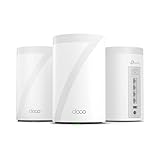
- 𝐅𝐞𝐚𝐭𝐮𝐫𝐞-𝐑𝐢𝐜𝐡 𝐖𝐢-𝐅𝐢 𝐁𝐮𝐢𝐥𝐭 𝐭𝐨 𝐋𝐚𝐬𝐭: Get expansive whole-home coverage, fast Wi-Fi 7 speeds, and a future-ready 10G WAN/LAN port that stays ahead as your network grows. Ideal for both everyday users and performance-focused homeowners.
- 𝗩𝗮𝘀𝘁 𝗠𝗲𝘀𝗵 𝗖𝗼𝘃𝗲𝗿𝗮𝗴𝗲 & 𝗗𝗲𝘃𝗶𝗰𝗲 𝗖𝗮𝗽𝗮𝗰𝗶𝘁𝘆: The 3-pack mesh system covers up to a vast 7,600 sq.ft. and supports over 200 devices without compromising performance, ensuring seamless connectivity.
- 𝐁𝐄𝟏𝟎𝟎𝟎𝟎 𝐓𝐫𝐢-𝐁𝐚𝐧𝐝 𝐖𝐢-𝐅𝐢 𝟕 𝐒𝐩𝐞𝐞𝐝𝐬: Delivers up to 5,188 Mbps (6 GHz), 4,324 Mbps (5 GHz), and 574 Mbps (2.4 GHz) speeds for 4K/8K streaming, AR/VR gaming, and more. Performance varies by conditions, distance to devices, & obstacles such as walls.
- 𝗙𝗼𝘂𝗿 𝟮.𝟱𝗚 𝗪𝗔𝗡/𝗟𝗔𝗡 𝗣𝗼𝗿𝘁𝘀: Includes four 2.5G WAN/LAN ports and a USB 3.0 port, making it an ideal choice for future-proofing your home network.
- 𝐒𝐢𝐦𝐮𝐥𝐭𝐚𝐧𝐞𝐨𝐮𝐬 𝐖𝐢𝐫𝐞𝐝 & 𝐖𝐢𝐫𝐞𝐥𝐞𝐬𝐬 𝐁𝐚𝐜𝐤𝐡𝐚𝐮𝐥: Tri-band Wi-Fi 7 and 10G Ethernet work together to balance traffic between Deco units for faster, more stable whole-home coverage. Backhaul requires at least two Deco units.
Decide whether you can wire the backhaul
Backhaul is the connection between mesh nodes. If you can run Ethernet between them, a wired link can avoid using wireless airtime for node-to-node traffic. NETGEAR specifies a 10 Gbps wired-backhaul option for Orbi 970, and TP-Link describes wired and wireless links between Deco units. These specifications establish options, not a universal performance gain. If wiring is not practical, compare each system’s band configuration and whether wireless backhaul is dedicated or shared.
Match ports to your internet plan and devices
Check both the WAN connection to your modem and the LAN ports available for wired devices. If your broadband plan or local network exceeds 1 Gbps, a system limited to gigabit Ethernet may become a bottleneck. Also check whether you will need a separate switch to connect multiple wired devices, and verify the exact kit and regional model before buying.
Rank #2

- 𝐃𝐞𝐜𝐨 𝟕 𝐒𝐮𝐩𝐞𝐫𝐜𝐡𝐚𝐫𝐠𝐞𝐝 𝐰𝐢𝐭𝐡 𝟒-𝐒𝐭𝐫𝐞𝐚𝐦 𝐁𝐄𝟓𝟎𝟎𝟎 𝐃𝐮𝐚𝐥-𝐁𝐚𝐧𝐝 𝐖𝐢𝐅𝐢 𝟕: Delivers up to 4324 Mbps (5 GHz) and 688 Mbps (2.4 GHz) speeds for 4K/8K streaming, AR/VR gaming, and more◇. Performance varies by conditions, distance to devices, & obstacles such as walls.
- 𝐒𝐞𝐚𝐦𝐥𝐞𝐬𝐬 𝐖𝐡𝐨𝐥𝐞-𝐇𝐨𝐦𝐞 𝐂𝐨𝐯𝐞𝐫𝐚𝐠𝐞: Covers up to 6,600 sq. ft. for over 150 devices with the option to expand anytime by adding another Deco router. All Deco routers work together.
- 𝐒𝐢𝐦𝐮𝐥𝐭𝐚𝐧𝐞𝐨𝐮𝐬 𝐖𝐢𝐫𝐞𝐝 & 𝐖𝐢𝐫𝐞𝐥𝐞𝐬𝐬 𝐁𝐚𝐜𝐤𝐡𝐚𝐮𝐥: Wi-Fi 7 and 2.5G Ethernet work together to balance traffic between Deco units for faster, more stable whole-home coverage. Backhaul requires at least two Deco units.§
- 𝐄𝐚𝐬𝐲 𝐒𝐞𝐭𝐮𝐩 & 𝐌𝐚𝐧𝐚𝐠𝐞𝐦𝐞𝐧𝐭: Set up and control your network in minutes with the Deco App. Keep your WiFi performing at its best by keeping the firmware updated through the App. All Wi-Fi routers require a separate modem. ⌂
- 𝐎𝐮𝐫 𝐂𝐲𝐛𝐞𝐫𝐬𝐞𝐜𝐮𝐫𝐢𝐭𝐲 𝐂𝐨𝐦𝐦𝐢𝐭𝐦𝐞𝐧𝐭 - TP-Link is a signatory of the U.S. Cybersecurity and Infrastructure Security Agency’s (CISA) Secure-by-Design pledge. This device is designed, built, and maintained, with advanced security as a core requirement.
Consider the devices you actually use
Wi-Fi 7 features matter only when the router, configuration, and client device support them. A newer mesh system can still connect older Wi-Fi devices, but those clients do not automatically gain Wi-Fi 7 capabilities. eero’s overview explains the technology and compatibility considerations: eero Wi-Fi 7 overview.
Wi-Fi 7 mesh systems to consider
| System | Evidence and key specifications | Best fit to consider |
|---|---|---|
| NETGEAR Orbi 770 | TechRadar’s 2026 guide names it “Best mesh Wi-Fi for large homes.” The reviewer reported that the tested kit filled a troublesome dead spot and delivered the test home’s full 150 Mbps broadband speed to all corners. The guide lists tri-band Wi-Fi 7, 2.5 Gb Ethernet ports, and two- or three-piece configurations. | Consider it if you want an option supported by a large-home review and can select a kit size that suits your layout. The test result reflects that reviewer’s home and broadband connection, not a guaranteed result elsewhere. TechRadar also notes limited app features and some subscription-dependent features. |
| ASUS ZenWiFi BQ16 Pro | Tom’s Guide’s 2026 review calls it its best Wi-Fi 7 mesh pick. In its test environment, the reviewer measured 2.62 Gbps at 15 feet and 1.532 Gbps at 50 feet, and described 100-foot overall range in its setup. | Consider it if the premium two-pack fits your budget and you value the cited independent test results. Those measurements are specific to Tom’s Guide’s setup and are not a direct comparison with another reviewer’s results. |
| NETGEAR Orbi 970 | NETGEAR specifies a router plus two satellites, a 27 Gbps aggregate Wi-Fi rating, stated coverage of up to 10,000 sq. ft., support for up to 200 devices, dedicated backhaul, and a 10 Gbps wired-backhaul option. | Consider it if the specified node configuration, backhaul options, or port capacity match your needs. Its coverage and speed figures are manufacturer claims, not independent measurements or an expected speed for one client. |
| eero Max 7 | eero documents tri-band Wi-Fi 7, two 10 Gigabit and two 2.5 Gigabit Ethernet ports, up to 4.3 Gbps wireless and 9.4 Gbps wired speeds, and stated coverage of up to 2,500 sq. ft. per unit. | Consider it if the port mix and per-unit coverage estimate suit your setup. Do not multiply the per-unit coverage figure to predict a multi-unit kit’s real-world reach; eero says placement and building materials can reduce range. |
| TP-Link Deco BE95 | TP-Link’s U.S. product page lists up to 9,600 sq. ft. stated coverage, 200+ devices, a 10 Gbps WAN/LAN port, and combined wired and wireless backhaul. Its detailed band list describes a quad-band system, though other wording on the page calls it tri-band. | Consider it if the listed port and backhaul options suit your home, but confirm the exact regional SKU and band configuration. Treat coverage and device capacity as manufacturer specifications. |
| TP-Link Deco BE25 | TP-Link lists dual-band Wi-Fi 7, up to 6,600 sq. ft. stated coverage, up to 150 devices, a 2.5 Gbps WAN/LAN port, multiple pack sizes, and wired or wireless links between Deco units. | Consider it as a more modest dual-band option if its configuration and port capacity meet your needs. Its coverage figure is a manufacturer claim, not a guaranteed result in a particular home. |
Review claims and specifications can change with product revisions and regional bundles. Check the precise model and pack contents before purchase.
Rank #3

- WHOLE-HOME COVERAGE WITH NO DEAD ZONES: The router plus satellites create a seamless mesh system that blanket up to 6,000 sq ft in fast, reliable WiFi from the front door to the backyard and basement to rooftop, link up to 70 devices on one network
- EVERYONE ONLINE AT ONCE, NO SLOWDOWNS: Dual-Band technology with Enhanced Backhaul helps deliver faster WiFi across your home so WiFi stays fast on every device simultaneously
- NEXT-GEN WIFI 7 SPEEDS: Up to 5 Gbps, 2.4X faster than WiFi 6, for 8K streaming, gaming, VR & video calls. Your phones, laptops and TVs all connect, including WiFi 6 and WiFi 5. Real-world speeds vary depending on connected devices and internet plan
- EASY SET UP WITH THE ORBI APP: Guided step-by-step setup gets your mesh network running fast, then manage devices and guest WiFi from anywhere
- WORKS WITH ANY INTERNET PROVIDER: Compatible with cable or fiber Internet Service Provider equipment and ready for plans up to 2.5 Gbps. Simply connect Orbi to your existing modem for whole-home WiFi
What the independent tests do—and do not—tell you
The Orbi 770 and ASUS BQ16 Pro reviews provide useful but separate snapshots. TechRadar’s Orbi 770 result was reported in a home with 150 Mbps broadband; the reviewer also reported a nearly 11 Gbps peak system speed. Tom’s Guide measured the ASUS at particular distances in its own setup. These tests were not established as a same-lab head-to-head comparison, so their numbers should not be combined into a ranking.
For your decision, use those reviews as evidence that each system performed well in its respective test—not as a forecast of your own room-to-room speed. Your broadband plan, construction, node locations, client device, and connection method can all affect what you experience.
Rank #4

- OUR MOST AFFORDABLE WI-FI 7 ROUTER - eero 7 helps you future-proof your network and make the most of Wi-Fi 7 performance starting today.
- SAY GOODBYE TO DEAD SPOTS - eero 7 minimizes network disruptions to help ensure you have fast, reliable wifi in every room of your home.
- FULL SPEED AHEAD - Support for internet plans up to 2.5 Gbps with two auto-sensing 2.5 GbE ports and wireless speeds up to 1.8 Gbps.
- HIGHLY CONNECTED - Three eero 7s support 120+ devices and 6,000 sq. ft. of coverage, so there’s plenty of reliable Wi-Fi 7 performance to go around.
- BACKWARD COMPATIBLE - eero 7 is backward compatible with all previous generations of eero and compatible with eero Built-in on select Amazon Echo devices.
A practical selection checklist
- Map the rooms with weak service, the floors involved, and the walls or other materials between possible node locations.
- Compare two- and three-unit kits on a like-for-like basis, and confirm exactly what the selected bundle includes.
- Decide whether you can connect nodes with Ethernet. If so, check that the system supports wired backhaul and that its ports meet your requirements.
- Match the system’s WAN speed and available LAN ports to your broadband plan and wired devices; allow for a switch if the port count is insufficient.
- Check whether the devices you care about support Wi-Fi 7 before paying extra for features they cannot use.
- Compare the current price for the required kit size and account for any subscription-dependent features noted in the relevant review or product information.
- Verify the regional model, revision, and specifications, especially where product-page band descriptions conflict.
Bottom line
For review-backed options, compare the NETGEAR Orbi 770 and ASUS ZenWiFi BQ16 Pro while keeping their different test conditions in mind. If your priority is a particular port or backhaul capability, examine the Orbi 970, eero Max 7, or Deco BE95 specifications against your actual setup. The right system is the one whose node configuration and connections fit your home; advertised coverage and speed alone cannot identify it.
Quick Recap
Best Value

- 𝐍𝐞𝐱𝐭-𝐆𝐞𝐧 𝐖𝐢-𝐅𝐢 𝟕 𝐰𝐢𝐭𝐡 𝟒-𝐒𝐭𝐫𝐞𝐚𝐦 𝐃𝐮𝐚𝐥-𝐁𝐚𝐧𝐝 𝐮𝐩 𝐭𝐨 𝟑.𝟔 𝐆𝐛𝐩𝐬 - Designed with the latest Wi-Fi 7 technology, featuring Multi-Link Operation (MLO), Multi-RUs, and 4K-QAM, The Deco 7 BE23 delivers full speeds of up to 2882 Mbps on the 5GHz band, 688 Mbps on the 2.4GHz band with 4 streams and achieve optimized performance on latest WiFi 7 laptops and devices, like the iPhone 16 Pro, and Samsung Galaxy S24 Ultra.
- 𝐖𝐢𝐝𝐞 𝐂𝐨𝐯𝐞𝐫𝐚𝐠𝐞 𝐰𝐢𝐭𝐡 𝐒𝐭𝐫𝐨𝐧𝐠 𝐂𝐨𝐧𝐧𝐞𝐜𝐭𝐢𝐨𝐧 - Enjoy seamless max Wi-Fi coverage up to 6,500 sq. ft (3-Pack) and 150 devices without compromising performance. 4x high-gain antennas per node and 4x high-power FEMs deliver far-reaching, reliable signals for remote workers, gamers, students, and more.
- 𝐔𝐥𝐭𝐫𝐚-𝐅𝐚𝐬𝐭 𝟐.𝟓 𝐆𝐛𝐩𝐬 𝐖𝐢𝐫𝐞𝐝 𝐏𝐞𝐫𝐟𝐨𝐫𝐦𝐚𝐧𝐜𝐞 - Each Deco 7 BE23 unit is equipped with two 2.5 Gbps WAN/LAN ports, offering warp-speed connectivity for high-performance wired devices. Integrate with a multi-gig modem for gigplus internet.
- 𝐎𝐮𝐫 𝐂𝐲𝐛𝐞𝐫𝐬𝐞𝐜𝐮𝐫𝐢𝐭𝐲 𝐂𝐨𝐦𝐦𝐢𝐭𝐦𝐞𝐧𝐭 - TP-Link is a signatory of the U.S. Cybersecurity and Infrastructure Security Agency’s (CISA) Secure-by-Design pledge. This device is designed, built, and maintained, with advanced security as a core requirement.
- 𝐒𝐭𝐫𝐨𝐧𝐠𝐞𝐫, 𝐌𝐨𝐫𝐞 𝐑𝐞𝐥𝐢𝐚𝐛𝐥𝐞 𝐁𝐚𝐜𝐤𝐡𝐚𝐮𝐥 - The Deco 7 BE23 enhances stability with simultaneous wireless and wired backhaul, leveraging Wi-Fi 7 MLO for stronger, more stable connections.
Product prices and availability are accurate as of the date/time indicated and are subject to change. Any price and availability information displayed on Amazon at the time of purchase will apply.

