
The Tool Desk
Outbyte Driver Updater FREEScan for outdated or missing drivers - takes under a minuteDriver Scan →Outbyte PC Repair FREEClear out junk files and repair common Windows errorsFree Scan →If you have confirmed that your FreeNAS or TrueNAS workload benefits from a separate SLOG, the Intel DC S3710 is the stronger endurance-first choice between these two SATA SSD families. Intel rated it at 10 drive writes per day (DWPD) for five years and specifies enhanced power-loss protection. The DC S4600 offers lower, capacity-dependent endurance—about 3.0 to 3.36 DWPD in Lenovo’s product guide—and may suit a more modest synchronous-write workload. Neither family is an automatic performance upgrade: first establish that your workload is doing synchronous writes that a SLOG can help.
Does a SLOG help your FreeNAS or TrueNAS workload?
A ZFS intent log (ZIL) records synchronous transactions so ZFS can acknowledge them after they are on non-volatile storage. A separate log device, or SLOG, places that log on dedicated storage. TrueNAS says a lower-latency SLOG can improve synchronous writes compared with using the data pool; it does not automatically accelerate ordinary asynchronous writes. Its documentation identifies databases, NFS, virtualization, and other heavy synchronous-write environments as possible fits. TrueNAS SLOG documentation.

For older FreeNAS deployments, the archived FreeNAS 11.1-U7 guide says synchronous writes are relatively rare with SMB, AFP, and iSCSI, and that adding a SLOG for those protocols makes sense only in special cases. It recommends checking zilstat to see whether a system may benefit. Treat that as version-specific historical guidance: confirm behavior against the documentation for your installed FreeNAS or TrueNAS release. FreeNAS 11.1-U7 ZFS guide.
Intel DC S3710 vs. DC S4600 specifications
The figures below come from Intel’s September 2015 S3710 product specification and Lenovo Press’s guide for the withdrawn S4600 product. These are published specifications, not a controlled comparison test. In particular, the latency figures describe different source contexts and should not be treated as proof that one drive will be faster in your SLOG workload.
Free tools Windows power users keep installed
One-click scans. No signup required.
#1 Best Overall

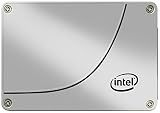
- Storage Capacity: 200GB SSD.
- Form Factor: 2.5” 7mm.
- Interface: SATA 3.0 6Gb/s.
- Sequential Read (up to): 550 MB/s.
- Sequential Write (up to): 300 MB/s.
| Attribute | Intel DC S3710 | Intel DC S4600 |
|---|---|---|
| Product class in cited source | High-endurance data-center SATA SSD | Mainstream SATA SSD |
| Documented capacities | 200 GB, 400 GB, 800 GB, 1.2 TB | 240 GB, 480 GB, 960 GB, 1.92 TB |
| Published endurance by capacity | 10 DWPD for five years; 3.6 PB (200 GB), 8.3 PB (400 GB), 16.9 PB (800 GB), 24.3 PB (1.2 TB), per Intel’s 2015 specification | 3.19 DWPD (240 GB), 3.36 DWPD (480 GB), 3.0 DWPD (960 GB), 3.09 DWPD (1.92 TB); total writes of 1.4 PB, 2.95 PB, 5.25 PB, and 10.84 PB respectively, per Lenovo Press’s withdrawn-product guide |
| Typical sequential write latency reported | 66 µs in Intel’s specification, with workload details provided there | 36 µs in Lenovo Press’s guide |
| Power-loss protection documented in cited source | Intel specifies enhanced power-loss data protection and a capacitor self-test | The cited Lenovo guide table does not establish this specific feature; verify the exact model’s manufacturer documentation before relying on it for a SLOG |
| SATA interface | SATA Revision 3.0; compatible with 6, 3, and 1.5 Gb/s | 6 Gb/s SATA |
Sources: Intel DC S3710 product specification and Lenovo Press DC S4600 guide. A capacity’s published endurance rating is a model-family specification; it does not establish the remaining life or health of an individual used drive.
How much SLOG capacity do you need?
The fact that these models are sold in hundreds of gigabytes or more does not mean a SLOG needs that much capacity. TrueNAS CORE’s hardware guide says a high-endurance, low-latency SLOG between 8 GB and 32 GB can serve most modern networks. TrueNAS’s SLOG page gives 16 GB over-provisioned from a larger SSD as its current project recommendation, while noting that this is not the only usable size. Actual requirements depend on the platform, workload, and software release. TrueNAS CORE hardware guide; TrueNAS SLOG documentation.
Choosing between the S3710 and S4600
Choose the S3710 when endurance headroom is the priority
If measurements show a workload that can benefit from a SLOG, the S3710’s 10-DWPD five-year rating gives it the stronger published endurance rating of these two families. That makes it the more compelling endurance-first option, provided the exact drive is in good condition and its power-loss protection is functional.
Consider the S4600 when its rating fits the measured workload
The S4600 may be adequate if the synchronous-write workload is modest and its endurance for the specific capacity is sufficient. Do not assume the cited guide proves that a particular S4600 unit has the power-loss protection you require; check exact-model manufacturer documentation and verify the unit itself.
Rank #3
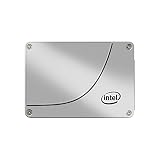
- Installation Type: Internal Solid State Drive for desktop computers
- Model Name: SSDSC2BA800G4 from Intel with 800GB storage capacity
- Software Included: Comes with Windows 10 operating system
- Compatible Devices: Works with desktop computers
- Data Transfer Rate: 6Gb/s SATA interface for fast data transfer
Do not choose either as a general-purpose speed upgrade
If your workload is mostly asynchronous, neither drive is likely to improve performance merely by being installed as a SLOG. The published latency values are not a head-to-head test of synchronous writes in your system, so use workload-specific measurements and the behavior of your deployed software release to make the call.
Power-loss protection, redundancy, and compatibility
A SLOG is intended to retain synchronous writes through a crash or power loss, so protection against power loss matters alongside latency and endurance. TrueNAS describes disk latency and write endurance as the primary concerns for SLOG devices. Confirm that protection is documented for the exact model and functional on the exact unit; do not infer it from a family name or from a seller listing.
Rank #4

- Intel SSD DC S3710 Series
- P/N: SSDSC2BA012T401
- Sequential read 550 MB/s & write 520 MB/s
- SATA 3.0 6Gb/s, 2.5" 7mm
- Ships in pressure-rated box
TrueNAS documents mirroring a log vdev as an optional way to avoid data loss from device failure or performance degradation. Whether to mirror depends on the deployment’s availability and failure requirements; a single device is not necessarily appropriate for every system. Also check physical fit, SATA compatibility with the controller and bay, firmware identity, and the system’s support for the chosen configuration. TrueNAS SLOG documentation.
Independent reader supportYour contribution helps us test, update, and keep practical guides available for everyone.Buying a used or refurbished S3710 or S4600
These are older product families, and a published specification cannot tell you whether an individual second-hand SSD is healthy. Before buying, check:
- The exact model and capacity, including the drive’s reported identity and firmware.
- Health and wear indicators, and any available evidence that power-loss protection is functioning.
- Controller, interface, physical-bay, and firmware compatibility with your system.
- The seller’s return terms in case the drive’s condition or identity differs from the listing.
Intel’s support article lists both models as former Intel NAND products and says technical and warranty support moved to Solidigm beginning October 3, 2022. Confirm the current support route directly if support coverage is important to the purchase. Intel support article on NAND product support.
Quick Recap
Product prices and availability are accurate as of the date/time indicated and are subject to change. Any price and availability information displayed on Amazon at the time of purchase will apply.

