
The Tool Desk
Outbyte PC Repair FREEClear out junk files and repair common Windows errorsFree Scan →Outbyte Driver Updater FREEFix the driver behind crashes, sound loss and screen glitchesFind Drivers →There is no single best mirrorless camera for every photographer: the right choice depends on what you shoot and how much camera-and-lens kit you are willing to carry. For a compact system, start with APS-C or Micro Four Thirds; consider full-frame when a larger sensor matters more than keeping the complete kit small. The Fujifilm X-T5 stands out for high-resolution stills, the Sony α6700 is a versatile APS-C hybrid, and the Canon EOS R50 is a budget-oriented starting point. These are use-case options, not a universal ranking.
How to choose a mirrorless camera
Compare the complete system rather than the camera body alone. A small body can still make a bulky kit when paired with large lenses, while a smaller sensor system may offer lenses that are easier to carry. The camera mount also determines which lenses you can use and how easily you can expand your kit.
- Choose by subject: autofocus and tracking are especially relevant for action and wildlife; resolution and cropping flexibility can matter for detailed stills; stabilization and a manageable kit are useful for travel.
- Choose by format: APS-C is a strong compact-system route, Micro Four Thirds can pair with smaller lenses, and full-frame is worth comparing if you prioritize a larger sensor and accept the potential size and system-cost trade-offs.
- Choose by output: for video, check the recording formats and frame rates you need, along with crop factors, rolling shutter, and overheating behavior. A headline frame rate alone does not describe the full video experience.
- Choose by system: check the current native-lens catalog for the mount before committing. The reviewed comparisons flag lens-selection constraints for some Canon RF and Nikon Z contexts, while TechRadar notes Sony and Fujifilm APS-C lens choice as an advantage.
- Budget for a lens: compare body-only and kit listings carefully; bundle contents and current prices can change. Choose a lens suited to your subject rather than treating the body price as the full cost of entry.
Best mirrorless cameras by use case
Fujifilm X-T5: high-resolution APS-C stills
RTINGS names the Fujifilm X-T5 its best APS-C mirrorless camera, citing its 40.2-megapixel resolution, portability, tilting screen, and dedicated exposure dials. DPReview also selects it as its APS-C pick. It is a strong candidate if detailed stills and direct exposure controls matter to you. Compare its price and your video or action needs against alternatives before choosing; those priorities may point elsewhere.
Sony α6700: APS-C hybrid shooting and travel
The Sony α6700 combines a compact APS-C body with features aimed at both stills and video. TechRadar lists a 26-megapixel sensor, five-axis stabilization, subject-recognition autofocus, and 4K 60p video oversampled from 6K. RTINGS also highlights in-body image stabilization and internal 10-bit 4:2:2 recording. One important video trade-off is a significant crop at 4K 120 fps, noted by both TechRadar and RTINGS; TechRadar also points to menu complexity. Consider it if you want a capable hybrid and are comfortable with those compromises.
#1 Best Overall

- Go Beyond Your Phone: Capture lifelike colors and incredible details from dawn to dusk thanks to a superior 20.9-megapixel DX format (APS-C size) sensor several times larger than that of a typical smartphone, but still lightweight and compact enough to fit in a small bag.
- Find Your Aesthetic: At the press of the Picture Control button, choose from 31 built-in presets designed to make your photos and videos stand out. Create and save your own Picture Control presets or download bespoke Cloud Picture Controls directly to your Z50II from Nikon Imaging Cloud. Play with results in real-time as you shoot and open up a world of creative possibilities.
- Focus with Confidence: People, dogs, cats, birds and vehicles—the Z50II can automatically detect and accurately track nine distinct subjects. Plus dedicated bird and airplane modes for even greater autofocus accuracy.
- Powerful Video: Capture the scene with incredible quality and detail with 4K UHD/60p, in-camera 120p slow-motion in Full HD, built-in electronic VR and product review mode.
- Built-in Flash: Get beautifully balanced photos indoors and at night. Use Night Portrait mode to create natural-looking slow-shutter flash portraits. Share in a snap: Send photos and video to your smart device in seconds using the free Nikon SnapBridge app. Includes the NIKKOR Z DX 16-50mm f/3.5-6.3 VR lens and NIKKOR Z DX 50-250mm f/4.5-6.3 VR lens
Canon EOS R50: a budget-oriented entry point
RTINGS places the Canon EOS R50 in its budget category and describes it as portable and beginner-friendly, with strong autofocus and video for its price tier. Its main system consideration is the Canon RF lens selection, which RTINGS describes as limited. The body can use both APS-C and full-frame RF lenses, offering a route to a later body upgrade, but check the lenses available for your subjects and budget before buying.
Canon EOS R7: APS-C for action and wildlife
Digital Camera World names the Canon EOS R7 its all-round pick, emphasizing APS-C portability, cost, and crop factor. RTINGS separately identifies it as a fit for sports and wildlife, while noting fewer lens options overall. Treat the R7 as a candidate when those shooting priorities align with the available RF lenses; Digital Camera World’s editorial pick is not a claim that it is best for every buyer.
Rank #2

- Improved Dual Pixel CMOS AF and eye detection AF 24.1 Megapixel CMOS (APS-C) sensor with is 100–6400 (H: 12800)
- Built-in Wi-Fi and NFC technology working temperature range: 32-104°F/0-40°C
- 9-Point AF system and AI Servo AF
- Optical Viewfinder with approx 95% viewing coverage
- Use the EOS Utility Webcam Beta Software (Mac and Windows) to turn your compatible Canon camera into a high-quality webcam
Nikon Z6III: full-frame stills and video
DPReview describes the Nikon Z6III as a full-frame enthusiast camera with a partially stacked 25-megapixel CMOS sensor that excels in stills and video. It is not the obvious choice if minimizing the complete kit is your main aim. DPReview notes lower peak dynamic range than peers and Nikon’s control over third-party lens options as considerations. Compare the native lenses you need and the size of the resulting kit, not just the body.
Panasonic LUMIX S5 II: full-frame video features
RTINGS positions the Panasonic LUMIX S5 II as a video-focused full-frame option, citing strong stabilization, internal 10-bit 4:2:2 recording, and a broad set of recording formats. RTINGS contrasts it with the pricier Nikon Z6III, which offers internal RAW recording, and notes that Panasonic’s Micro Four Thirds GH7 has a wider range of affordable lenses. If a compact system is the priority, weigh the S5 II’s full-frame format against the lenses you would carry and the GH7’s different system trade-offs.
What’s actually slowing this PC down?
Pick the symptom - the matching free tool is one click away.
Rank #3
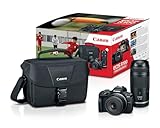
- EOS R100 Mirrorless camera.
- RF75-300mm F4-5.6 telephoto zoom lens (approx.120-480mm on APS-C equipped bodies).
- RF-S 18-45mm F4.5-6.3 lens (approx. 29-72mm on APS-C equipped bodies).
- Shoulder Bag 200 ES provides a protective space for carrying around a pair of lenses.
- Excellent introduction lenses to telephoto (zoom) shooting.
OM System OM-1 II: outdoor use in Micro Four Thirds
DPReview calls the OM System OM-1 II worth considering for outdoor photography and weather sealing, particularly if you already own Micro Four Thirds lenses. Its appeal is therefore especially clear for photographers invested in that system; it is not a blanket recommendation for every travel or outdoor kit.
Which sensor format makes the most sense?
| Format | Why consider it | What to weigh |
|---|---|---|
| APS-C | A credible compact-system option with candidates such as the Sony α6700, Fujifilm X-T5, Canon EOS R50, and Canon EOS R7. | Check the mount’s lens selection and the size and cost of the lenses you actually need. Lens availability differs by system. |
| Micro Four Thirds | Can offer smaller lenses; the OM System OM-1 II is a specific outdoor option, while RTINGS notes a wider range of affordable lenses for Panasonic’s GH7. | Choose it for the complete system and your intended subjects, rather than assuming every body or lens has the same strengths. |
| Full-frame | Relevant when prioritizing a larger sensor; the Nikon Z6III and Panasonic LUMIX S5 II are examples with stills-and-video or video-focused strengths. | Include lens size and system cost in the decision. A full-frame body comparison alone does not tell you how compact the kit will be. |
Before you buy
- Define the main job. Decide whether your priority is travel, everyday stills, high-resolution detail, wildlife/action, vlogging, or more serious video.
- Choose a format and mount. Shortlist APS-C, Micro Four Thirds, or full-frame based on the balance you want between sensor size and carrying a complete kit.
- Check the lens you need. Confirm that a compatible lens exists for your subject, and compare its cost and size. Lenses are not interchangeable across mounts unless the system specifically supports them.
- Check the exact video requirements, if relevant. Verify the frame rate, crop, recording format, and other limitations for the mode you intend to use. For the α6700, for example, the 4K 120p mode has a significant crop.
- Compare the actual purchase listing. Confirm whether it is body-only or includes a lens, what that lens is, and the current price and availability. Those details are not established here and can change.
Why camera guides disagree on the best model
Different buying guides choose different all-round winners because they prioritize different readers and use cases. Digital Camera World names the Canon EOS R7 its all-round pick, while RTINGS and DPReview highlight other cameras for particular categories. As Digital Camera World editor James Artaius put it, “The ‘best’ mirrorless camera really depends on what it’s being used for.” Its guide was last updated 23 March 2026. Treat editorial winners as starting points: compare the camera’s specific strengths, its limits, and the lens system you would actually use.
Quick Recap
Best Value
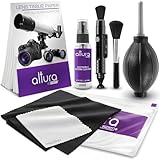
- COMPLETE CAMERA CLEANING KIT: Our camera lens cleaning kit includes an alcohol & ammonia-free lens cleaner spray, cleaning brush, lens pen, air blower, MagicFiber microfiber cloths (3), and lens tissue paper wipes (50). Most competing lens cleaning kits cost more and still make you buy the spray and brush separately. Ours doesn't.
- SAFE LENS CLEANER SPRAY: Our lens cleaning solution is alcohol-free, ammonia-free, and odor-free. Formulated to safely remove dust, fingerprints, and smudges from anti-reflective coatings and multi-coated glass. Professional MagicFiber microfiber cleaning cloths work alongside the spray to leave zero scratches or streaks on even the most delicate lens surfaces.
- PROFESSIONAL LENS CLEANER KIT: Organized for a fast, systematic clean. Use the rocket blower for camera lenses to clear loose dust and act as a camera duster, the lens pen for fingerprints, then apply the lens cleaning solution on a MagicFiber lens cleaning cloth for a streak-free finish. A complete DSLR cleaning kit and mirrorless camera cleaning kit in one.
- WORKS WITH ALL CAMERA BRANDS: Our camera lens cleaning kit is compatible with all camera models and brands, including Canon EOS, EOS R, and Rebel series; Nikon D-series and Z-series; Sony Alpha, a6000, and a7 series; Fujifilm X-series; Olympus, Pentax, Sigma, and Tamron lenses. Camera and photography accessories for all DSLR and mirrorless shooters. One kit that safely cleans every lens you own.
- PHOTOGRAPHY MUST HAVES: Whether you're a travel photographer, wedding photographer, wildlife shooter, or beginner exploring photography accessories for the first time, this camera cleaning kit keeps every lens and filter spotless on location or at home. The perfect gifts for photographers of all levels. From casual hobbyists to working professionals. We have you covered!
Rank #4

- Beginner-Friendly Mirrorless Power: The Canon EOS R100 offers an accessible entry into mirrorless photography with a 24.1MP APS-C CMOS sensor and DIGIC 8 image processor, delivering vibrant, detailed images and smooth video. Designed for everyday shooters and first-time DSLR users, this compact camera balances quality and ease-of-use, providing auto scene modes and simplified menu navigation for a seamless learning curve.
- Versatile RF-S 18-45mm Lens Included: This kit comes with the Canon RF-S 18-45mm f/4.5-6.3 IS STM lens, perfect for general-purpose shooting. From family portraits and daily snapshots to travel landscapes and vlogs, this zoom lens delivers sharp results and smooth autofocus. Built-in image stabilization helps reduce shake, making handheld photography more stable and enjoyable.
- Dual Pixel CMOS Autofocus for Sharp Results: Canon’s reliable Dual Pixel CMOS AF ensures fast and accurate focusing, especially when tracking people, faces, or stationary subjects. The system covers a wide portion of the frame and adjusts effortlessly between stills and video—ideal for capturing life’s moments as they happen, without missing a beat.
- Key Features: 24.2MP APS-C CMOS Sensor, DIGIC 8 Image Processor, 4K 24p Video with Crop, Full HD 60p, Dual Pixel CMOS AF with 143 AF Zones, 6.5 fps Electronic Shutter, 2.36m-Dot OLED EVF, 3" 1.04m-Dot LCD Screen, Wi-Fi and Bluetooth with SD Card Slot, RF-S 18-45mm f/4.5-6.3 IS STM Lens,
Product prices and availability are accurate as of the date/time indicated and are subject to change. Any price and availability information displayed on Amazon at the time of purchase will apply.

