
Do these 3 things before closing this tab:
1Repair Windows errors before they cause bigger problems2Scan for outdated or missing drivers - takes under a minute3Clear out junk files and repair common Windows errorsThe best internet provider for 2026 depends first on your address, then on how your household uses the connection. Fiber is usually the strongest choice when available because it offers fast upload speeds, consistent performance, and generous data policies. Cable is the most common fallback, while 5G home internet and Starlink can be better fits where wired service is unavailable or inconvenient.
Do not choose from a nationwide list without checking your exact address. Use the FCC National Broadband Map, then compare the provider’s Broadband Consumer Label for the actual monthly price, upload speed, equipment charges, data policy, and contract terms.


Best internet providers for 2026 at a glance
| Best for | Provider | Connection | Notable plans or pricing |
|---|---|---|---|
| Best overall where available | GFiber | Fiber | 1 Gig for $70, 3 Gig for $100, or 8 Gig for $150 per month |
| Best fiber alternative | AT&T Fiber | Fiber | Up to 5 Gig in select areas; symmetrical upload and download speeds |
| Best fiber in the Northeast | Verizon Fios | Fiber | 300 Mbps for $59.99, 500 Mbps for $84.99, or 1 Gig for $99.99 before discounts |
| Best cable fallback | Xfinity | Fiber-powered coaxial cable | NOW Internet at 100 Mbps for $30; regular plans include options from 300 Mbps to 2 Gbps where available |
| Best fixed wireless | Verizon 5G Home or T-Mobile | 5G fixed wireless | Verizon plans list standalone prices of $60, $70, and $85 per month |
| Best rural or remote option | Starlink | Low-Earth-orbit satellite | Residential 100 Mbps from $55, 200 Mbps from $85, or Residential Max from $130 |
Prices and availability can change by address. Taxes, fees, promotional credits, AutoPay requirements, mobile bundles, installation, and equipment can alter the amount you actually pay.
1. GFiber: best overall internet provider where available
GFiber is the strongest all-around choice for many households that can get it. Its current consumer lineup uses three names:
Recommended Free Tools
#1 Best Overall
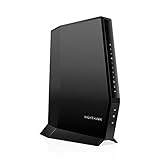
- MAXIMIZE YOUR CABLE INTERNET AND WHOLE-HOME WIFI: A cable modem and WiFi router in one device unlocks the full potential of your home internet with faster downloads, smoother WiFi for gaming and video calls, and reliable coverage in every room.
- APPROVED FOR YOUR PROVIDER AND PLAN: Works with Xfinity internet plans up to 800Mbps, Spectrum up to 1Gbps, and Cox up to 1Gbps. Not compatible with Verizon, AT&T, CenturyLink, DirecTV, DISH, or bundled voice plans. ISP activation required after setup.
- MULTI-GIG DOCSIS 3.1 SPEEDS: Get Gigabit+ cable download speeds on today's fastest plans, with headroom for the upgrades ahead. Real-world speeds depend on your plan and ISP network.
- WIFI 6 COVERAGE FOR THE WHOLE HOME: Stay connected in every room with dual-band AX2700 WiFi 6 covering up to 2,000 sq ft and capacity for 25+ connected devices. Real-world coverage depends on home size, layout, and building materials.
- WIRED CONNECTIONS FOR YOUR FASTEST DEVICES: Four Gigabit Ethernet ports keep gaming consoles, desktops, and streaming devices hardwired for the lowest latency and the most stable connection in your home.
- Core 1 Gig: up to 1 Gbps symmetrical speeds for $70 per month.
- Home 3 Gig: up to 3 Gbps symmetrical speeds for $100 per month.
- Edge 8 Gig: up to 8 Gbps symmetrical speeds for $150 per month.
GFiber says every current plan includes installation, Wi-Fi equipment, unlimited data, and no annual contract. Core includes Wi-Fi 6E equipment, while the multi-gig plans include Wi-Fi 7 equipment. The Edge 8 Gig plan also includes battery backup for up to two hours and a 99.9%+ uptime-or-money-back guarantee, subject to the plan terms and availability.
The symmetrical speeds matter more than the headline download number for households that upload large files, use cloud backups, livestream, work remotely, or regularly make video calls. A 1 Gig fiber plan with a strong upload speed can be more useful than a faster cable plan with a much smaller upload allowance.
Existing GFiber customers may still see older names such as 1 Gig, 2 Gig, 5 Gig, or 8 Gig. Those legacy plan names do not necessarily indicate the current products available to a new customer.
GFiber is not nationwide. Check the address before treating it as an option. In J.D. Power’s latest completed residential ISP study, published in October 2025, GFiber ranked highest in the South wired region with a score of 703. That is a regional satisfaction result, not proof that GFiber performs best at every address.
2. AT&T Fiber: best alternative to GFiber
AT&T Fiber is a strong choice wherever its fiber network reaches the property. AT&T advertises up to 5 Gig service in select areas, with equal advertised upload and download speeds on its fiber network. Its current fiber information also states that plans include unlimited data, equipment, and no annual contract.
The main complication is pricing. AT&T’s displayed prices can include new-customer promotions, AutoPay or paperless-billing conditions, and address-specific discounts. Check the Broadband Facts label before comparing AT&T with a provider showing a standard rate. A promotional price is not the same as the normal price after the credit ends.
AT&T performed particularly well in the latest J.D. Power study, ranking highest in the North Central wired region with a score of 554 and in the West wired region with a score of 561. Those regional results can help when two fiber options are available, but local installation quality and outage history still matter more than a national brand comparison.
3. Verizon Fios: best fiber provider in the Northeast
Verizon Fios remains one of the clearest fiber choices in the Northeast. Its current lineup includes 300 Mbps, 500 Mbps, 1 Gig, 2 Gig, and 5 Gig tiers, although the available selection depends on the address.
PC Slower Than It Used to Be?
A free scan shows the junk files, broken settings and background clutter dragging Windows down - then fixes them in one click.Free scan · Windows 10 & 11Crashes, No Sound, or Screen Glitches?
Random freezes, missing sound and display glitches usually trace back to one bad driver. Find and replace yours safely.Free scan · under a minuteVerizon’s listed standard prices include $59.99 per month for 300 Mbps, $84.99 for 500 Mbps, and $99.99 for 1 Gig before applicable discounts and promotions. Current Fios plans advertise at least a three-year price-lock guarantee, but the exact term varies by tier. The guarantee applies to the base monthly rate and excludes items such as discounts, promotions, setup charges, additional equipment, perks, and third-party services.
A $99 professional setup charge may apply. Verizon says it may waive that charge for certain plans, locations, service combinations, or ordering methods, so confirm the checkout total rather than assuming installation is free.
Verizon ranked highest in the East wired region in J.D. Power’s latest completed study, with a score of 578. Its Fios network is a particularly good fit for households that need dependable uploads for remote work, gaming broadcasts, cloud storage, or content production.
4. Xfinity: best cable fallback
Xfinity is often the practical choice when fiber is not available. It offers broad coverage and a range of speeds, including regular plans from 300 Mbps through 2 Gbps where available. Its prepaid NOW Internet product advertises 100 Mbps service for $30 per month.
Xfinity says plans from 300 Mbps through 2 Gbps, where available, qualify for a five-year price guarantee. The guarantee does not require an annual contract, and customers can cancel without an early termination fee. Read the conditions carefully: promotional pricing commonly requires AutoPay using a stored bank account and paperless billing, while taxes and fees may be additional.
Xfinity describes its network as fiber-powered, but the connection to the home is coaxial cable. That is not the same as fiber-to-the-home. Cable can provide excellent download performance, but upload speeds are typically less symmetrical than fiber. Compare the upload figure on the Broadband Facts label instead of selecting a plan from the download speed alone.
Rank #3

- MAXIMIZE YOUR CABLE INTERNET AND WHOLE-HOME WIFI: A cable modem and WiFi router in one device unlocks the full potential of your home internet with faster downloads, smoother WiFi for gaming and video calls, and reliable coverage in every room.
- APPROVED FOR YOUR PROVIDER AND PLAN: Works with Xfinity internet plans up to 800Mbps, Spectrum up to 1Gbps, and Cox up to 1Gbps. Not compatible with Verizon, AT&T, CenturyLink, DirecTV, DISH, or bundled voice plans. ISP activation required after setup.
- MULTI-GIG DOCSIS 3.1 SPEEDS: Get Gigabit+ cable download speeds on today's fastest plans, with headroom for the upgrades ahead. Real-world speeds depend on your plan and ISP network.
- WIFI 6 COVERAGE FOR THE WHOLE HOME: Stay connected in every room with dual-band AX6000 WiFi 6 covering up to 2,500 sq ft and capacity for 30+ connected devices across your home. Real-world coverage depends on home size, layout, and building materials.
- MULTI-GIG WIRED CONNECTIONS FOR YOUR FASTEST DEVICES: One 2.5 Gig Multi-Gig port and four Gigabit Ethernet ports keep gaming consoles, desktops, and streaming devices hardwired for the lowest latency and the most stable connection in your home.
Xfinity makes sense for streaming-heavy households, ordinary gaming, and general home use when fiber is unavailable. Fiber is usually preferable for frequent large uploads, multiple remote workers, livestreaming, and homes with demanding cloud-backup workloads.
5. T-Mobile or Verizon 5G Home: best fixed-wireless option
5G home internet can be a useful middle ground between wired broadband and satellite. The provider supplies a cellular gateway that connects the home to a nearby mobile network. Installation is generally simpler than running a new wired line, but performance depends heavily on signal strength, tower capacity, local network load, and the exact placement of the gateway.
J.D. Power’s 2025 residential ISP study ranked T-Mobile highest in the wireless internet segment, with a score of 663 versus a segment average of 647. Verizon is also worth checking, particularly where its 5G Ultra Wideband service reaches the address.
Verizon currently lists three 5G Home tiers:
| Plan | Standard listed price | Advertised price-lock period |
|---|---|---|
| 5G Home | $60 per month | Three years |
| 5G Home Plus | $70 per month | Four years |
| 5G Home Ultimate | $85 per month | Five years |
These are standalone prices before eligible discounts. AutoPay and a qualifying Verizon mobile plan can reduce the displayed price, so separate the mobile-bundle price from the price available to a home-internet-only customer. Verizon’s current plans include unlimited data and a router.
T-Mobile’s plan names and prices have changed frequently. Its support material records plan changes effective June 4, 2026, including changes to AutoPay and regular pricing. Check the current offer after entering the address instead of relying on older articles that use the former “5G Home Internet” pricing.
Fixed wireless is worth trying when fiber or cable is unavailable, when the price is substantially lower, or when you want a quick installation. It is a weaker choice if the address has unstable signal or if the household needs predictable upload performance.
Free tools Windows power users keep installed
One-click scans. No signup required.
6. Starlink: best for rural and remote homes
Starlink is most useful where fiber, cable, DSL, and reliable fixed wireless are not realistic alternatives. Its current U.S. Residential page lists:
Rank #4

- CABLE INTERNET AND WIFI MADE FOR YOUR HOME: This two-in-one cable modem and WiFi router puts every setting in your hands, from your WiFi names and passwords to how your network runs, so it works the way your household needs.
- APPROVED FOR YOUR PROVIDER AND PLAN: Works with Xfinity internet plans up to 800Mbps and Cox plans up to 500Mbps. Not compatible with Verizon, AT&T, CenturyLink, DirecTV, DISH, or bundled voice plans. ISP activation required after setup.
- GET THE FULL SPEED OF PLANS UP TO 800 MBPS: DOCSIS 3.0 delivers plenty of speed for HD and 4K streaming, online gaming, and video calls across your home. Actual speeds vary by plan and provider.
- AC1900 WIFI COVERAGE FOR THE WHOLE HOME: Stay connected in every room with dual-band AC1900 WiFi covering up to 1,800 sq ft and Beamforming+ for stronger signal to mobile devices. Real-world coverage depends on home size, layout, and building materials.
- WIRED CONNECTIONS FOR YOUR FASTEST DEVICES: Four Gigabit Ethernet ports keep gaming consoles, desktops, and streaming devices hardwired for the lowest latency and the most stable connection in your home.
- Residential 100 Mbps: from $55 per month.
- Residential 200 Mbps: from $85 per month.
- Residential Max: from $130 per month.
All three list unlimited data, but the speeds are maximum available speeds rather than guarantees. Starlink warns that service can slow during congestion. The system also requires a clear view of the sky; trees, buildings, roof design, weather, and installation location can affect the result.
Satellite latency is generally higher than fiber, cable, and many 5G connections. That can affect fast-paced online games, interactive remote work, and some video calls even when the download speed appears sufficient. Consider equipment availability, installation conditions, weather exposure, congestion, and obstruction checks separately from the advertised speed.
How to check which providers serve your address
- Open the FCC National Broadband Map.
- Choose Search by Address and enter the complete service address, including the apartment or unit number when applicable.
- Review the listed Providers and select the fixed-service results for the property.
- Use Service Filters to narrow the results by technology, advertised download or upload speed, and residential or business service.
- Check the map’s Data As-Of Date so you know how current the availability report is.
- Compare the results with each provider’s own address checker and Broadband Facts label.
Providers report availability data to the FCC’s Broadband Data Collection, but the map can contain errors. If a provider claims service is available when it is not, or omits service that is actually available, consumers can challenge the map’s information through the FCC process.
The Tool Desk
Outbyte Driver Updater FREEScan for outdated or missing drivers - takes under a minuteDriver Scan →Outbyte PC Repair FREEClear out junk files and repair common Windows errorsFree Scan →What to compare before ordering
Connection type and upload speed
For most homes, the preferred order is fiber, cable, fixed wireless, then satellite—but local conditions can change that order. Look at upload speed as carefully as download speed. Upload performance is important for video meetings, cloud backups, sending large media files, livestreaming, and hosting services from home.
Standard price rather than the introductory price
Write down both the promotional price and the regular price after the promotion ends. Then add equipment, installation, taxes, and fees. A price lock may cover only the base service rate, not promotional credits or extra services.
Data and network-management policies
“Unlimited data” is useful, but it does not necessarily promise identical speeds under every congestion condition. Wireless and satellite services can slow as local capacity fills. Read the label and terms for data allowances, deprioritization, and network-management language.
Equipment and home Wi-Fi
A multi-gig plan cannot deliver multi-gig speeds to every device automatically. The router, Ethernet ports, cable category, Wi-Fi standard, device hardware, distance, walls, and simultaneous users all affect the result. A gigabit wired connection may test far faster than an older phone over Wi-Fi.
Quick wins for a faster PC:
Clear out junk files and repair common Windows errorsFree Scan →Fix the driver behind crashes, sound loss and screen glitchesFind Drivers →Repair Windows errors before they cause bigger problemsFix Now →Best Value
Contract, installation, and cancellation terms
Confirm whether the plan requires an annual contract, whether professional setup costs extra, and whether rented equipment must be returned by a specific deadline. No-annual-contract service does not mean every installation or equipment charge is automatically waived.
What the 2026 satisfaction data actually shows
The American Customer Satisfaction Index reported an overall U.S. ISP satisfaction score of 73 out of 100 in its 2026 telecommunications study, up 1% from 2025. The study surveyed customers from April 2025 through March 2026 and reports separate fiber and non-fiber results.
That data should not be read as proof that one provider is best nationwide. Satisfaction varies by technology, region, installation quality, local congestion, and support experience. J.D. Power’s latest completed residential ISP study as of August 8, 2026 is the 2025 study. Its final 2026 study is scheduled for publication in October 2026, so claims about a completed 2026 J.D. Power ranking are premature.
Be careful with outdated broadband discounts
The federal Affordable Connectivity Program is not a current discount. The FCC says the ACP ended on June 1, 2024 and warns that websites still collecting ACP enrollment information may be outdated or fraudulent. Do not enter personal information into a site claiming to enroll you in the former program.
What’s actually slowing this PC down?
Pick the symptom - the matching free tool is one click away.
FAQ
Which internet provider is best overall in 2026?
GFiber is the best overall pick where its fiber network is available, thanks to symmetrical speeds, unlimited data, included equipment, and no annual contract on its current plans. AT&T Fiber and Verizon Fios are strong alternatives in their coverage areas.
Is fiber internet better than cable?
Usually. Fiber normally offers more symmetrical upload and download speeds and consistent performance. Cable can still be an excellent choice, especially for streaming and ordinary home use, but its upload speed is typically much lower. Compare the provider’s Broadband Facts label for the actual figures.
Is 300 Mbps enough for a family?
It can be enough for many households, but there is no universal cutoff. The right speed depends on simultaneous streaming, gaming, video calls, large downloads, upload needs, Wi-Fi quality, and the provider’s real-world performance. A household with several remote workers may benefit more from strong upload speed than from a much higher download headline.
Is Starlink better than 5G home internet?
Not automatically. Starlink is generally the more relevant option for remote locations without reliable terrestrial service. 5G home internet can be faster or lower-latency where the home has a strong signal and the tower has capacity. Check both services at the exact address and consider congestion, weather, obstructions, and upload performance.
The Bottom Line
Choose fiber first if the FCC map and provider address checker confirm it is available. GFiber, AT&T Fiber, and Verizon Fios are the leading candidates where their networks overlap. Choose Xfinity or another cable provider when fiber is unavailable, consider T-Mobile or Verizon 5G Home when the cellular signal is strong, and use Starlink mainly for rural or remote properties without competitive wired service.
Before ordering, save the provider’s Broadband Facts label and verify the regular price, upload speed, equipment, data policy, installation cost, price-lock exclusions, and cancellation terms. The best provider is the one that performs reliably at your address—not necessarily the brand with the fastest advertised plan.
Quick Recap
Product prices and availability are accurate as of the date/time indicated and are subject to change. Any price and availability information displayed on Amazon at the time of purchase will apply.

