
Outdated Drivers Are Slowing You Down
One free scan finds every outdated or missing driver and matches the right update for your exact hardware.Free scan · exact hardware matchWindows Errors? Fix Them Before They Spread
Repair common Windows errors and clear accumulated junk for a smoother, more stable PC - no reinstall needed.Free scan · no reinstallA behavioral-health data warehouse becomes useful for care coordination, analytics, or AI only when it does more than collect records: it must preserve where information came from, make transformations visible, measure data quality against the intended use, and enforce appropriate access. FHIR can support exchange between systems; an analytical model such as OMOP can standardize data for analysis. Neither standard, by itself, makes a warehouse clinically complete, legally compliant, or ready for AI.
Why build a behavioral-health data foundation?
Behavioral-health information is often spread across behavioral-health providers, hospitals, primary care, claims, labs, referrals, and care-management systems. When information does not move reliably across settings, care teams may lack context needed for continuity and coordination. In a February 4, 2026 article, SAMHSA leaders Thomas Keane, M.D., M.B.A., and Christopher D. Carroll, M.Sc., wrote: “The lack of reliable health information exchange and integration of health data across care settings can inhibit this essential care coordination.”
The scale of behavioral-health need is one reason organizations may want better information flow, but prevalence figures are not measures of interoperability or warehouse demand. ONC reports that 26% of U.S. adults aged 18 and older were estimated to be living with a mental health disorder in any given year; the cited page does not identify the year for that estimate. Separately, ONC reports 2022 Any Mental Illness prevalence of 36.2% for adults aged 18–25, 29.4% for ages 26–49, and 13.9% for ages 50 and older.
ONC and SAMHSA describe USCDI+ BH as an effort to address behavioral-health data needs beyond the scope of USCDI, alongside a FHIR Behavioral Health guide and pilot work. As of the February 2026 SAMHSA article, pilots were ongoing; lessons were expected to inform refinements, and a Behavioral Health Information Resource was planned for 2027. Treat element sets and guide versions as changeable, and verify current guidance when designing an implementation.
Quick wins for a faster PC:
Fix the driver behind crashes, sound loss and screen glitchesFind Drivers →Repair Windows errors before they cause bigger problemsFix Now →Scan for outdated or missing drivers - takes under a minuteDriver Scan →#1 Best Overall

- 【Versatile Storage Expansion – For Gaming, Work & Everyday Use】 Running out of space on your PS5 or Xbox Series X/S? This external hard drive lets you store and play PS4 / Xbox One games directly, instantly freeing up your console’s internal storage for next‑gen titles. At the same time, it handles work file backups, media libraries, and cross‑device data transfers with ease. One drive, all your needs. *(Note: PS5 / Xbox Series X|S games cannot be run or stored directly from the external hard drive. However, by offloading your PS4 / Xbox One games, you can free up valuable space for newer titles.)*
- 【Patented Silicone Sleeve – Data Protection You Can Count On】 Worried about drops? We’ve got you covered. The patented built‑in silicone sleeve acts like a shock‑absorbing armor, cushioning your drive against bumps and falls. Whether it’s important work documents, precious family photos, or hard‑earned game saves, your data deserves this level of protection.
- 【Plug & Play, Compatible with Computers & Consoles】 No complicated setup—just plug in and go. Works seamlessly with Windows, Mac, and Linux computers, as well as PS4, PS5, Xbox One, and Xbox Series X/S. Process files at the office, back up data at home, or enjoy gaming in your downtime—one drive handles all your devices, simply and hassle‑free.
- 【USB 3.0 Ultra‑Fast Transfer – No More Waiting】 Tired of watching progress bars crawl? With USB 3.0 speeds up to 5Gbps, large files transfer in seconds. Whether you’re moving work documents, transferring hundreds of gigs of games, or backing up a year’s worth of photos, you get more done in less time.
- 【Sleek, Lightweight, and Ready to Go】 Weighing just 0.16 kg—lighter than a can of soda—this compact drive features a stylish mirror‑and‑frosted finish. Toss it in your bag and go, whether you’re heading to the office, visiting a friend for a gaming session, or giving a presentation on the road.
How do you build a behavioral-health data warehouse?
Start with the decisions and workflows the data must support, then design the pipeline and controls around those needs. A system for near-real-time care coordination has different latency and access requirements from a research or model-development environment. Keep operational care uses, secondary analytics, and AI development or deployment distinct in the architecture and governance.
1. Define the users, decisions, and boundaries
- Specify which care settings, populations, and behavioral-health workflows are in scope, including the medical records that need to be considered alongside them.
- Name the intended users and decisions: for example, referral follow-up, care coordination, reporting, research, or development of a predictive model.
- Set acceptable data latency, required history, and the data classes each user may access.
- Define what “good enough” means for each use. A coordination workflow may need timely encounter and referral status; a model-development use may require broader representativeness, longitudinal coverage, and explicit missingness analysis.
ONC frames behavioral-health exchange as a way to support continuity, integration, and coordination. CMS describes API-based access and exchange criteria in its own participating ecosystem; those criteria are not a universal architecture mandate.
2. Inventory sources and preserve context
List each source system and why it exists. Likely categories include EHRs, claims, registries, laboratory systems, referral platforms, and care-management tools. These systems collect information for different purposes and use different formats and vocabularies, a challenge highlighted in OHDSI’s explanation of the OMOP Common Data Model.
Rank #2

- 【Dual-Port Beast Mode】MOVE SPEED SP05 Solid State Drives slays with push-pull USB3.2 + Type-C ports—plug either side, no flipping, no drama. Yeet 1GB files in 2 seconds. Upgraded zinc alloy armor keeps it icy cool and looks like a cyberpunk gadget— drop-proof metal vibes.
- 【3-Stage Push-Pull Perfection】Glide the slider with a satisfying click—effortlessly switch between USB-A and USB-C in one smooth motion. No lost caps, no broken ports, just pure buttery-slick vibes. Survives gym bags, chaotic travel, or desks buried under half-empty coffee cups. (Pro hack: Push until it clicks to lock securely)
- 【SSD-Grade Chip & Metal Shell】MOVE SPEED SP05 integrates SSD-grade chips with a precision-engineered zinc alloy push-pull , enhancing heat dissipation via optimized airflow channels (max temp 122°F). The dust/drop/high-temp/anti-magnetic resistant build ensures durability for extreme environments.
- 【Plug & Slay Anywhere】This External SSD slaps into iPhones (shoot 4K vids straight to the drive), Androids, laptops, PS5, even your grandpa’s car stereo—zero setup, zero cables needed. Comes with a braided lanyard (clip it to keys, backpacks) so you can flex it on hikes, coffee runs, or while rage-quitting games.
- 【No Cap—What’s in the Box & 5-Year Care】Package includes: MOVE SPEED SP05 1TB SSD, premium braided strap (clip it to keys or flex on your bag’s zipper), and a “don’t stress” manual. Got drama? We’ve got 7/24 rage-free support and lifetime tech squad. our crew slays 90% issues in 24hrs.
For each ingested record, preserve source identifiers and provenance, relevant timestamps, the original code system and value, and the transformation version. Where source semantics allow it, distinguish absent, unknown, not collected, and explicitly negative values. Collapsing these states into one null or false value can change the meaning of the data and mislead downstream users.
Recommended Free Tools
3. Exchange and transform with explicit mappings
FHIR and OMOP address related but different problems. FHIR is oriented toward API-based exchange of electronic health data. OMOP CDM is an open community standard for structuring observational data so standardized analyses can be applied. An organization may ingest or exchange through FHIR and transform into OMOP for analytics, but the conversion needs documented mappings, retained source values, and provenance.
| Approach | Primary role | What it does not establish on its own |
|---|---|---|
| FHIR | API-oriented exchange of electronic health data; ONC-sponsored Behavioral Health Profiles are listed in FHIR implementation guidance. | That a receiving warehouse has complete behavioral-health coverage, suitable analytical structure, or clinically validated data. |
| OMOP CDM | Standardized structure and content for observational data and reusable analyses. | That source data were captured completely, mapped without loss, or fit for every clinical or AI use. |
For behavioral-health coverage, inspect current USCDI+ BH elements and the current FHIR Behavioral Health implementation guidance rather than assuming a general medical dataset captures local workflows. Standards can improve consistency and exchange, but the organization still has to decide which fields matter and whether they exist in its sources.
Rank #3

- Lightweight and convenient: Lexar JumpDrive A30E (USB Type-A) boasts a slim, portable design for easy device compatibility; lightweight at 7.41 g
- Transfer speeds up to 100 MB/s: 10x faster than standard USB 2.0 drives; Based on internal testing, performance may vary depending upon the host device, interface, and usage conditions
- Wide compatibility: Compatible with tablets, laptops, Macs, and traditional Type-A devices, no software installation required; Reliably stores photos, videos & files
- Compact: Features a push-button retractor and a lanyard loop for on-the-go use
- Enhanced security: Lexar DataShield protects files, easily creates a password-protected safe with auto-encryption; Files deleted from the safe are securely erased and can't be recovered
4. Version transformation rules and expose gaps
Build and version ETL or ELT rules. Document how each source code maps to a standard vocabulary, where the value lands, what information is aggregated or lost, how corrections propagate, and how unmapped concepts are represented. OHDSI’s FHIR-to-OMOP quickstart illustrates translation from source terminology to OMOP concepts and shows that some nonstandard concepts may have no standard mapping. Preserve that gap visibly rather than silently assigning a false equivalent.
How do you know whether healthcare data is good enough?
Assess the transformed dataset, not only the source feed, and tie acceptance criteria to the intended use. A syntactically valid record or completed load does not prove that a clinical concept is represented accurately or that the population is adequately covered.
Combine automated checks with clinical review
OHDSI’s Data Quality Dashboard applies a harmonized assessment approach to OMOP-standardized data. Its software listing says it performs more than 1,500 checks across tables and fields in an OMOP CDM instance. That count describes tool capability, not a score, certification, or evidence that any particular warehouse is fit for care or AI.
Rank #4

- 256GB ultra fast USB 3.1 flash drive with high-speed transmission; read speeds up to 130MB/s
- Store videos, photos, and songs; 256 GB capacity = 64,000 12MP photos or 978 minutes 1080P video recording
- Note: Actual storage capacity shown by a device's OS may be less than the capacity indicated on the product label due to different measurement standards. The available storage capacity is higher than 230GB.
- 15x faster than USB 2.0 drives; USB 3.1 Gen 1 / USB 3.0 port required on host devices to achieve optimal read/write speed; Backwards compatible with USB 2.0 host devices at lower speed. Read speed up to 130MB/s and write speed up to 30MB/s are based on internal tests conducted under controlled conditions , Actual read/write speeds also vary depending on devices used, transfer files size, types and other factors
- Stylish appearance,retractable, telescopic design with key hole
- Check structural conformance, required fields, plausible values, temporal consistency, and unexpected distributions.
- Reconcile critical measures with their source systems and ask clinicians or domain experts whether mapped concepts retain the meaning needed for the workflow.
- Set owners and remediation thresholds for failures that could materially affect care, reporting, or a model.
- Repeat checks after source-system changes, mapping updates, or shifts in clinical workflows, and monitor for drift.
Evaluate fitness for the specific use
Before a dataset supports a clinical or analytical decision, document source coverage, missingness, temporal validity, known representation gaps, and the populations and settings represented. A dataset may be sufficient for one use and unsuitable for another. Data-quality tooling is one evidence layer; it cannot replace source reconciliation or clinical judgment.
Independent reader supportYour contribution helps us test, update, and keep practical guides available for everyone.How can behavioral-health data be shared safely?
Privacy and access governance belong in the design, not as a final permissions layer. In the United States, HIPAA protections apply to identifiable health information in covered circumstances. HHS OCR’s guidance addresses information related to mental and behavioral health, including opioid overdose. CMS also states that interoperability participation does not supersede applicable privacy obligations and describes continuing duties for covered entities and business associates.
- Set role- and purpose-based access rules, and apply minimum-necessary practices where applicable.
- Verify user identity and authority; log access and make audit trails reviewable.
- Define retention, correction, incident response, and business associate arrangements as required for the organization.
- Assess whether 42 CFR Part 2 applies to substance-use records and determine the rules that govern the particular organization and use.
Technical ability to exchange a record is not blanket permission to disclose it. Requirements depend on the data, parties, purpose, and jurisdiction; the U.S. examples above are not a complete legal checklist or universal requirements.
What’s actually slowing this PC down?
Pick the symptom - the matching free tool is one click away.
Best Value
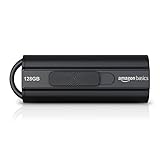
- USB 3.1 flash drive with high-speed transmission; store videos, photos, music, and more
- 128 GB storage capacity; can store 32,000 12MP photos or 488 minutes 1080P video recording, for example
- Convenient USB connection
- Read speed up to 130MB/s and write speed up to 30MB/s; 15x faster than USB 2.0 drives; USB 3.1 Gen 1 / USB 3.0 port required on host devices to achieve optimal read/write speed; backwards compatible with USB 2.0 host devices at lower speed
- High-quality NAND FLASH flash memory chips can effectively protect personal data security
What does AI readiness require?
AI readiness is a use-case decision, not a property conferred by adopting FHIR, OMOP, de-identification, or a data-quality dashboard. Before model development or deployment, state the intended use and population, source coverage, acceptance criteria, temporal validity, missingness, known representation gaps, and monitoring plan. Validate both the transformed dataset and model behavior for the relevant setting and population.
ONC’s 2025 SAFER Guides include organizational responsibilities for AI-enabled systems and practices concerning validation and maintenance of complex EHR technical components. Use these materials as part of lifecycle safety work, alongside local governance and clinical validation; standards conformance alone cannot establish clinical safety.
How should an organization compare warehouse designs?
There is no universal winner between FHIR and OMOP because their roles differ, and they can be complementary. Compare designs against the intended use rather than selecting a standard as a proxy for quality.
| Decision area | Questions to resolve |
|---|---|
| Purpose and latency | Is the priority operational care coordination, reporting, research, model development, or deployment? How current must the data be? |
| Coverage | Which sources, care settings, populations, and behavioral-health-specific elements are represented? |
| Mapping fidelity | Are terminology mappings explainable? Are source representations retained, and are unmapped concepts visible? |
| Provenance and auditability | Can users trace a transformed value to its source and transformation version? |
| Quality operations | Which automated checks and clinical reviews are required, who owns remediation, and how is drift monitored? |
| Privacy and permitted use | How do consent, access, retention, and jurisdictional requirements constrain the design? |
| Operational burden | Can the organization maintain pipelines, mappings, and controls at the required scale and latency? |
A cloud data warehouse may be one infrastructure option, but infrastructure alone does not confer clinical validity, privacy compliance, or AI suitability. Platform selection should follow requirements for data scope, operations, security, and cost; the standards and guidance discussed here do not establish a vendor ranking.
Do these 3 things before closing this tab:
1Scan for outdated or missing drivers - takes under a minute2Clear out junk files and repair common Windows errors3Fix the driver behind crashes, sound loss and screen glitchesQuick Recap
Product prices and availability are accurate as of the date/time indicated and are subject to change. Any price and availability information displayed on Amazon at the time of purchase will apply.

