
Outdated Drivers Are Slowing You Down
One free scan finds every outdated or missing driver and matches the right update for your exact hardware.Free scan · exact hardware matchWindows Errors? Fix Them Before They Spread
Repair common Windows errors and clear accumulated junk for a smoother, more stable PC - no reinstall needed.Free scan · no reinstallBank text alerts can help you spot suspicious activity, but a text message alone cannot prove who sent it or make a transaction secure. If a message claims there is a problem, check your account through your bank’s official app or website, or call a number you already trust—such as the one on your card or statement. This guide reflects U.S. consumer-protection and regulator guidance; alert features and enrollment vary by bank.
What financial SMS alerts can—and cannot—do
A financial institution may offer text notifications about suspicious or potentially fraudulent transactions. These alerts can draw your attention to activity so you can investigate, but SMS is only a notification channel: delivery is not guaranteed, and the message’s appearance does not authenticate its sender.

The Federal Deposit Insurance Corporation (FDIC) also cautions against sending account numbers or other sensitive information through ordinary text messages, which can be vulnerable to hackers. For broader context, the Federal Financial Institutions Examination Council (FFIEC) says its guidance supports layered security and underscores weaknesses in single-factor authentication. That is institutional guidance, not a guarantee to consumers or a requirement that every bank use a particular authentication method.
Is this bank text a scam?
It might be real, but scammers imitate financial institutions with fake fraud alerts. The FDIC describes messages that claim a large purchase was made and use urgency to prompt a response. The Federal Trade Commission (FTC) warns that a fake alert may direct you to reply or call a number; a scammer can then invent a story to gain access to money or account information.
#1 Best Overall

- POWERFUL SECURITY KEY: The Security Key C NFC is the essential physical passkey for protecting your digital life from phishing attacks. It ensures only you can access your accounts.
- WORKS WITH 1000+ ACCOUNTS: Compatible with Google, Microsoft, and Apple. A single Security Key C NFC secures 100 of your favorite accounts, including email, password managers, and more.
- FAST & CONVENIENT LOGIN: Plug in your Security Key C NFC via USB-C and tap it, or tap it against your phone (NFC) to authenticate. No batteries, no internet connection, and no extra fees required.
- TRUSTED PASSKEY TECHNOLOGY: Uses the latest passkey standards (FIDO2/WebAuthn & FIDO U2F) but does not support One-Time Passwords. For complex needs, check out the YubiKey 5 Series.
- BUILT TO LAST: Made from tough, waterproof, and crush-resistant materials. Manufactured in Sweden and programmed in the USA with the highest security standards.
Be especially cautious if an unexpected message pressures you to act immediately, asks you to reply, provides a link or callback number, or asks for personal details or a verification code. Those signs do not establish by themselves that a message is fraudulent, but they are reasons to verify it independently.
What to do when a transaction text worries you
- Pause. Urgency is a common feature of impersonation attempts. Do not let the message rush you into acting.
- Do not use the message to make contact. Do not reply, click its links, or call a number it supplies.
- Check through a trusted route. Open your bank’s official app, type its known website address yourself, or call the number printed on your payment card or statement. The FTC also recommends using the company’s official app, website, chat, or customer-service number when a message might be legitimate.
- Keep verification codes private. Do not tell a caller or texter a one-time code, even if they claim to be helping secure your account.
- Contact the bank directly if activity looks unauthorized. Use the trusted route and follow the institution’s account-protection instructions; procedures differ by bank.
The FDIC’s June 2025 consumer guidance puts the core practice plainly: “When you get a text message that makes you worry or seems fishy, take your time and call your bank directly, using a phone number that you are familiar with, like the number provided on your debit or credit card.”
Rank #2

- Realistic Deterrent Design: This fake security alarm keypad features an authentic appearance with a red blinking LED light and professional black housing that creates the impression of an active security system, helping to deter potential intruders without the cost of a full alarm installation
- Extended Battery Life: Enjoy exceptional longevity with up to 1.5 years of continuous usage from just four AAA batteries, providing reliable operation and peace of mind while minimizing the need for frequent battery replacements and maintenance
- Simple Installation Process: No complicated wiring or professional installation required - this keypad can be easily mounted anywhere you need it, making it perfect for renters, temporary locations, or anyone seeking a hassle-free security solution
- Energy Efficient Operation: The LED light is designed to blink continuously while consuming minimal power, ensuring your deterrent remains visible and effective throughout the extended battery life without draining energy unnecessarily
- Versatile Placement Options: The wireless design allows you to position this security keypad in the most visible and strategic locations such as near entry doors, garages, or windows to maximize its deterrent effect without being limited by electrical outlet locations
Should you click a link in a bank fraud alert?
No. Do not click a link in an unexpected message claiming to be a fraud alert. Go to the bank independently through its official app or a website address you already know, or call a trusted number. A message may imitate a real institution, so the name or branding shown in the text is not enough to establish that the link is safe.
Independent reader supportYour contribution helps us test, update, and keep practical guides available for everyone.Will your bank ask for your verification code?
Do not share a login or one-time verification code with anyone who contacts you by text or phone. The FTC’s June 2024 guidance says: “Never share a verification code. Ever.” A code intended to confirm your login can help someone else access your account. If you are concerned about your account, contact the institution using the number on a statement or its official app—not contact details from the message.
Quick Recap
Best Value

- HARDWARE 2FA AND MFA: FIDO Alliance Certified FIDO2 v2.1 with CTAP2 plus legacy U2F and CTAP1 for strong two-factor login and passwordless sign-in on services that support security keys
- BUILDING ACCESS ON ONE CARD: MIFARE DESFire EV2 4K applet with AES encryption adds office door and physical access control alongside digital authentication
- CERTIFIED SECURE ELEMENT: An NXP Common Criteria EAL6+ certified secure controller and Java Card platform protects your keys on a tamper-resistant chip
- DUAL INTERFACE SMART CARD: Contactless NFC ISO 14443 plus ISO 7816 contact reader support in an ISO 7810 ID-1 format that is passive and needs no battery
- SWISS ENGINEERED DESIGN: Built by Cryptnox as a single card for authentication and access control and backed by a 2 year warranty
Rank #3
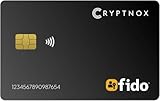
- FIDO2 CERTIFIED: FIDO Alliance Certified FIDO2 v2.1 and CTAP Level 1 for 2FA and MFA on Google Microsoft Apple GitHub login.gov AGOV SwissID and any WebAuthn service
- PASSKEY READY: Works as a hardware passkey for passwordless sign-in where the service enables it and as a U2F and WebAuthn security key everywhere else
- CERTIFIED SECURITY: NXP JCOP 4.5 secure element rated Common Criteria EAL6+ (augmented)
- TAP OR INSERT: Dual NFC ISO 14443 and contact ISO 7816 interface in an ID-1 format smart card that is passive and battery-free
- BUILT TO LAST: Passive smart card made in Switzerland designed by Swiss company Cryptnox and backed by a 2 year manufacturer warranty
How to use bank texts as one part of account security
- Use alerts as prompts to check, not proof. A notice can help you spot activity, but confirm account details in the official app or with the bank.
- Keep sensitive information out of ordinary texts. Do not send account numbers or other sensitive details in reply to a message.
- Ask your bank about its specific options. Check how to enroll in alerts, what transaction activity they cover, whether thresholds can be set, which channels are supported, and how account recovery works. These details are institution-specific.
- Rely on layered protection. Text alerts serve a different purpose from login verification. Follow your institution’s security recommendations rather than treating any single message or factor as complete protection.
Product prices and availability are accurate as of the date/time indicated and are subject to change. Any price and availability information displayed on Amazon at the time of purchase will apply.

