
Outdated Drivers Are Slowing You Down
One free scan finds every outdated or missing driver and matches the right update for your exact hardware.Free scan · exact hardware matchPC Slower Than It Used to Be?
A free scan shows the junk files, broken settings and background clutter dragging Windows down - then fixes them in one click.Free scan · Windows 10 & 11Autonomous vehicle levels are the six SAE levels of driving automation, from Level 0 (no driving automation) to Level 5 (full driving automation). The key difference is not how futuristic a car sounds: it is which tasks the feature performs, the conditions in which it works, and whether a human must supervise or take over.
What do autonomous vehicle levels describe?
The levels classify driving-automation features on on-road motor vehicles. SAE J3016, the relevant taxonomy, addresses systems that perform part or all of the dynamic driving task on a sustained basis. That task includes the ongoing work of driving, rather than a brief warning or safety intervention. SAE’s catalog lists J3016_202609 as current as of September 20, 2026; its short level summaries are an orientation, not a replacement for the full standard’s definitions: SAE International’s J3016 catalog entry.

A level applies to a particular feature while it is engaged and operating in a particular instance—not permanently to an entire car. One vehicle can have features at different levels. To describe a system accurately, identify the feature in use, its operating conditions, and who is responsible for monitoring and fallback.
What are the six SAE driving automation levels?
| SAE level | Common descriptor | What the feature does | Human role |
|---|---|---|---|
| 0 | No driving automation | Does not provide sustained driving automation; it may warn the driver or intervene momentarily. | The human drives. |
| 1 | Driver assistance | Supports either steering or speed control. | The driver supervises continually and handles the rest of the driving task. |
| 2 | Partial driving automation | Supports steering and speed control together. | The driver must continually supervise and remain responsible for driving. |
| 3 | Conditional driving automation | Drives under defined conditions. | A human must be available to respond after an alert or relevant failure. |
| 4 | High driving automation | Drives under defined conditions. | Within those conditions, the system can mitigate risk without a human taking over. |
| 5 | Full driving automation | Can drive under all conditions in which people can drive. | Human driving is not needed. |
These are plain-language distinctions. SAE’s current J3016 catalog description provides concise summaries, while the complete standard governs technical definitions. SAE’s 2021 J3016 levels chart is also a visual reference.
#1 Best Overall
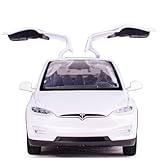
- Made of zinc alloy with ABS plastic parts
- 5.9 inch x 2.2 inch x 1.8 inch(size)
- The two sides of doors could be opened,front and back covercould be opened too
- You can pull back the car,then it can move forwards with Lights and Sound
- Very suitable as children 4 years and up toys for birthday,Christmas gift, new year. Also it can be a gift for your boyfriend
What is the difference between Levels 0, 1, and 2?
Levels 0–2 are driver-support features: the human remains responsible for supervising the driving environment and driving safely. The distinction is how much sustained control the feature provides.
- Level 0: No sustained driving automation. A warning or momentary intervention does not turn a feature into automated driving under SAE J3016.
- Level 1: The feature supports either steering or speed, not both together as a Level 2 feature does. Adaptive cruise control is a familiar example of speed support.
- Level 2: The feature can support steering and speed at the same time, but the driver still has to watch the road and supervise continuously. NHTSA gives “highway pilot” as an example; the name does not mean the car is driving independently.
For a Level 2 feature, assistance with both steering and speed does not transfer responsibility for monitoring to the vehicle. NHTSA’s consumer guidance likewise emphasizes the driver’s continuing responsibility: NHTSA’s driver-assistance overview.
Rank #2
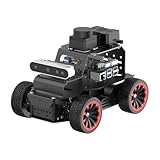
- For Raspberry Pi 5 & ROS2 Robot Car. MentorPi A1 smart AI robot car is powered by Raspberry Pi 5, compatible with ROS2, and programmed in Python, making it an ideal platform for AI robot development.
- High-Performance Hardware. Equipped with Ackerman chassis, closed-loop encoder motors, TOF lidar, depth camera, AI voice interaction box, and other advanced components to ensure optimal performance and efficiency.
- Advanced AI Capabilities. Supports SLAM mapping, path planning, multi-robot coordination, vision recognition, target tracking, and more, covering a wide range of AI applications.
- Autonomous Driving with Deep Learning. Utilizes YOLO model training to enable road sign and traffic light recognition, along with other autonomous driving features, helping users explore and develop autonomous driving technologies.
- Empowered by Large AI Model, Human-Robot Interaction Redefined. MentorPi AI robot car deploys multimodal models with ChatGPT at its core, integrating 3D vision and Al voice interaction box. This synergy enhances its perception, reasoning, and actuation capabilities, enabling advanced embodied AI applications and delivering natural, context-aware human-robot interaction.
How do Levels 3, 4, and 5 differ?
Levels 3–5 are automated-driving features, but they differ in operating limits and who must handle a problem.
- Level 3: The system drives only under defined conditions. A human must be available to respond when the system requests a takeover or a relevant malfunction occurs.
- Level 4: The system also operates only under defined conditions, but within those conditions it does not rely on a human to mitigate risk or take over.
- Level 5: The system is intended to drive under all conditions in which a human can drive; it does not require a human driver.
The central Level 4 versus Level 5 distinction is scope: Level 4 is bounded by defined operating conditions, while Level 5 is meant to cover all conditions in which people can drive. “More automation” alone does not capture that difference.
What’s actually slowing this PC down?
Pick the symptom - the matching free tool is one click away.
Rank #3

- OpenMV Smart Robotic AGV Car Kit: Contains AGV car kit for OpenMV cameras
- Auto Tracking Color Balls: Includes color balls for automatic tracking
- Following Lines: Features pre-programmed lines for simple navigation
- Compatible with OpenMV Cam H7 Plus: Works with OpenMV Cam H7 Plus models
- Compatible with OpenMV Cam H7: Works with OpenMV Cam H7 models
Why can safety features be described differently?
SAE J3016 focuses on systems that perform driving tasks on a sustained basis. It excludes warning and alert systems, as well as momentary active-safety interventions such as electronic stability control and automatic emergency braking, from its sustained driving-automation taxonomy. It also identifies some lane-keeping assistance systems as momentary interventions outside that taxonomy.
NHTSA’s consumer page uses a simplified presentation that places automatic emergency braking, forward collision warning, and lane departure warning under Level 0 momentary driver assistance. It lists adaptive cruise control or lane keeping assistance as Level 1 examples and highway pilot as a Level 2 example. These descriptions are useful consumer guidance, but a feature’s exact classification depends on what it does and whether it provides sustained steering or speed support. See NHTSA’s explanation of driver-assistance technologies alongside SAE’s taxonomy.
Rank #4
Do the terms “self-driving” or a feature name tell you the level?
No. Marketing names are not a reliable way to determine the SAE level or the driver’s responsibilities. NHTSA advises consumers to consult the owner’s manual for information about the vehicle’s actual technology and limits. Check what the system controls, where it can operate, whether you must keep watching, and what happens when it reaches a limit.
NHTSA avoids using “self-driving” for higher automation because the phrase can describe a state of operation without clarifying capability and may mislead consumers about the interaction still required. Prefer the specific SAE level, accompanied by the feature’s operating conditions and the human role. NHTSA explains this terminology and consumer context on its Automated Vehicle Safety page.
Are Levels 3–5 cars available to buy?
NHTSA’s consumer guidance says Levels 3–5 technologies are not available on vehicles for consumer purchase on its driver-assistance page. Its automated-vehicle page says no fully automated vehicle is currently available for sale in the United States and that vehicles currently for sale require full driver attention for safe operation. These are U.S.-specific statements from agency pages accessed October 4, 2026; availability and agency guidance can change. Consumer sale is distinct from testing, research, pilot programs, or limited deployments.
Quick Recap
Product prices and availability are accurate as of the date/time indicated and are subject to change. Any price and availability information displayed on Amazon at the time of purchase will apply.

