
Free tools Windows power users keep installed
One-click scans. No signup required.
Choose Atlassian Rovo when your team’s work and knowledge already live in Jira, Confluence, or Jira Service Management and agents need to work within those workflows. Consider a standalone agent platform when you need a separate agent experience or want to build and govern agents across systems beyond Atlassian. The options can also coexist: Atlassian documents ways for external AI clients to connect to Rovo, but compatibility and access controls need to be checked for each setup.
What counts as an Atlassian or standalone AI agent?
Atlassian describes Rovo as its AI for teamwork, available across products including Jira, Confluence, and Jira Service Management. Its configurable agents can be used in Rovo chat, automation rules, while editing Jira and Confluence content, or through Studio. Depending on their configuration and permissions, they can help organize, create, or edit Jira issues and Confluence pages. Rovo knowledge can draw on Atlassian products and connected third-party apps.
“Standalone AI agent” is not a single product type. Here, it means an agent platform built and managed outside the Atlassian product experience. Some platforms focus on agents inside a vendor’s own environment; others can connect to external applications. Microsoft, for example, describes Copilot Studio as a standalone web app for creating agents and distinguishes simpler prompt-and-response agents from more autonomous ones. These examples do not establish that every standalone platform has the same features or connectors.
Which approach fits your team?
| Decision factor | Rovo is a stronger candidate when… | A standalone platform is a stronger candidate when… |
|---|---|---|
| Where the work happens | Most operational knowledge, work items, and service workflows are already in Jira, Confluence, or Jira Service Management, and users want agent actions close to those workflows. | You need a distinct agent experience or expect workflows to span systems beyond Atlassian. Confirm that the platform you choose supports the systems and tasks you need. |
| Integration effort | Native Atlassian surfaces, connected apps, and Atlassian automation are central to the use case. | Your team is prepared to connect the platform to Atlassian and other systems, and can validate each connector, API, and permission model. |
| Administration and governance | You want Atlassian administration and user permissions to remain central. Atlassian says Rovo respects user permissions and access controls, and provides admin controls and audit information. | Your team already manages identity, connectors, and agent lifecycles on another platform, and can verify that platform’s controls against its policies. Microsoft, for example, documents management through Microsoft 365 and Power Platform controls. |
| Usage and licensing | Your likely usage fits the Rovo allowance for your eligible Atlassian plan, and you want Rovo administration and visibility within Atlassian. | You have checked the specific platform’s licensing and metering against your expected workload. Microsoft says some Copilot agents are available at no additional cost, while agents that access shared tenant data can be metered. |
| Data-processing requirements | The standard Rovo configuration meets your requirements, or your eligible Enterprise organization can request Atlassian-hosted LLMs after reviewing the option’s qualifications. | The service’s model choices, deployment, trust boundary, and data handling meet your requirements. Validate the specific service’s contractual and technical details with its vendor. |
Favor Rovo for work that is already Atlassian-centered
If an agent needs to work with Jira issues, Confluence pages, or service workflows, Rovo’s placement in Atlassian products may make it a natural starting point. That is a workflow-fit argument, not proof that Rovo is more accurate, faster, or cheaper than another agent platform.
Quick wins for a faster PC:
Clear out junk files and repair common Windows errorsFree Scan →Fix the driver behind crashes, sound loss and screen glitchesFind Drivers →#1 Best Overall

- ENHANCED CONTEXT WITH MULTIMODAL INPUT: Capture audio, type notes, add images, and press to highlight key moments for richer context. During recording, instantly mark key moments with a single button press. Simultaneously enrich your audio by snapping photos of important documents or typing in ideas
- CHAT WITH YOUR RECORDINGS USING "ASK Plaud": Unlock deeper insights with this interactive AI. Ask questions, extract key points, draft emails, and get next-step suggestions—all grounded in your original audio for reliable, ready-to-use answers
- INTELLIGENT RECORDING WITH AI DIRECTIONAL AUDIO: Enjoy seamless, intelligent recording with Plaud Note Pro. Its AI automatically switches between call and meeting modes while recording, while directional audio and real-time spatial awareness minimize noise to capture voices with crystal clarity
- Everything Included: Includes Plaud Note Pro, magnetic case, magnetic ring, charging cable, and a free Starter Plan with 300 transcription minutes per month. Upgrade anytime in the Plaud app to Pro Plan (1,200 min/mo) or Unlimited Plan(Up to 24 hours of transcription per user per day)
- PREMIUM ULTRA-SLIM DESIGN WITH INSTANTVIEW DISPLAY: Meticulously designed, the AI Note Taker is just 0.12 inches thin and 1.06 oz —about the size of a credit card. Its sleek aluminum body with a textured wave finish features a vivid AMOLED display, letting you check battery and recording status at a glance, while it seamlessly works with Apple Find My to ensure you never misplace it
Favor a standalone platform for broader agent operations
An outside platform may fit better if you want to create and manage agents in a separate environment or coordinate work across a wider set of systems. “Standalone” does not guarantee broad integrations: check the chosen service’s actual connectors, permissions, and administration before deciding.
Can a standalone agent connect to Jira or Confluence?
It may be possible without moving the agent experience into Atlassian. Atlassian documents a Rovo MCP server and an Agent2Agent Gateway for external AI clients, naming GitHub Copilot and Google Gemini as examples. Those examples are not a guarantee that every client, task, or tenant is compatible.
Rank #2
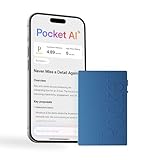
- YOUR AI PERSONAL ASSISTANT FOR EVERYDAY PRODUCTIVITY: More than a voice recorder, Pocket works as your AI personal assistant to capture, transcribe, and summarize meetings, calls, and ideas instantly. Core features are included out of the box, with optional advanced tools available for power users.
- ONE-TAP RECORDING FOR REAL-LIFE MOMENTS: Capture meetings, phone calls, and in-person conversations instantly with a simple tap, no typing, no interruptions, just effortless note-taking anywhere you go.
- SMART AI INSIGHTS & ORGANIZATION: Pocket automatically turns recordings into clear summaries, key action items and structured conversation maps so you can quickly review what matters without digging through audio.
- TURN CONVERSATIONS INTO ACTION WITH “ASK POCKET”: Don’t just record, understand. Instantly ask questions across your meetings, extract key insights and generate next steps in seconds. All grounded in your recordings, so answers stay accurate and reliable.
- MAGSAFE COMPATIBLE FOR SEAMLESS USE: Easily attach Pocket to your iPhone or other MagSafe compatible devices for convenient, hands-free recording on the go. Perfect for capturing meetings, calls, and ideas without needing to hold your device.
Before adopting this architecture, confirm the actual client and use case, supported scopes, access controls, and required administrator configuration. Decide which platform owns the agent’s identity and lifecycle, and test whether the connection preserves the permissions and review steps your team expects.
How do Rovo credits and extra usage work?
Atlassian’s licensing documentation, accessed October 7, 2026, lists the following monthly Rovo credit allowances per user. Atlassian says the allowance is pooled across the organization and refreshes monthly; it is not a guaranteed count of tasks. Credit consumption depends on interaction complexity and feature type, so these figures alone cannot predict how much work a team can complete.
Recommended Free Tools
Rank #3
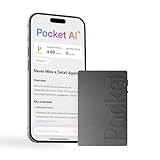
- YOUR AI PERSONAL ASSISTANT FOR EVERYDAY PRODUCTIVITY: More than a voice recorder, Pocket works as your AI personal assistant to capture, transcribe, and summarize meetings, calls, and ideas instantly. Core features are included out of the box, with optional advanced tools available for power users.
- ONE-TAP RECORDING FOR REAL-LIFE MOMENTS: Capture meetings, phone calls, and in-person conversations instantly with a simple tap, no typing, no interruptions, just effortless note-taking anywhere you go.
- SMART AI INSIGHTS & ORGANIZATION: Pocket automatically turns recordings into clear summaries, key action items and structured conversation maps so you can quickly review what matters without digging through audio.
- TURN CONVERSATIONS INTO ACTION WITH “ASK POCKET”: Don’t just record, understand. Instantly ask questions across your meetings, extract key insights and generate next steps in seconds. All grounded in your recordings, so answers stay accurate and reliable.
- MAGSAFE COMPATIBLE FOR SEAMLESS USE: Easily attach Pocket to your iPhone or other MagSafe compatible devices for convenient, hands-free recording on the go. Perfect for capturing meetings, calls, and ideas without needing to hold your device.
| Eligible Atlassian plan | Standard | Premium | Enterprise |
|---|---|---|---|
| Jira or Confluence | 25 credits per user per month | 70 credits per user per month | 150 credits per user per month |
| Teamwork Collection or Service Collection | 250 credits per user per month | 700 credits per user per month | 1,500 credits per user per month |
The same licensing documentation lists pay-as-you-go extra usage at $0.01 per credit ($10.00 per 1,000 credits). Atlassian Support states that updated pricing applies to usage and forecasts starting August 31, 2026, and that extra-usage billing takes effect December 3, 2026. These dates and rates are time-sensitive: confirm the current support documentation, plan eligibility, and billing settings before budgeting. Atlassian also documents admin visibility and controls to disable extra usage.
Atlassian says Rovo is available to customers on eligible Standard, Premium, or Enterprise Cloud plans for Jira, Confluence, Jira Service Management, or its Service and Teamwork Collections, with no separate Rovo purchase required for eligible plans. Eligibility and rollout can depend on the organization and product. Check the specific tenant rather than assuming a plan includes access.
Rank #4

- AI-POWERED TRANSCRIPTION & SUMMARIES: Plaud Note Pro is your professional voice transcriber, delivering high-accuracy transcription in 112 languages with auto speaker labels. Powered by top AI models and thousands of templates, Note Pro instantly creates structured summaries, mind maps, To-Do lists, and proposals tailored to your role and industry
- ENHANCED CONTEXT WITH MULTIMODAL INPUT: Capture audio, type notes, add images, and press to highlight key moments for richer context. During recording, instantly mark key moments with a single button press. Simultaneously enrich your audio by snapping photos of important documents or typing in ideas
- CHAT WITH YOUR RECORDINGS USING "ASK Plaud": Unlock deeper insights with this interactive AI. Ask questions, extract key points, draft emails, and get next-step suggestions—all grounded in your original audio for reliable, ready-to-use answers
- INTELLIGENT RECORDING WITH AI DIRECTIONAL AUDIO: Enjoy seamless, intelligent recording with Plaud Note Pro. Its AI automatically switches between call and meeting modes while recording, while directional audio and real-time spatial awareness minimize noise to capture voices with crystal clarity
- Everything Included: Includes Plaud Note Pro, magnetic case, magnetic ring, charging cable, and a free Starter Plan with 300 transcription minutes per month. Upgrade anytime in the Plaud app to Pro Plan (1,200 min/mo) or Unlimited Plan(Up to 24 hours of transcription per user per day)
What should you check about permissions and data processing?
Permissions and administration
Atlassian says Rovo respects user permissions and access controls, and provides administration controls and audit information. That vendor description is relevant, but it does not replace testing the agent with the roles and data your team actually uses. For a standalone platform, review its identity model, connector permissions, audit coverage, and controls for creating, changing, and retiring agents.
Atlassian-hosted LLM option
Atlassian says Cloud Enterprise organizations can request Atlassian-hosted LLMs. When enabled, prompts and context used for LLM processing stay within the Atlassian Cloud boundary. Atlassian says this option is organization-level and not currently self-serve. It also notes that some multimodal features may be unavailable, coverage for Jira Service Management and other collections is still being verified, credit rates are higher, and response quality or latency may differ.
Atlassian further states that data submitted to or generated by Rovo is not shared with third-party AI providers to train, fine-tune, or improve their models or services, whether or not an organization opts into Atlassian-hosted LLMs. Treat this as Atlassian’s description of its handling commitments, not as a blanket data-residency or compliance guarantee. The vendor’s July 2026 update describes a rollout of Rovo data-residency migrations; admins should verify supported regions and availability in their own tenant. For any platform, check applicable contractual terms and technical controls against your organization’s requirements.
How to compare the options in a pilot
Vendor feature lists cannot tell you which setup will work best for your own tasks. The material available for this comparison does not establish an independent head-to-head performance result, so use a scoped pilot to assess the systems under your team’s normal permissions.
Quick Recap
- Choose representative tasks. Include routine work, a task involving information from more than one system, and a case where the agent must create or change an item. Exclude actions you are not prepared to review or authorize.
- Use equivalent inputs and access. Where the platforms can perform the same task, give them comparable instructions and data access. Record any connector or configuration work needed to make the comparison fair.
- Check authorization and outputs. Test with relevant user roles. Check whether each agent can access only appropriate information, whether its answers are useful, and whether proposed or completed actions are correct.
- Measure the operational burden. Track review and correction time, setup and maintenance effort, response latency, and the steps users must take to complete each workflow.
- Estimate actual usage costs. Record consumption for the tested tasks and compare it with current licensing and metering rules. For Rovo, account for pooled credits and verify the organization’s settings for extra usage.
- Decide by workflow, not a feature-count winner. Keep the platform that meets the task, governance, and cost requirements with an acceptable review burden. If different workflows favor different platforms, a mixed setup may be more appropriate than forcing every use case onto one.
Product prices and availability are accurate as of the date/time indicated and are subject to change. Any price and availability information displayed on Amazon at the time of purchase will apply.

