
The ASUS Striker Extreme is an LGA775 motherboard built around NVIDIA’s nForce 680i SLI chipset. ASUS documents support for selected Intel processors, up to 8 GB of DDR2 memory, and a two-card PCIe x16 SLI layout. For a restoration or compatibility check, use the exact CPU model and its minimum BIOS version in ASUS’s support table; the LGA775 socket alone does not guarantee support.
What the ASUS Striker Extreme is
ASUS identifies the Striker Extreme as an LGA775 board using the NVIDIA nForce 680i SLI chipset. Its specifications describe a platform from the DDR2 and PCI Express 1.x era, rather than a modern motherboard. ASUS’s manual and specifications are the board-specific reference for its documented limits.
The board’s listed front-side bus entries are 1333, 1066, 800, and 533 MHz. These are manufacturer specifications; they do not by themselves establish that a particular processor works without the appropriate BIOS.
Which CPUs are supported, and how to check BIOS
ASUS’s CPU support list gives validated processor models and the BIOS version required for each listed CPU. Check the exact processor model and revision against that table before installing it. Do not infer support from the LGA775 socket or processor family alone.
#1 Best Overall
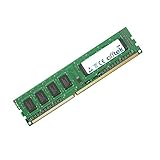
- Boost Your System’s Performance: Increase available memory for smoother multitasking, improved responsiveness and better performance when running memory-intensive applications.
- Matched Specifically to Your Machine: OFFTEK selects the correct memory configuration for the computer shown in this listing, removing the uncertainty from choosing a compatible upgrade.
- We Do the Technical Checking for You: There is no need to compare memory speeds, voltages, form factors or other technical details, as the upgrade has been matched to the machine’s supported requirements.
- Extend the Life of Your Computer: Increasing the available memory can help your existing machine remain productive for longer, offering a cost-effective alternative to replacing the complete system.
- Quick and Straightforward Upgrade: Memory is normally simple to install and requires no software installation; shut down and disconnect the machine before fitting and follow the manufacturer’s instructions.
- Find the complete model designation printed on the processor or its packaging.
- Open ASUS’s Striker Extreme CPU support list and locate that exact model.
- Read the minimum BIOS version shown for the processor.
- Compare that requirement with the BIOS currently installed on the board. If the installed version is older, the CPU may not be supported until the BIOS is updated; check ASUS’s BIOS instructions and the board’s current boot capability before attempting an update.
Memory: DDR2 types and capacity
ASUS specifies four 240-pin DIMM sockets for non-ECC, unbuffered DDR2 memory, with support listed for DDR2 800, 667, and 533 MHz and a maximum system memory capacity of 8 GB. The manual also lists 1200 MHz SLI-Ready Memory. That separate specification is not a promise that any DDR2 kit will run at that rate or that every module arrangement is validated.
Before choosing memory, check the module type, total capacity, and rated speed against ASUS’s specifications. The 8 GB ceiling is the board’s stated maximum, not a guarantee that every combination of DIMMs will be compatible.
PCIe slots and the board’s SLI arrangement
ASUS documents two blue PCIe x16 slots for a two-card SLI arrangement operating at x16/x16. The board also has one PCIe x8 slot, one PCIe x1 slot, and two conventional PCI slots. This describes the board’s original expansion layout; it does not establish compatibility with a modern graphics card, driver, or operating system.
Storage connections
The manual lists six SATA ports at 3.0 Gb/s, with NVIDIA MediaShield RAID support for RAID 0, 1, 0+1, 5, and JBOD. It also documents two external SATA ports provided through a Silicon Image controller. These are legacy interfaces, so compare the stated connection speed and port count with the requirements of the drives and setup you intend to use.
What’s actually slowing this PC down?
Pick the symptom - the matching free tool is one click away.
Rank #2
- Boost Your System’s Performance: Increase available memory for smoother multitasking, improved responsiveness and better performance when running memory-intensive applications.
- Matched Specifically to Your Machine: OFFTEK selects the correct memory configuration for the computer shown in this listing, removing the uncertainty from choosing a compatible upgrade.
- We Do the Technical Checking for You: There is no need to compare memory speeds, voltages, form factors or other technical details, as the upgrade has been matched to the machine’s supported requirements.
- Extend the Life of Your Computer: Increasing the available memory can help your existing machine remain productive for longer, offering a cost-effective alternative to replacing the complete system.
- Quick and Straightforward Upgrade: Memory is normally simple to install and requires no software installation; shut down and disconnect the machine before fitting and follow the manufacturer’s instructions.
BIOS archive and firmware age
In the ASUS BIOS archive, version 2002 is the newest displayed entry; ASUS dates it May 19, 2010. Its release note says it fixes potentially lengthy booting with an ATI Radeon 5000 card. This is the newest version shown in the consulted archive, not evidence of ongoing firmware development or current support. See the ASUS BIOS archive for the version history.
What to compare before restoring or replacing the board
If you are deciding whether to keep this board for a vintage build or choose another platform, compare the requirements that determine practical fit:
- Processor: exact CPU model and its minimum validated BIOS, according to ASUS’s support table.
- Memory: non-ECC unbuffered DDR2, supported speed, and total capacity within the stated 8 GB maximum.
- Graphics: whether you need the board’s documented two-card x16/x16 SLI layout; do not treat that period configuration as proof of modern GPU compatibility.
- Storage: number of drives and whether the board’s SATA 3.0 Gb/s ports meet your needs.
The board may appear in used or vintage-hardware listings as an ASUS Striker Extreme motherboard. Availability, condition, and price depend on the seller and are not established by ASUS’s specifications. Verify those details directly before buying.
Quick Recap
Product prices and availability are accurate as of the date/time indicated and are subject to change. Any price and availability information displayed on Amazon at the time of purchase will apply.

