
No—PvE-only games are not automatically less competitive. They can test speed, score, efficiency, difficulty cleared, consistency, and team coordination. The difference is that PvE players compete against a shared challenge or compare their results, while PvP players directly oppose one another. Which feels more competitive depends on what kind of contest you want.
What does “competitive” mean in PvE and PvP?
In PvP, competition is direct: players try to defeat or outperform other players in the same contest. That makes fairness between opponents central to the experience.
In PvE, the game supplies the opposition. Competition can still come from trying to beat a time or score, clear a harder difficulty, use fewer resources, improve consistency, or rank above other runs. In co-op PvE, players can also pursue mastery together by coordinating roles and executing a difficult encounter.
These are different competitive relationships, not a simple scale from “competitive” to “not competitive.” A player who wants to outplay a human opponent may find PvE less satisfying; someone who enjoys optimizing a run or coordinating a team may find it intensely competitive.
#1 Best Overall

- WHODUNIT WORD DEDUCTION: Solve the crime by connecting clever word clues to uncover who’s lying and who’s telling the truth. Every round challenges players to think fast, read the room, and catch the culprit.
- SOCIAL BLUFFING & ASSOCIATION: Players create convincing alibis using word associations while one secret criminal tries to blend in. The mix of bluffing and logic creates big laughs and memorable “aha!” moments.
- PERFECT PARTY GAME ENERGY: Designed for 4-8 players, Alibis shines at parties, game nights, and group gatherings. Everyone stays involved through discussion, debate, and accusation from start to finish.
- EASY TO LEARN, FAST TO PLAY: Simple rules get the game started in minutes while still delivering meaningful deduction. With a 20-30 minute playtime, it’s ideal for repeat plays and late-night rounds.
- HIGH REPLAY VALUE & VARIETY: A wide range of scenarios, clues, and word combinations ensure no two games feel the same. Endless variability keeps the mystery fresh and the accusations flying every time.
How can you tell whether a PvE game is competitive?
Look for whether the game gives you meaningful goals and ways to assess performance—not only whether it has a leaderboard.
- Visible comparison: Can you compare results with friends, other players, or your own previous runs?
- Meaningful measures: Do time, score, efficiency, or difficulty cleared reflect skills the game intends to reward?
- Room to improve: Can practice, strategy, or harder content produce better performance?
- Team execution: In co-op, do communication and role coordination materially affect success?
- Desired opponent: Do you want direct human opposition, or does improving against a common challenge meet your idea of competition?
What forms can PvE competition take?
Leaderboards and personal bests
Some PvE games make performance comparison explicit. Epic Games described Warstride Challenges as uploading each player’s personal best to friends and world leaderboards. That offers a concrete competitive target—improve your time and compare it with other runs—without requiring players to fight each other directly.
Rank #2

- VIBRANT COLOR GAME: Challenge friends and family to connect words with colors in the engaging Hues and Cues, featuring 480 colorful hues for limitless fun!
- FUN FOR ALL AGES: Perfect for family game nights, parties, or casual play, this game brings players of all ages together with simple rules and exciting gameplay.
- UNIQUE EXPERIENCE: No two rounds are the same! Hues and Cues provides a new and unique experience with each playthrough, keeping the fun fresh and engaging.
- CREATIVE AND INNOVATIVE: Use just one or two word clues to guide others to the right hue, sparking creative thinking and fostering fun team interaction.
- QUICK TO LEARN: Hues and Cues offers fast-paced action with easy rules, making it enjoyable for both casual players, and gaming enthusiasts.
Speed, score, and optimization
Fast clears and high scores can create demanding goals, but they are only measures of particular kinds of performance. StarCraft II co-op designer Kevin “monk” Dong cautioned, “Perhaps most importantly, speedrunning does not account for player skill.” A time can rank runs while leaving out other dimensions of mastery, so a leaderboard’s existence does not by itself show that it measures the whole challenge well. See the Blizzard News interview.
Coordinated team execution
Co-op PvE can put the challenge in communication and shared execution rather than player-versus-player combat. GTFO’s developers described the game as a hardcore four-player co-op PvE stealth/action/horror FPS built for a specific audience and a deep experience. That design illustrates how cooperation itself can be demanding. The description appears in GTFO’s announcement.
Windows Errors? Fix Them Before They Spread
Repair common Windows errors and clear accumulated junk for a smoother, more stable PC - no reinstall needed.Free scan · no reinstallOutdated Drivers Are Slowing You Down
One free scan finds every outdated or missing driver and matches the right update for your exact hardware.Free scan · exact hardware matchRank #3
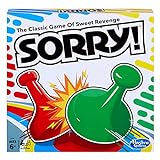
- GAME OF SWEET REVENGE: Enjoy classic Sorry! gameplay with this Sorry! board game for kids. It's an edge-of-your-seat race to home, so hurry up and get there first
- FIRST ONE HOME WINS: Who will be the first player to get all 3 of their pawns to the home space? But watch out! Players can get "sweet revenge" by sending each other's pawns back to the starting point
- SO MANY POSSIBILITIES: Slide, collide, and score to win the Sorry! game. This family game for kids and adults features so many possibilities depending on the card picked up and strategy chosen
- CLASSIC SORRY! GAMEPLAY: Remember playing the original Sorry! game as a kid? Bring back memories of playing the Sorry! game with family members and introduce it to a new generation
- FAMILY GAME NIGHT FAVORITE: A go-to game for family time or anytime indoor fun, the Sorry! game for kids is one of the best family games for game night
Do leaderboards make PvE more competitive?
They can make comparison more visible, but they do not automatically improve the experience or capture every valuable skill. A 2017 study, “Leaderboard Effects on Player Performance in a Citizen Science Game,” compared more than 4,500 new players and cautioned against assuming leaderboards always enhance gameplay. That sample belongs to the study’s specific game and setting; it is not a measure of PvE games overall. Read the study.
Rankings can also change expectations in group play. Research on game balancing discusses speedrunning guilds in endgame PvE: optimized standards can help establish practices, but can also raise the bar for other players. A ranking may therefore motivate some groups while making others feel pressured to match an ideal run. The effect depends on the game and its community, not simply on whether a leaderboard exists. Read the balancing research.
Rank #4

- STRATEGY GAME: Adventure awaits any swashbuckler brave enough to command a fleet. Conquer islands to gain valuable resources. Build and upgrade your ships with masts and cannons. Wage war against rival captains and rule the seas.
- EASY TO LEARN: The thematic and intuitive gameplay allows new players to quickly grasp the rules and will have you helming your battleship through the Caribbean in no time. The rulebook also contains an overview guide for easy understanding.
- HIGH REPLAYABILITY: The game board is created by combining six different double-sided ocean tiles which create a unique map configuration each time you play. You’ll never play the same map twice, encouraging you to explore new strategies.
- GIFTS: This modern classic appeals to both beginners and veteran gamers. Fun for adults, couples, families, kids, teens, high school and college students. Perfect for birthday gifts and Christmas gifts. A game night crowd pleaser.
- NUMBER OF PLAYERS AND AVERAGE PLAYTIME: This pirate game is designed for 2 to 6 players, plus a team play option. Average playtime is 20 minutes per player. There is no player elimination, so every captain fights to the very end.
Does PvE have a replayability ceiling?
Authored PvE content can be finite: Riot’s discussion of game modes argues that storytelling experiences have limits because developers can author only so many enemies and stories. That is a design perspective, not a rule that every PvE game stops being competitive once its story ends. Harder content, variation, personal improvement, and rankings can extend the challenge beyond a first clear. Read Riot’s game-mode discussion.
Independent reader supportYour contribution helps us test, update, and keep practical guides available for everyone.Can you rank PvE-only games against PvP games?
Not on one universal competitiveness scale. The available examples show that PvE can include performance rankings and demanding cooperative play, but they do not establish that PvE-only games are generally more or less competitive than PvP games. Player motivations also do not reduce neatly to a PvP-versus-PvE split; a 2012 Game Developer article challenges that assumption and discusses a broader motivation framework. Read the article.
What’s actually slowing this PC down?
Pick the symptom - the matching free tool is one click away.
Best Value

- FUN FAMILY GAME FOR KIDS: Remember playing the original Trouble board game as a kid? Introduce a new generation to classic Trouble gameplay with this Trouble game for kids
- EASY TO LEARN AND SET UP: The Trouble game is easy to play and quick set up. The object of the game is simple: the first player to get all of their game pieces around the board wins
- POWER UP SPACES: The game instructions include options for classic Trouble gameplay or a version with Power Up Spaces for a more challenging game
- POP-O-MATIC BUBBLE: In this beloved children's board game, players press and pop the plastic bubble to roll the die. The iconic Pop-o-Matic die roller is fun to press, and it keeps the die from getting lost
- BOARD GAMES FOR FAMILY: Adults and kids can play this family board game together. It's a fun indoor game for playdates and a great choice for Family Game Night
A more useful comparison is between the particular games and the kind of competition each supports: direct opposition, ranked performance against a shared challenge, or cooperative mastery. Decide which of those you value before calling one game less competitive than another.
Quick Recap
Product prices and availability are accurate as of the date/time indicated and are subject to change. Any price and availability information displayed on Amazon at the time of purchase will apply.

