
Recommended Free Tools
No—not based on the evidence available. Energy Dome’s CO2 Battery is being developed for grid-scale storage that can deliver power for longer than many lithium-ion installations. Google has linked the technology to its broader effort to meet rising data-center electricity demand, but that is not the same as data centers replacing their onsite backup batteries. Lithium-ion remains useful for shorter-duration grid storage; long-duration storage is an additional option.
What is a CO2 Battery?
Energy Dome’s CO2 Battery is an industrial, thermo-mechanical energy-storage system—not a chemical battery pack for a server room. It stores energy by moving carbon dioxide through a closed cycle: electricity drives compressors that draw CO2 from a low-pressure dome and store it under pressure; when electricity is needed, the CO2 is evaporated and expanded through a turbine to generate power. Energy Dome says its standard system is designed to provide 8–24 hours of firm, dispatchable capacity. Energy Dome’s CO2 Battery overview
That duration is the main distinction in the data-center story. A grid-connected storage facility can shift renewable electricity from the hours when it is generated to later periods of demand. It can support a region’s electricity supply, including loads from data centers, without being installed at a data center or serving as that facility’s backup battery.
Why compare it with lithium-ion?
Google describes lithium-ion as important for adding grid capacity and managing short-term changes in renewable generation. In a July 25, 2025 post, Google energy leaders Michelle Chang and Ainhoa Anda wrote that lithium-ion batteries “typically store and dispatch power for 4 hours or less.” Google presents long-duration storage as a further tool, not a wholesale replacement for lithium-ion. Google’s announcement of its Energy Dome partnership Google’s statement on lithium-ion and short-duration storage
#1 Best Overall

- Lithium Photo batteries have been developed to provide optimum, long-lasting performance for your film and digital cameras
- Storage life lasts up to 10 years.
- Withstands even the most extreme temperatures
A longer discharge window can help cover a different gap: energy generated during one part of the day may be needed hours later, or renewable output may fall while demand remains high. That makes long-duration storage potentially relevant to a power system serving energy-intensive data centers. It does not establish that every data center needs this technology, or that it can replace every function of an onsite battery system.
What the announced projects establish
The public examples show grid-scale projects and partnerships associated with data-center power strategy. They are evidence of development and deployment plans, not proof of widespread adoption or a sector-wide move away from lithium-ion.
Rank #2

- Battery Type: Ni-MH, Voltage: 3.6V, Capacity: 3000mAh, WH: 10.8Wh
- Compatible Models: D-TEK Select Refrigerant Leak Detector 712-202-G1, PLS LED Stobe, Compass and D-TEK CO2 Refrigerant Leak Detectors
- P/N: 712-700-G1 EAC-460015-003 A19267-460015-LSG A19267-460015-LSD
- Certificated with UN38.3, MSDS, ISO9001, RoHS, CE
- Full Refund or a Free Replacement without Reason for 60 Days.
| Project | Announced scale and duration | What the announcement says |
|---|---|---|
| Coronado Generating Station site, St. Johns, Arizona | 19 MW, 10 hours | Energy Dome and Salt River Project (SRP) announced the planned project on June 15, 2026. Their announcement describes a 20-year tolling agreement: Energy Dome will own and operate the facility, and SRP will dispatch its output. It is a grid-scale project; the announcement does not describe a data center replacing onsite batteries. Energy Dome and SRP announcement |
| Former thermal power station near Rhode, County Offaly, Ireland | 23 MW / 200 MWh | Google announced the project with Energy Dome in 2026. Google’s Energy Dome announcement |
| Columbia Energy Storage Project, Wisconsin | Designed to provide enough electricity for about 18,000 homes for 10 hours on a charge | Alliant Energy says it expects construction to begin in 2026 and completion by the end of 2027. These dates are the utility’s forecast, not confirmation that construction or completion has occurred. Alliant Energy’s project page |
On July 25, 2025, Google said it had formed a long-term partnership with Energy Dome to support multiple commercial projects globally. Google described the CO2 Battery as able to dispatch stored renewable energy for 8–24 hours and placed it within a broader portfolio of energy approaches. Google’s partnership announcement
What Energy Dome claims about performance—and what remains unproven
For its standard CO2 Battery, Energy Dome claims net round-trip efficiency of 70% or more, an operating life exceeding 30 years, and no capacity degradation. These are company-stated product claims; the available material does not establish them as independently audited results across commercial projects. Energy Dome’s CO2 Battery overview
What’s actually slowing this PC down?
Pick the symptom - the matching free tool is one click away.
Rank #3
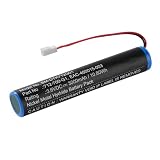
- Compatible with Models: D-TEK Select Refrigerant, Leak Detector 712-202-G1, PLS LED Stobe, Compass and D-TEK CO2, Refrigerant Leak Detectors
- Compatible Battery Part number:712-700-G1, EAC-460015-003, A19267-460015-LSG
- Battery Specifications: Type: Ni-MH, Voltage: 3.6V, Capacity: 3000mAh, Dimension 128.54 x 24.10 x 22.30mm
- Certificated with ISO9001, RoHS, CE, UN38.3, and MSDS, and provide high quality replacement battery
- The batteries in this store have a one-year quality guarantee, and free return and exchange within one year. Provide 100% satisfied customer service
Energy Dome’s comparison table also assigns lithium-ion 85% round-trip efficiency, a lifetime under 12 years, CAPEX 1.7 times its own system, and depth of discharge under 80%. These are vendor comparison figures, not a neutral market benchmark. In particular, a cost ratio cannot be treated as a general verdict: project duration, duty cycle, design, financing, and system boundaries matter, and no independent apples-to-apples cost study is established by the cited material. Energy Dome’s comparison
Efficiency comparisons also need matching system boundaries. Energy Dome’s CO2 Battery Plus pairs storage with open-cycle gas turbines and uses turbine exhaust heat during discharge. The company advertises efficiency above 115% for Plus, but that figure includes external waste heat and is not directly comparable with the standard system’s electrical round-trip efficiency. Energy Dome’s CO2 Battery Plus overview
Rank #4

- Replacement For BIOCHEM / BCI CAPNOCHECK ET CO2 MONITOR BATTERY
- Unit per sale:1
Does this replace a data center’s backup batteries?
The announced projects described here are grid-scale storage. Google’s partnership connects long-duration storage to its wider power strategy, but the announcements do not show data centers removing onsite lithium-ion backup batteries and installing CO2 systems instead. Those are different applications: grid-connected storage dispatches electricity into the power system, while onsite backup equipment is located at a facility to support its own electrical needs.
Google has also discussed data-center demand response as part of its energy strategy. That is a broader way to consider how flexible demand and supply can help manage electricity needs; it is not evidence that a particular CO2 Battery project directly powers or backs up a data center. Google’s discussion of its energy strategy
The Tool Desk
Outbyte PC Repair FREEClear out junk files and repair common Windows errorsFree Scan →Outbyte Driver Updater FREEScan for outdated or missing drivers - takes under a minuteDriver Scan →Best Value

- First Alert's Precision Detection advanced sensing technology complies with new industry standards to reduce cooking nuisance alarms and provides early warning in the event of a home fire emergency
- Provides reliable 2-in-1 protection against both smoke and carbon monoxide
- End-of-life warning lets you know when it’s time to replace the alarm
- Battery-operated alarm allows for easy installation and maintenance
- Test/silence button for efficient testing to ensure alarm is working properly
How to judge the “ditching lithium-ion” claim
- Check the duration: the CO2 Battery’s stated 8–24-hour target addresses longer discharge periods than Google’s description of typical lithium-ion storage at four hours or less.
- Check the use case: distinguish grid-connected storage from behind-the-meter supply and onsite backup. A project supporting a grid that serves data centers is not automatically a data-center battery replacement.
- Compare efficiency on equal terms: separate standalone electrical round-trip efficiency from claims that include external waste heat.
- Ask for project-level economics: costs depend on duration, operating pattern, design, and financing. The vendor’s comparison alone does not establish which option costs less for an equivalent project.
- Separate plans from operating evidence: announced capacity and forecast schedules do not by themselves establish completed construction, measured performance, or broad industry adoption.
The defensible conclusion is narrower than the headline’s premise: Google and other power-sector partners are exploring long-duration storage, and Energy Dome’s CO2 Battery is one grid-scale technology aimed at that need. The evidence supports adding a different storage option alongside lithium-ion—not declaring that AI data centers are abandoning lithium-ion.
Quick Recap
Product prices and availability are accurate as of the date/time indicated and are subject to change. Any price and availability information displayed on Amazon at the time of purchase will apply.

