
Free tools Windows power users keep installed
One-click scans. No signup required.
To run an Android app in Android Studio, choose the app run configuration, select an emulator or connected Android device, then click Run (▶). Android Studio uses Gradle to build the app and deploys it to the target you selected. If the build or project sync fails, start with the Build tool window.
Build and run the project
- Select the run configuration. In the toolbar, open the run-configurations menu and choose app. This is the standard configuration for running the project’s default app module.
- Select a target device. Use the target-device menu to choose a running Android Virtual Device (AVD) or a connected phone. If the menu has no suitable target, follow one of the setup routes below.
- Click Run. Android Studio builds the project and deploys it to the selected target. The default configuration builds an APK and launches the project’s default activity. Android Studio delegates the build to Gradle; as Android Developers puts it, “Android Studio doesn’t do anything unique to build your application; it calls Gradle to perform the build the same way you’d call it from the command line.” Android Developers explains the run workflow.
What project sync and the build do
Sync and build are related, but they are not the same operation. When a project opens or you request synchronization, Android Studio analyzes its build files to understand the project structure and index dependencies. That information supports IDE features such as code completion and launch configurations. Gradle then performs the build work that produces the app for deployment. If sync fails, the IDE may not have an accurate picture of the project; if the build fails, Gradle could not complete the work needed to produce the app. Android Developers describes the build process.
Choose where to run the app
| Consideration | Emulator | Physical Android device |
|---|---|---|
| Setup | Create and start an AVD in Device Manager. | Enable debugging, then connect by USB or pair for wireless debugging where supported. |
| Coverage | Try different device profiles, screen sizes, and Android versions. | See behavior on actual phone hardware. |
| Computer demands | Uses computer resources; larger virtual devices or higher Android API levels may need more. | Can be useful if the computer struggles with emulation. |
| Connection | Runs on the development computer. | USB or, on supported Android versions, Wi-Fi. |
Neither route is right for every situation. Android’s emulator guidance recommends an emulator in most cases, while suggesting a physical device when the computer lacks adequate resources and recommending real-device testing before release. Your first successful run is a useful milestone, not a substitute for release validation. Read the emulator guidance and the physical-device guide.
Run on an emulator
An Android Emulator simulates a device on your computer. Its AVD (Android Virtual Device) describes the simulated hardware and Android version. You can create and manage AVDs in Android Studio’s Device Manager, then select the running virtual device from the toolbar’s target-device menu and click Run.
Windows Errors? Fix Them Before They Spread
Repair common Windows errors and clear accumulated junk for a smoother, more stable PC - no reinstall needed.Free scan · no reinstallCrashes, No Sound, or Screen Glitches?
Random freezes, missing sound and display glitches usually trace back to one bad driver. Find and replace yours safely.Free scan · under a minute#1 Best Overall

- 【Strong Adsorption】The inspiration of the silicone phone suction case comes from the adhesive force of the octopus. Each suction cup phone mount is 3.15 inches long and 2.17 inches wide, with 24 independent suction cups providing a stronger and more stable suction force, so you don't have to worry about your phone falling during use.
- 【Back of Phone Suction Grip】Remove the adhesive film on the phone suction cup and stick it on the phone case. You can then fix the phone on any smooth surface, which is very convenient. (The phone suction cup cannot be removed and reused after being attached to the phone case. It is recommended to attach it to a regular phone case, not a valuable one.)
- 【Widely Used】Our non-slip silicone phone sticky grip mount attaches to almost any flat phone case and make it compatible with common mobile phones such as iPhone and Android.You can shoot, watch videos or video calls in the kitchen, gym, dance studio, bathroom and other places.
- 【Capture the Wonderful Picture】Whether you are a TikTok creator or just like to share videos and photos, this phone suction cup can help you hands-free capture wonderful videos and photos for sharing with friends.
- 【Note】You can fix the phone suction cup on a smooth surface such as a mirror or glass. If necessary, wipe the suction cup with a damp cloth to obtain stronger suction. Before releasing your hand, make sure the phone is firmly fixed. (Not applicable to rough walls, wooden surfaces, and other uneven surfaces)
- Open Tools > Device Manager and create an AVD if you do not already have one.
- Start the AVD from Device Manager and wait for Android to finish starting.
- Select that AVD in the target-device menu, choose app as the run configuration, and click Run.
The first emulator launch can take longer; later launches may resume from a snapshot. Emulators are useful for checking layouts across screen sizes and trying different API levels without owning each device. Android Developers recommends a host computer with 16 GB RAM and 16 GB disk space for the emulator experience; these are recommendations, not universal minimums for every Android Studio project. Higher API levels or larger virtual devices may need more resources. Check the emulator host requirements.
Run on a physical Android phone
Connect by USB
- On the phone, enable Developer options and turn on USB debugging.
- Connect the phone to the computer with a USB cable that fits the phone and supports data transfer.
- Accept the phone’s debugging prompt if it appears, then select the phone in Android Studio’s target-device menu.
- Select app and click Run.
Some computers need additional setup before they can communicate with a phone. Windows may require an OEM USB driver; Ubuntu may require membership in the plugdev group and suitable udev rules. To check whether Android Debug Bridge (ADB) detects a USB-connected phone, run adb devices in a terminal. If the device is absent, check USB debugging, the cable and port, and any operating-system driver or permissions setup. See Android’s device-connection instructions.
Rank #2

- SUPERIOR COMFORT — Unlike traditional circular ear buds, the design of EarPods is defined by the geometry of the ear. Which makes them more comfortable for more people than any other ear bud–style headphones.
- HIGH-QUALITY AUDIO — The speakers inside EarPods have been engineered to maximize sound output and minimize sound loss, which means you get high-quality audio.
- BUILT-IN REMOTE — EarPods with USB-C plug also include a built-in remote that lets you adjust the volume, control the playback of music and video, and answer or end calls with a pinch of the cord.
- COMPATIBILITY — Works with all devices that have a USB-C port.
- INTEGRATED MICROPHONE — A built-in microphone precisely captures your voice while you’re on the phone, taking a FaceTime call, or summoning Siri — so you’re always heard loud and clear.
Pair over Wi-Fi
Android 11 and later supports wireless deployment and debugging through ADB. Put the phone and workstation on the same wireless network, enable Wireless debugging in the phone’s Developer options, then use Android Studio’s Pair Devices Using Wi-Fi flow and follow its pairing prompts. Once paired, select the phone as the target and run the app. Wireless availability and interface details can vary by Android and Android Studio version; consult the current Android device guide if the labels differ.
Find out why a sync or build failed
Open View > Tool Windows > Build. The Build tool window provides separate views for synchronization and build activity:
Rank #3

- Secure Hold: Our PopSockets adhesive phone grip gives your cell phone a secure, comfortable hold in hand to help prevent drops while texting, taking photos, or scrolling on the go. Designed to stick firmly to most phone cases and devices.
- Hands-Free Made Easy: Easily turn your PopSocket into a phone stand to prop up your phone anywhere, perfect for watching videos, video calls, or following recipes. A must-have phone holder that keeps your device secure and ready for anything.
- Compatibility: Works with all phones, tablets, and Kindles. Sticks best to smooth, hard plastic cases and may not adhere to silicone or textured cases. Easily swap your PopTop to change up your style.
- Black PopSockets: Simple, refined, and endlessly versatile. A timeless essential for any phone.
- Travel Must-Have for People On the Go: A must-have travel accessory for flights, flying, airports, air travel, airplanes, planes, international trips, cruises, and long travel days. Key gadget for your airport haul, travel accessories and must-haves.
- Sync: review sync tasks and errors when Android Studio cannot finish project synchronization.
- Build Output: inspect the task tree and build or compilation error output when Gradle cannot produce the app.
Open the failed task and read the specific error before changing project files. A missing device is a deployment-target issue; a Gradle error is a sync or build issue. Separating those cases helps you look in the right place first. Android’s run guide covers the Build tool window.
Independent reader supportYour contribution helps us test, update, and keep practical guides available for everyone.If the device does not appear
- For an emulator: create an AVD in Device Manager and start it; then check the target-device menu again.
- For USB: verify that USB debugging is enabled and the phone is connected with a data-capable cable. Check for an authorization prompt and any driver or operating-system setup that applies. Run
adb devicesto see whether ADB detects it. - For Wi-Fi: confirm the phone and computer share a network, Wireless debugging is enabled, and Android Studio’s pairing flow completed.
When the app launches, Android Studio has completed the essential first-run path. For deeper inspection of runtime behavior, the next tools to learn are Logcat and debug mode; the run overview links to their documentation.
Quick Recap
Best Value
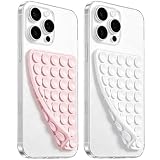
- 【PKYAA Double Sided Silicone Suction Phone Case Mount】PKYAA With Double Sided 40 Strong and Reliable individual suction cups, PKYAA provides a thicken and upgraded universal silicon suction mount for your phone.
- 【Friendly to Content Creators】If you are a content creator or an online influencer, you can create videos anywhere with this suction mount completely hands free with this silicone cell phone mount for cases.
- 【HANDS-FREE & Adhere to Mirrors】This Double Sided silicone suction phone case mount allows you to stick your phone to the mirror easily. No longer holding your phone in one hand to watch video tutorials while making up.
- 【Strong Grip on the Smooth Surface】You can easily hang your phone anywhere with a smooth surface. All you do is you clean off your phone and smooth surface. It is STURDY and it not only sticks to mirrors, it also sticks to windows, it sticks to refrigerators, tiles and other clean, flat surfaces.
- 【Press Down Firmly Every 30 Minutes】Use your palm or fingers to press the phone down firmly and check it's secure before letting go. Apply even pressure for a few seconds to allow the suction cup to adhere properly. To maintain the grip and prevent accidental falls, it's a good practice to periodically reapply pressure to the suction cup.
Rank #4

- [360 ° Flexible Rotation Design] Comes with a rotatable lanyard ring that supports 360 ° free rotation, effectively solving the problem of twisted and tangled lanyards
- [Wide compatibility] The ultra-thin 0.02-inch design does not block the charging port at all, and both wired and wireless charging can be used directly without removing the pad. Compatible with most smartphones such as iPhone, compatible with various wristbands, lanyards, crossbody straps, and keychains
- [Durable and Portable Material] Premium rust-resistant stainless steel material with good flexibility, which not only avoids scratching the phone case, but also has excellent anti rust and anti fading performance
- [Multi scenario Practical] Paired with a lanyard or wristband, hands-free use can be achieved. The phone is within reach and not easily dropped, ideal for daily commuting and outdoor activities. Suitable for full coverage phone cases, does not support half coverage phone cases
- [Quality Service] If you find any damage or other issues with the product upon receipt, please contact us immediately. We will handle it quickly
Product prices and availability are accurate as of the date/time indicated and are subject to change. Any price and availability information displayed on Amazon at the time of purchase will apply.

