
Quick wins for a faster PC:
Repair Windows errors before they cause bigger problemsFix Now →Scan for outdated or missing drivers - takes under a minuteDriver Scan →The AMD EPYC 7452 is a 32-core, 64-thread server processor that can be a sensible value when its 155 W power envelope, platform, and workload fit the system. It is not automatically the best 32-core choice: in ServeTheHome’s August 2020 comparison, the faster, higher-TDP EPYC 7502P was favored for many single-socket builds. The practical verdict depends on measured application performance and whole-system costs, not core count alone.
EPYC 7452 specifications and platform requirements
AMD lists the EPYC 7452 as an EPYC 7002 Series server CPU. It has 32 cores, 64 threads, a 2.35 GHz base clock, boost up to 3.35 GHz, 128 MB of L3 cache, and a default TDP of 155 W. It uses the SP3 platform and supports one or two sockets. AMD’s specifications also list PCIe 4.0 x128, eight-channel DDR4 memory up to 3200 MT/s, and up to 204.8 GB/s of memory bandwidth per socket.
![AMD EPYC 7002 [2nd Gen] 7452 Dotriaconta-core [32 Core] 2.35 GHz Processor - OEM Pack](https://m.media-amazon.com/images/I/41rkXj68NPL._SL160_.jpg)
![AMD EPYC 9004 [4th Gen] 9124 Hexadeca-core [16 Core] 3 GHz Processor](https://m.media-amazon.com/images/I/316ISTIk-UL._SL160_.jpg)
This is a server processor, not a drop-in desktop upgrade. A prospective system needs an SP3-capable server board or complete system. Check the manufacturer’s CPU support list, required firmware, cooling capability, and memory-population rules for the exact configuration. The processor specification confirms supported platform and memory characteristics; it does not certify a particular board or DIMM kit.
What the EPYC 7452 benchmarks show
ServeTheHome’s 2020 review compares the 7452 with nearby EPYC processors and contemporary Intel Xeon systems across a varied set of workloads. The tests include c-ray 1.1 8K ray tracing, 7-zip compression, NAMD molecular modeling, OpenSSL sign and verify, UnixBench Dhrystone 2 and Whetstone, chess, and an in-house KVM virtualization workload. The comparisons are historical and tied to the review’s test configurations; they should not be treated as universal rankings for current software or systems.
#1 Best Overall
Clock speed and power can outweigh a core-count match
In the c-ray test, the review reports that the 7502 performs much better than the 7452, attributing much of the gap to clock speed and TDP. That is a useful warning against choosing by core count alone: two 32-core CPUs can behave quite differently when their operating frequencies and power limits differ.
Understand the 7-zip averaging method
For 7-zip, ServeTheHome removed the highest and lowest quartiles of runs and averaged the remaining results to approximate sustained performance. The review notes that simply averaging all raw results would have put the 7F72 ahead in that test. Rankings can therefore shift with the measurement and averaging method; the chart’s result is not interchangeable with a different test procedure.
Rank #2
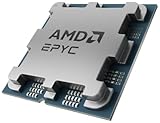
- The processor features Socket AM5 socket for installation on the PCB
- EPYC product line processor for better usability and increased efficiency
- Dodeca-core (12 Core) processor core allows multitasking with great reliability and fast processing speed
- 64 MB of L3 cache memory provides excellent hit rate in short access time enabling improved system performance
- Processor with 3.40 GHz clock speed for reliable and fast execution of instructions to ensure maximum convenience and feasibility
Virtualization is a system-level workload
The review’s KVM test counts how many virtual machines remain online while meeting a customer target SLA. It reports that 32 cores help in this broader scenario, where memory also matters. For virtualization planning, CPU throughput is only one part of the result; memory capacity and configuration can affect how many workloads a host can sustain.
ServeTheHome’s benchmark page contains the test results and methodology. Its charts are image-based in the available page text, so specific chart values should be consulted directly rather than inferred or reconstructed.
Recommended Free Tools
Rank #3

- 16 CPU cores
- Up to 3.3GHz max boost clock
- 1P/2P socket count
- 32 # of threads
- 128MB L3 cache
EPYC 7452 vs. 7502P: which 32-core option fits?
ServeTheHome characterized the 7452 as a relative bargain in the launch-era EPYC lineup, while noting that buyers seeking a 32-core single-socket server might be better served by the 7502P. The reviewer’s conclusion was specific to the 2020 market and configuration context, not a permanent rule. The 7452’s lower TDP and launch-era price can favor it when they suit the build; the 7502P’s higher TDP and additional performance may justify the alternative in a performance-focused system.
- Choose based on application throughput: benchmark the software and workload mix the server will actually run, rather than assuming equal core counts mean equal performance.
- Fit the power and thermal budget: account for the 7452’s 155 W default TDP alongside the server’s cooling, power delivery, and operating conditions.
- Match the socket and system design: the 7452 supports one or two sockets, but board support, memory capacity and bandwidth, and I/O must suit the deployment.
- Compare complete-system economics: include licensing, memory, networking, and operational overhead before treating consolidation as a guaranteed saving.
- Use a current price, not a launch figure: AMD’s $2,025 1Ku price was a launch-era figure, not a verified current retail or used-market quote.
AMD’s launch table listed the 32-core 7502 at $2,600 and 7502P at $2,300 alongside the 7452’s $2,025 1Ku price. Those historical list prices can explain the original value comparison, but they do not establish what a processor costs or whether it is available today. AMD’s EPYC 7002 launch announcement provides the launch-era product-stack context.
Rank #4
A separate SPEC result: useful context, not a single-CPU score
SPEC lists an Inspur NF5488A5 result dated November 2021 with two EPYC 7452 processors: SPECrate2017_int_base 383 and SPECrate2017_int_peak 407. The submitted configuration used 1 TB of DDR4-3200 memory (32 × 32 GB), Red Hat Enterprise Linux 8.3, and AOCC 2.0.0. This is a result for that dual-socket system and software configuration, not a benchmark score for one 7452 in isolation. The SPEC result report includes the submission details.
Independent reader supportYour contribution helps us test, update, and keep practical guides available for everyone.Who should consider the EPYC 7452?
The 7452 is worth evaluating when a server workload benefits from 32 cores, the system needs SP3 and DDR4, and the CPU’s power and cost profile works for the deployment. It may also fit a two-socket design, provided the board and rest of the platform support the intended configuration. The review does not establish that it wins every workload or that consolidation will reduce costs in every environment.
Best Value
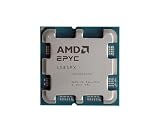
- The processor features Socket AM5 socket for installation on the PCB
- EPYC product line processor for your convenience and optimal usage
- Hexadeca-core (16 Core) processor core helps processor process data in a dependable and timely manner with maximum productivity
- 128 MB of L3 cache memory offers great system performance and avoids interruptions while executing complex and critical tasks
- Processor with 4.30 GHz clock speed for quick and dependable processing of data to ensure maximum productivity
For a single-socket 32-core build, compare it directly with the 7502P using representative application tests and the server’s actual power, memory, and licensing constraints. For any purchase, validate the exact system support and use a current seller quote rather than relying on the original launch price. ServeTheHome’s original conclusion is best read as a conditional value judgment from August 2020.
Quick Recap
Product prices and availability are accurate as of the date/time indicated and are subject to change. Any price and availability information displayed on Amazon at the time of purchase will apply.

