
Do these 3 things before closing this tab:
1Fix the driver behind crashes, sound loss and screen glitches2Repair Windows errors before they cause bigger problems3Scan for outdated or missing drivers - takes under a minuteiTechGuides is reader-supported. When you buy through links on our site, we may earn an affiliate commission. As an Amazon Associate I earn from qualifying purchases. Learn more
AirPrint setup for HP, Brother, Canon, Epson, and other printers usually requires no download: verify the exact printer model supports AirPrint, connect the printer and iPhone, iPad, or Mac to the same reachable network, then choose Print from the Apple device. Wi-Fi and Ethernet work; USB and Bluetooth do not provide normal iPhone or iPad AirPrint printing.
AirPrint is Apple’s built-in, driverless printing system. The printer still needs to be AirPrint-compatible and network-connected, and the app you are using must expose a Print command. Manufacturer apps can help with setup, scanning, maintenance, firmware, and advanced features, but ordinary AirPrint printing normally does not require HP Smart, Brother Mobile Connect, Canon PRINT, or Epson Smart Panel.
Key takeaways
- AirPrint is built into supported Apple devices, so a separate AirPrint download or printer driver is normally unnecessary.
- AirPrint compatibility is model-specific; owning an HP, Brother, Canon, or Epson printer does not by itself guarantee AirPrint support.
- An iPhone, iPad, or Mac and the printer must be able to communicate over the same local network, whether the printer uses Wi-Fi or Ethernet.
- On iPhone or iPad, use Share or Actions → Print → No Printer Selected → choose the printer → Print.
- On a Mac, use File → Print and select the AirPrint printer, or choose Add Printer if macOS does not list it.
- A manufacturer app or Mac driver becomes useful when the printer is not AirPrint-compatible or when AirPrint lacks scanning and model-specific controls.
What do you need for AirPrint setup for HP, Brother, Canon, Epson, etc.?
For successful AirPrint setup, you need five things: an exact printer model that supports AirPrint, a powered-on printer without active errors, a Wi-Fi or Ethernet network, an iPhone, iPad, or Mac on the same reachable local network, and an app that supports printing.
What’s actually slowing this PC down?
Pick the symptom - the matching free tool is one click away.
- Find the complete model number on the printer, its display, its configuration page, or its original documentation.
- Check the model against Apple’s AirPrint compatibility information and the printer manufacturer’s specifications or manual.
- Make sure the printer has paper and is not showing a paper, ink, toner, cover, or offline error.
- Confirm the Apple device has a working Wi-Fi connection. Cellular data alone is not a substitute for local Wi-Fi access.
- Confirm the app or document viewer provides a Print command. Some iPhone and iPad apps do not support printing at all.
AirPrint compatibility belongs to the exact model, not simply to the brand. Some HP, Brother, Canon, and Epson models support AirPrint while other models from the same brand may require a manufacturer app or a computer driver.
Popular on Amazon
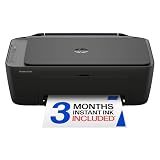
- PERFECT FOR BASIC PRINTING NEEDS – Print everyday color documents like to-do lists, letters, financial documents and recipes
- KEY FEATURES – Color print, copy, scan, and a 60-sheet input tray, plus mobile and wireless printing
- OPTIMIZE PRINT FORMATTING WITH HP AI – Print web pages and emails with precision—no wasted pages or awkward layouts; HP AI easily removes unwanted content, so your prints are just the way you want
- ICON LCD – Print your basic documents with ease from the intuitive control panel
- PRINT SPEED – Up to 7.5 ppm black, 5.5 ppm color
Is AirPrint installed separately?
No. AirPrint is normally built into supported Apple operating systems and compatible printers. Apple describes AirPrint as a driverless printing system with automatic printer discovery and support for devices including iPhone, iPad, Mac, and Apple Vision Pro; the Apple AirPrint overview explains the supported workflow.
Do not search for an “AirPrint driver” or an “AirPrint download” as the first fix. The important software-related checks are printer firmware, Apple device software, and—on a Mac—a manufacturer driver when the printer does not support AirPrint or when advanced controls are required.
AirPrint can print supported documents, photos, web pages, email, and other content from compatible apps. AirPrint is primarily a printing workflow. Scanning, faxing, ink monitoring, cloud services, and printer maintenance may require the manufacturer’s application or macOS scanning tools.
How do you connect an HP, Brother, Canon, or Epson printer to Wi-Fi?
Use the printer’s own network setup first. The exact labels and button combinations vary by model, but the general process is the same.
- Turn on the printer and wait for it to finish starting up.
- Open the printer’s Setup, Network, Wireless, or Wireless Settings menu.
- Choose the home or office Wi-Fi network.
- Enter the Wi-Fi password and confirm the connection.
- Wait for a stable wireless indicator or a connected status message.
- If available, print a network-status or configuration page and note the network name and IP address.
- Connect the iPhone, iPad, or Mac to the same network name, then try printing.
Printers with a display usually provide a wireless setup wizard. Printers without a display may use WPS, a temporary USB connection to a Mac, or the manufacturer’s mobile app. Apple documents these alternatives in its guide to connecting an AirPrint printer to Wi-Fi; the printer’s model-specific manual takes priority over generic button instructions.
Alternative connection methods
| Connection method | When to use it | Important limitation |
|---|---|---|
| Printer control panel | The printer has a screen or navigation buttons. | Menu names differ between models. |
| WPS | The printer and router both support WPS. | The printer’s WPS action and timing are model-specific; do not assume one button sequence works for every brand. |
| Manufacturer app | The printer has no display or needs guided setup. | The app is separate from native AirPrint and may offer additional features. |
| USB-assisted setup | A setup assistant temporarily transfers Wi-Fi details through a Mac. | USB-assisted setup is not the same as iPhone or iPad AirPrint over USB. |
| Ethernet | You want a stable network connection or Wi-Fi setup is unreliable. | The printer needs to be connected to the same reachable LAN as the Apple device. |
A printer connected by Ethernet can still be available to an iPhone or iPad over Wi-Fi when both connections lead to the same local network. Ethernet is often a useful test: if AirPrint works over Ethernet but not Wi-Fi, the problem is likely wireless configuration, signal quality, or network isolation rather than printer compatibility.
How do you print from an iPhone or iPad?
On a supported iPhone or iPad app, the AirPrint sequence is Share or Actions → Print → No Printer Selected → choose the printer → Print.
Free tools Windows power users keep installed
One-click scans. No signup required.
- Open the document, photo, email, web page, or file you want to print.
- Tap the Share button or an Actions button.
- Scroll through the available actions and tap Print.
- Tap No Printer Selected.
- Select the AirPrint printer from the list.
- Choose available options such as copies, page range, paper size, color, or double-sided printing.
- Tap Print.
Apple’s current iPhone and iPad instructions use the labels No Printer Selected and Print, but labels can differ between apps and software versions. If Print is missing, test another app that is known to support printing; the missing command may be an app limitation rather than a printer problem.
Available settings depend on the printer, app, file, and paper configuration. AirPrint does not guarantee access to every manufacturer feature such as borderless printing, specialty paper choices, stapling, scanning, faxing, or all duplex and color controls.
How do you print from a Mac?
On a Mac, open the document and choose File → Print, then select the network printer in the Printer menu.
Also popular on Amazon

- Affordable Versatility - A budget-friendly all-in-one printer perfect for both home users and hybrid workers, offering exceptional value
- Crisp, Vibrant Prints - Experience impressive print quality for both documents and photos, thanks to its 2-cartridge hybrid ink system that delivers sharp text and vivid colors
- Effortless Setup & Use - Get started quickly with easy setup for your smartphone or computer, so you can print, scan, and copy without delay
- Reliable Wireless Connectivity - Enjoy stable and consistent connections with dual-band Wi-Fi (2.4GHz or 5GHz), ensuring smooth printing from anywhere in your home or office
- Scan & Copy Handling - Utilize the device’s integrated scanner for efficient scanning and copying operations
- Connect the Mac and printer to the same reachable network, or use a supported direct connection.
- Open the document, image, or web page.
- Choose File → Print.
- Open the Printer menu.
- Select the AirPrint printer.
- Choose the required print settings and click Print.
If the printer is not listed, choose Add Printer in the printer menu and look for the network printer. Apple’s Mac wireless printing guide also covers adding printers and explains that a Mac may support some AirPrint printers through USB or Ethernet. The printer’s own documentation determines which ports and functions are supported.
The Tool Desk
Outbyte Driver Updater FREEFix the driver behind crashes, sound loss and screen glitchesFind Drivers →Outbyte PC Repair FREERepair Windows errors before they cause bigger problemsFix Now →If the printer does not support AirPrint, install the latest printing software supplied by the manufacturer for the printer model and macOS version. A Mac driver can provide more controls and support older printers, but a Mac driver does not turn an unsupported printer into an iPhone or iPad AirPrint printer.
What are the HP AirPrint setup steps?
For an HP printer, connect the printer and Apple device to the same wireless network, then use the native iPhone, iPad, or Mac Print command. HP’s AirPrint setup guidance provides model-dependent network and troubleshooting instructions.
- On an HP printer with a display, look under Setup, Network, or Wireless Settings, often including a Wireless Setup Wizard.
- On some screenless HP printers, WPS can be started from the printer and completed by pressing the router’s WPS button. HP button combinations vary by product family, so use the instructions for the exact model.
- Use HP Smart for guided setup, scanning, status, supplies, and management when those functions are useful. Basic AirPrint printing from a compatible networked HP printer normally does not require HP Smart.
- If an HP printer appears connected but is not discovered, open its Embedded Web Server using the printer’s IP address, when available, and check whether AirPrint is enabled. HP’s exact Embedded Web Server menus vary by model.
HP’s AirPrint category can help identify replacement products, but a category listing is not a substitute for checking the exact model’s specifications and ownership costs.
What are the Brother AirPrint setup steps?
For a compatible Brother machine, connect the Apple device and Brother printer to the same network, then print from the Apple Print menu without installing a printer driver on the Apple device.
Quick wins for a faster PC:
Fix the driver behind crashes, sound loss and screen glitchesFind Drivers →Repair Windows errors before they cause bigger problemsFix Now →- Brother printers may connect to the router over Wi-Fi or wired Ethernet.
- Brother’s official AirPrint instructions cover printing photos, email, web pages, and documents on compatible machines.
- Do not assume every Brother model supports AirPrint; verify the exact model before troubleshooting discovery.
- Use Brother’s mobile software for model-specific setup, scanning, maintenance, or other functions that native AirPrint does not expose.
Brother’s Mac support may provide additional software for printers that are not AirPrint-compatible or for functions beyond generic printing.
What are the Canon AirPrint setup steps?
For a compatible Canon printer, configure the printer’s network connection using the exact Canon manual, place the printer and Apple device on the same network, and use the iPhone, iPad, or Mac Print command.
Canon manuals describe AirPrint as driverless printing from supported Apple devices. Canon’s official AirPrint guide example is useful for understanding the workflow, but one PIXMA or imageCLASS manual cannot establish AirPrint support for the entire Canon product range.
Use the exact Canon model’s manual or product specifications to check network setup, whether AirPrint can be enabled or disabled, and which paper or finishing options are available. Canon PRINT may be useful for setup, scanning, and photo-specific features, but the app is not automatically required for ordinary AirPrint printing.
What are the Epson AirPrint setup steps?
For a compatible Epson printer, complete wireless setup, connect the Apple device and printer to the same network, and print through the native Apple Print command.
Also popular on Amazon

- Affordable Versatility - A budget-friendly all-in-one printer perfect for both home users and hybrid workers, offering exceptional value
- Crisp, Vibrant Prints - Experience impressive print quality for both documents and photos, thanks to its 2-cartridge hybrid ink system that delivers sharp text and vivid colors
- Effortless Setup & Use - Get started quickly with easy setup for your smartphone or computer, so you can print, scan, and copy without delay
- Reliable Wireless Connectivity - Enjoy stable and consistent connections with dual-band Wi-Fi (2.4GHz or 5GHz), ensuring smooth printing from anywhere in your home or office
- Scan & Copy Handling - Utilize the device’s integrated scanner for efficient scanning and copying operations
- Epson’s AirPrint instructions describe driverless wireless printing from iPhone, iPad, iPod touch, and Mac.
- Some Epson models expose AirPrint settings in Web Config → Network → AirPrint Setup.
- Depending on model and firmware, Epson Web Config may show the Bonjour service name, location, protocol priority, and an Enable AirPrint option.
- Epson Smart Panel or Epson iPrint can assist with setup, scanning, monitoring, and cloud-related features, but those apps are separate from the built-in AirPrint workflow.
Epson’s Web Config menus and AirPrint controls are not identical on every model. If the setting is absent, consult the exact printer manual rather than assuming AirPrint is disabled.
Why does AirPrint require the same local network?
AirPrint needs local device-to-printer communication, not merely shared access to the internet. A phone on the main home network and a printer on a guest network may both browse the web while remaining unable to discover or reach each other.
Common network blockers include:
- The iPhone or iPad is using cellular data because Wi-Fi is disabled.
- The printer is on guest Wi-Fi while the Apple device is on the main Wi-Fi.
- A mesh system, extender, router, or access point has client isolation enabled.
- The printer is on Ethernet in a separate VLAN from the Apple device.
- A hotel, school, office, apartment, or public network blocks device-to-device traffic or requires a browser sign-in.
- A VPN or security tool interferes with local printer discovery.
- The printer and router have incompatible wireless settings, even though the printer can see the network.
AirPrint does not universally require 2.4 GHz Wi-Fi. The defensible requirement is compatible printer and router networking plus local reachability. Wireless band support depends on the printer model and network hardware.
What should you do when the AirPrint printer does not appear?
Follow the checks in order, starting with compatibility and network reachability before changing router settings.
- Verify the exact model. Confirm that Apple or the manufacturer lists the printer as AirPrint-compatible.
- Check the network name. Confirm that the printer and Apple device are on the same SSID or on LAN segments that permit local traffic.
- Check cellular and VPN status. Connect the Apple device to Wi-Fi and temporarily test without a VPN, subject to your security policy.
- Check printer readiness. Clear paper, ink, toner, cover, and offline errors. Wait until the printer finishes booting and joins the network.
- Restart the printer. Turn it off, wait briefly, turn it on, and wait for a stable network connection.
- Restart the iPhone, iPad, or Mac. A fresh discovery attempt can clear a temporary networking problem.
- Restart the router only if necessary. Do this especially when other local devices also cannot communicate.
- Print a network configuration page. Verify the network name and IP address. A missing or invalid address indicates a network connection problem.
- Check AirPrint settings. Some models allow AirPrint to be disabled through the printer control panel or web interface. HP calls this interface the Embedded Web Server; some Epson models use Web Config.
- Check isolation settings. Guest Wi-Fi, client isolation, VLAN rules, and incorrectly configured mesh access points can block discovery.
- Update where appropriate. Check printer firmware and Apple software, following the manufacturer’s update guidance.
- Test Ethernet. If the printer supports Ethernet, connect it to the same router or LAN and try again.
- Use the manufacturer app diagnostically. The app may reveal a failed Wi-Fi setup or firmware problem even when native AirPrint cannot find the printer.
- Use Mac Add Printer or official software. This is appropriate for Mac printing when AirPrint is unsupported or when the manufacturer driver is required.
Apple specifically recommends checking updates, waiting for the printer to join the network after power-on, and following manufacturer guidance. Apple also states that an iPhone or iPad cannot use AirPrint with a printer connected only by USB, Bluetooth, or USB to an AirPort Base Station; see Apple’s iPhone and iPad AirPrint troubleshooting guidance.
Why does an AirPrint job appear but fail?
When the printer appears in the list but the job fails, the printer is discoverable but may be unable to accept the file, reach the device reliably, or process the selected settings.
- Check paper size and type, paper orientation, and the tray selected on the printer.
- Clear paper jams and cartridge, toner, cover, or maintenance errors.
- Check whether the printer is paused, offline, or showing a full queue.
- Cancel stuck jobs from the Mac print queue or the printer’s available control panel.
- Print a one-page PDF or simple photo. A simple test distinguishes a file-specific problem from a general connection problem.
- Try another app that supports printing. A problem limited to one app or file is not necessarily an AirPrint failure.
- Reduce advanced settings. Generic AirPrint controls may not support every paper, color, borderless, duplex, or finishing option offered by the printer.
- Restart the printer and, if other local connections are failing, the router.
- Check the printer’s web interface for job history or a more specific error.
- Try Ethernet to isolate unstable Wi-Fi.
- Use the manufacturer app or a Mac manufacturer driver when AirPrint lacks a required printer-specific function.
AirPrint is intentionally generic. A full HP, Brother, Canon, Epson, or other manufacturer driver may expose more settings than the Apple Print interface, but that additional software is not required for a basic job from a compatible printer.
Outdated Drivers Are Slowing You Down
One free scan finds every outdated or missing driver and matches the right update for your exact hardware.Free scan · exact hardware matchPC Slower Than It Used to Be?
A free scan shows the junk files, broken settings and background clutter dragging Windows down - then fixes them in one click.Free scan · Windows 10 & 11Can AirPrint work over USB, Bluetooth, Wi-Fi Direct, or Ethernet?
AirPrint is normally a network printing system. Ethernet is supported when the printer is reachable on the same local network; USB and Bluetooth are not normal iPhone or iPad AirPrint connection methods.
| Connection | iPhone or iPad AirPrint | Mac possibility | Practical advice |
|---|---|---|---|
| Wi-Fi through the normal LAN | Yes, when the model is compatible and local discovery is allowed. | Yes. | Use this as the standard setup. |
| Ethernet to the same LAN | Yes, when the printer is reachable from the Apple device. | Yes. | Useful for reliability and troubleshooting. |
| USB-only printer | No normal AirPrint path. | Often possible with the appropriate Mac support software or connection. | Do not expect a USB router connection to create iPhone or iPad AirPrint. |
| Bluetooth-only printer | Not a normal AirPrint path. | Depends on the printer and manufacturer software. | Use the printer’s documented app or driver. |
| Wi-Fi Direct | Only on models that specifically support the required workflow. | Model-dependent. | Treat it as an exception, not a universal substitute for a home network. |
Wi-Fi Direct can be useful when a normal network is unavailable, but connecting directly to the printer may disconnect the Apple device from its usual internet network. HP documents Wi-Fi Direct as an option for some models; HP’s model-specific AirPrint guidance should be followed rather than generalized to every HP printer.
Independent reader supportYour contribution helps us test, update, and keep practical guides available for everyone.Should you use AirPrint or the manufacturer’s app?
Use AirPrint for quick, local printing with minimal software; use the manufacturer’s app or driver when setup, scanning, maintenance, cloud functions, or advanced controls matter.
Also popular on Amazon

- AFFORDABLE ALL-IN-ONE FOR HOME AND HOME OFFICE: Print, copy, and scan on one compact wireless printer designed for everyday home office printing, schoolwork, documents, and reports. Produce beautiful prints for results that stand out.
- EASY TO USE WITH CLOUD APP CONNECTIONS: Print from and scan to popular Cloud apps(2), including Google Drive, Dropbox, Box, OneDrive, and more from the simple-to-use 1.8” color display on your printer.
- FULL-SIZE FEATURES IN A COMPACT DESIGN: This printer includes automatic duplex (2-sided) printing, a 20-sheet single-sided Automatic Document Feeder (ADF)(3), and a 150-sheet paper tray(3). Engineered to print at fast speeds of up to 16 pages per minute (ppm) in black and up to 9 ppm in color(4).
- MULTIPLE CONNECTION OPTIONS: Connect your way. Interface with your printer on your wireless network or via USB.
- MOBILE PRINTING MADE EASY: Go mobile with the Brother Mobile Connect app(5) that delivers easy onscreen menu navigation for printing, copying, scanning, and device management from your mobile device. Monitor your ink usage with Page Gauge to help ensure you don’t run out(6).
| Method | Best for | Advantages | Limitations |
|---|---|---|---|
| Apple AirPrint | Ordinary local printing from iPhone, iPad, or Mac. | No separate driver; simple native workflow. | Requires model compatibility and local discovery; fewer model-specific controls. |
| HP Smart | HP setup, scanning, status, supplies, and guided diagnostics. | More HP-specific management features. | Unnecessary for basic AirPrint on a compatible HP printer; some features may involve extra software or account prompts. |
| Brother mobile software | Brother setup, scanning, maintenance, and mobile features. | Model-specific controls. | Does not remove the need to verify native AirPrint support. |
| Canon PRINT | Canon setup, scanning, and photo workflows. | Access to Canon-specific functions. | More involved than AirPrint for a simple print job. |
| Epson Smart Panel or Epson iPrint | Epson setup, scanning, monitoring, and cloud-related functions. | Useful for Epson-specific features. | Separate apps are not normally needed for basic AirPrint. |
| Full Mac driver | Unsupported AirPrint printers or advanced Mac controls. | Broader legacy and model-specific support. | Requires installation and can require maintenance after macOS updates. |
A printer appearing in a manufacturer app but not in Apple’s Print menu usually means the app is using a separate communication method, or the printer lacks native AirPrint support. The app’s success does not prove that the exact printer model supports AirPrint.
When should you use a Mac driver, USB, or Ethernet instead?
Use a Mac driver when the printer is not AirPrint-compatible or when the generic AirPrint interface omits a feature you need. Use USB for a Mac or legacy-printer recovery path when the printer supports it. Use Ethernet when wireless discovery is unreliable but the printer can join the same LAN by cable.
These alternatives do not have identical coverage:
- Mac driver: Best for older or non-AirPrint printers and advanced settings such as manufacturer-specific media, finishing, or maintenance controls.
- USB: Useful for direct Mac printing and some setup assistants, but not a normal iPhone or iPad AirPrint solution.
- Ethernet: A strong option for offices, weak-signal locations, and troubleshooting because it avoids wireless signal and Wi-Fi association problems.
- Manufacturer app: Useful for setup and diagnostics, especially for screenless printers, but it is not necessarily native AirPrint.
When is replacing the printer the sensible option?
Consider replacement when the exact printer has no AirPrint support, its Wi-Fi hardware is failing, its manufacturer software no longer supports the required Apple system, or the printer remains unreliable after a known-good Ethernet and local-network test.
Before buying, check the exact model—not merely the brand—for AirPrint support, Wi-Fi or Ethernet, automatic duplexing, scanner and ADF requirements, ink or toner cost, paper handling, firmware support, and any account or subscription conditions. Printer purchase price alone does not determine ownership cost; consumables, paper, maintenance, and replacement printheads can matter more over time.
For replacement research, Apple’s compatibility information is the first filter. Manufacturer category pages can then narrow the choice: HP provides an AirPrint-filtered printer category, while Epson provides an Apple-compatible printer listing. Current prices and stock change by country and date, so verify the exact product page before purchasing.
Quick decision guide
| Situation | Best next step |
|---|---|
| The printer is listed as AirPrint-compatible and is on the same network. | Use the native Share or File → Print workflow. |
| The printer is compatible but does not appear. | Check SSID, guest-network isolation, VPN, printer readiness, AirPrint settings, firmware, and restart order. |
| The printer appears but jobs fail. | Clear printer errors and queue jobs, test a simple file and another app, then reduce advanced settings. |
| The printer is not AirPrint-compatible but works with a Mac. | Use the manufacturer’s Mac driver, USB, or network printing path. |
| The printer has no display. | Use the exact model’s WPS, USB-assisted, or manufacturer-app setup instructions. |
| The printer is old, unsupported, or has failing network hardware. | Compare an AirPrint-compatible replacement after checking running costs and required features. |
Frequently Asked Questions
Can I AirPrint from an iPhone or iPad over USB?
No. Apple’s normal iPhone and iPad AirPrint workflow requires a compatible network-connected printer; a printer connected only by USB or Bluetooth is not a normal AirPrint target. A Mac may support some USB printer connections separately.
Do I need HP Smart, Brother Mobile Connect, Canon PRINT, or Epson Smart Panel to use AirPrint?
Usually no. Basic AirPrint printing from a compatible networked printer normally uses Apple’s built-in Print command. Manufacturer apps remain useful for guided setup, scanning, maintenance, status, firmware, and features that AirPrint does not expose.
Why does my printer work in the manufacturer app but not in Apple’s Print menu?
The manufacturer app may use a separate communication method, or the exact printer model may not support native AirPrint. Check the model-specific AirPrint listing before changing router settings.
Does AirPrint work on a guest Wi-Fi network?
AirPrint may fail on guest Wi-Fi when the router blocks communication between clients or separates the printer from the Apple device. Put both devices on a reachable local network or ask the network administrator to permit the required local printer discovery and traffic.
Recommended Free Tools
Can AirPrint scan documents?
AirPrint is primarily a printing system and does not guarantee scanning. Scanning commonly requires the manufacturer’s app or macOS scanning tools, depending on the printer and Apple device.
The Bottom Line
AirPrint setup is normally simple: verify the exact printer model, connect the printer by Wi-Fi or Ethernet, put the Apple device on the same reachable local network, and choose Print. If the printer is missing, investigate compatibility and network isolation before installing software. If the printer is unsupported or its network hardware is failing, use a Mac driver, USB, Ethernet, the manufacturer’s app, or replace the printer.

