
Recommended Free Tools
AI-powered speakers prioritize connected features such as voice control and streaming; traditional high-end audio often uses separately selected components. Neither label tells you which will sound better. A smart speaker can be convenient and sound good, while a passive component system can be high fidelity—but so can an active, connected hi-fi speaker.
What do “AI-powered” and “traditional high-end” mean?
“AI-powered speaker” is commonly used for a connected speaker that plays audio and offers features such as voice-assistant control, wireless streaming, and sometimes smart-home control. The exact services and capabilities vary by model. “Traditional high-end speakers” usually refers to a component-based home audio system, often with passive speakers driven by a separate amplifier.
These terms describe different things. “Smart” refers to connected features and control; “passive” describes how a speaker is powered. Neither is a grade of acoustic performance.
How does a smart speaker work?
A smart speaker typically combines speaker drivers and amplification in one unit, connects wirelessly to services or devices, and may accept spoken commands. In a general voice-control design, microphones capture speech, the device digitizes it, and a cloud service interprets the request before the speaker responds or acts. That is one common architecture, not a guarantee about every assistant’s processing or privacy practices. Texas Instruments’ overview of smart-speaker design explains this general command path.
#1 Best Overall

- [AI Smart Speaker] You can use tozo pm1 speaker to AI Chat by connect with TOZO APP, you can literally Talk to it like a real person, rather than just typing and reading on a screen. It’s perfect for hands-free assistance, learning, and entertainment.
- [Intelligent Meeting Assistant] Recording + real-time transcription: one-click recording, stopping as you go, AI real-time conversion of voice messages into text recordings, and automatically analyzing the recording/text content, intelligently refining the key points, action items, and conclusions, and also translating into multiple languages with one click.
- [Excellent Sound Quality] Experience studio-grade clarity with our precision-engineered 28mm dynamic driver. Delivering 30% louder output and deeper bass resonance, it captures every nuance—from crisp highs to rich mid-ranges, ensuring vibrant, distortion-free sound whether you’re streaming music, or voice call.
- [Up to 20H Playtime] Bluetooth speaker has a built-in robust rechargeable battery. Up to 20 hours playtime, ensuring continuous, uninterrupted playback, whether you use the speaker for lectures, work conversations, or listening to music while running outdoors, etc.
- [Unleash Your Hands] Clip-On Convenience make it secure the rugged built-in clip to jackets, backpacks, or belts, room-filling music or take calls hands-free, perfect for hiking, cycling, or busy workdays.
Some product designs use specific ways of distributing sound around a room. For example, Bose says its Smart Speaker 500 has two drivers aimed in opposite directions to reflect sound from walls. That is a feature of that model, not a defining feature of smart speakers generally. Bose’s smart-speaker overview describes its example.
What makes a traditional component hi-fi system different?
In a common traditional setup, passive speakers connect to a separate amplifier. The owner may also choose a separate source, such as a streamer or other playback component. This arrangement involves more component selection and setup, but lets the owner choose and replace parts independently. Sonos explains the amplifier requirement and upgrade trade-off for passive speakers.
Rank #2

- Your favorite music and content – Play music, audiobooks, and podcasts from Amazon Music, Apple Music, Spotify and others or via Bluetooth throughout your home.
- Alexa is happy to help – Ask Alexa for weather updates and to set hands-free timers, get answers to your questions and even hear jokes. Need a few extra minutes in the morning? Just tap your Echo Dot to snooze your alarm.
- Keep your home comfortable – Control compatible smart home devices with your voice and routines triggered by built-in motion or indoor temperature sensors. Create routines to automatically turn on lights when you walk into a room, or start a fan if the inside temperature goes above your comfort zone.
- Do more with device pairing – Fill your home with music using compatible Echo devices in different rooms, or create a home theatre system with Fire TV.
- Say goodbye to drop-offs and buffering - With eero Built-in, Echo Dot doubles as a mesh wifi extender, adding up to 1,000 sq. ft. of wifi coverage to your existing eero network.
“High-end” does not mean “passive,” however. Active speakers have amplification built in, and some active hi-fi models also integrate a digital-to-analog converter (DAC), digital signal processing (DSP), and streaming. Conversely, a passive speaker may be part of a high-fidelity system when paired with suitable amplification and sources. KEF’s explanation of active and passive hi-fi discusses both approaches.
How do the two approaches compare?
| Decision | Smart or integrated speaker | Traditional component hi-fi |
|---|---|---|
| Setup | Usually fewer separate components; wireless setup and app or voice control may be central. | Passive speakers need a separate amplifier; the source may also be a separate component. |
| Control and services | Check the specific model’s assistant, streaming services, smart-home compatibility, and software support. | The owner selects the source and amplification; streaming can come from an added source component. |
| Upgrades | Features and amplification are integrated, so replacing one part may require replacing the unit. | Components can be selected and upgraded individually. |
| Sound quality | Depends on the particular speaker, room, placement, and listening level—not its smart features. | Depends on the particular speakers and system match; passive design does not guarantee better sound. |
| Likely fit | Convenient voice control, streaming, and a self-contained room speaker are priorities. | Component choice, system building, and independent upgrades are priorities. |
Can an AI-powered speaker sound as good as high-end speakers?
There is no category-wide winner. Smart features do not establish sound quality, and a traditional component setup is not automatically superior. Both active and passive systems can deliver high-fidelity sound. Compare specific models in the room where you will use them, with the same music and source quality, at comparable listening levels. Consider placement and room interaction as well as the feature set.
Quick Recap
Best Value

- Powered by a 47% faster processor, the next-gen dual-tweeter acoustic architecture produces detailed stereo separation while a 25% larger midwoofer deepens the bass.¹
- Place this speaker anywhere and everywhere you want to listen. The compact design fits beautifully on your bookshelf, kitchen counter, desk, or nightstand.
- Stream from all your favorite services over WiFi. Pair a Bluetooth device with the press of a button. Connect a turntable or other audio source using an auxiliary cable and the Sonos Line-In Adapter.²
- Go from unboxing to unbelievable sound in just a few minutes. Simply plug in the power cable, connect your phone or tablet to WiFi, and open the Sonos app.
- With a tap in the Sonos app, Trueplay tuning technology analyzes the unique acoustics of your space and optimizes the speaker’s EQ. So all your content sounds just the way it should.
Rank #4
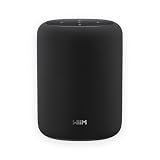
- Hi‑Res Audio, Expertly Tuned – Enjoy up to 24‑bit/192 kHz Hi‑Res streaming, powered by a 100W peak amplifier, 4″ paper‑cone woofer and dual 1″ silk‑dome tweeters for natural mids, smooth highs, and room‑filling clarity.
- Smarter in Any Room - AI RoomFit technology optimizes the sound to your specific space and placement—balanced bass, clean vocals, and engaging detail wherever you place it.
- Open by Design - Stream in the WiiM Home App or cast directly via Google Cast, Spotify/TIDAL/Qobuz Connect, Alexa Cast, DLNA, Roon/LMS; join WiiM, Google Cast, Alexa multi‑room groups.
- Stereo & Cinema‑Ready - Pair two for true L/R stereo; add WiiM Sub Pro for deeper, tighter bass or combine with compatible WiiM components as center/surround for an immersive home‑theater setup.
- Control made simple – Manage playback and settings easily through the WiiM Home App, voice control via Alexa or Google Assistant (with compatible devices), and physical buttons on the speaker—streamlined design, no screen or remote needed.
Rank #3
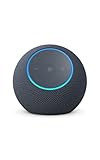
- Meet Echo Dot Max: Experience rich room-filling sound that automatically adapts to your space and fine-tunes playback. Features a built-in smart home hub and Omnisense technology for highly personalized experiences.
- Music to your ears: With nearly 3x the bass versus Echo Dot (2022 release), it fits beautifully in any space, delivering your personal sound stage with deep bass and enhanced clarity. Listen to streaming services, such as Amazon Music, Apple Music, Spotify, and SiriusXM. Encore!
- Do more with device pairing: Connect compatible Echo smart speakers and smart displays in different rooms, or pair with a second Echo Dot Max to enjoy even richer sound. Pair your Echo Dot Max with compatible Fire TV devices to create a home theater system that brings scenes to life.
- Simple smart home control: Set routines, pair and control lights, locks, and thousands of smart home devices that work with Alexa without needing a separate smart home hub. With Omnisense technology, you can activate routines via temperature or presence detection.
- Say goodbye to drop-offs and buffering - With eero Built-in, Echo Dot Max doubles as a mesh wifi extender, adding up to 1,000 sq. ft. of wifi coverage to your existing eero network.
Which type should you choose?
- Choose an integrated smart speaker if you want a simple, self-contained setup with voice or app control and wireless streaming. Before buying, verify that the exact services, assistant, and smart-home functions you need are supported.
- Choose a passive component system if you want to select the speakers and amplifier separately and value the option to upgrade components independently. Plan for the extra matching and setup.
- Consider active hi-fi speakers if you want an integrated design without treating convenience and sound quality as mutually exclusive. Some models combine amplification and digital processing, and may also include streaming; check each product’s specifications.
Product prices and availability are accurate as of the date/time indicated and are subject to change. Any price and availability information displayed on Amazon at the time of purchase will apply.

