
Quick wins for a faster PC:
Clear out junk files and repair common Windows errorsFree Scan →Scan for outdated or missing drivers - takes under a minuteDriver Scan →An AI-generated avatar is a digital character described by how it is made; a virtual influencer is a digital persona described by what it does. An avatar can represent a user or appear in an app without influencing anyone. A virtual influencer publishes audience-facing content and performs an influencer-like role—and may be made with CGI, AI, or both.
What is the difference between an AI-generated avatar and a virtual influencer?
The simplest distinction is production versus purpose. “AI-generated” highlights the technology used to create or modify a digital figure. “Influencer” describes a role: publishing content to attract, engage, or influence an audience.
That means the categories can overlap, but they are not interchangeable. An AI-generated avatar is not automatically a virtual influencer, and a virtual influencer does not have to be AI-generated. The terms are used inconsistently across research, which also uses overlapping labels such as CGI influencer and AI influencer.
| Comparison | AI-generated avatar | Virtual influencer |
|---|---|---|
| What the term describes | A digital representation or character, with AI-enabled creation foregrounded | A digital persona’s audience-facing, influencer-like role |
| Typical purpose | May represent a person, appear in an interface, or serve another use | Publishes social or digital content to engage or influence an audience |
| Technology | AI is part of the label; the avatar may also use other graphics or animation | May be made with CGI, AI, or both |
| Management | Depends on the application and its operator | Often curated by a creator, agency, brand, or AI system; apparent first-person agency does not prove autonomy |
| Appearance | Can be realistic or stylized | Can be humanlike, cartoonish, anime-inspired, nonhuman, or object-like |
When does an avatar become a virtual influencer?
An avatar becomes a virtual influencer when it is developed and managed as a digital persona that creates audience-facing content and performs tasks associated with an influencer. For example, a customer-support avatar can answer questions without having an influencer role. A game character can represent a player without publishing content to build an audience.
Free tools Windows power users keep installed
One-click scans. No signup required.
#1 Best Overall

- 100% LIFETIME PROTECTION: Enjoy reliable performance with lifetime coverage, guaranteeing your tripod is always protected against any defects or issues.
- Ultimate Materials & Engineerin: EUCOS's phone tripod utilizes modified Nylon PA6/6 for all-weather durability. The engineered polymer delivers exceptional crush/shear resistance and toughness, achieving optimal rigidity-flexibility balance.
- Rapid Extension Tripod for Phone: Glide the rod in a single, fluid motion to convert it from a compact tripod into a full 62" selfie stick. Achieve instant elevation for dynamic filming.
- Studio-Grade Phone Rig: Safely harness phones from 2.2" to 3.6" wide with pro-level clamping and effortless framing. Built-in cold shoe expands your creative options with lights and mics.
- Hands-Free Control: The Wireless remote enables instant pairing with smartphone and remote capture from up to 33ft/10m. Ensures rock-solid stability for blur-free photography and Start/Stop video recordings effortlessly—all without device contact.
The 2025 Journal of Business Research editorial defines virtual influencers as digital personas created through computer-generated imagery and/or AI. It says their personas and storylines are typically curated by third parties—including agencies, brands, individual creators, or AI systems—and that they create content on social and digital platforms to engage audiences. A 2024 Psychology & Marketing article similarly treats “virtual” as referring to a computer-generated entity and “influencer” as referring to its commercial activity. Its working definition includes characters managed by human operators using CGI, deepfaking, AI elements, or machine learning.
Neither definition requires the character to act independently. A persona may speak in the first person or appear to make its own choices while a human team plans its story, content, and partnerships.
Rank #2

- 62" Phone Tripod & Selfie Stick Combo: Extendable phone tripod for iPhone and Android, combining a tripod stand and selfie stick in one lightweight design for selfies, photos, videos, vlogging, live streaming, and family gatherings.
- Adjustable Height & 360° Rotation: The tripod extends up to 62 inches to support standing shots, group photos, video calls, and content creation. The 360° rotating phone holder allows vertical or horizontal shooting.
- Stable Phone Holder for Daily Recording: Designed for hands-free video recording, online meetings, tutorials, livestreams, and social content. The phone holder keeps your device positioned securely for clear, steady shots.
- Wide Compatibility with Phones and Cameras: Fits most smartphones from 2.8" to 5.7" wide and includes a universal 1/4" screw mount for compatible cameras, action cameras, webcams, and camcorders.
- Wireless Remote & Complete Kit: Includes 1 phone tripod/selfie stick, 1 universal phone holder, 1 adapter, and 1 wireless remote shutter. Backed by 12-month after-sales support for everyday shooting needs.
Do virtual influencers have to look human or use AI?
No. Virtual influencers can be realistic synthetic people, stylized or anime-like characters, anthropomorphized creatures, or even inanimate objects. Their visual realism is only one way to describe them; it does not determine whether they are influencers.
Nor does the label guarantee a particular technology. CGI and AI can be used separately or together, and some virtual influencers are not AI-enhanced. An AI-created character might never become an influencer if it is not used to publish and engage with an audience.
Do these 3 things before closing this tab:
1Fix the driver behind crashes, sound loss and screen glitches2Clear out junk files and repair common Windows errors3Scan for outdated or missing drivers - takes under a minuteRank #3
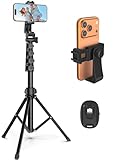
- 【Sturdy and Stable】: Made of premium aluminum alloy and stainless steel, Liphisy phone tripod with remote keeps your device stay securely in place for still shots and video recording.
- 【Multi-angle Shot】: With a max height of 64”, this tripod stand with a 210-degree rotation head and 360-degree rotation holder allows you to capture shots from any angle, catering to different photography needs.
- 【Wireless Remote Included】: Package includes a wireless remote that connects to your cell phone easily, making it a breeze to snap photos or video recordings.
- 【Height Adjustable】: The height of this cell phone tripod with remote can be adjusted from 17” to 64” and the easy lock mechanism makes it really easy to set up. It gives you an excellent vantage point for capturing photos and videos.
- 【Wide Application】: Compatable with different phone and camera, this tripod is great for photography and video recording, perfect for travel and home use.
What else should you compare?
Appearance alone does not tell you how a virtual influencer works or what role it plays. A useful comparison considers the character’s story, management, apparent agency, and function.
- Form: How humanlike or stylized is the character? Is it a person-like figure, creature, or object?
- Content and story: Does it have a personal-life storyline, or mainly present products and information?
- Ownership and management: Is it a brand-owned persona, a creator-managed character, or presented as a free agent?
- Function: Does it act as a brand ambassador, presenter, spokesperson, or content creator?
- Agency and transparency: Who creates the posts and decides what the persona says? Is the audience given clear information about sponsorships and management?
A 2024 scholarly typology uses these dimensions to distinguish virtual influencers. It identifies Lil Miquela as an example of a humanlike free-agent persona and Lu do Magalu as a brand-owned spokesperson. Those examples illustrate categories; they do not establish either persona’s current follower count, ownership arrangements, or partnerships.
Rank #4
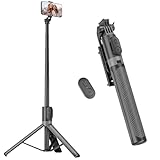
- [Versatile Design] RISEOFLE 71'' Phone Tripod and Selfie Stick combo is the perfect accessory for all your cell phone photography needs.The high-quality aluminum alloy telescopic pole allows you to extend effortlessly and smoothly, and turns into a tripod with just one pull. Its sturdy yet lightweight design provides stability and reliability, ensuring that your phone or camera stays safe during use. Ideal for Selfies/Live/Video Recording/Travel
- [Extra Tall 71" Adjustable Phone Tripod] This selfie stick tripod features a 7-section adjustable aluminum telescoping pole that adjusts from 12.2 in (31 cm) to 70.86 in (180 cm). Provides exceptional flexibility for shooting a variety of shots. Whether you're taking a selfie, a group photo or shooting a video, the adjustable height ensures you get the best angle every time.
- [Compact & Portable Design] The RISEOFLE phone tripod stand With a folded length of only 31cm (12.2 in) and a weight of 264g (0.58 lb), extremely portable and easy to store, it can be effortlessly placed into your backpack or carry-on luggage, making it the perfect companion for your travels. Wherever you go, it allows you to capture amazing footage with ease.
- [360° Rotation & Wide Compatibility] Featuring a 360° rotating phone holder, this selfie stick tripod allows you to easily switch between portrait and landscape modes for the best viewing angle. The universal holder fits smartphones with widths of 2.6''-3.6'' (4''-7'' screen size) and is compatible with most cameras, action cams, and webcams via the 1/4” screw mount (Note: the remote control function only applies to cell phones, the camera cannot use the remote control function).
- [Perfect for Content Creation] Ideal for selfies, vlogging, and social media content creation, the RISEOFLE Tripod comes with a wireless remote control for hassle-free shooting. Whether you're on Instagram, YouTube, TikTok, or Twitter, this phone stand for filming helps you capture professional-quality photos and videos with ease.
How should marketers assess performance?
There is no established universal winner between virtual and human influencers. The 2025 scholarly editorial summarizes mixed findings: virtual influencers may be perceived as less trustworthy in some contexts, while perceived uniqueness and audience identification may matter in others. Results depend on the audience, brand, character, content, and campaign objective.
For campaign decisions, compare audience and brand fit, the persona’s content and story, transparency about sponsorship and management, production and control requirements, and the specific outcome being measured. Do not treat engagement, sales, or trust as automatic advantages of a synthetic persona.
Recommended Free Tools
Best Value

- Rotatable twist with 1/4"screw allows 360° adjustment and 180° flipping, so you can take photos, video call or live broadcast with ease
- Universal compatibility with smartphones up to 3.7 inches wide, GoPros, digital cameras and webcams
- Includes a wireless remote with a range of 30 feet (without obstacle), so you can easily take individual, group and wide-angle shots
- Swaps easily between handheld selfie stick and stand-alone tripod for dual-purpose use
- Whether you're an amateur, enthusiast or professional, this is a must-have accesory for shooting on the go
One vendor-reported survey offers context but is not a head-to-head performance test: Sprout Social reported in August 2025 that its Q3 2025 Pulse Survey found 46% of consumers were uncomfortable with brands using AI influencers and 23% were comfortable. These figures should not be generalized beyond that survey without reviewing its methodology. The same report said 48% of Millennials and 53% of Gen Z respondents had bought a product or service through an influencer’s sponsored post in the last year; those figures refer to influencer-sponsored posts generally, not virtual influencers specifically.
What disclosure rules apply to virtual influencer endorsements?
In the United States, the Federal Trade Commission’s June 2023 update to its Endorsement Guides clarified that endorsements include virtual influencers. The FTC says a material connection between an endorser and marketer that could affect how consumers evaluate an endorsement should be disclosed, and advises that social-media disclosures be clear and conspicuous. This is U.S. guidance; requirements may differ elsewhere, so check the rules that apply in the relevant jurisdiction.
How much do adoption and popularity figures tell you?
Publication counts and follower totals can show attention to the topic, but they are not proof that virtual influencers are more effective or widely preferred by audiences. Audrezet and coauthors reported that scholarly publications about virtual influencers increased by almost 6,350% between 2020 and 2024, surpassing 100 publications annually. That figure measures scholarly publication activity, not audience or market growth.
The same 2025 editorial calculated a platform tally in April 2025 for selected accounts: approximately 2.46 million followers on Instagram, 3.4 million on TikTok, 1.1 million on Facebook, 281,000 on YouTube, 334,000 on Snapchat, and 29,200 on X/Twitter. These are date-specific totals for the accounts included in that paper, not current platform-wide totals.
Quick Recap
Product prices and availability are accurate as of the date/time indicated and are subject to change. Any price and availability information displayed on Amazon at the time of purchase will apply.

