
The Tool Desk
Outbyte Driver Updater FREEScan for outdated or missing drivers - takes under a minuteDriver Scan →Outbyte PC Repair FREERepair Windows errors before they cause bigger problemsFix Now →iTechGuides is reader-supported. When you buy through links on our site, we may earn an affiliate commission. As an Amazon Associate I earn from qualifying purchases. Learn more
AI development is difficult because a model must do more than produce a strong result in a test: it has to solve the right problem with suitable data, work safely and fairly in its intended setting, fit existing systems, and remain dependable after launch. The challenges below follow that lifecycle; they are not a universal ranking, and not every project faces them to the same degree.
1. Defining the problem and what success means
A team can build a technically capable model and still fail if the task is poorly defined. Before choosing an approach, clarify who will use the system, what decision or work it will support, and what a useful outcome looks like in practice. The answer may depend on more than accuracy: delay, cost, consistency, the consequences of mistakes, and whether people can review or override results may also matter.
Success criteria should reflect the intended use and the risks of being wrong. A benchmark score can help compare performance on a defined test, but by itself it does not establish that a system is suitable for a particular workflow. NIST describes trustworthy AI in terms that include validity and reliability, safety, security and resiliency, accountability and transparency, explainability and interpretability, privacy enhancement, and fairness with harmful bias managed. These are distinct considerations, not interchangeable measures of one overall score. See NIST’s overview of trustworthy and responsible AI and its AI Risk Management Framework FAQs.
2. Finding, preparing, and governing suitable data
AI systems depend on data that is relevant to the task and usable under the organization’s legal, privacy, and security obligations. Teams may find that needed data is unavailable, incomplete, inconsistent, low quality, or poorly representative of the people and situations the system will encounter. Preparing it can also require time-consuming work to assess, organize, document, and manage access.
#1 Best Overall
![Arduino® UNO™ Q 4GB [ABX00173]- Hybrid Board, Qualcomm Dragonwing QRB2210 microprocessor (MPU) & STM32U585 Microcontroller(MCU), AI Vision, Voice, IoT, Robotics, Linux Debian OS, Wi-Fi 5, USB-C](https://m.media-amazon.com/images/I/51cl4xygwGL._SL160_.jpg)
- Dual-Brain Hybrid Power: Combines the Qualcomm Dragonwing QRB2210 MPU (Quad-core Arm Cortex-A53 @ 2.0 GHz CPU, Adreno GPU, AI acceleration) and the real-time, low-power STM32U585 MCU for advanced applications like object recognition, voice commands, and motion detection.
- AI & Linux Capabilities: Unlocks AI-powered vision and sound solutions; runs Linux Debian OS for coding in Python and supports the Arduino ecosystem with libraries and Sketches; quick start with Arduino App Lab.
- Advanced Features: Equipped with 4 GB LPDDR4 RAM, 32 GB eMMC built-in storage, ideal for single-board computer (SBC) mode, running multiple simultaneous high-level processes, more complex AI or ML models, extensive logs. Dual-band Wi-Fi 5 (2.4/5 GHz), Bluetooth 5.1, and high-speed headers for vision, audio, and display peripherals.
- Seamless Expansion & Connectivity: Features the classic UNO form factor for shields compatibility, an 8x13 LED matrix, and a Qwiic connector for easy expansion with Modulino nodes; power and connect via the USB-C connector.
- Intended Use & Development: The perfect platform for prototyping robotics or IoT projects, empowering innovators with a unified development experience to mix Arduino Sketches, Python scripts, and containerized AI models in a single interface.
Data quality is not a one-time checkbox. If the data used in development does not reflect the intended setting, evaluation results may give an incomplete picture of how the system will behave there. Privacy and representation requirements can also constrain what data can be collected or used, so those questions belong in planning—not just at the end of development.
These constraints are especially visible in government adoption, but should not be treated as survey findings about every industry. The OECD’s 2025 work on government AI identifies limited data, inconsistent or low-quality data, legacy IT, tight budgets, skills shortages, and stronger privacy, transparency, and representation requirements among the challenges public organizations face. Its scope is government, not all AI projects. See OECD, Governing with Artificial Intelligence and its discussion of implementation challenges that hinder strategic use of AI in government.
3. Making performance dependable, safe, and fair
Model development involves balancing different requirements rather than optimizing one metric in isolation. A system may perform well on a test and still be unreliable in unfamiliar conditions, expose sensitive information, create security risks, or produce outputs that are difficult to understand or challenge. Which concerns matter most depends on the application and the possible consequences of failure.
Outdated Drivers Are Slowing You Down
One free scan finds every outdated or missing driver and matches the right update for your exact hardware.Free scan · exact hardware matchPC Slower Than It Used to Be?
A free scan shows the junk files, broken settings and background clutter dragging Windows down - then fixes them in one click.Free scan · Windows 10 & 11Reliability and safety
Teams need to ask whether the system works consistently for its intended task and what happens when it is uncertain, wrong, or used outside its intended conditions. Safety concerns the potential for harm; reliability concerns whether the system performs as expected. Neither can be inferred solely from a single favorable benchmark result.
Rank #2
- Dual-Brain Hybrid Power: Combines the Qualcomm Dragonwing QRB2210 MPU (Quad-core Arm Cortex-A53 @ 2.0 GHz CPU, Adreno GPU, AI acceleration) and the real-time, low-power STM32U585 MCU for advanced applications like object recognition, voice commands, and motion detection.
- AI & Linux Capabilities: Unlocks AI-powered vision and sound solutions; runs Linux Debian OS for coding in Python and supports the Arduino ecosystem with libraries and Sketches; quick start with Arduino App Lab.
- Advanced Features: Equipped with 2 GB LPDDR4 RAM, 16 GB eMMC built-in storage, ideal to develop in PC-connected mode, running the OS, Python scripts, and basic network services (SSH) without a demanding GUI or heavy multitasking; great for lightweight AI and memory-optimized TinyML applications, needing local storage for basic OS and core libraries. Dual-band Wi-Fi 5 (2.4/5 GHz), Bluetooth 5.1, and high-speed headers for vision, audio, and display peripherals.
- Seamless Expansion & Connectivity: Features the classic UNO form factor for shields compatibility, an 8x13 LED matrix, and a Qwiic connector for easy expansion with Modulino nodes; power and connect via the USB-C connector.
- Intended Use & Development: The perfect platform for prototyping robotics or IoT projects, empowering innovators with a unified development experience to mix Arduino Sketches, Python scripts, and containerized AI models in a single interface.
Security and privacy
Security includes protecting the system and its surrounding processes from misuse or disruption, while privacy concerns the handling and protection of personal or sensitive information. These questions affect choices about data, access, deployment, and operations; they are not limited to model architecture.
Fairness, accountability, and explanation
Teams may need to detect and manage harmful bias, make responsibility for decisions clear, and provide explanations or interpretation appropriate to the use. These goals can be difficult to satisfy simultaneously. The 2026 Stanford Institute for Human-Centered Artificial Intelligence AI Index reports that safety improvements may reduce accuracy, illustrating that improving one objective can create a trade-off with another. The right balance depends on the task and risk context; there is no single solution that makes every system trustworthy.
The same report counts 362 documented AI incidents, up from 233 in 2024. These are documented counts, not a complete census of every incident, and the figures alone do not explain why incidents increased. See the 2026 AI Index Report.
4. Integrating AI into systems and real work
A model does not operate in isolation. It has to connect with the organization’s data and software, fit the way people actually work, and have a clear role in decisions. Legacy systems can make integration difficult; a technically successful prototype may still be hard to operate reliably in an existing environment.
Rank #3
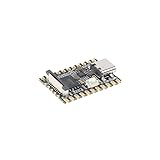
- Single core ARM Cortex-A7 32-bit core, integrated with NEON and FPU
- Built in Micro's self-developed 4th generation NPU, with high computational accuracy and support for mixed quantization of int4, int8, and int16. Among them, int8 has a computing power of 0.5 TOPS and int4 has a computing power of up to 1.0 TOPS
- Built in self-developed 3rd generation ISP3.2, supports 4 million pixels, and supports various image enhancement and correction algorithms such as HDR, WDR, and multi-level denoisin
- It has powerful encoding performance, supports intelligent encoding, adapts to save bit rates according to the scene, and saves more than 50% of the bit rate compared to conventional CBR mode, making the captured images high-definition, smaller in size, and doubling the storage space
- The design with built-in RISC-V MCU supports low-power fast startup, 250ms fast capture, and simultaneous loading of AI model library, enabling facial recognition to be completed within 1 second
People and resources are part of the implementation challenge, too. Teams need appropriate technical and domain expertise, time, infrastructure, and budget to develop and support a system. Staff who use or oversee it need to understand what it can and cannot do, when to rely on it, and how to raise concerns. These constraints vary by organization; the OECD’s findings about skills, legacy IT, and budgets specifically describe government adoption.
Independent reader supportYour contribution helps us test, update, and keep practical guides available for everyone.5. Monitoring the system after launch
Deployment is not the end of AI development. Real-world conditions can differ from the conditions used to build and evaluate a system, and AI behavior can be variable or nondeterministic. A system may therefore need ongoing checks for changes in performance, operational problems, security issues, compliance concerns, or unintended effects on people and at larger scale.
NIST’s 2026 report on post-deployment monitoring groups monitoring challenges into six categories:
Free tools Windows power users keep installed
One-click scans. No signup required.
- Functionality
- Operational performance
- Human factors
- Security
- Compliance
- Large-scale impacts
NIST also notes that monitoring methods and common terminology remain nascent and scattered. Its March 9, 2026 announcement calls post-deployment monitoring “from incident monitoring to field studies” a crucial practice for confident, wide-spread AI adoption. The report addresses monitoring deployed AI systems; it is not a ranking of every development challenge. See the NIST announcement and the official publication record.
Rank #4

- 【POWERFUL ESP32‑S3 CONTROLLER】Built‑in Xtensa 32‑bit LX7 dual‑core processor, 512KB SRAM, 8MB PSRAM, 16MB Flash for stable AI voice computing and multitask processing.
- 【Preloaded Dual AI Platforms】Comespre-installed with complete Deepseek and OpenAI voice dialogue projects.Experience intelligent voice interaction instantly. (Note: OpenAI functionality requires your own API key.)
- 【STABLE WIRELESS & CLEAR AUDIO】Integrated 2.4GHz Wi‑Fi + Bluetooth 5 (LE); dedicated audio decoding module for natural, responsive voice interaction.
- 【USER‑FRIENDLY VISUAL & PLUG‑AND‑PLAY】2” TFT‑SPI color screen shows real‑time chat; modular design, no extra wiring, ready to use after setup.
- 【FULL LEARNING SUPPORT】45 programmable GPIOs, rich interfaces, online web tutorials, free technical support for beginners & developers.
Monitoring is useful only when an organization can act on what it finds. Teams should establish who reviews signals, how concerns are escalated, and what responses are possible—such as investigation, changes to the system or workflow, or pausing its use. The appropriate measures depend on the system and the risks it creates.
How to judge which challenge matters most
There is no evidence-based universal top-five list in these sources: NIST focuses on trustworthiness and deployed-system monitoring, the OECD discusses government adoption, and Stanford HAI reports on AI developments and documented incidents. For a specific project, assess the following dimensions against its actual use:
- How dependable does performance need to be for this task, and what are the consequences of error?
- Can the organization obtain suitable data and handle it with appropriate privacy protections?
- What security and resilience risks need to be managed?
- How important are fairness, accountability, and explainability in the decisions or interactions involved?
- Can the model be integrated and supported with the available systems, skills, time, and budget?
- What monitoring and compliance obligations apply after launch, and who will respond to problems?
This makes comparison specific to the setting rather than treating one model, approach, or checklist as the right answer for every project.
Do these 3 things before closing this tab:
1Fix the driver behind crashes, sound loss and screen glitches2Repair Windows errors before they cause bigger problems3Scan for outdated or missing drivers - takes under a minuteQuick Recap
Product prices and availability are accurate as of the date/time indicated and are subject to change. Any price and availability information displayed on Amazon at the time of purchase will apply.

