
Free tools Windows power users keep installed
One-click scans. No signup required.
AI art and human-made art differ less by label than by who makes the expressive decisions. A person might use AI for an idea or a limited edit, combine generated elements with substantial drawing, or ask a model to produce most of an image. Those workflows have different implications for credit and, depending on the jurisdiction and the human contribution, copyright.
What distinguishes AI art from human-made art?
Human-made art is created through a person’s expressive choices and actions, whether the medium is painting, photography, drawing, or digital illustration. “Human-made” does not mean analog-only. AI art, meanwhile, can describe anything from a minor assistive use to an image whose composition, forms, colors, and details are largely determined by a model.
The useful question is not simply “Was AI involved?” It is: who decided what expressive elements appear in the finished work, what did the person contribute, and how much of that contribution remains visible?
| Workflow | Typical role of the person | Typical role of AI |
|---|---|---|
| Human-made | Makes and executes the expressive choices through a medium. | Not used to create the work. |
| AI-assisted | Creates the work and makes expressive choices; selects, arranges, or modifies AI-assisted material. | Supports ideation, edits, or production without necessarily replacing human expression. |
| AI-generated | Provides instructions or other input and may select among outputs. | Determines much of the final image’s expressive elements. |
These are descriptive categories, not legal conclusions. Compare workflows by control of composition and detail, the human work visible in the result, the intended purpose, and the relevant rights context. Time spent prompting is not itself the same as control of expressive choices.
#1 Best Overall

- 【Bring Imagination to Life with AI】Type an idea—like a dancing dragon or a castle in space—and turn it into a custom picture to project and trace. Kids can add their own colors and details to create art that feels truly personal.
- 【Turn Favorite Photos into Art】Transform photos of family, pets, favorite toys, or special moments into pictures kids can project and trace. A heartwarming way to draw the people and memories they love.
- 【Ready to Draw, with More to Explore】Choose from 50 built-in pictures for creative play right out of the box. Explore additional Drawing Packs and Learning Packs featuring animals, holidays, ocean life, letters, numbers, stories, and more—no SD cards required.
- 【Learn Numbers and Words with Sound】When a Learning Pack is selected, the built-in speaker says numbers and English words as matching pictures appear. Kids can listen, repeat, trace, and color; regular Drawing Packs do not play word or number audio.
- 【A Thoughtful Gift with Corded Power】Presented in a premium gift box for birthdays, Christmas, and other special occasions. Designed without a lithium battery and must remain connected to power during use; connect the included USB cable to a compatible 5V/1A adapter or power bank.
Can you copyright AI art?
In the United States, some parts of a work involving AI may qualify for copyright, but purely AI-generated material generally does not under the U.S. Copyright Office’s January 29, 2025 report. The Office says copyright does not extend to material where human control over expressive elements is insufficient. It also says that using AI as an assistive tool does not, by itself, remove the possibility of copyright protection for human-created expression.
United States: assess the human contribution
The U.S. Copyright Office’s Copyright and Artificial Intelligence, Part 2: Copyrightability report identifies human-authored expression perceptible in the output, creative selection or arrangement, and creative modifications as contributions that may qualify for protection. Whether they do depends on the facts of the particular work.
The report says prompts alone do not provide sufficient control over expressive elements using generally available technology. A detailed prompt does not automatically make the person who wrote it the copyright author of the resulting image. The Office summarizes its distinction this way: “The use of AI tools to assist rather than stand in for human creativity does not affect the availability of copyright protection for the output.” That conclusion concerns AI-assisted output; it does not make every element of an image copyrightable.
Rank #2
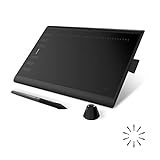
- Working Area Configuration - HUION art tablet equips with a 10 x 6.25 inches working area, providing the user with the most comfortable size to work; the 10mm slim structure and minimalist design of appearance make the drawing tablet more attractive.
- Tilt Function Battery-free Stylus: This computer graphics tablet come with a battery-free stylus PW100, no need to charge, allowing for constant uninterrupted drawing. ±60° tilt support enables imitation of lines input with diverse drawing gestures, with accuracy ensured.
- Press Keys:12 programmable press keys plus 16 programmable soft keys, you can set shortcut keys on drawing tablet's driver based on your preferences, such as erase, zoom in/out, scroll up and down, and so on.
- Compatibility: HUION graphics tablet supports Windows 7 or later/ macOS 10.12 or later/ Android 6.0 or later/ Linux (Ubuntu). A USB adapter is required to connect to a Mac computer. H1060P supports various mainstream design and drawing software, including PS, SAI, AI, CDR, etc. (Please note: The H1060P is compatible with Ubuntu, but it requires the use of the Xorg display server. Wayland is not supported.)
- NOTE: You can easily connect your phone to the art tablet via the OTG connector; while iPhone and iPad are NOT at the moment. The cursor will not show up in the SAMSUNG Galaxy S series at present. If you are not sure whether the product is compatible with your Phone or any help, please contact us.
The Office’s general guidance describes copyright as protecting original works fixed in a tangible form and originality as independent creation by a human author with a minimal degree of creativity. Paintings, photographs, and illustrations are among its examples of visual works. Those general principles do not guarantee protection for a particular work or resolve other rights issues.
United Kingdom and European Union: do not assume U.S. rules apply
The UK government’s Report on Copyright and Artificial Intelligence (2026) describes a statutory provision for certain computer-generated literary, dramatic, musical, or artistic works. Under section 9(3) of the Copyright, Designs and Patents Act 1988, “the author shall be taken to be the person by whom the arrangements necessary for the creation of the work are undertaken.” The report also describes uncertainty about how that provision works alongside the originality requirement.
The report describes the prevailing originality test in the UK and EU as the author’s own intellectual creation, expressing free and creative choices and a personal touch. It says AI-assisted authorial works are available for copyright on that basis in the UK and EU. This is a jurisdictional summary, not advice about the rights in a specific image; the legal analysis may turn on where protection is sought and how the work was made.
Rank #3

- Customize Your Workflow: The 6 customizable press keys on Huion H640P drawing tablet for pc let you assign your most-used commands—like undo, zoom, brush switch, or save—so you can keep your hands on the tablet and your mind on the art. Whether you're a digital painter switching brushes, or a comic artist zooming in and out, these keys keep your workflow smooth and uninterrupted. Plus, the Huion driver lets you save different shortcut profiles for different apps, so you never have to reconfigure when switching software.
- Professional Pen Performance: Huion H640P drawing pad for computer comes with the battery-free PW100 stylus that's always ready when inspiration strikes. With 8192 levels of pressure sensitivity, every light sketch, or bold stroke responds naturally to your hand—just like a real pen. The 5080 LPI resolution and 233 PPS report rate deliver lag-free, precise strokes, so you can draw confidently without second-guessing your cursor. The pen side buttons help you switch between pen and eraser instantly.
- Compact and Portable: Huion H640P computer graphics tablet features a compact, ultra-portable design at just 0.3 inches thin and 0.61 lbs light, so it slides easily into your backpack—perfect for sketching in coffee shops, taking notes in class, or editing on the go between home and studio. The 6x4 inch active area offers enough room for natural pen movements while fitting comfortably on crowded desks, or lecture hall seats.
- Stable Compatibility: Huion H640P graphic drawing tablet works seamlessly with Mac, Windows, Linux PCs, and Android smartphones/tablets (OS version 6.0 or later). Left-handed friendly, and you just need to flip the tablet and adjust the settings in the driver. Please note: H640P does NOT support iPhone/iPad.
- Move Beyond the Mouse: Huion Inspiroy H640P is a pen tablet that replaces your mouse for more natural, precise control. Freehand draw, take notes, or even play OSU—everything you do with a mouse, you can do better with a pen. The precise tip makes it ideal for detailed photo editing, graphic design, or signing PDF. Meanwhile, the ergonomic pen grip helps you avoid the strain that comes from hours of using a mouse.
Output rights and training inputs are separate questions
Whether a particular output is copyrightable or who may claim copyright in its human-authored parts does not settle whether copyrighted works could lawfully be used to train the model. The U.S. Copyright Office’s 2025 report addresses copyrightability of outputs; it does not resolve the full training-data litigation or licensing debate.
How should AI art be credited or labeled?
A label should describe the process accurately, not claim more authorship than the facts support. State what was generated and what a person actually drew, photographed, selected, composed, or edited. Identify the tool or model when relevant and known; do not guess at details you cannot verify.
The Tool Desk
Outbyte PC Repair FREERepair Windows errors before they cause bigger problemsFix Now →Outbyte Driver Updater FREEFix the driver behind crashes, sound loss and screen glitchesFind Drivers →- “Created with AI-generated background elements; the artist painted and composed the foreground.”
- “Image generated with [tool/model], then selected and digitally edited by [person].”
These examples are templates: include only details that are true for the work. A credit line communicates process and attribution; it does not decide copyright ownership. Likewise, the absence of a particular label does not, by itself, establish infringement or ownership.
Rank #4
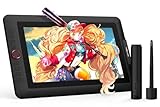
- PLEASE NOTE:XPPen Artist13.3 Pro drawing tablet Need to connect with computer,you need to use it with your computer or laptop, the 3 in 1 cable is included
- Drawing Tablet with Screen: Tilt Function- XPPen Artist 13.3 Pro supports up to 60 degrees of tilt function, so now you don't need to adjust the brush direction in the software again and again. Simply tilt to add shading to your creation and enjoy smoother and more natural transitions between lines and strokes
- Graphics Tablets: High Color Gamut- The 13.3 inch fully-laminated FHD Display pairs a superb color accuracy of 88% NTSC (Adobe RGB≧91%,sRGB≧123%) with a 178-degree viewing angle and delivers rich colors, vivid images, and dazzling details in a wider view. Your creative world is now as powerful as it is colorful
- Drawing Pad: One is enough- The sleek Red Dial on the display is expertly designed with creators in mind, its strategic placement allows for natural drawing postures. With just one wheel, you can effortlessly zoom in and out, adjust brush sizes, and flip the canvas—all tailored to suit the habits of everyday artists. The 8 customizable shortcut keys allow you to personalize your setup, streamlining your workflow and enhancing creative efficiency
- Universal Compatibility & Software Support:supports Windows 7 (or later), Mac OS X 10.10 (or later), Chrome OS 88 (or later), and Linux systems. Fully compatible with major creative software including Photoshop, Illustrator, SAI, and Blender 3D. Register your device to access additional programs like ArtRage 5 and openCanvas for expanded creative possibilities.
In a May 2025 Library of Congress Copyright Office interview, Register of Copyrights Shira Perlmutter put the distinction this way: “The difference is whether AI is enhancing human expression or is the source of the expressive choices.” The interview also noted that the Office had registered more than a thousand works in which applicants followed its guidance to disclose and disclaim AI-generated material. That was a time-bound figure reported in May 2025, not a current total.
Independent reader supportYour contribution helps us test, update, and keep practical guides available for everyone.What do artists think about AI art?
Survey findings indicate a range of views, not a verdict about art quality or a reliable estimate of all artists’ opinions. Lovato, Zimmerman, Smith, Dodds, and Karson’s 2024 study, Foregrounding Artist Opinions: A Survey Study on Transparency, Ownership, and Fairness in AI Generative Art, was based on a convenience sample of 459 artists.
- 61.87% of participants viewed AI models as a threat to art workers. This records participants’ views; it does not measure actual job losses.
- 44.88% agreed that AI art models were a positive development in art, while 27.02% were neutral on that question.
- For a hypothetical work mimicking an artist’s recognizable style, 39.22% agreed that the user should own the work and its derivatives, while 41.39% agreed that the artist whose style was recognizable should own them. These are competing sample responses, not law or consensus.
The UK government’s 2026 report says 3,465 respondents offered open-text views on consultation question 31. A common theme in those comments was that creators should share rights or remuneration when AI outputs draw on their creative inputs. This is a consultation count and a summary of a theme, not a representative public-opinion poll.
Do these 3 things before closing this tab:
1Repair Windows errors before they cause bigger problems2Scan for outdated or missing drivers - takes under a minute3Clear out junk files and repair common Windows errorsBest Value

- Word-first 16K Pressure Levels: The upgraded stylus features 16,384 levels of pressure sensitivity and supports up to 60 degrees of tilt, delivering smoother lines and shading for a natural drawing experience. With no battery or charging needed, it operates like a real pen, making it easy for beginners to create effortlessly. This functionality helps novice artists develop their skills and explore their creativity without the intimidation of complex tools
- Designed for Beginners: This drawing pad desinged with 8 customizable shortcuts for both right and left-hand users, express keys create a highly ergonomic and convenient work platform
- Perfectly Adapted for Android: The XPPen Deco 01 V3 art tablet supports connections with Android devices running version 10.0 and above. It is recommended to download the XPPen Tools Android application, which adapts to your smartphone's screen aspect ratio, ensuring accurate mapping. It also supports mapping on Android screens with different aspect ratios in portrait mode
- Large Drawing Space, Bigger Bold Inspiration: This expansive drawing pad has10 x 6.25-inch helps you break through the limit between shortcut keys and drawing area
- Easy Connectivity for Beginners: The Deco 01 V3 offers USB-C to USB-C connectivity, plus adapters for USB C. This ensures easy connection to various devices, allowing beginner artists to set up quickly and focus on their creativity without compatibility concerns. Whether using a laptop, tablet, or desktop, the Deco 01 V3 provides a seamless experience, making it an ideal choice for those just starting their digital art journey
How to compare two works or workflows
For a practical comparison, look at the work and its production history rather than treating “AI” and “human” as mutually exclusive labels.
- Identify the expressive choices. Ask who determined the composition, forms, colors, and details visible in the final image.
- Identify the human contribution. Note what a person drew, photographed, selected, arranged, or modified, and whether that work is perceptible in the result.
- Check the attribution. See whether the description accurately names generated material, human work, and relevant tools.
- Set the rights context. Identify the jurisdiction and distinguish the status of generated elements from any human-authored expression being claimed.
- Consider the purpose. A viewer, commissioner, or publisher may care about different tradeoffs, so judge the workflow against the work’s actual goal and constraints.
The evidence cited here does not establish that AI art or human-made art is generally more creative, valuable, accurate, or emotionally effective. Those judgments cannot be inferred from the artist-attitude survey figures.
Quick Recap
Product prices and availability are accurate as of the date/time indicated and are subject to change. Any price and availability information displayed on Amazon at the time of purchase will apply.

