
Recommended Free Tools
AI agents can retrieve information, automate workflows, develop software, and support cybersecurity operations—but giving an agent access to company systems also means deciding whose authority it uses and how its actions will be controlled. NIST identifies security concerns as a barrier to adoption and describes unresolved identity and governance challenges. Its reviewed publications do not establish what percentage of companies are ready, so “most companies aren’t ready” should be read as an editorial warning, not a measured finding.
What makes an AI agent different from an AI assistant?
An agent may do more than provide an answer: depending on the system and its configuration, it may retrieve information, use tools, or carry out steps in a workflow. NIST describes these capabilities as possibilities, not behavior shared by every agent. The governance problem arises when an agent can act in systems where access has consequences: its identity, permissions, and actions need to be distinguishable from those of the person or service operating it.
Readiness, in practical terms, means being able to determine which agent acted, whose authority it used, what data and tools it could reach, what it was permitted to do, and how its actions can be reviewed. This is not a guarantee of safety or a certification; it is a way to make the control problem concrete.
Why is it difficult to let agents act safely?
NIST’s May 18, 2026 summary of responses to a security request for information says: “Commenters widely agreed that AI agents present novel security threats and that these security concerns present a barrier to adoption.” The summary also says existing cybersecurity practices remain useful but need adaptation for agents.
#1 Best Overall
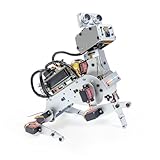
- AI-Powered Raspberry Pi Robot Dog — PiDog: Powered by Raspberry Pi (5/4B/3B+/3B/Zero 2W), OpenClaw, and multi-LLMs like ChatGPT, Gemini, Grok, DeepSeek, Qwen & Ollama. With 12 servos, camera, gyroscope, hearing & touch sensors, PiDog can see, listen, talk, move, and interact intelligently. Supports OpenCV, MediaPipe, TTS & STT, app control, FPV & Python. A great STEM robotics gift for students, makers & tech enthusiasts—perfect for birthdays and holidays. (Raspberry Pi not included)
- Realistic Dog-like Movements: PiDog's 12 powerful servos enable 32 dog-like actions, including walking, sitting, standing, shaking its head, wagging its tail, and performing playful tricks, closely mimicking a real dog and providing an engaging experience. This is an AI development robot product designed for engineers, suitable for ages 15 and above
- Rich Sensor Suite for Interactive Experiences: PiDog features ultrasonic, touch, gyroscope, sound, camera, speaker and microphone. These provide it with advanced hearing, vision, and touch, enabling it to see, detect obstacles, respond to touch, and recognize sounds, making interactions highly engaging
- AI-Powered Interactions with OpenClaw & Multi-LLMs. PiDog combines voice, vision, and gesture recognition for immersive AI experiences. Powered by OpenClaw and multi-LLMs like ChatGPT, Gemini, Grok, DeepSeek, Qwen, Doubao, and Ollama (local LLMs), it can understand questions, respond naturally through TTS & STT, recognize math problems, interpret hand gestures, and hold smart conversations. OpenClaw also enables customizable AI behaviors and personalized robotics development, helping users create their own intelligent robotic companion
- Comprehensive Learning Resources and Support: PiDog offers detailed online documentation, video tutorials, prompt technical support, and an active forum community, ensuring beginners can easily complete all projects and enjoy a great experience
One challenge is identity. A person’s account is not a good stand-in for every agent they start: shared credentials can obscure which actor performed an action, while broad or long-lived credentials can expose more access than a task requires. Agents may also be temporary, operate across systems, or delegate work to other agents, making it harder to follow the chain of authority and reconstruct what happened.
NIST’s review of comments found support for building on existing identity standards, alongside concerns about scale, delegation, and auditability. That points toward extending established controls rather than assuming current practices will work unchanged—or that a new agent platform solves the identity problem by itself.
Rank #2

- Optimized AI Arm Kit for LeRobot & Hugging Face Projects – The SO-ARM101 is an upgraded low-cost robotic arm servo motor kit designed for AI robotics enthusiasts and developers. Fully compatible with LeRobot and Hugging Face frameworks, it supports imitation learning and reinforcement learning, making it ideal for real-world robotics applications. (3D-printed parts not included.)
- Enhanced Wiring & Performance – Compared to the SO-ARM100, the SO-ARM101 features improved wiring to prevent disconnection at joint 3 and eliminates range-of-motion limitations. The leader arm uses optimized gear ratio motors for smoother performance—no external gearboxes required.
- Real-Time Leader-Follower Functionality – New real-time tracking allows the leader arm to follow the follower arm, enabling human intervention and correction during reinforcement learning (RL) training. Perfect for hands-on AI robotics development and research.
- Open-Source, DIY-Friendly & Nvidia-Compatible – Developed by TheRobotStudio, this open-source AI Arm kit integrates seamlessly with the LeRobot platform, offering PyTorch-based datasets, simulation, training, and deployment tools. Fully compatible with Nvidia Jetson edge devices, including reComputer Mini J4012 Orin NX 16 GB.
- Comprehensive Learning Resources – Includes detailed open-source assembly and calibration guides, testing tutorials, and deployment instructions. From wiring to AI training, get everything you need to start building, teaching, and optimizing your robotic arm for grasping and placing tasks.
Which agent deployment model are you governing?
NIST’s comment summary distinguishes three deployment boundaries. They matter because the organization’s control over the agent, its identity, and its access can differ. The table describes the governance questions raised by each model; it does not imply that every deployment handles credentials or prompts in the same way.
| Deployment model | Who controls the agent? | Identity and access questions | What the organization can verify or revoke |
|---|---|---|---|
| Enterprise-owned internal agent | The enterprise operates it for internal use. | Which employee or system is responsible for it? What data, tools, and actions does its task require? | The organization can set its own access rules, but must make the agent’s actions and delegated work traceable. |
| Enterprise-owned agent serving external users | The enterprise operates the agent, but outside users interact with it. | How are external-user requests separated from the agent’s enterprise authority? Which actions can it take on behalf of a user? | The enterprise controls the agent, but must govern how external prompts can lead to access or actions in its systems. |
| Externally owned agent interacting with enterprise services | An outside party owns or operates the agent. | Who issued its identity and credentials, and what authority will the enterprise accept from it? | The enterprise may be able to limit or revoke its own service access; it does not control the external agent itself. |
The distinctions above follow the three categories in NIST’s comment summary. The specific prompt, credential, and verification arrangements depend on the implementation; the summary does not prescribe one universal design.
Do these 3 things before closing this tab:
1Repair Windows errors before they cause bigger problems2Fix the driver behind crashes, sound loss and screen glitches3Clear out junk files and repair common Windows errorsRank #3
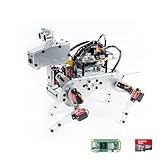
- Raspberry Pi AI Robot: powered by Raspberry Pi (5/4B/3B+/3B/Zero 2W), features 12 servos and sensors for vision, hearing, and touch. Integrated with ChatGPT-4o, it responds to complex queries. With app control and FPV, users can manage and see its view in real-time. It supports Python programming
- Realistic Movements: 12 powerful servos enable 32 actions, including walking, sitting, standing, shaking its head, wagging its tail, and performing playful tricks, closely mimicking a real and providing an engaging experience
- Rich Sensor Suite for Interactive Experiences: features ultrasonic, touch, gyroscope, sound, camera, speaker and microphone. These provide it with advanced hearing, vision, and touch, enabling it to see, detect obstacles, respond to touch, and recognize sounds, making interactions highly engaging
- Engaging Interactions with ChatGPT-4o: with ChatGPT-4o enables voice interactions and visual recognition, making it smarter and more responsive. Users can have natural conversations, solve math problems via the camera, and interpret gestures, creating diverse and fun interactions
- Comprehensive Learning Resources and Support: offers detailed online documentation, video tutorials, prompt technical support, and an active forum community, ensuring beginners can easily complete all projects and enjoy a great experience
What controls should be in place before granting access?
NIST’s identity guidance recommends treating agents as distinct entities rather than allowing them to act through shared human accounts. Bill Fisher, a security engineer at NIST’s NCCoE, and Ryan Galluzzo, NIST Digital Identity Program Lead, write: “For organizations to have confidence in transactions, agents need to be treated like first-class entities with their own unique identifiers, credentials, and associated entitlements that are bound to and by the identity of the user or system operating the agent.”
- Give each agent a distinct identity. Use credentials attributable to the agent and bind its entitlements to the user or system responsible for it. Avoid shared employee credentials.
- Limit authority to the task. Use scoped, delegated permissions and least entitlement. Avoid broad API keys and static, long-lived credentials where stronger authorization patterns are available.
- Keep an audit trail across systems and delegation. Record which agent acted, under whose authority, and what it did—including when an agent is ephemeral or delegates work. The record needs to support review, not merely show that a service account was used.
- Set the boundary before connecting systems. Decide whether the agent is internal, enterprise-operated for outside users, or externally owned. That choice changes which party controls the agent and which access the enterprise can directly govern.
- Build on identity standards, then test for gaps. Existing standards and practices provide a starting point, but scale, agent behavior, and delegation may expose implementation gaps. NIST’s project is intended to test this standards-based approach and identify critical gaps.
How can an organization turn those controls into a deployment decision?
- Define the task and the boundary. Document what the agent is meant to do, who operates it, who supplies requests, and which enterprise services are involved.
- Assign responsibility and identity. Name the user or system accountable for the agent and establish a distinct agent identity with credentials linked to that responsibility.
- Grant only task-specific access. Identify the minimum data, tools, and actions needed. Use delegated, scoped authority rather than a broad standing credential.
- Plan for delegation and review. Determine how actions by the agent or any subagents will be attributed and audited, and how access can be withdrawn when no longer needed.
- Check the design against established identity practices. Where the agent’s scale, behavior, or delegation cannot be handled clearly, treat that as a gap to resolve before expanding access—not as evidence that a checklist alone makes deployment safe.
This sequence is a practical application of NIST’s identity and governance concerns, not a NIST-certified checklist. NIST’s work remains in progress.
Rank #4
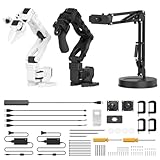
- 【End-to-End Imitation Learning】Hiwonder SO-ARM101 robot arm is an embodied intelligent hardware platform compatible with the Lerobot open-source framework. It provides developers with streamlined access to shared code, templates, and pre-trained models to explore the latest advancements in AI research.
- 【Dual-Camera Vision System】Equipped with both a gripper-mounted camera and an external camera, the system supports both precise manipulation and environmental awareness for accurate imitation learning.
- 【Hiwonder High-Performance Bus Servos】Featuring 12 high-torque bus servo motors with magnetic feedback, the Hiwonder SO-Arm101 robotic arm delivers smooth, stable motion, eliminating issues like power deficiency and jitter.
- 【Professional Control & Debugging】Integrated with the Hiwonder BusLinker V3.0 debugging board, the system supports servo scanning, real-time status monitoring, and trajectory control. The professional PC software simplifies device calibration and debugging, making it accessible for both researchers and hobbyists.
- 【Open-Source Compatibility】The SO-ARM101 robotic arm is designed to be fully compatible with the LeRobot open-source project. We acknowledge the contributions of the open-source community; all trademarks and copyrights belong to their respective owners.
Does NIST say most companies are unready?
No representative percentage of company readiness is established in the reviewed NIST materials. The security RFI summary reports stakeholder concerns, while the identity project materials describe feedback, standards preferences, and planned work. NIST’s NCCoE says it received more than 600 responses to its concept paper; that response count is not a survey of companies’ deployment readiness.
NIST’s AI Agent Standards Initiative, announced February 17, 2026, outlines work on standards, open protocols, security, and identity. Its published work supports a narrower conclusion than a readiness statistic: agents create identity and governance questions organizations need to address, and existing security practices need adaptation to meet them.
Quick Recap
Product prices and availability are accurate as of the date/time indicated and are subject to change. Any price and availability information displayed on Amazon at the time of purchase will apply.

