
iTechGuides is reader-supported. When you buy through links on our site, we may earn an affiliate commission. As an Amazon Associate I earn from qualifying purchases. Learn more
For a production AI agent, a tool-call trace is not enough to prove that an action was authorized. Put an independent enforcement point between the model and every side effect: it should check the identity and delegated scope, evaluate the exact requested operation, validate any action-specific approval, and deny execution if a required check or audit write fails. Record the decision and outcome as structured evidence, while minimizing sensitive prompt and context data.
What an agent audit trail needs to prove
A useful audit trail should let an authorized reviewer reconstruct who or what requested an operation, what authority applied, what the enforcement layer decided, whether approval was required and obtained, and what happened when execution was attempted. A record saying only that an agent called a tool may leave those questions unanswered.
NIST’s summary of public comments on agent identity and authorization notes that conventional logs can omit the request being evaluated, the governing authority, relevant identities and delegations, and whether an approval occurred. The comments also raise a countervailing concern: collecting too much agent context can expose sensitive information. The goal is therefore not to retain every prompt and tool payload, but to preserve the minimum evidence needed to explain and investigate the decision.
- Request: the proposed operation, represented in a normalized form suitable for policy evaluation.
- Identity and authority: the user or service sponsor, the agent or workload identity, relevant delegation, and the scope in which the action was allowed or denied.
- Decision: the policy and version applied, the result, and any approval requirement or approval reference.
- Execution: whether the action was dispatched and its outcome, including a failure or denial where applicable.
- Evidence references: links or identifiers for supporting records, rather than unnecessary copies of sensitive material.
This is an implementation target, not a claim that a single log format or universal agent-audit standard has been established. NIST’s evaluation-probe work describes machine-readable trails that map decisions to supporting documents, but that ongoing project focuses on factual grounding and example citation-quality dimensions such as faithfulness, completeness, and sufficiency. It should not be read as an audit system for every dimension of production agent behavior.
#1 Best Overall

- Valued Carpenter Pencil Set: You will get 2 pcs solid carpenter pencils with 26 piece 2.8 mm refills, 1 replaceable sharpener, 1 plastic storage box.The complete carpenter pencils combination allows you to finish your work faster and more easily
- Deep Hole Marker Pencil: The deep-hole construction pencils adopts 45mm elongated tip design, which is more convenient to mark in the small hole or in other tight areas that other carpenter markers cannot reach
- Carpenter Pencils with Sharpener: The sharpener is screwed into the top of the work pencil, which won't get lost either. Built-in pencil sharpener that keep the lead with pointed and smooth to Improves line of sight in fine work
- Stronger Solid Lead: This work pencil is matched with a 2.8 mm thick lead , which is much thicker and stronger during the drawing process of construction work, it will not break or damage easily
- Marks on Various Surfaces: 3 colors solid construction pencil can marks on various surfaces,such as metal, plastic, wood, paper etc. Ideals for woodworkers, contractors, craftsmen, builders, merchants and masons
Put a hard authorization gate before every side effect
Treat model output as a proposal, never as an authorization decision. A separate execution service or policy enforcement point should receive the proposed operation, validate its identity, tool, target, parameters, scope, and approval requirements, and only then dispatch it. The model must not be able to skip that component by calling a tool through a second path.
Separate proposal, decision, and execution
- Proposal: the agent requests an operation, such as reading a record or sending a message.
- Normalization: the enforcement service converts the request into the exact operation that would be executed, including resolved target identifiers and relevant parameters.
- Policy decision: the service checks the authenticated principal, delegation, tool, target, operation, risk classification, and approval state.
- Dispatch: only the enforcement service can invoke the tool, using the operation that was checked—not a newly assembled or model-modified version.
- Evidence: the service records the decision and execution outcome, and returns a bounded result to the agent.
OWASP’s AI Agent Security Cheat Sheet recommends separating decision-making from execution and failing closed when policy lookup, approval validation, risk classification, or audit logging fails. Apply the same boundary to every route that can change state or disclose protected data; a tool that bypasses the gate defeats it.
Bind the decision to the operation actually executed
Authorization should be evaluated against the normalized operation, not a vague intent such as “handle the customer request.” Bind an approval and policy decision to the relevant actor, tool, target, parameters, timestamp, and expiry. If any bound field changes, require a new decision and, where applicable, a new approval.
Recommended Free Tools
Rank #2

- Ergonomically Designed: Work in tight areas with a compact design that gets into tough spots
- Compact and Lightweight: Both tools are designed to fit into difficult to reach spaces. The 1/4" impact driver has a length of 5.55 in. and weighs just 2.8 lbs, while the 1/2" drill/driver measures only 7.5 in. and weighs 3.6 lbs
- Both the DEWALT impact driver and electric drill driver feature integrated LED work lights with a convenient 20-second delay, ensuring enhanced visibility in dimly lit or challenging work areas
- One-Handed Loading - Keep one hand free with a 1/4 in. hex chuck that accepts 1 in. bit tips
- Power drill cordless with 1/2" single sleeve ratcheting chuck provides tight bit gripping strength, making bit changes faster and more secure
Make the execution service dispatch the exact checked payload. This avoids a gap where one operation is shown to a reviewer but a different target or parameter is used after approval. For irreversible actions, use a short-lived authorization artifact and replay protection, as OWASP recommends. An approval that has expired, has already been used, or no longer matches the operation must not authorize execution.
Define identity, delegation, and action scope
Inventory the human or service sponsor, agent identity, delegated authority, tools, target resources, and the point where each permission is checked. Keep these identities distinguishable in the evidence: an agent acting under a user’s bounded delegation is not the same principal as an agent with broad service credentials.
Represent authority narrowly enough to answer what the agent may do, to which resources, and under what conditions. A permission to read one class of records should not silently authorize sending messages or deleting records. Unknown tools and unresolved identities should receive no inherited permission by default.
Rank #3

- 【Great Compatibility】This Katerk 1/4 inch hex shank bit holder is specifically designed for 1/4 inch hex shank drill bits. It's compatible with most 1/4 fast hex handles, hex sockets, various electric screwdrivers, and handheld screwdrivers. The bit holder makes it a valuable addition for any handyman.
- 【Secure and Safe】Built with a secure backup nut design, each drill bit holder securely locks onto your bits, ensuring they stay firmly in place. Additionally, our bit holder incorporates a high-quality steel ball rolling design that holds up to several kilograms of weight, ensuring your various drill bits don't fall off.
- 【Easy One-Handed Operation】The bit holder for impact driver allows you to change bits single-handedly, simplifying your workflow. Its multi-color design further allows for quick identification of the drill bit you need.
- 【Compact and Convenient】Thanks to its compact size, this 1/4 inch bit holder is easy to carry around. The bit holder allows for easy attachment to various tools, making this a convenient addition to your construction accessories. The Katerk bit holder is cast from high-quality alloy material, promising a long product lifespan. Despite its rugged strength, the bit holder remains lightweight, making it portable.
- 【Cool Christmas Gift For Men Stocking Stuffers】 This screwdriver bit holder, driver bit holder, impact bit holder, can be given as a gift to your loved one, especially for anyone involved in construction or electrical work. It's a must-have for stocking stuffers for men and women, tools gifts for dad, tech gadgets for men, gifts for dad, gifts for him, gifts for husband, gifts for boyfriend, cool gadgets for men, and cool gifts for dad.
NIST’s AI Agent Standards Initiative identifies agent authentication and identity infrastructure as an active area of work, alongside voluntary guidance, industry-led standards activity, and protocol interoperability. The initiative page was updated August 14, 2026; this activity is not a finished universal compliance standard. Teams still need to define and enforce their own identity chains and operational boundaries.
The Tool Desk
Outbyte PC Repair FREERepair Windows errors before they cause bigger problemsFix Now →Outbyte Driver Updater FREEFix the driver behind crashes, sound loss and screen glitchesFind Drivers →Classify actions and make approval meaningful
Define risk categories for your environment rather than assuming every tool call deserves the same treatment. OWASP gives searches and reads as examples of lower-risk actions and sends, code execution, deletion, and fund transfers as examples that may need review. That is an illustrative pattern, not a universal classification: sensitivity, reversibility, blast radius, and organizational policy affect the right category.
| Control decision | Implementation pattern |
|---|---|
| Routine, bounded operation | Permit only within an explicit identity, tool, target, and parameter scope; record the decision and outcome. |
| Action requiring confirmation | Show a human a clear preview of the normalized operation and require approval bound to the actual actor, tool, target, parameters, time, and expiry. |
| Prohibited or higher-assurance operation | Deny by default or require stronger authentication and a separately defined approval path; do not treat an agent-generated explanation as authorization. |
A useful confirmation preview states what will happen, to which target, with which material parameters, and under whose authority. The approval should identify the operation—not merely the conversation or the agent session. If a recipient, amount, resource, or other bound parameter changes after confirmation, invalidate the approval.
Rank #4

- Long Nib and Deep Hole Marker: Our mechanical carpenter pencil with 45mm nib is designed for easy marking of deep holes or narrow areas. These construction pencils are the great choice for woodworking tools, construction tools, carpenter tools, contractor tools, wood carpentry tools and architect tools
- Extra Refills in 2 Colors for Versatile Marking: The construction mechanical pencil comes with 12 extra 2.8mm refills, including 6 red and 6 black refills. The black refill is suitable for light surfaces, while the red wax is perfect for dark surfaces. Our carpenter mechanical pencil makes sure that you'll have an ample supply for extended use
- Built-in Sharpener: Our construction pencil comes with a built-in sharpener to ensure the mechanical pencil tip is always sharp and ready for use. Never buy an extra pencil sharpener again. A great tool for any woodworker pencil, contractor pencils. The refill can easily be extended or retracted with a simple click of the pencils mechanical, allowing you to work more efficiently and accurately
- Portable Clip Design: Our deep hole construction pencil features a portable clip design, easy to carry and attach to your pocket or tool box, so that you can keep the carpenter pencils mechanical close at hand, making it a convenient tool to have on the go. Great gifts choice for carpenters
- Stronger Pencil Lead: The black refills are made of lead, sturdy and smooth. The red refills are made of wax, clear and light. These marking pencils are much thicker and stronger than normal pencils during the marking process of construction work, suitable for various surfaces, such as glasses, metal, boards, floors, walls, furniture, etc. The written marks can be easily wiped with a wet paper towel when needed
Fail closed when a required control is unavailable
A hard gate is only a gate if execution cannot proceed when the control path is uncertain. Configure the execution service to deny the operation when the policy service is unavailable, risk cannot be classified, approval is missing or invalid, identity or scope cannot be resolved, or the required audit record cannot be written. Do not convert a timeout, parsing error, or unknown result into an allow.
- Unknown tool or target: deny until it has an explicit policy.
- Stale, mismatched, or replayed approval: deny and require a fresh decision.
- Policy or identity lookup failure: deny rather than falling back to model judgment or a broader credential.
- Audit write failure: do not execute if the decision cannot be recorded as required by the control design.
- Changed parameters after approval: re-evaluate the operation and obtain new approval when required.
Use a consistent denial path that returns a safe, bounded explanation to the agent without exposing policy internals or secrets. Operational handling of the underlying outage should be separate from authorization: retries may be appropriate, but they must not bypass the gate.
Capture decision evidence without creating a sensitive-data archive
Build the audit event at the enforcement point, where the request, identity checks, decision, approval state, and execution result meet. Use a structured event that can be correlated across policy, approval, and tool systems. A practical record can include:
Best Value
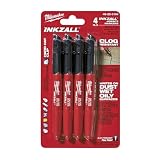
- Milwaukee Ink all Fine Point Marker, Black, 4 Per Pack
- 4 per pack Features Clog Resistant Marker Tip Writes through Dusty, Wet and Oily Surfaces Durable Marker Tip for Writing on Concrete, OSB and Rough Surfaces
- Clog resistant tip writes on dusty, wet and oily surfaces and is optimized for rough surfaces such as OSB, cinderblock and concrete
- Hard hat clip- attaches for easy access
- Quick dry time with reduced smearing and marking
- Unique event and correlation identifiers, event time, and the outcome.
- Authenticated sponsor and agent/workload identity, plus the relevant delegation or authority reference.
- Tool, target, and normalized operation or a protected reference to it.
- Policy identifier and version, risk classification, and allow or deny result.
- Approval identifier and status when approval applies, without treating the identifier alone as proof that the approval matched.
- Execution result, such as dispatched, completed, failed, or denied, and references to supporting evidence.
Minimize or redact prompt text, retrieved context, credentials, tokens, and personal data. Retain a protected operation representation or a reference only to the extent needed for the organization’s investigative and compliance purposes. Apply access controls to audit records, define retention and deletion rules, and protect the integrity of the event stream. NIST’s public-comment summary highlights both demands: richer evidence about authority and approval, and the privacy risks of overcollection or exposed agent logs.
Keep decision evidence distinct from explanatory text generated by the model. The model’s rationale may help an operator understand a proposal, but it does not establish the governing permission, the approval, or what the execution service actually dispatched.
Test the enforcement boundary, not just successful calls
Before deployment and after material policy, model, tool, or identity changes, test whether the gate resists abuse and whether its evidence shows what happened. OWASP calls out approval bypass, tool misuse, privilege escalation, exfiltration, recursion, and multi-agent chaining as relevant abuse cases. Retain the tested configuration and observed approvals or denials as release evidence.
What’s actually slowing this PC down?
Pick the symptom - the matching free tool is one click away.
- Submit an unknown tool, target, or parameter and verify that it is denied.
- Attempt a tool invocation through any route that might bypass the enforcement service.
- Change a target or material parameter after a human approves the preview; verify that the old approval no longer applies.
- Replay an approval artifact or use it after expiry; verify rejection.
- Remove or change delegated privileges between proposal and execution; verify that the current authority is checked.
- Simulate policy lookup, approval validation, risk-classification, and audit-write failures; verify that no protected side effect occurs.
- Test prompt manipulation, data exfiltration attempts, recursive calls, and downstream agent delegation to confirm that the same boundary applies across the chain.
For each test, preserve the relevant policy and tool configuration, the attempted operation, the observed allow or deny, and the resulting audit evidence. A passing happy-path demonstration alone does not show that unauthorized paths are blocked.
Evaluate an implementation against the control boundary
Whether the enforcement layer is built in-house or supplied as a service, assess the behavior that matters at runtime. A dashboard or trace viewer is not a substitute for pre-execution enforcement.
| Evaluation area | Question to verify |
|---|---|
| Enforcement and failure behavior | Does the control run before side effects, and does it fail closed when required checks or logging are unavailable? |
| Scope granularity | Can policy distinguish sponsor, agent identity, delegation, tool, target, and material parameters? |
| Human approval | Is approval bound to the exact normalized action, short-lived, and protected against replay? |
| Evidence quality and integrity | Can reviewers connect request, authority, policy version, decision, approval, execution outcome, and supporting evidence? |
| Privacy protections | Can sensitive prompt and context data be minimized or redacted, with appropriate access and retention controls? |
| Adversarial verification | Can teams test the boundary and export the configuration and observed denials or approvals as release evidence? |
NIST’s agent standards activity and probe work are useful context for identity and machine-readable evidence, but neither should be represented as a completed certification regime for production agent authorization. Design controls around the operations your system performs and validate their behavior in your own deployment.
Quick Recap
Product prices and availability are accurate as of the date/time indicated and are subject to change. Any price and availability information displayed on Amazon at the time of purchase will apply.

