
Choose colocation space by verifying the usable IT power, cooling, connectivity, security and contract terms available in the specific facility—not by comparing headline megawatts or monthly cabinet prices alone. Before requesting quotes, document your current and forecast load, rack density, redundancy needs, connectivity, compliance requirements, location constraints and go-live date. Then compare proposals over the full contract term, including setup, support, expansion and exit costs.
What should you define before requesting colocation quotes?
A provider can only quote against a requirement you have made specific. Prepare a brief that distinguishes what you need on day one from what you expect to need later.
- Space: cabinet count, rack units (U) required, and whether you need a private cage or other construction.
- Power: current and forecast IT load in kilowatts (kW), plus sustained kW per rack. State whether each figure is measured, planned, or a maximum requirement.
- Resilience: required power-feed arrangement and redundancy target, including whether equipment is dual-corded and how it should connect to A and B feeds.
- Connectivity: required carriers, cloud on-ramps, internet exchanges, and cross-connects.
- Location: acceptable markets, latency constraints, and any geographic or jurisdictional requirements.
- Assurance: applicable compliance evidence, audit needs, insurance requirements, and physical-access procedures.
- Schedule and growth: target ready-for-service date, deployment milestones, and the amount and timing of expected expansion.
Keep the assumptions consistent across providers. If one quote covers a committed load and another quotes only a space reservation, they are not like-for-like offers.
How do you verify power and cooling in the specific hall?
Ask the provider to identify the exact hall and confirm how much capacity is deliverable as usable IT load there today. A facility-wide megawatt figure does not establish that the quoted hall has available power, cooling, or a connection date. Find out whether the quoted capacity depends on utility upgrades, construction, or other future milestones.
#1 Best Overall

- Save valuable floor space: 6U wall mount server cabinet Dimensions: 13.78" H x21.65" W x17.72" D.Maximum mounting depth is 14.2"
- Keep critical network equipment secure: glass door and side panels are lockable to prevent unauthorized access. Front door can be installed on either side of the front of the cabinet to satisfy your door swing orientation preference
- Easy equipment configuration: Fully adjustable mounting rails and numbered U positions, with square holes for easy equipment mounting with top and bottom punch-out panels for easy cable access
- Durability: Made of high quality cold rolled steel holds up to 110lb (50kg) (Easy Assembly Required)
- PCI & HIPPA and EIA/ECA-310-E compliant
Confirm the usable load and rack density
- Ask for the installed sustained kW per rack the hall can support, not just a facility capacity headline.
- Confirm the quoted load is available to your deployment and establish how actual consumption and any overage are measured and billed.
- Clarify the A/B feed design, how dual-corded equipment is supported, and what happens if one feed is unavailable.
- Get the ready-for-service date and the contractual remedy if delivery is late.
Match cooling to the deployment
Ask which cooling technology is installed in the named hall and what environmental limits apply. Standard air-cooled space may not be suitable for a high-density deployment. If your racks require high density, request evidence that the hall has the necessary installed capability, such as rear-door heat exchangers, in-row cooling, or liquid cooling. A general statement that a provider supports high density is not confirmation that the specific space does.
How should you compare connectivity?
Connectivity affects resilience, deployment timing and recurring cost. Request the building’s on-net carrier list, cloud on-ramp availability, internet-exchange access, and a description of the meet-me-room topology. Confirm whether the required carriers and services are available in the building and can reach the proposed space.
For every needed cross-connect, obtain the non-recurring charge (NRC), monthly recurring charge (MRC), and provisioning lead time. Ask whether the facility is carrier-neutral and what terms govern your choice of carrier. Score connectivity as both a cost and a resilience requirement; a long list of provider logos does not show that your desired connections are available on your schedule.
Rank #2

- Universal 19” Rack Mount Compatibility – Perfect for pro audio, video, IT, and network gear. Compatible with mixers, routers, patch panels, servers, power amps, and more.
- Heavy-Duty Load Capacity – Built to support up to 550 lbs. Ideal for studio gear, DJ setups, server equipment, and AV components that demand serious stability.
- Robust Steel Frame & Design – Made with 1.5mm thick steel and weighs 36 lbs for maximum durability, reduced vibration, and long-term reliability in any setting.
- Mobile & Secure – Preinstalled with 3” industrial-grade caster wheels (lockable), making it easy to move and position your rack exactly where you need it.
- All-In-One Setup Kit Included – Comes with 34 rack screws (5mm & 6mm), a 1U blank spacer, and an assembly tool—ready for fast installation out of the box.
What resilience, security and compliance evidence should you request?
Request documentation for the specific facility and services being proposed. A provider-wide certification or description may not cover the site, service, or controls your organization will use.
Quick wins for a faster PC:
Clear out junk files and repair common Windows errorsFree Scan →Scan for outdated or missing drivers - takes under a minuteDriver Scan →Repair Windows errors before they cause bigger problemsFix Now →- Tier or equivalent certification evidence, if required by your procurement standard.
- Generator, UPS and cooling redundancy details, along with maintenance procedures and planned-maintenance practices.
- Three to five years of incident history, with enough detail to understand relevant service interruptions and corrective actions.
- Physical-access controls, visitor procedures, and rules for receiving and shipping equipment.
- Current SOC 2, ISO 27001, PCI DSS, HIPAA, or FedRAMP reports where applicable. Check that the report scope names the facility and service you are buying.
Equinix describes five physical security layers at its IBX sites; treat any provider’s security description as a starting point and verify the controls and evidence applicable to your proposed location. Equinix has also cited an Uptime Institute analysis stating that 43% of significant outages were caused by power-related problems. That is a historical figure from the cited analysis, not a current universal outage rate; its practical value is as a reminder to examine power architecture and outage remedies, not as a forecast for a particular facility.
What does a colocation SLA cover, and what should the contract say?
Read the service-level agreement (SLA) together with the primary service agreement. The SLA defines what is measured and what remedy may apply; the main agreement can set the exclusions, liability limits, renewal terms, and termination rights that determine how useful that remedy is. Have technical, legal, and finance stakeholders review the documents together.
Rank #3

- ADJUSTABLE DEPTH: 4- Post 22U 19" server rack enclosure with 4 vertical rails and adjustable mounting depth 5.7" to 33.0" (14,4cm to 83,8cm); IT rack is compatible with various servers / switches / data / video / AV and other IT networking equipment
- EASY SHIPPING AND ASSEMBLY: Enclosed 22U data rack cabinet ships compact flat-packed to avoid damage and facilitate installation; Include wheels & levelling feet to offer more stability; Home server rack cabinet is only 46.6in (118,3cm) in height
- DESIGN AND VENTILATION: Half height server rack cabinet has lockable and removable door and side panels with vented top allowing airflow; 4 Post 19" rack with 1764lb (800kg) weight capacity (stationary); Computer cabinet rack is EIA/ECA-310-E Compliant
- HARDWARE INCLUDED: Rolling home network rack includes rack mounting and equipment mounting hardware, such as 20 M6 cage nuts / screws, PVC cup washers; Front/rear doors and side panels Keys, 2x allen keys; Rack assembly hardware; Casters and leveling feet
- THE IT PRO'S CHOICE: Designed and built for IT Professionals, this 22U IT Server Cabinet is backed for life, including free lifetime 24/5 multi-lingual technical assistance
Check the measurement and remedy
- Identify the exact service and equipment covered, the availability measurement method, and how an incident is reported and counted.
- Read exclusions carefully, including treatment of planned maintenance and events outside the provider’s responsibility.
- Compare response commitments, service-credit rules, and any chronic-outage termination right. Confirm whether credits are the sole remedy and what liability limits apply.
- Check whether the SLA covers the power service you actually need. For example, Verizon’s published U.S. Premium Data Center Colocation SLA states: “AC power is to be available to Customer’s Data Center Colocation cabinet 100% of the time.” This is a provision in that specific published SLA, not a guarantee that every provider’s SLA covers power in the same way.
Check delivery, renewal and exit terms
- Record any annual escalator and how renewal pricing is set; do not assume the initial rate continues after the initial term.
- Confirm expansion rights, including whether adjacent capacity can be reserved and on what conditions.
- Review audit rights, equipment de-installation requirements, notice periods, and exit charges.
- Plan for migration overlap: establish whether you can retain old and new space concurrently and what that period would cost.
How do you compare colocation pricing fairly?
There is no reliable public price benchmark that applies across colocation markets. Actual prices depend on location, contract term, committed power, density, connectivity, construction, and required services. Compare actual proposals on the same scope and over the full term rather than treating a cabinet rate as the total cost.
Choose a common unit for the comparison, such as dollars per usable kW per month, and state the load and term used in that calculation. Include one-time and recurring charges, and make clear which charges are estimates or conditional.
The Tool Desk
Outbyte PC Repair FREEClear out junk files and repair common Windows errorsFree Scan →Outbyte Driver Updater FREEScan for outdated or missing drivers - takes under a minuteDriver Scan →| Cost item | What to include in the comparison |
|---|---|
| Space and power | Cabinet or cage charges, committed power, metering basis, overage rates, and any minimum commitment. |
| Connectivity | Cross-connect NRC and MRC, carrier or cloud connection charges where quoted, and any recurring network service costs. |
| Setup and construction | Cage or other NRC construction, installation charges, and staging or shipping services. |
| Operations and support | Remote hands, monitoring, and any other support services your operating model requires. |
| Term and exit | Taxes, annual escalators, renewal pricing mechanics, insurance, de-installation, migration overlap, and exit costs. |
Model the total over three years or the full proposed term, whichever matches the commitment being considered. If growth is likely, include the cost and availability of the additional capacity instead of assuming it will be offered at the original rate.
Rank #4
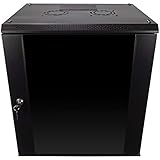
- DURABLE BUILD: Constructed from high-quality Cold Rolled Steel, the NavePoint Consumer Series 12U network cabinet boasts a sturdy, welded frame. Fitting EIA standard 19” networking equipment, this server cabinet confidently supports up to 110 lbs, providing a resilient base for your vital IT gear and equipment
- CONVENIENT DESIGN: This 12U cabinet features a reinforced, heat-treated, tempered glass front door with a security lock. Perfect for applications requiring both security and accessibility, its compact design of 17.72"L x 21.65"W x 24.42"H offers a practical solution for space-constrained settings.
- EASY & CUSTOMIZABLE EQUIPMENT SET UP - The 12U IT cabinet, with removable side panels and security locks, offers customization at its finest. Whether it's for an efficient device or cable management, this data cabinet ensures secure, adaptable configurations that suit your networking server requirements
- ENHANCED VENTILATION & SECURITY - Built-in fans and flow-through ventilation work to prevent overheating, ensuring optimal operation of your equipment. The reinforced, lockable tempered glass front door not only boosts security but also facilitates easy monitoring of installed equipment.
- SAFETY & COMPLIANCE - All NavePoint products are built to industry standards.
How do you make the final provider comparison?
Use the same evidence standard for each shortlisted facility. A concise comparison should capture both the provider’s answer and the document or commitment that supports it.
- Deliverable capacity: usable IT kW and sustained kW per rack in the named hall, available date, and any build or utility dependencies.
- Cooling readiness: installed cooling approach, density suitability, and environmental limits.
- Resilience and SLA: power and cooling architecture, measurement rules, exclusions, remedies, and maintenance treatment.
- Interconnection: required carriers and cloud on-ramps, meet-me-room access, cross-connect prices, and lead times.
- Assurance and operations: facility-scoped security and compliance evidence, remote-hands coverage, and operational procedures.
- Fit and flexibility: location and latency fit, expansion rights, contract flexibility, and migration options.
- Economics: normalized full-term total cost using the same load, services, assumptions, and term.
Prefer a written, facility-specific answer over a marketing claim. If a requirement remains conditional, price and schedule it as a risk rather than treating it as delivered capacity.
Quick Recap
Product prices and availability are accurate as of the date/time indicated and are subject to change. Any price and availability information displayed on Amazon at the time of purchase will apply.

