
An “Apple I replica kit” can mean anything from a bare printed circuit board to a populated, tested replica board. Those are not complete computers: the assembled replica described by its seller excludes a keyboard, power supply, and video monitor. Decide how much building and parts sourcing you want to take on, then confirm the exact box contents and current stock on the seller’s listing before you buy.
What an Apple I replica kit can include
“Kit” is not a standardized package description. Listings may cover different stages of a build, so check whether you are buying only a board, a collection of components, or an assembled board. A currently listed unpopulated board, the seller’s assembled replica, and its separate IC set are distinct products.
| Option | What the listing describes | What to account for |
|---|---|---|
| Unpopulated replica board | A bare PCB; the seller makes a bill of materials (BOM) available for buyers who want to populate it. The mainboards category describes HASL, ENIG, and a HASL option with a gold-plated expansion port. Seller’s mainboards listings | The board is not a working computer on its own. You must source and assemble the required components. |
| Assembled Apple-1 Replica | The seller describes it as fully populated, tested, wave-soldered, and supplied with an Operation Manual. It ships as the populated, tested PCB and manual only. Seller’s assembled replica listing | The listing explicitly excludes a keyboard, power supply, and video monitor. Check what additional adapters or accessories your setup needs. |
| Apple-1 IC-Kit | 50th Anniversary Edition | A separate set of integrated circuits for a replica, described as including the CPU, RAM, TTL logic, shift registers, PROM, character ROM, PIA, timer, and clock driver. Seller’s IC-kit listing | The listing checked for this article was marked sold out. An IC set is not a full computer, and stock can change. |
The seller’s pages establish their own listed configurations, not an independent assessment of historical fidelity or performance. Check the precise parts and substitutions claimed for the specific product you are considering.
Which option fits your goal?
Choose a bare board for a component-level build
A bare PCB makes sense if you want to source and install the components yourself. Before ordering, work through the BOM and make sure the complete required set is obtainable. An individual Apple-1 replica build project documents parts and tools and notes that some vintage components can be difficult or expensive to find; its list is useful context, not a universal specification for every replica.
Do these 3 things before closing this tab:
1Clear out junk files and repair common Windows errors2Scan for outdated or missing drivers - takes under a minute3Repair Windows errors before they cause bigger problems#1 Best Overall
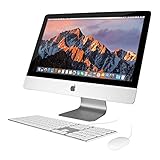
- Renewed products look and work like new. These pre-owned products have been inspected and tested by Amazon-qualified suppliers, which typically perform a full diagnostic test, replacement of any defective parts, and a thorough cleaning process. Packaging and accessories may be generic. All products on Amazon Renewed come with a minimum 90-day supplier-backed warranty.
Choose the assembled board to avoid populating the PCB
A populated, tested board removes the component-installation work described for a bare PCB, but it does not remove the need to arrange the excluded peripherals. Budget for a compatible keyboard, power supply, and display, and verify their electrical specifications and compatibility before connecting them. The seller’s listing does not establish those specifications.
Treat an IC set as a parts purchase
The 50th Anniversary IC kit is a component set, not a standalone build or a substitute for checking the rest of the BOM. Its checked product page showed it as sold out, so confirm live availability rather than relying on a previously observed status.
Rank #2

- 16GB Memory, 1TB Hard Drive
- Integrated" Intel Iris Pro 5200 graphics processor with 128 MB of "Crystalwell" embedded DRAM
- Connectivity includes four USB 3.0 ports, dual Thunderbolt ports, Gigabit Ethernet, 802.11ac Wi-Fi (802.11a/b/g/n compatible), and Bluetooth 4.0.
- Fresh installation of macOS 10.14 Mojave, includes new MagSafe adapter
What to verify before ordering
- Contents: Confirm whether the package is a bare board, a component bundle, or a populated board. Do not infer peripherals, a case, cables, or adapters from the word “kit.”
- Parts and assembly: For a DIY board, compare the BOM against parts you can actually source and your soldering experience. Some legacy parts may be difficult to obtain.
- Peripherals: The assembled replica listing excludes keyboard, power supply, and monitor. Check what your intended setup requires and verify compatibility with the seller or relevant documentation.
- Fidelity: If period-correct parts or board details matter, verify the actual product claims rather than assuming every replica uses original components.
- Price and stock: Listings and inventory change. Recheck the seller’s current pages for price, availability, and included items before purchasing.
How the replica relates to the original Apple-1
The original Apple-1 Operation Manual is a 1976 document. The Computer History Museum catalog identifies it as aimed at hobbyists and says it includes the computer’s complete wiring diagram and monitor software source. A modern printed version is a reproduction, not the original artifact; the Apple-1 Registry’s manual guide distinguishes original manual variants from modern reprints. A reproduction may interest collectors or readers, but the assembled replica listing includes its own manual and does not establish that a separate reprint is necessary to operate it.
The Apple-1 Registry’s historical account says the computer was first conceived as a hobbyist kit, while Byte Shop owner Paul Terrell wanted assembled computers. It reports that an April 1977 Apple Computer price list offered a 4 KB model for US$475 and an 8 KB model for US$575. Those are historical prices reported by the Registry, not prices for replicas today. The same account estimates about 200 Apple-1 computers were produced and 175 sold; those figures are approximate and attributed to that source.
What’s actually slowing this PC down?
Pick the symptom - the matching free tool is one click away.
Quick Recap
Rank #3

- BUILD A COMPUTER: Includes all the components needed to build a fully-functioning computer! A Raspberry Pi, 7" screen, DIY speaker, rechargeable battery. Teaching kids to be STEAM-capable; coding their own games, interactive projects and more!
- HANDS-ON STEAM PROJECTS: Building the computer is only the beginning! Using Piper’s StoryMode, kids are guided through a secret mission, attaching wires and connecting electronic components to move around an immersive world and controlling the outcome.
- LEARN TO CODE: With a Piper Computer Kit, kids learn the basics of coding with 11 progressively challenging projects using an easy, drag-and-drop visual coding language. Using PiperCode, kids progress through tangible tasks that increase their level of confidence.
- CREATED FOR KIDS: Designed by educators to foster self-paced learning, kids advance from foundational tasks through more challenging projects at their own pace. They can progress to pre-loaded Python programming language, deepening their engagement and competence.
- THE BUILD IS JUST THE BEGINNING: Piper Computer Kit features an integrated, build-it-yourself speaker and 7" HDMI screen. The kit is engineered for multi-rebuilds, with a sturdy carrying case. Beyond the build, Piper Computer Kit launches kids into an expansive, adventurous world of learning disguised as fun, with dozens of playable projects from Day One.
Product prices and availability are accurate as of the date/time indicated and are subject to change. Any price and availability information displayed on Amazon at the time of purchase will apply.

